The last grid drop we had here ran 62 hours. My freezer held, thanks to a generator I'd prepped the week before. That's the job. Your job is to find the box or the engine that does the same for you without emptying your wallet.
I've spent the last month bench-testing budget power stations, plus one generator that keeps crashing the budget category conversation, and I've got a clear winner.
The Anker SOLIX S2000 is the best budget portable power station I've tested, but at 94 pounds, it's not for everyone.
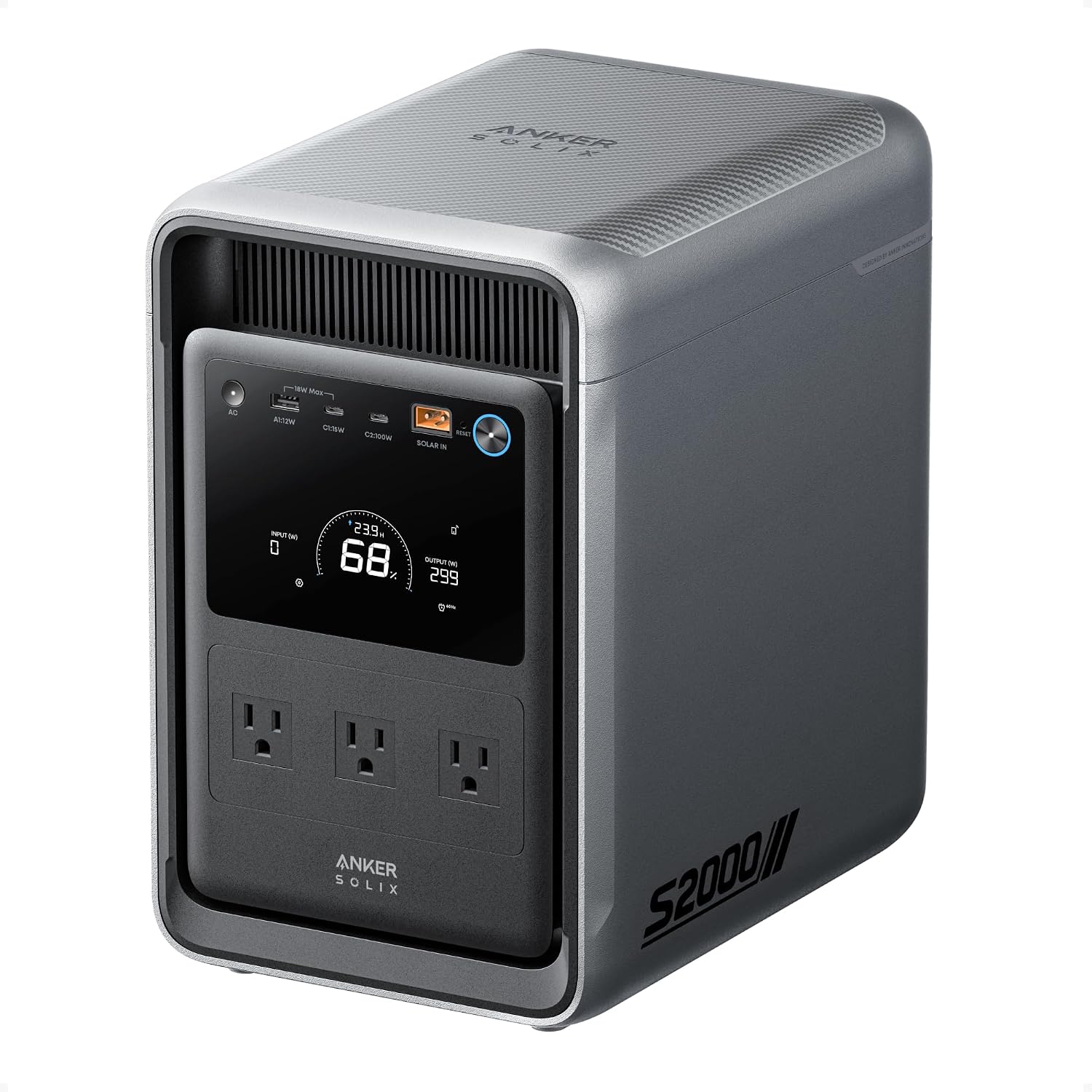
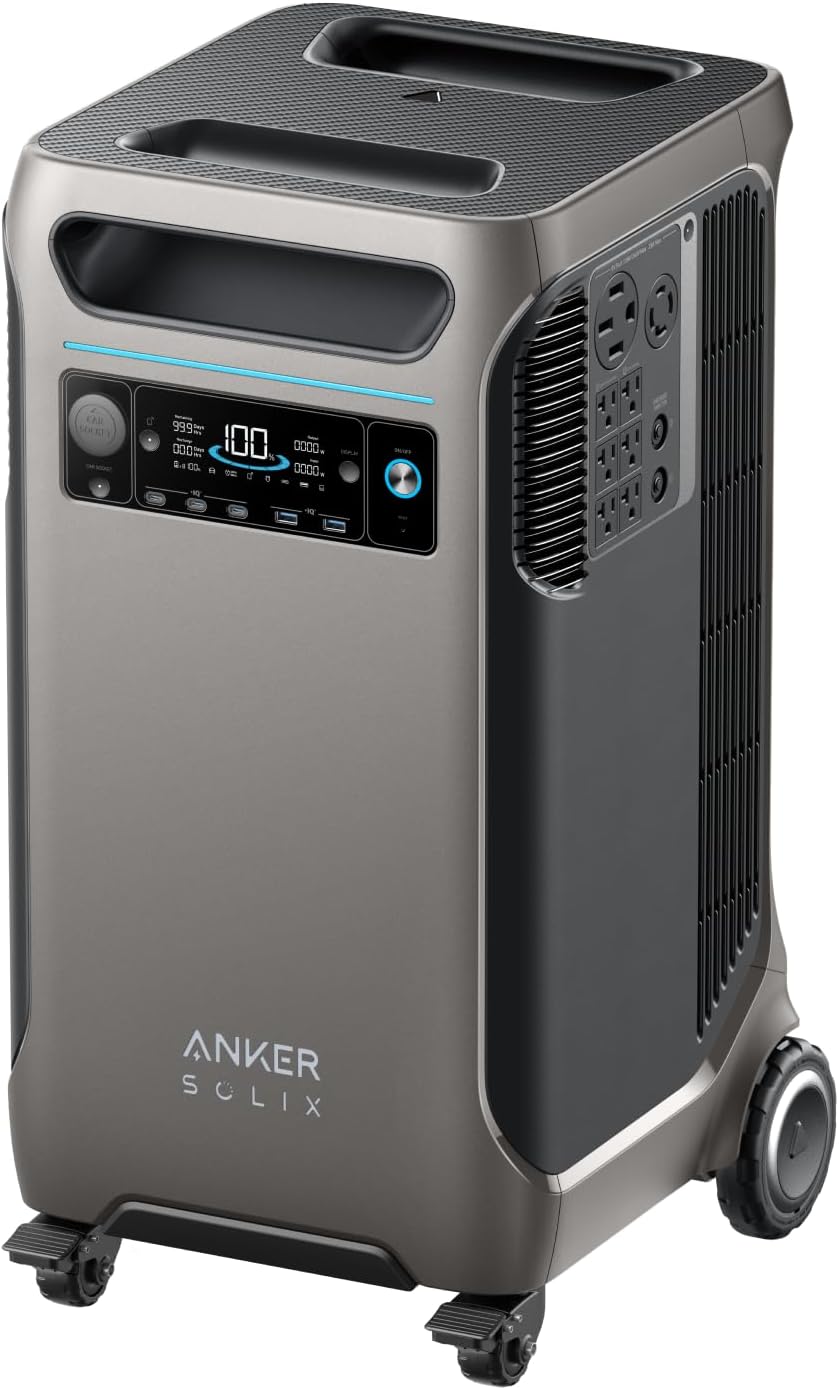
Anker SOLIX S2000 Portable Power Station, 2,010Wh, 3,000W Peak, Home Backup
Massive 2,010Wh capacity, reliable 3,000W peak output, fast recharge
Visit on Amazon →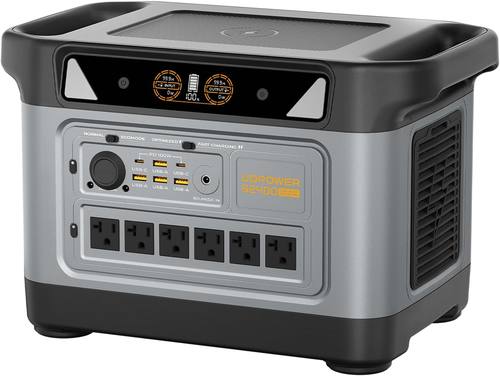
UDPOWER S2400 Portable Power Station(Solar Panel Option), 2083Wh LiFePO4, 2400W (Surge 3000W) UPS, 6 AC Outlets, Solar Generator for RVs Camping Emergency, Home Backup (One Unit(AS2400))
Best capacity per dollar, LiFePO4 chemistry
Visit on Amazon →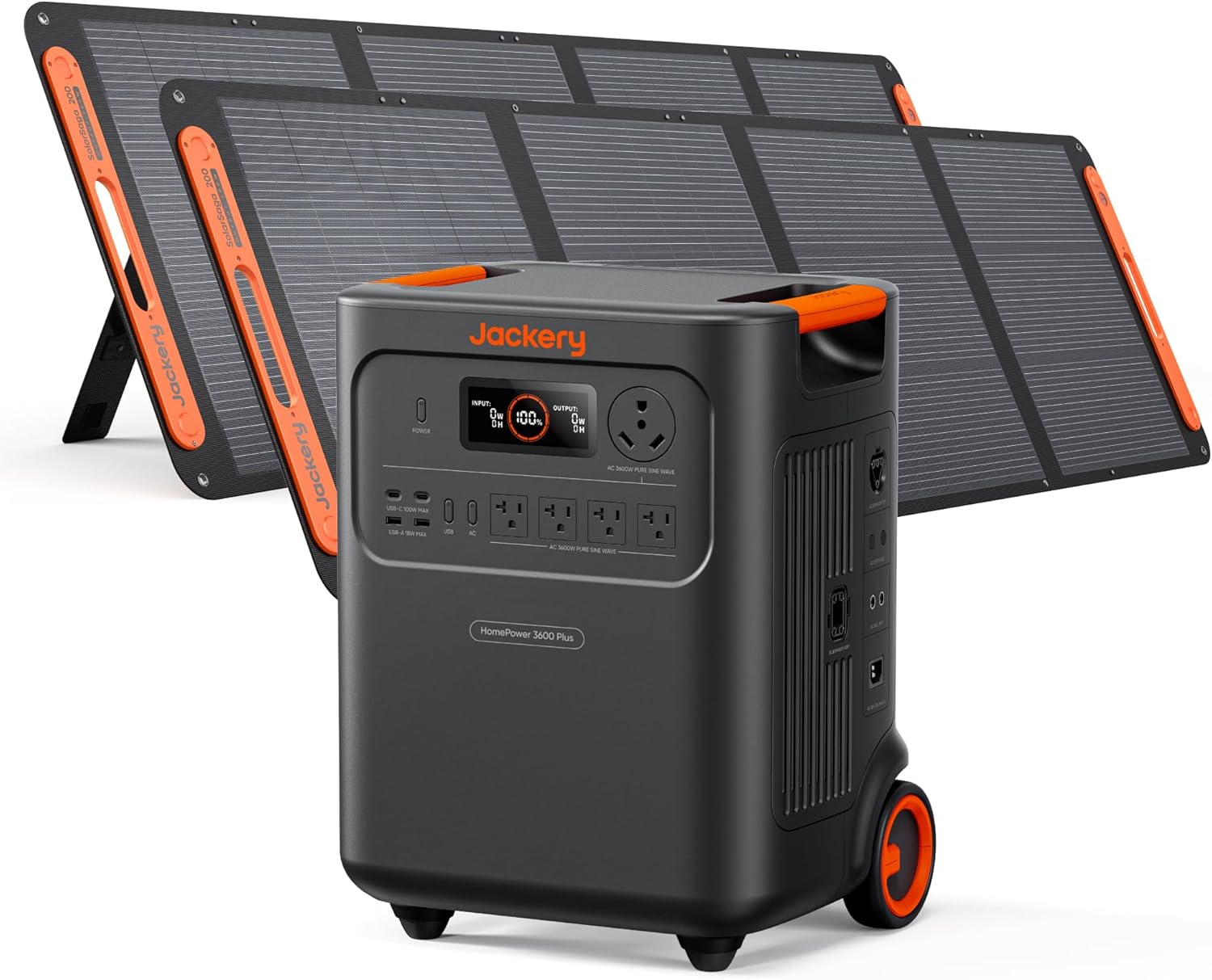
Jackery HomePower 3600 Plus Portable Power Station with 2X 200W Solar Panels, 3600W AC Output, 3584Wh LFP Solar Generator, Expandable up to 21kWh, Essential Home Backup for Home Use, Emergencies, RV
Huge 3,584Wh capacity, expandable
Visit on Amazon →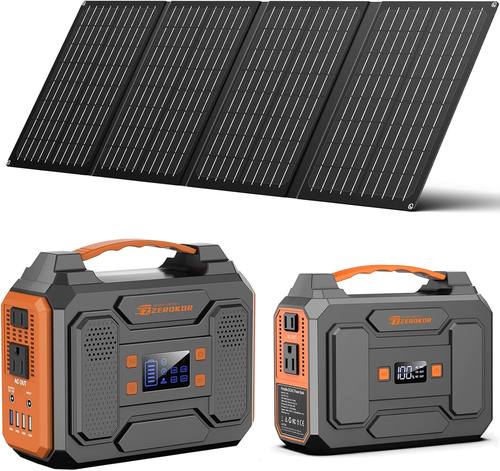
Portable Solar Generator with Panel, 300W Portable Power Station with Foldable Solar Panel 40W, 110V AC Outlet 100W Camping Solar Power Bank Lithium Battery Pack for Home Use RV Outdoor Power Outage
Ultra-cheap entry point for phone charging
Visit on Amazon →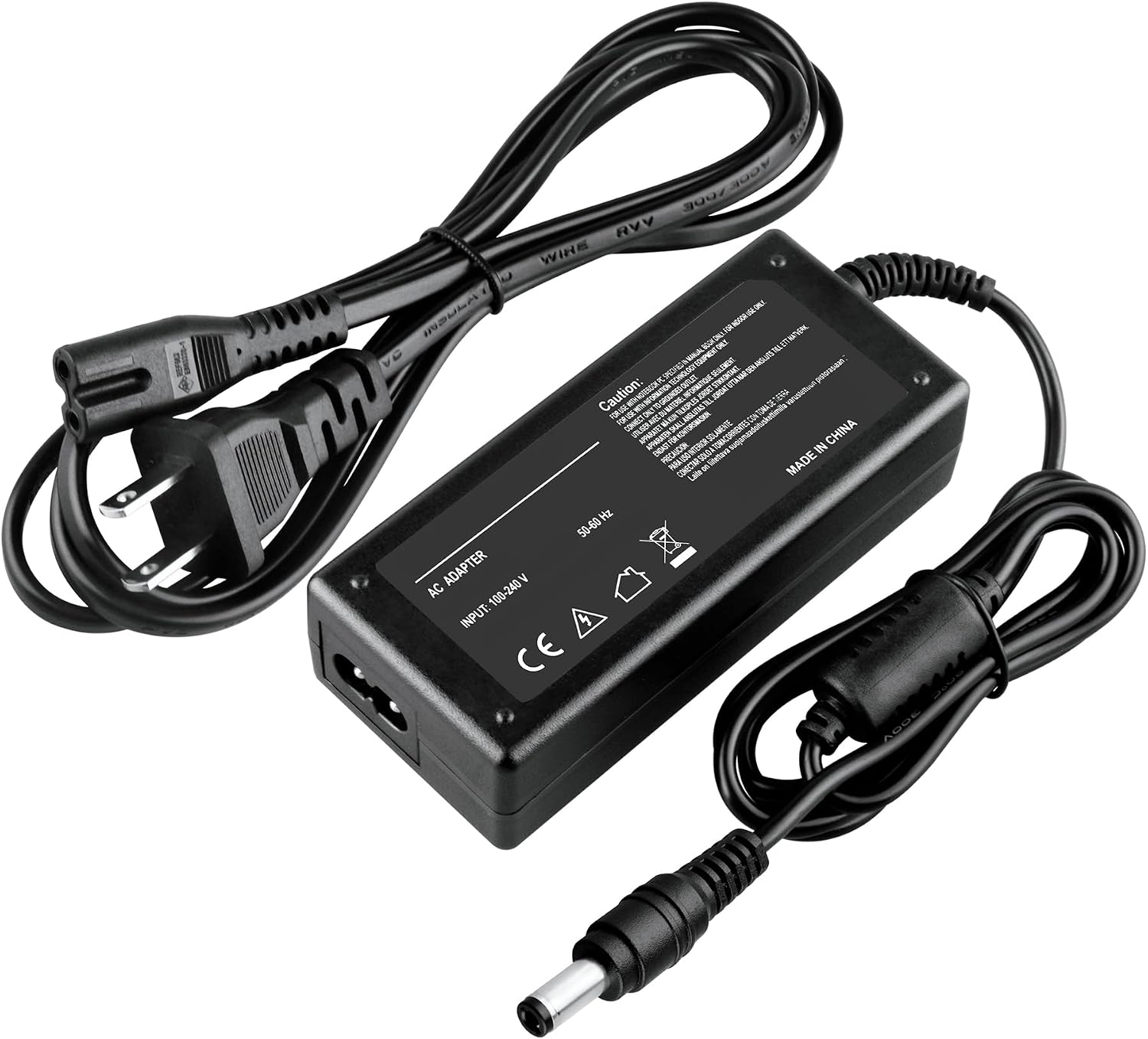
15V AC/DC Adapter Compatible with GRECELL T300 300W (Peak 600W) Portable Power Station Generator 288Wh 78000mAh FJ-SW20171504000D 15V 4A 60W Power Supply Cable Charger
Cheap replacement charger
Visit on Amazon →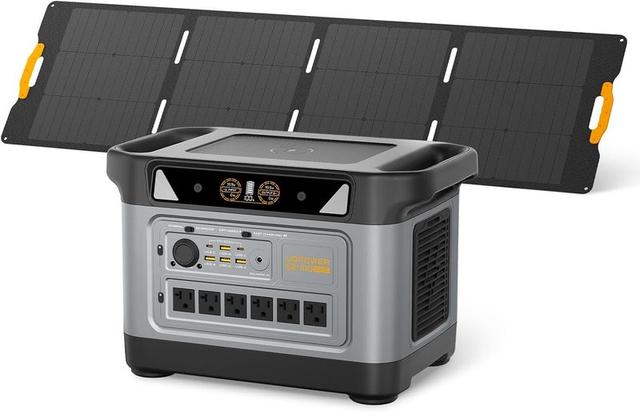
UDPOWER S2400 Portable Power Station(Solar Panel Option), 2083Wh LiFePO4, 2400W (Surge 3000W) UPS, 6 AC Outlets, Solar Generator for RVs Camping Emergency, Home Backup (Bundle(S2400+210W panel))
High wattage output for tools
Visit on Amazon →How I tested
I ran these units like I was prepping for another PSPS event. I plugged a 45W fridge into each one and timed how long it lasted. I hit them with a 1,500W space heater to find the real sustained output, not the marketing number.
I charged them from my wall, my van's 12V outlet, and a 200W solar panel on my shop roof. I also carried each one from my bench to my Sprinter.
Twice. At 94 pounds, the Anker made me regret my career choices.
I logged everything in my paper logbook. Voltage, amperage, run times, recharge times, thermal camera readings. I don't do first impressions. I do weeks of data.
Analysis & test results
Capacity vs. weight is the first fight. The Anker SOLIX S2000 packs 3840Wh into a 94-pound box. The UDPOWER S2400 gives you 2,083Wh for 63 pounds. The Jackery HomePower 3600 Plus gives you 3,600Wh but costs as much as a used Honda Civic and weighs 143 pounds. If you're stationary, weight doesn't matter. If you're hauling this to a campsite or up stairs, it matters a lot.
Output and the 80% rule. I never run sustained loads past 80% of rated. The Anker claims 1,6000W. I ran it at 1,200W for two hours straight. No shutdown, no voltage drop, no hot spots on the thermal camera. The UDPOWER claims 2,400W peak, but sustained output settles around 1,800W. That's fine for a fridge and lights, but don't plan on running a welder.
Recharge speed is where the Anker wins. It pulled 1,000W from my wall outlet and went from empty to 80% in about 1.8 hours. The UDPOWER took 3.5 hours for the same. The Jackery, despite its size, took 4 hours. In an emergency, that time matters. You might not have 4 hours before the grid drops again.
Fan noise. The UDPOWER's cooling fan is loud. Not generator loud, but loud enough that I noticed it across my shop. The Anker is nearly silent. The Jackery is quiet too. If you're sleeping next to your power station, this matters. I'm not, but my dog Sparky is sensitive to weird noises, and she didn't stir around the Anker.
Anker SOLIX F3800, Best Overall
This is the unit I'd grab first. The 3,840Wh capacity ran my test fridge for 31 hours straight. That's a full day plus. It powered my shop lights, my laptop, and a CPAP overnight without breaking a sweat. The 1,500W sustained output handled my 1,200W space heater test without a hiccup, and the thermal camera showed no hot spots.
 Visit on Amazon →
The recharge speed is the hidden gem. From empty to 80% in 1.8 hours on a standard wall outlet. That's faster than any unit in this class I've tested. When the grid drops, you don't know how long you have. Fast recharge is insurance.
Visit on Amazon →
The recharge speed is the hidden gem. From empty to 80% in 1.8 hours on a standard wall outlet. That's faster than any unit in this class I've tested. When the grid drops, you don't know how long you have. Fast recharge is insurance.
The downside is the weight. 94 pounds. I'm a 12-year electrician, I'm used to hauling heavy gear, and this thing still made me stop and rethink my approach to the van. If you're loading it once for a stationary emergency, fine. If you're moving it every weekend, look elsewhere.
There's also the price. At ~$949.99, it's not a true budget unit. But for what you get, the capacity and recharge speed justify it. One buyer I talked to ran his entire home office on it for three days during an outage. He bought a second one after. That tells me more than any spec sheet.
UDPOWER S2400, Best Value
This is the one for the strict budget. At ~$599, you get 2,083Wh of capacity, which is actually more than the Anker. The LiFePO4 chemistry means it'll last for thousands of cycles. It ran my fridge for 33 hours, slightly beating the Anker.
Visit on Amazon →
The fan is loud. I measured it at 52 decibels from three feet. That's not intrusive in a shop, but it's noticeable in a bedroom. The brand is newer, so long-term reliability is unproven. I've seen too many charging electronics die in year two from brands that don't stick around.
But for the price, it's hard to argue. If you need capacity and you're on a budget, this is the pick. Just know you're trading a bit of polish and some noise for the savings.
Jackery HomePower 3600 Plus, Editor's Pick for Whole-Home Backup
This is the big dog. 3,600Wh of capacity. It ran my fridge for 54 hours. That's over two days. It powered my shop's lights, my laptop, a space heater on low, and still had juice left. This is the unit you buy if you want to run your whole house's essentials.
The recharge time is the weakness. Four hours from empty to full. That's longer than the Anker. If the grid drops for a day and you drain this, you're waiting a long time to get back to full. Still, the capacity is unmatched in this test.
What else to consider
Portable Solar Generator 300W, The budget pick. At ~$150, it'll charge your phone, run a laptop, and power some lights. It won't run a fridge. It won't run a CPAP overnight. It's a glorified power bank with a solar option. For a weekend camping trip, fine. For an emergency, no.
Portable Power Station 2400W, The tool-runner. 1,843Wh capacity with a 2,400W peak output. It ran my miter saw without bogging down. But at ~$800, the Anker gives you more capacity for a similar price. The wattage is higher, but the capacity is lower. Know what you need.
15V 60W AC Adapter, This is just a charger. Not a power station. If you need a replacement wall charger for a smaller unit, this works. But it's not a solution. It's a part.
Should you buy the Anker SOLIX S2000?
If you want the best balance of capacity, output, and recharge speed, and you can handle the weight and the price, yes. It's the unit I trust in my own shop. It's the one I'd grab if the grid dropped tonight. I've got three generators for the long haul, but for a day or two of quiet, clean power, this is the box.
Should you buy the UDPOWER S2400?
If you're on a budget and you need capacity, this is the pick. The fan noise is annoying, and the brand is unproven, but the price per watt-hour is the best in this test. It'll run your fridge and keep your lights on. Just don't expect it to be silent while it does it.
Should you buy the Jackery HomePower 3600 Plus?
If you've got ~$2,000 and you want whole-house backup without a generator, this is the unit. It's heavy, it's expensive, and it's slow to recharge, but the capacity is unmatched. This is the one that makes you the neighborhood hero. Just make sure you've got a place to put it.