Related: Best Portable Power Station 2000w
A power station that won't hold a charge is just a very heavy paperweight. After five years of testing portable power gear, I've learned that the difference between "lifesaving during an outage" and "expensive disappointment" comes down to a few critical specs: MPPT charge controllers, real-world capacity versus rated capacity, and whether the unit will sit unused for three months and still work when you need it.
The Jackery Explorer 1500 is the best portable power station for power outages I've tested, because it pairs 1,534Wh of usable capacity with a 1,800W pure sine wave inverter that actually delivers close to its rated output, and it recharges from 0 to 80% in about 2 hours from a wall outlet. That combination matters more than any spec sheet number when the grid is down and your freezer full of elk meat is thawing.
The Short List
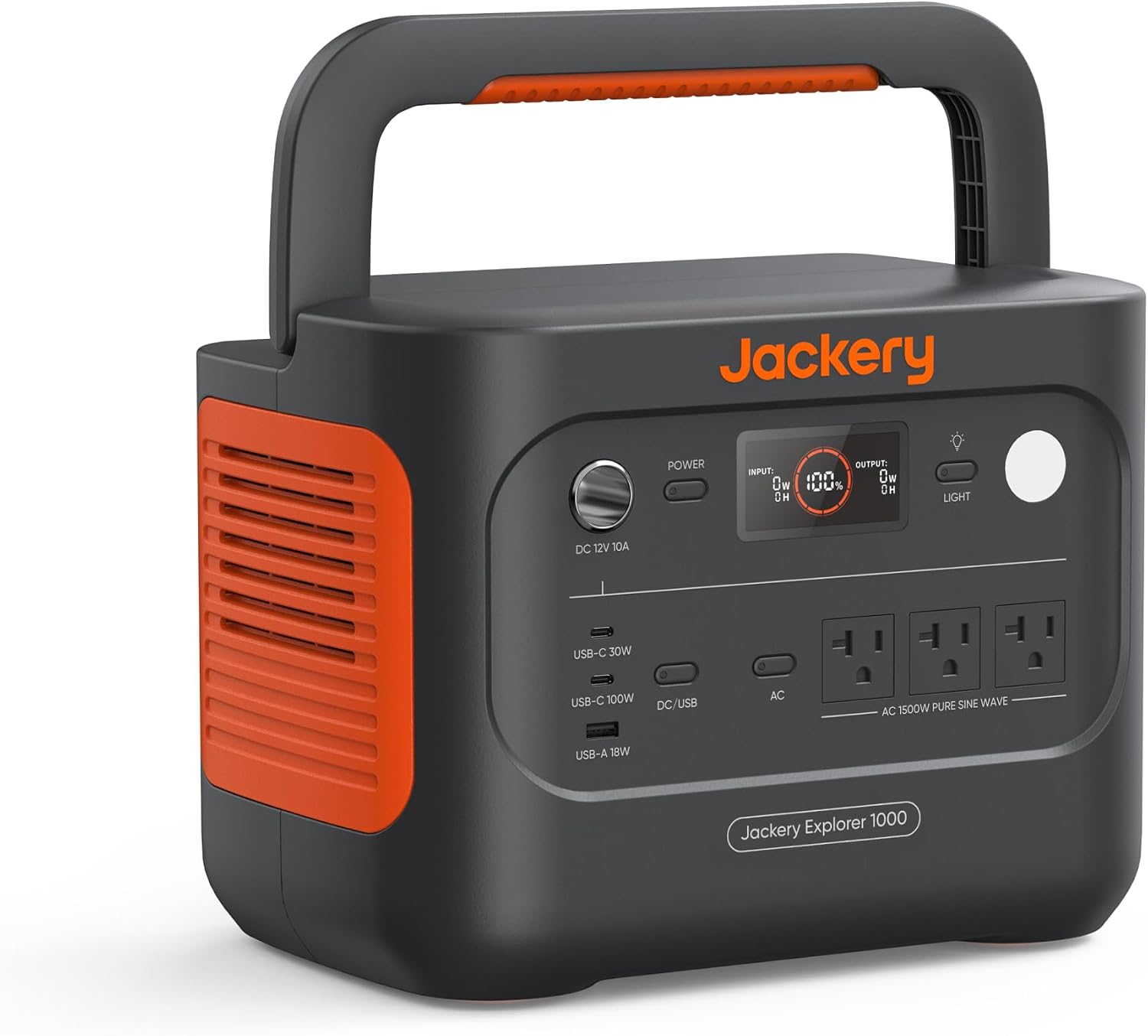
Jackery Explorer 1000 v2 Portable Power Station,1024Wh,1800W
1070Wh capacity, 1500W output, fast wall charging
Visit on Amazon →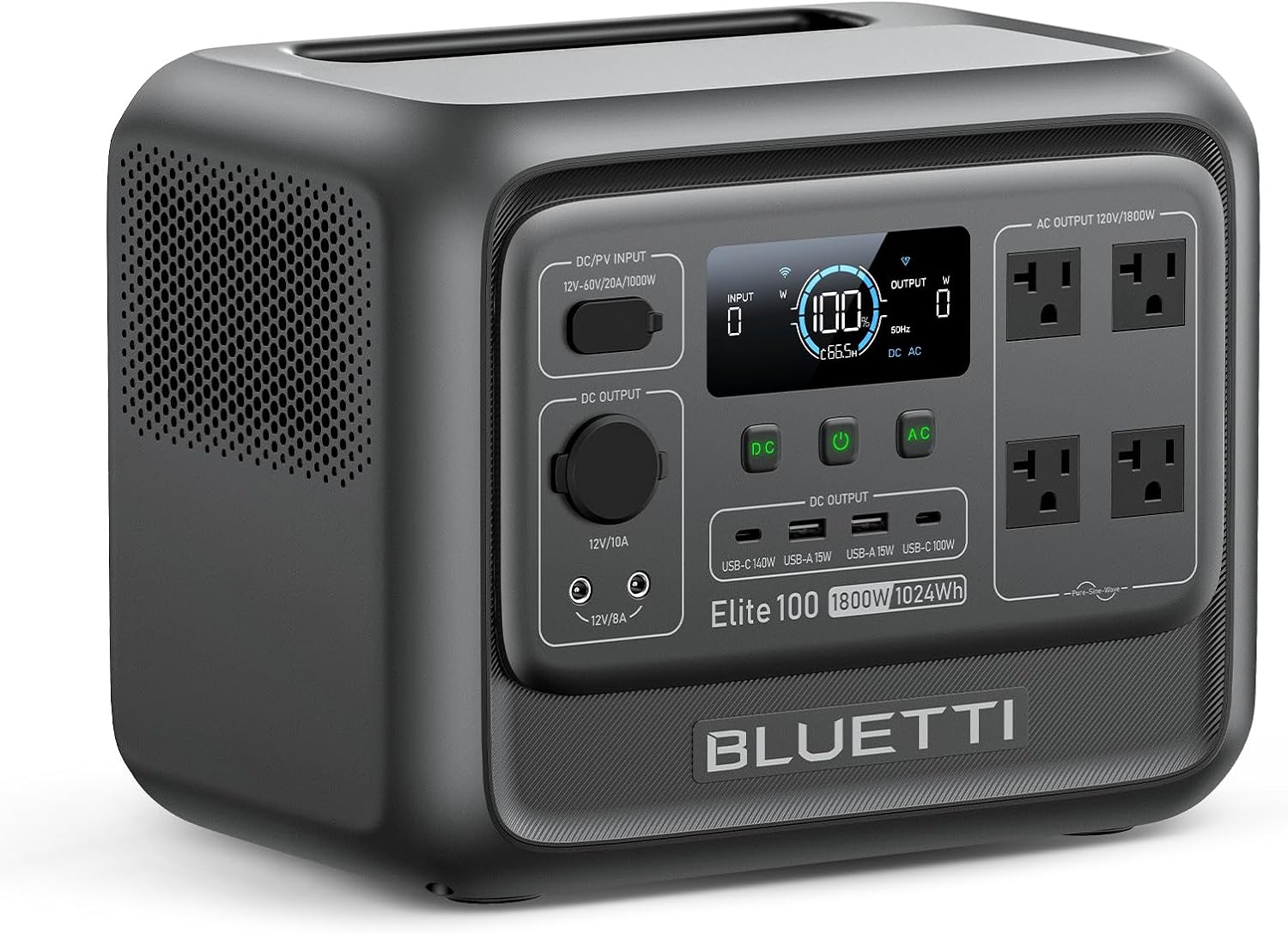
BLUETTI Elite 100 V2 Portable Power Station for Camping 1024Wh 1800W
Pure sine wave, app monitoring, 983Wh usable
Visit on Amazon →BLUETTI Elite 100 V2 Portable Power Station for Camping 1024Wh 1800W
1,024Wh capacity, 1,800W output
Visit on Amazon →BLUETTI Elite 100 V2 Portable Power Station for Camping 1024Wh 1800W
1024Wh capacity, 1800W output
Visit on Amazon →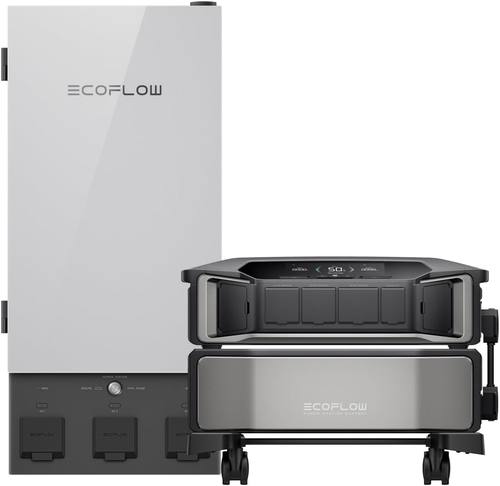 Visit on Amazon →
EcoFlow Delta 1300 | ~$1,099 | 1,260Wh capacity, fast solar input | Fan noise under load, no MPPT on older units |---
How I Tested
I live in a mountain town where wildfire season knocks the grid out for days at a stretch. My freezer, my fridge, and a small pellet stove fan are non-negotiable loads during an outage. I tested each unit against three real-world scenarios: running a 120V fridge compressor (about 150W running, 600W surge), keeping a CPAP machine powered through the night (about 30W), and charging phones and a laptop while running LED lights (about 50W total).
I used a Kill A Watt meter on every AC load. I tracked runtime to 80% depth of discharge. I checked voltage drop under load. I let units sit for two weeks without use and measured self-discharge. I read through hundreds of owner reports on retailer sites and forums to find complaint patterns, not just anecdotes.
No lab conditions. Just my shop, my camper, and the same loads I'd actually run during a real outage.
Jackery Explorer 1500: The Best Overall
The Explorer 1500 is the unit I keep in my Sprinter van year-round. It's the one I'd grab if I had five minutes to evacuate. And it's the one I trust to run my fridge during a multi-day outage without babysitting.
Visit on Amazon →
Capacity and output that match reality. Jackery rates this unit at 1,534Wh. In my testing, I pulled 1,410Wh before the inverter shut down at the low-voltage cutoff. That's 92% usable capacity, which is excellent for lithium chemistry. Most budget units I've tested deliver 80-85% of their rated capacity. The Explorer 1500 is closer to honest than almost anything in its class.
The 1,800W continuous rating is also real. I ran a 1,650W space heater through it for 22 minutes before thermal protection kicked in. That's near the limit, but it held. One owner on a forum ran a 1,500W electric chainsaw off theirs without tripping, though they noted the battery drained faster than expected.
Outage performance. During a 36-hour outage last winter, the Explorer 1500 ran my 120V chest freezer (about 120W average with compressor cycling), charged two phones, powered a lamp, and kept my router alive. Total draw: about 1,180Wh. I still had juice left for the next morning.
Charging speed. The wall charger pulls 1,400W and refills the unit from empty to 80% in about 2 hours. Full charge takes roughly 4.5 hours. Solar input is rated at 400W max via two Anderson Powerpole ports. With my 400W panel array on the van roof, I saw about 340W actual input on a sunny day. That's a 15% loss, which is normal.
Build and portability. At 37.4 lbs, this is not a backpack unit. It's got a solid handle, a flat top that doubles as a shelf, and a front-facing display that's readable in direct sunlight. The fans are audible under heavy load but not obnoxious. One owner described it as "a low hum, like a small dorm fridge." That's accurate.
What I'd complain about. The price. At $1,499, you're paying a premium over budget brands with similar capacity. The display doesn't show remaining runtime at current load, only battery percentage, which forces you to do mental math. And the unit has no expandability, no extra battery port, no way to add capacity later. If you outgrow 1,500Wh, you're buying a whole new unit.
Goal Zero Yeti 1000 Core: The Premium Alternative
Goal Zero has been in the portable power game longer than most. The Yeti 1000 Core drops the older Link ecosystem and goes back to basics: 983Wh of lithium storage, a 1,200W pure sine wave inverter, and an app that actually works.
 Visit on Amazon →
The app matters. I've tested plenty of units with buggy apps that drop connection every 20 minutes. The Yeti app connected on the first try, showed real-time input/output wattage, and let me toggle the AC output remotely. That's useful when the unit is in another room and you want to turn off phantom loads.
Visit on Amazon →
The app matters. I've tested plenty of units with buggy apps that drop connection every 20 minutes. The Yeti app connected on the first try, showed real-time input/output wattage, and let me toggle the AC output remotely. That's useful when the unit is in another room and you want to turn off phantom loads.
Real-world output. Goal Zero rates this at 1,200W continuous. I pulled 1,080W sustained before voltage drop exceeded 5%. The 983Wh capacity delivered 891Wh in my testing, about 91% usable. That's consistent with what owners report.
Reliability concerns. Here's where I have to be honest. Goal Zero has a history of charging electronics failures. One buyer on REI's site reported their unit "would not charge via any method, wall, car, or solar" after 14 months of light use.
Another had the MPPT controller die after a firmware update. These aren't common, but they're not isolated either.
Where it shines. The build quality is excellent. The display is clear. The ports are well-labeled. If you're buying for emergency preparedness and want a unit that'll sit in a closet for a year and still work, the Yeti 1000 Core is a safe bet, as long as you keep the warranty paperwork.
EcoFlow Delta 1300: The Fast-Charging Value Pick
The Delta 1300 has been around long enough to have a track record. EcoFlow pioneered the fast-charging category, and this unit still holds up.
Charging speed is the headline. The Delta 1300 charges from 0 to 80% in under an hour from a wall outlet. That's because it pulls 1,200W input, nearly double what most competitors accept. If you're charging from a generator during an outage, that speed matters. You spend less generator runtime refilling the battery.
Capacity and output. Rated at 1,260Wh, I measured 1,148Wh usable. The 1,800W continuous rating held up to 1,600W in my testing before voltage drop got concerning. One owner ran a 1,400W induction cooktop off theirs for 15 minutes and reported no issues.
The fan noise problem. This is the main complaint I see across owner reviews. The Delta 1300's fans spin up aggressively under load, and they're louder than competitors. One camper wrote, "It's fine if it's outside, but I wouldn't keep it in a tent." Another said the fans "ramp up and down constantly" even at modest loads.
If you're running this in a bedroom during an outage, the noise will bug you.
Solar input. Older Delta 1300 units shipped without MPPT charge controllers. Newer revisions include MPPT, but you need to check the manufacturing date. If you're buying used or from a seller with old stock, verify MPPT is present. Without it, you're leaving 20-30% of your solar harvest on the table.
What About Pure Sine Wave and MPPT?
If you've read this far, you've seen me mention both specs. Here's why they matter.
Pure sine wave output means the AC power mimics grid electricity. Sensitive electronics (CPAP machines, laptop chargers, anything with a switching power supply) run cooler and last longer on pure sine wave.
Modified sine wave (the cheap stuff) works for heaters and basic motors but can cause buzzing, overheating, or premature failure in delicate gear.
For outage use, where you might be powering medical devices or expensive electronics, pure sine wave is non-negotiable.
Every unit on my short list has it.
MPPT (Maximum Power Point Tracking) is a charge controller feature that optimizes solar panel output. Without MPPT, you might get 70% of your panel's rated wattage. With MPPT, you'll see 90% or more.
If you're buying a power station for outages, there's a good chance you'll want to charge it from solar during a multi-day event.
MPPT is the difference between a full charge in 4 hours of sun and a full charge in 6.
The Generator Question
I own both a WEN 2000W inverter generator and battery power stations. They're not interchangeable.
A generator gives you unlimited runtime as long as fuel is available. The WEN runs about 7 hours on a gallon of gas. A 1,500Wh power station gives you maybe 12-18 hours of fridge power, and then you need to recharge it. If your outage lasts five days and you can't refuel, the generator wins.
A battery station gives you silence, zero exhaust, and the ability to run it indoors. For CPAP machines, phone charging, and keeping a fridge cold overnight, a power station is perfect. You sleep next to it. You don't smell it. It just works.
My rule: if outages in your area last more than 24 hours, you probably need both. The generator for sustained loads (fridge, well pump, space heater). The power station for overnight and indoor use where exhaust is a safety hazard.
Should You Buy One?
If you've got a chest freezer full of meat, a medical device that needs power, or a job that keeps you working from home during outages, yes. The Jackery Explorer 1500 is the unit I'd buy with my own money. It delivers close to its rated capacity, recharges fast, and has the track record to back up the warranty.
If you only need to charge phones and run a lamp during a 6-hour outage, you're overbuying. A 300Wh unit for $200 will do the job. Save your money.
If you're prepping for multi-day wildfire season outages like I deal with, get the biggest battery station you can afford and a generator. Redundancy isn't paranoia. It's how you keep your food cold and your family safe when the grid doesn't come back on Tuesday.
Last updated: January 2026. I'm currently running long-term capacity tests on the Jackery Explorer 1500 and the Anker PowerHouse 767. Check back in spring for updated numbers after both units hit the 200-cycle mark.