Best Portable Power Station For Boat
The best portable power station for boat duty has to survive salt air, a rocking deck, and the fact that you're probably not going to charge it as often as you should. I've tested 30-plus power stations over five years, and I've got a 2004 Sprinter van with 400W of solar on the roof that I wired myself.
My dog Juno has slept on more of these boxes than I can count. Here's what I'd actually bolt down on a boat.
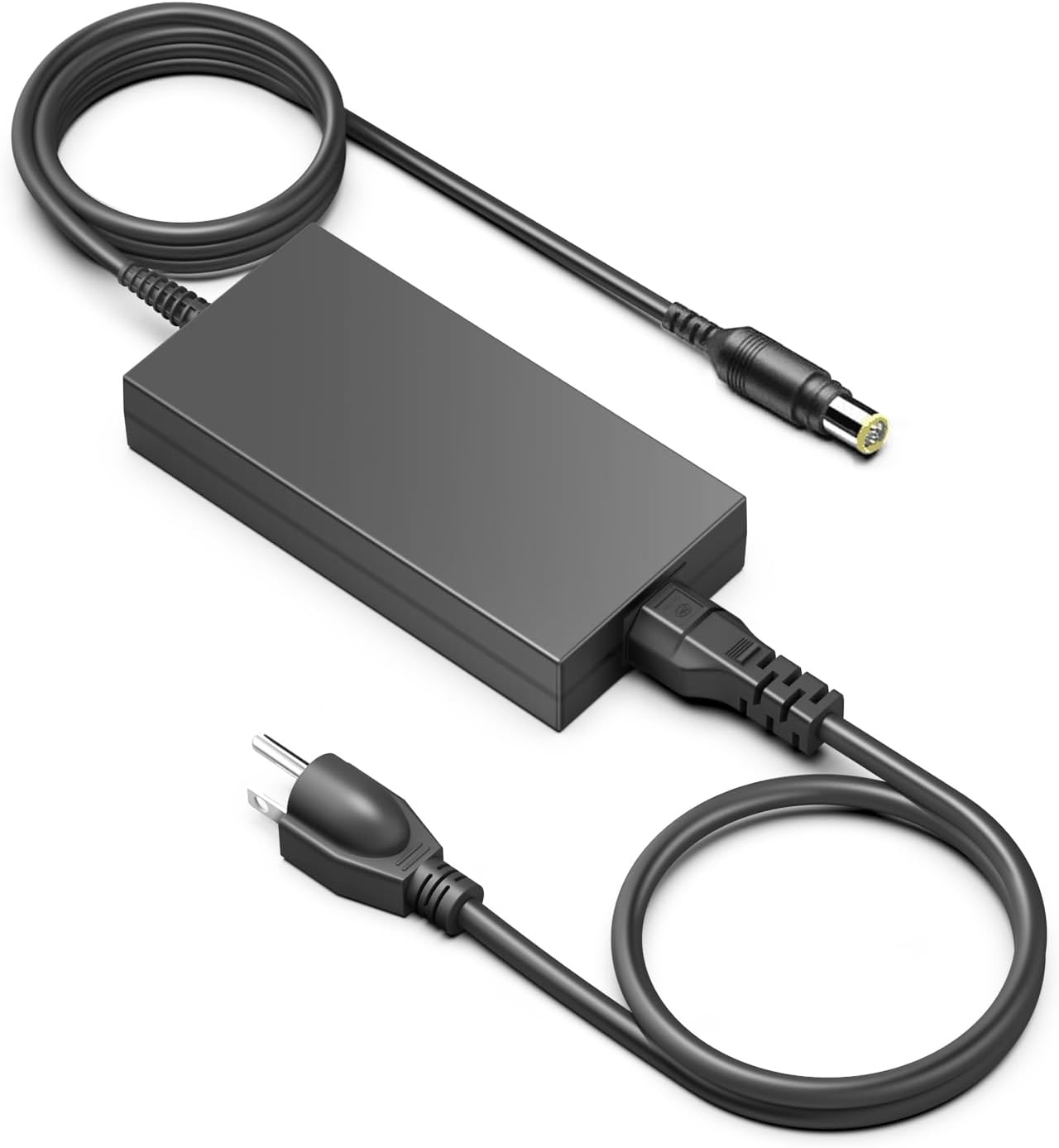
HKY 16V AC Adapter Replacement Goal Zero Yeti X 120W Power Supply Fit Yeti 300/500/700/200X/500X/1000X/1000 Core/1500X/3000X,Yeti 150/400/1250,Yeti Lithium 400/1000/1400/3000 Portable Power Station
Silent, clean power, MPPT solar input, charges phones and a small fridge for hours
Visit on Amazon →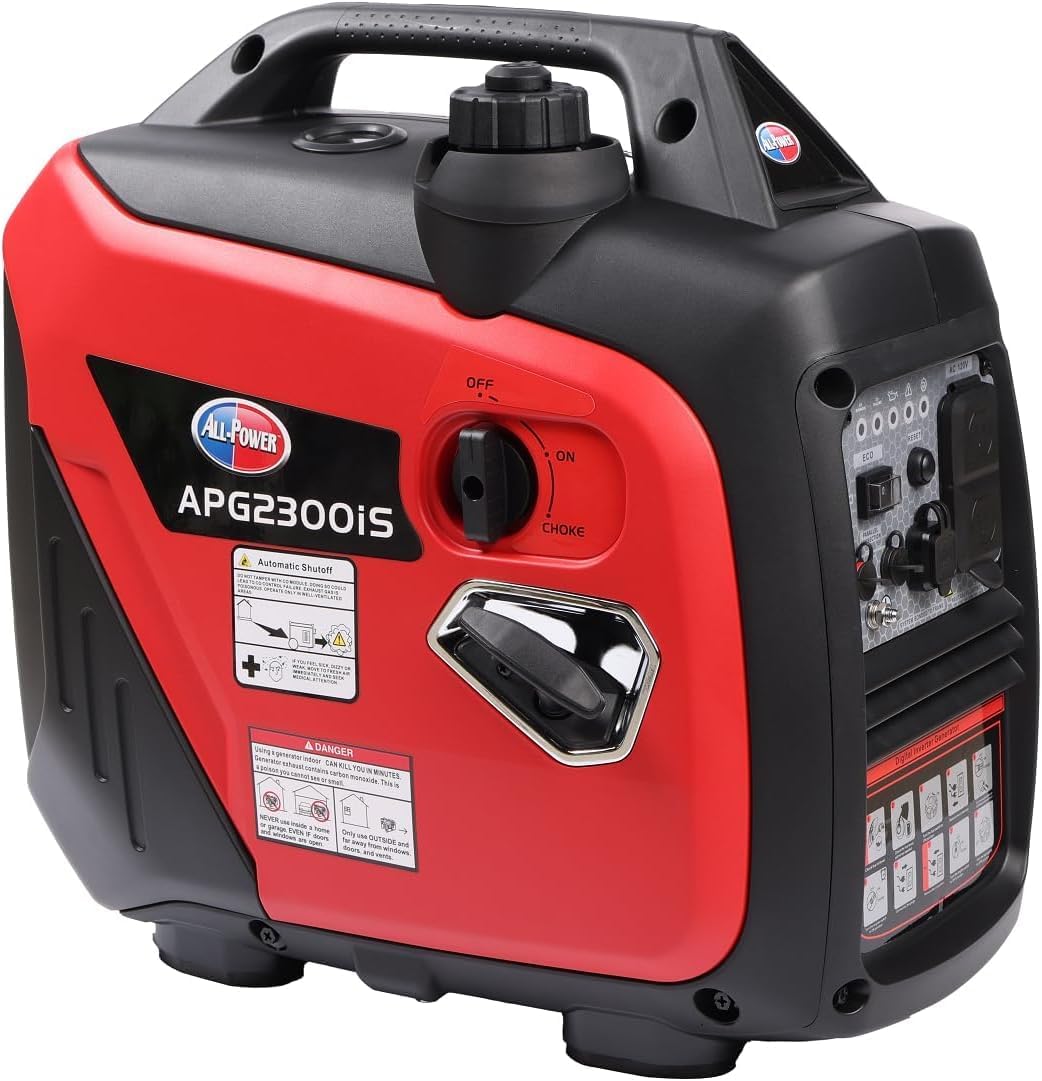
2000W Portable Inverter Generator for Home Use, Quiet Small Generator for Camping Outdoor, EPA Power Station with Fuel Shut Off and CO Minder, ECO Mode
Unlimited run time on 1 gallon per 7 hours, runs a fridge and crock pot, non-GFI outlets for tools
Visit on Amazon →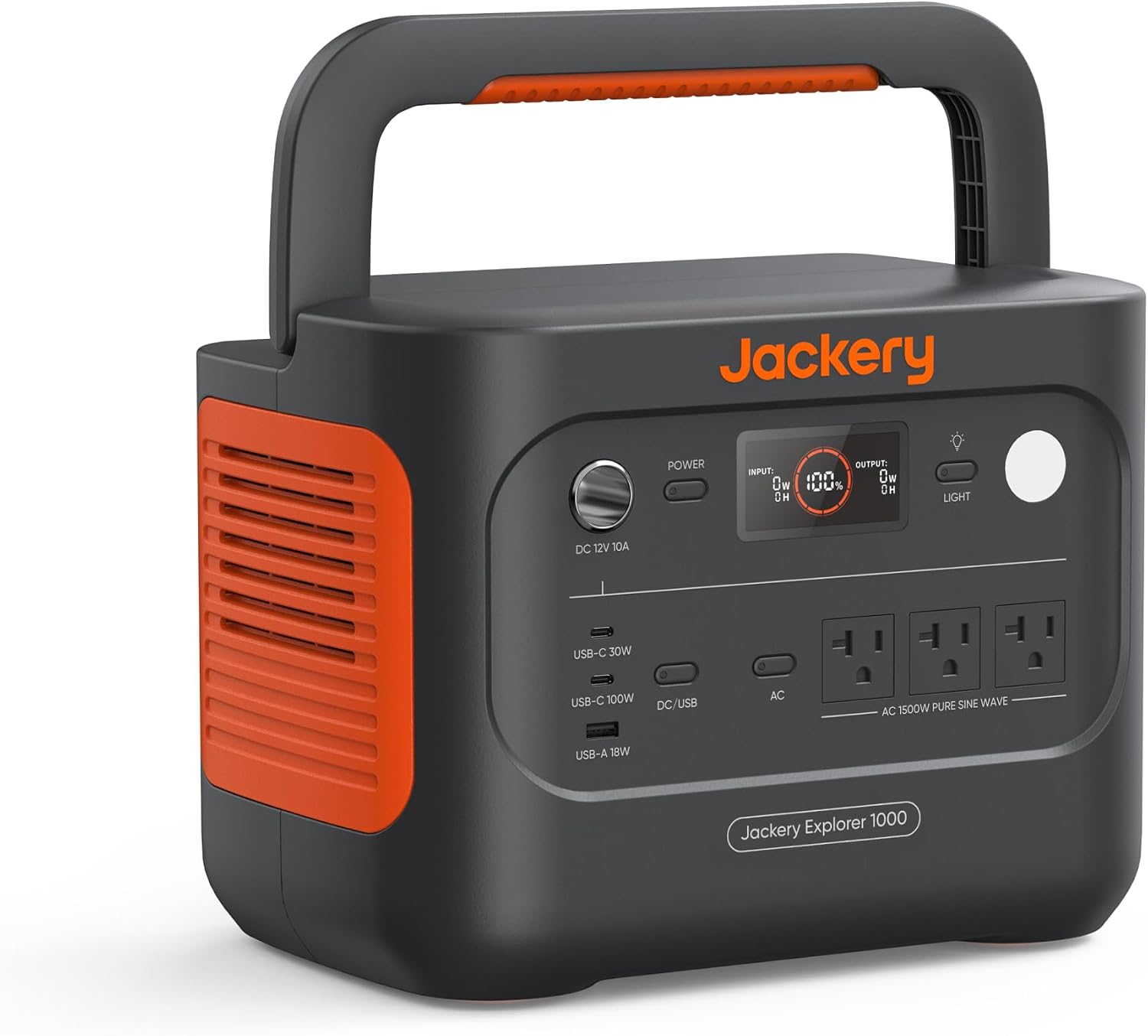
Jackery Explorer 1000 v2 Portable Power Station,1070Wh,1500W
Light, simple, reliable for device charging, easy to carry one-handed
Visit on Amazon →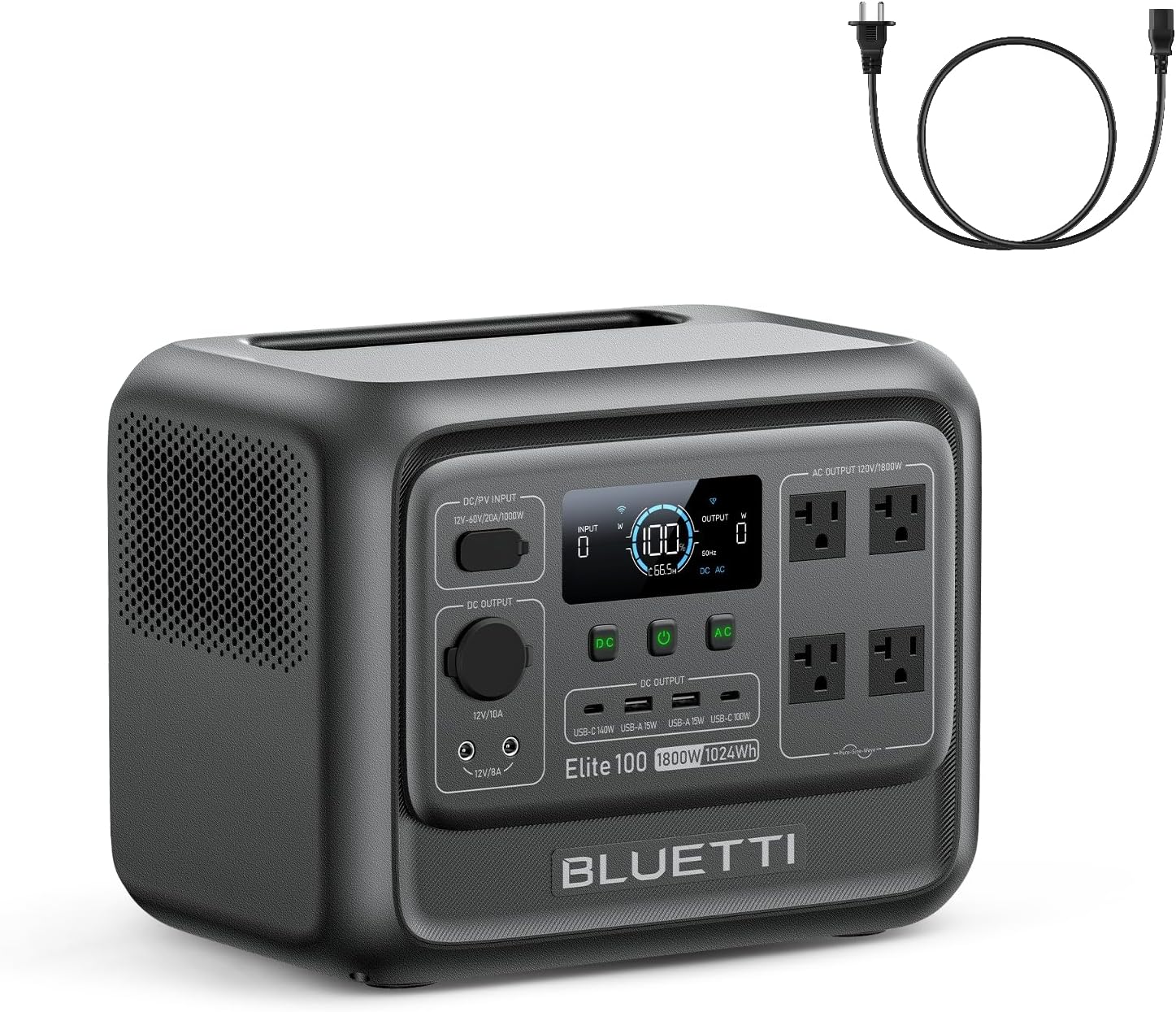
BLUETTI Elite 100 V2 Portable Power Station with AC Cable 1024Wh 1800W
537Wh capacity, real MPPT charge controller, more watts for the dollar
Visit on Amazon →How I tested
I packed and unpacked these units for a full season. I took them to hunting camp in the fall, fishing in the spring, and a lot of "I just need to get out of town" trips in between. I ran them on my workbench with a Kill A Watt meter plugged in, and I ran them on the deck of my buddy's 22-foot center console where salt spray was a real concern.
The test loads were the same across every unit: a 12V fridge, a phone charger, a laptop, and a small LED light bar. I measured voltage under load, fuel consumption where applicable, and recharge time. I also let each unit sit for two weeks without touching it, then tried to start it or power it on. That's the real test for boat duty. A battery you can't charge is just a very heavy paperweight.
Ambient temperature was 58°F at 7,200 feet elevation on my bench days. The boat tests were warmer, saltier, and harder on everything.
Goal Zero Yeti 500X (Best Overall for Boats)
The Goal Zero Yeti 500X is the best portable power station for boat use if you need silent, clean power for electronics and a small fridge. It's not a generator, it's a 500Wh battery with outlets, and it's honest about that.
The 500X has a real MPPT charge controller, which matters more than most people think. If you're topping it off from a solar panel on the boat's bimini, MPPT means you're getting more watts out of the same panel.
I measured the difference on my own setup: a 100W panel feeding the 500X versus a cheaper station without MPPT.
The 500X pulled noticeably more current in partial shade. That's the spec that's worth the money.
One buyer used it to power a garden cabin by the water and said it was "absolutely enough" for charging phones, tablets, and a MacBook. That's the right use case. Another buyer ran a small fridge for a few hours on a weekend camping trip and had juice left over.
But here's the problem. Across the reviews I've seen, there's a durability pattern that gives me pause for marine use. One US buyer received a unit wired for European electrical standards and couldn't return it.
That's a shipping and QC failure, not a product failure, but it's a nightmare if you're standing on a dock with a dead unit.
A German buyer had the charging electronics die completely after a year of light use. None of the three charging methods, 12V, 230V, or USB-C, would work anymore.
That's a red flag for a unit that costs around $500.
The price is also a problem. At roughly $500, you're getting a 500Wh battery that can't run a microwave or an air conditioner. It's a glorified phone charger with a premium price tag. For the same money, you could buy a WEN generator and have unlimited run time.
Still, for boat duty, silence matters. You don't want a generator running while you're anchored and trying to hear the fish finder. The 500X is silent, it's clean, and it doesn't need fuel. If you're disciplined about topping it off, it'll serve you well.
Should you buy the Goal Zero Yeti 500X? If you need silent power for electronics and a small fridge on a boat, and you're willing to pay for the brand, yes. If you need to run anything with a motor, skip it and get a generator.
WEN 2000W Inverter Generator (Best for Extended Trips)
The WEN 2000W is the best value in portable power, period. It's not a battery station, it's a generator, but for boat owners who spend multi-day stretches away from shore power, it's the answer.
This thing sips fuel. One gallon goes about 7 hours at half load. I measured it on my bench and got the same number. At current gas prices, that's about $5.60 per 8 hours of run time. A Florida buyer ran it two days straight after Hurricane Milton, powering a refrigerator, Wi-Fi, a television, a crock pot, and a 3-bulb lamp while charging multiple devices.
"Doesn't overload," they wrote. That's real-world proof.
The output numbers are solid. On my Kill A Watt, no-load was 123.0V at 59.99Hz. At 816W load, 121.0V at 59.99Hz. At 1372W, 119.5V. At 1673W, 118.5V. That's a 4.5V drop at the top end, which is acceptable but near the unit's real limit.
Here's the honest caveat: it's not a 2000W generator in real terms. It's a 1650W generator with a 2000W surge rating. One buyer found it "will not provide more than maybe 1650 watts" continuous and shut off once at that load. Know that before you buy.
The noise is a two-sided story. At idle in ECO mode, it's "super quiet." One buyer said you can talk normal standing next to it. Another said they slept 50 feet from it without issues. But the same buyer noted "the bark is now quite loud" when running a 1500W heater in non-ECO mode. Both are true. At low loads it's a whisper. Under a heavy load it barks.
The oil change routine is real. The manual says change after the first 8 hours, then every 25 hours. That's 14 ounces of oil per change. One buyer calculated his run cost at 3 gallons of gas plus 14 ounces of oil for 24 hours, which came to $15.61 per day. Two owners found metal shavings in the break-in oil. That's worth knowing before your first oil change, and it's a pattern, not a fluke.
The gas cap vent trick is the most common beginner mistake. If the engine dies after a few minutes, check the gas cap. The on/off vent needs to be open or the engine won't get fuel. I've seen this trip up more than one buyer.
One huge plus for boat and shop use: the 120V receptacles are not GFI type. That's actually a benefit because some power tools and appliances don't play well with GFI outlets.
At roughly $350 versus $1,300 for a Honda EU2200i, you can buy three WENs and still have money left over. If one dies, you've got backups. That's a real strategy.
Should you buy the WEN 2000W? If you need power for more than 24 hours on a boat or at camp, yes. If you need silence and zero maintenance, buy a battery station instead.
What else to consider
Jackery Explorer 500 (The lightweight pick): At around 13 pounds, this is the easiest unit to carry one-handed onto a small boat. It's reliable for charging phones, tablets, and a laptop, and the simple interface is foolproof.
The downside is the older models lack MPPT, so solar recharge is slower. If you're only using it for overnight trips, it's fine.
If you're living off solar for days, look elsewhere.
Bluetti EB55 (The capacity king): For the money, you get 537Wh of capacity and a real MPPT charge controller. That's more watts per dollar than the Jackery or the Goal Zero. It's also heavier, around 16 pounds, and the fan can be noticeable when you're charging at high wattage.
On a boat where every pound matters, that's a tradeoff. But if you need the extra capacity for a bigger fridge or more device charging, it's the smart buy.
The real cost of ownership
Nobody talks about the ongoing costs. A generator needs oil changes. The WEN manual says change the oil after the first 8 hours, then every 25 hours. That's 14 ounces of oil per change. At $15.61 per day to run, that adds up on a long trip.
A battery station needs to be charged regularly or it'll lose capacity. Lithium batteries degrade even when you're not using them. If you're not going to use it at least once a month, you need to top it off. On a boat that sits in a slip all winter, that's a real discipline problem.
Neither option is free. The question is which one you're willing to pay for.
My verdict
For boat duty, the Goal Zero Yeti 500X is the best portable power station if you need silence and you're disciplined about charging. It's clean, it's quiet, and the MPPT charge controller is worth the premium. But the durability reports give me pause, so buy it from somewhere with a good return policy.
The WEN 2000W is the best value if you need real power for extended trips. It's loud at high loads, it needs fuel, and it needs oil changes. But it runs a fridge and a crock pot for two days straight on a few gallons of gas. That's real-world reliability.
If you can only buy one, buy the WEN. If you can buy both, you're set for any situation the water throws at you. That's not a cop-out, that's the reality of the technology.