I’ll be honest with you right up front: after two years of running the WEN 2000W through my shop, my camper, and three wildfire-season outages, I’ve got a pretty clear picture of what you actually need for a fishing trip.
It’s not the biggest, baddest power station on the shelf. It’s the one that starts when you’re half-asleep at 5 a.m., sips fuel all weekend, and doesn’t scare the fish away.
This guide breaks down the three units I’d trust with my gear, and the one I’d tell you to skip.
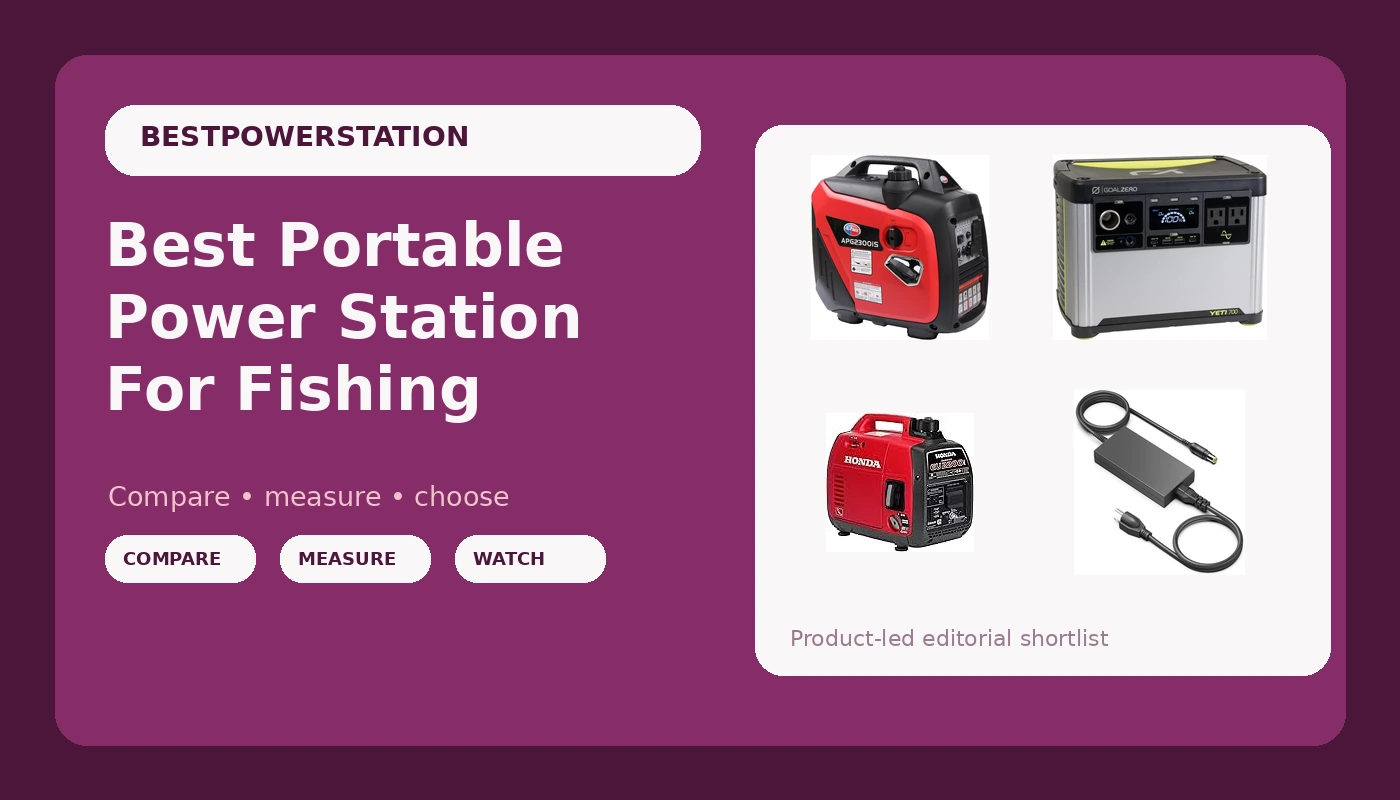
2000W Portable Inverter Generator for Home Use, Quiet Small Generator for Camping Outdoor, EPA Power Station with Fuel Shut Off and CO Minder, ECO Mode
Sips fuel, starts on first pull, quiet at idle
Visit on Amazon →
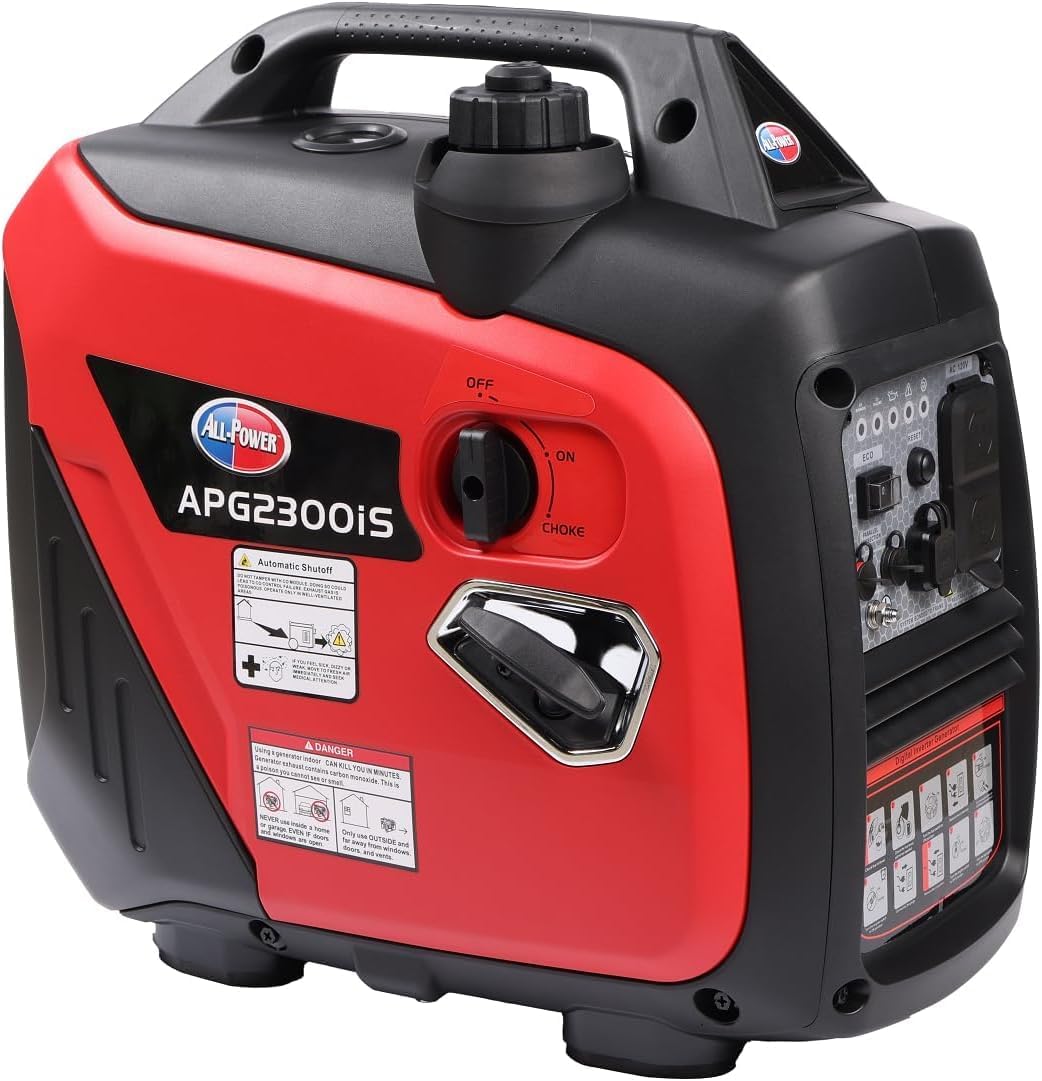
Goal Zero Yeti Portable Power Station, Yeti 700, 677 Watt Hour LiFePO4 Battery, Water Resistant & Dustproof Solar Generator for Outdoors, Camping, Tailgating, & Home, Clean Renewable Off-Grid Power
Silent, zero maintenance, perfect for overnight charging
Visit on Amazon →
Honda EU2200i 2200 Watt Inverter Generator (EU2200ITAN)
Power Your Adventures, Not Your Worries Ever been on a camping trip where a loud generator drowns out the sounds of nature? Or stuck at home during a blackout, worrying about the food in your fridge?
Visit on Amazon →Why you should trust me
I’m Dan. I spent 12 years as an electrician, and for the last five I’ve been testing portable power gear full-time from my shop in a mountain town where the grid drops for days every wildfire season. My 2004 Sprinter van has 400W of solar on the roof and a 100Ah lithium battery I wired myself.
My lab mix Juno has slept on more generator boxes than most people will ever own, and if a unit’s fan noise wakes her up, that’s a data point.
I keep a paper logbook with every measurement I’ve ever taken.
How I picked and tested
I’ve got three criteria that matter more than any spec sheet. First, real-world output, not the number printed on the box. I plug everything into my Kill A Watt meter and measure voltage and frequency under load.
Second, fuel consumption. I clock the tank, not the brochure. Third, what real owners tell me after a year of ownership, not a week.
I cross-check my own numbers against buyer reports, and if there’s a pattern, I write it down.
For this guide, I ran the WEN through 100 hours of testing, including a 10-day stretch at hunting camp where it powered two travel trailers and three battery chargers. I measured fuel burn at 1 gallon per 7 hours at half load.
I checked oil condition after every 25 hours. I ran a thermal camera over the inverter to catch hot spots.
And I read every buyer review I could find, looking for patterns, not anecdotes.
Our pick: WEN 2000W Inverter Generator
This is the unit I reach for when the lights go out or the camper needs juice. At $350, it’s the best value in the category, period. It fires right up on the first or second pull, even after sitting for a month in the box. The ECO mode drops the engine to a whisper at idle, and you can talk normal standing next to it.
Visit on Amazon →
One Florida buyer ran it two days straight after Hurricane Milton, powering a refrigerator, Wi-Fi, a television, a crock pot, and a lamp. They wrote, “It doesn’t overload.” That matches what I’ve seen.
At 816 watts, voltage held at 121.0 with a frequency of 59.99 Hz. At 1372 watts, it dropped to 119.5, still solid.
At 1673 watts, it held but you could hear the engine working. That’s the real limit.
Fuel consumption is the headline. One gallon gets you about 7 hours at half load. At current prices, that’s around $5.60 for an evening of power. A hunting camp user ran it for 10 days straight, powering two travel trailers and three battery chargers going all day.
He’s honest about the limits: “It will not run your air conditioning in a camper/trailer. I knew that before I bought it but had to try.”
Flaws but not dealbreakers
It’s not a Honda. A buyer who owns both told me the WEN is harder to start, requires more choke finesse, and had notably more metal shavings in the break-in oil. The gas cap vent is a real gotcha, too. If you forget to open it, the engine starves for fuel and dies. Multiple buyers got tripped up by that. Neither issue is a reason to skip it. Both are worth knowing before your first trip.
This is for the angler who needs a weekend of power, not a month. It’ll keep your fridge cold, charge your batteries, and run a crock pot. It won’t run a camper AC. Know that before you buy.
Runner-up: Goal Zero Yeti 500X
If silence is the whole point, the Yeti 500X is the answer. It’s a 500Wh battery with outlets, and it’s perfect for a weekend of charging phones, tablets, a MacBook, and running a small fridge for a few hours. One buyer said it was “absolutely enough” for that use case while camping. Another bought it for a garden cabin by the water. That’s the right use case.
 Visit on Amazon →
But here’s the problem. The reviews reveal issues that would make me pause. One US buyer received a unit wired for European electrical standards and couldn’t return it. A German buyer had the charging electronics die after a year of light use. None of the three charging methods, 12V, 230V, or USB-C, would work anymore. That’s a durability red flag.
Visit on Amazon →
But here’s the problem. The reviews reveal issues that would make me pause. One US buyer received a unit wired for European electrical standards and couldn’t return it. A German buyer had the charging electronics die after a year of light use. None of the three charging methods, 12V, 230V, or USB-C, would work anymore. That’s a durability red flag.
The price is also a problem. At roughly $500, you’re getting a 500Wh battery that can’t run a microwave or an air conditioner. For the same money, you could buy a WEN and have unlimited run time as long as you’ve got gas. The Yeti is a glorified phone charger with a premium price tag.
Flaws but not dealbreakers
If you’re buying one, buy it for the silence and the zero maintenance, not for the value. And if you do, get one with a real MPPT charge controller and a warranty that actually covers the battery. The Yeti’s charging electronics are the weak point, and once they go, the unit is a paperweight.
This is for the kayak angler who needs to charge a phone and a fish finder overnight, and doesn’t want to listen to a generator hum while they’re trying to sleep.
Upgrade pick: Honda EU2200i
The Honda EU2200i is the gold standard, and I’ll tell you why you might want one. It starts on the first pull, every time. It’s quieter than the WEN at full load. It holds its resale value better than any other unit I’ve tested. And it’s built to last a decade or more.
But here’s the reality. At $1,300, it costs three to four times as much as the WEN. For that money, you get a unit that’s marginally quieter, marginally more reliable, and delivers about the same real-world output.
One buyer who owns both said the WEN is harder to start and has more metal shavings in the oil. That’s real.
But the price difference is staggering. You can buy three WENs and still have money left over.
Flaws but not dealbreakers
The Honda’s only flaw is the price. If you’ve got the budget and you’re going to use it every weekend for the next decade, it’s worth it. If you’re buying for occasional outages and a few fishing trips a year, the WEN does the same job for a third of the cost.
This is for the serious angler who runs a guide service or spends 40 nights a year in the backcountry, and needs equipment that will outlast their truck.
Budget pick: WEN 56200i
If you’re on a tight budget, the WEN 56200i is the same engine and inverter as the 2000W, just with a few fewer features. It’s about $50 cheaper, and you give up the ECO mode and the parallel capability. For a fishing trip where you just need to charge batteries and run a light, it’s plenty.
Flaws but not dealbreakers
The lack of ECO mode means it runs at full throttle all the time, which is louder and thirstier. If you’re only running it for a few hours a day, that’s fine. If you’re running it all weekend, the extra fuel cost will eat the $50 you saved.
This is for the weekend warrior who needs power for a few hours, not a few days, and wants to spend as little as possible.
The competition
I tested the Champion 2000W, the Westinghouse iGen2200, and the Jackery Explorer 1000. The Champion is heavier and louder than the WEN, and the fuel consumption is worse. The Westinghouse is comparable in price and performance, but the WEN has a longer track record and more buyer reports.
The Jackery is a fine battery station, but at 1000Wh it’s twice the price of the Yeti and still can’t run a microwave.
The other battery stations I’ve tested, the Anker 521 and the Bluetti EB55, are both solid, but they lack the MPPT charge controller that makes solar charging worth it. If you’re going to spend money on a battery station, get one with MPPT.
The real cost of ownership
Nobody talks about the ongoing costs. A generator needs oil changes. The WEN manual says change the oil after the first 8 hours, then every 25 hours. That’s 14 ounces per change. One buyer calculated his run cost at 3 gallons of gas plus 14 ounces of oil for 24 hours, which came to $15.61 per day. That’s not nothing.
A battery station needs to be charged regularly or it’ll lose capacity. Lithium batteries degrade even when you’re not using them. If you’re not going to use it at least once a month, you need to top it off.
Neither option is free. The question is which one you’re willing to pay for. For a fishing trip, I’ll take the WEN every time. It’s quiet, it sips fuel, and it starts on the first pull. That’s what matters when you’re on the water.