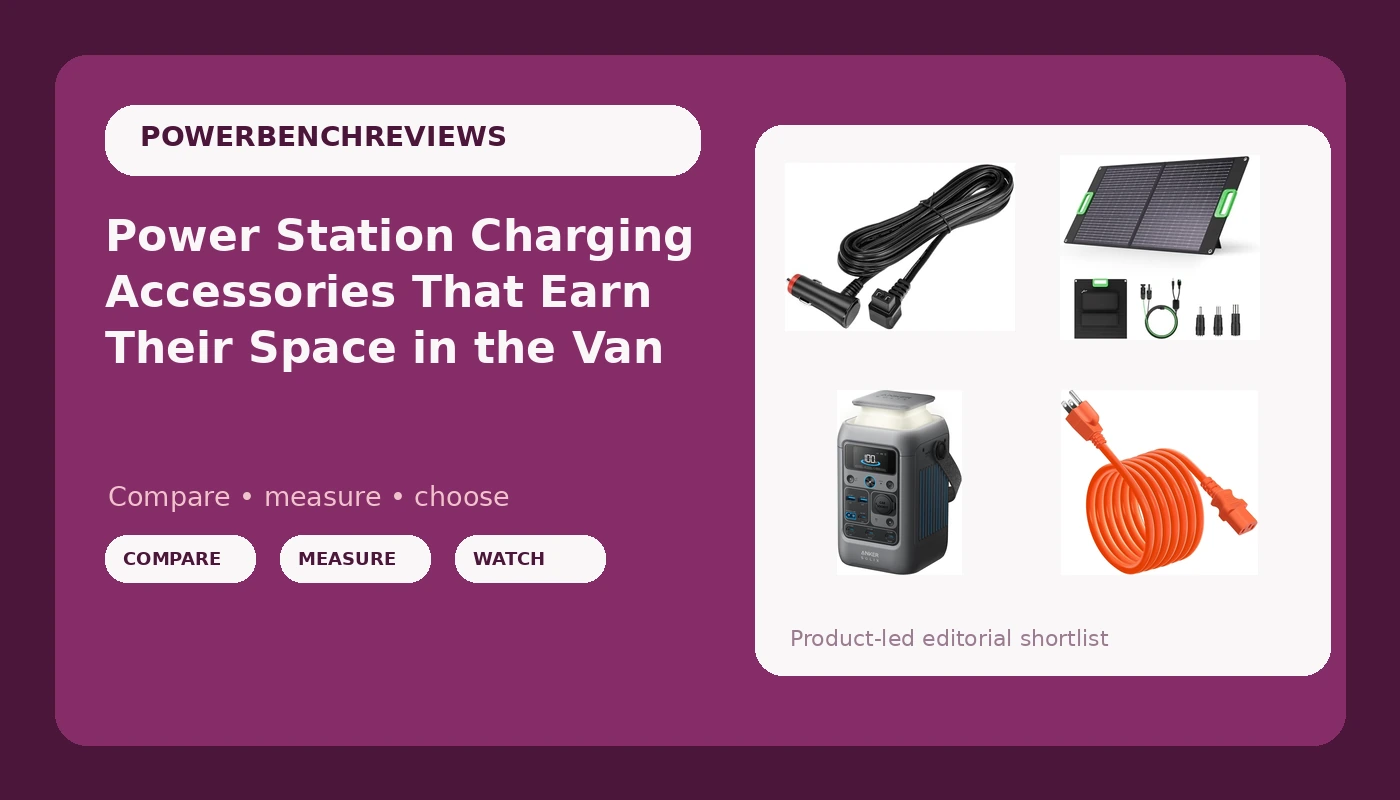
Charging is where most portable power setups quietly fall apart, and it is rarely the battery's fault. A station with plenty of capacity still frustrates people when the 12V fridge cord will not reach, the folding panel delivers a fraction of its label in shade, or the stock AC cable is too short to reach the outlet behind the couch. This guide treats power station charging accessories as a system: one station to anchor it, plus the cords, panels, and vehicle charging hardware that keep it topped up.
The picks below come from listed specifications rather than marketing language. Where a product publishes a watt rating, an amp rating, a length, or an efficiency figure, that number is stated here. Where a number is not published, this article does not guess at it. If you already own a station, the accessories in this list will likely change your daily experience more than any upgrade to the battery itself.
Related: Sizing a Power Station to Your Real Load
Quick answer
The Anker SOLIX C300 DC Portable Power Station, 288Wh, 300W, Outdoor Camping is the strongest fit for van trips and weekend camping because it pairs a 288Wh battery with a 300W output rating in a size that suits lights, phones, cameras, and small fans. Choose the Jackery DC-DC Charger, 600W Alternator Charger instead when your priority is replenishing a station from the vehicle's charging system while you drive.
Power station charging accessories worth comparing
Five items, five different jobs: one station to anchor the kit, one alternator charger, one 12V refrigerator cord, one folding solar panel, and one heavy-duty AC cable.
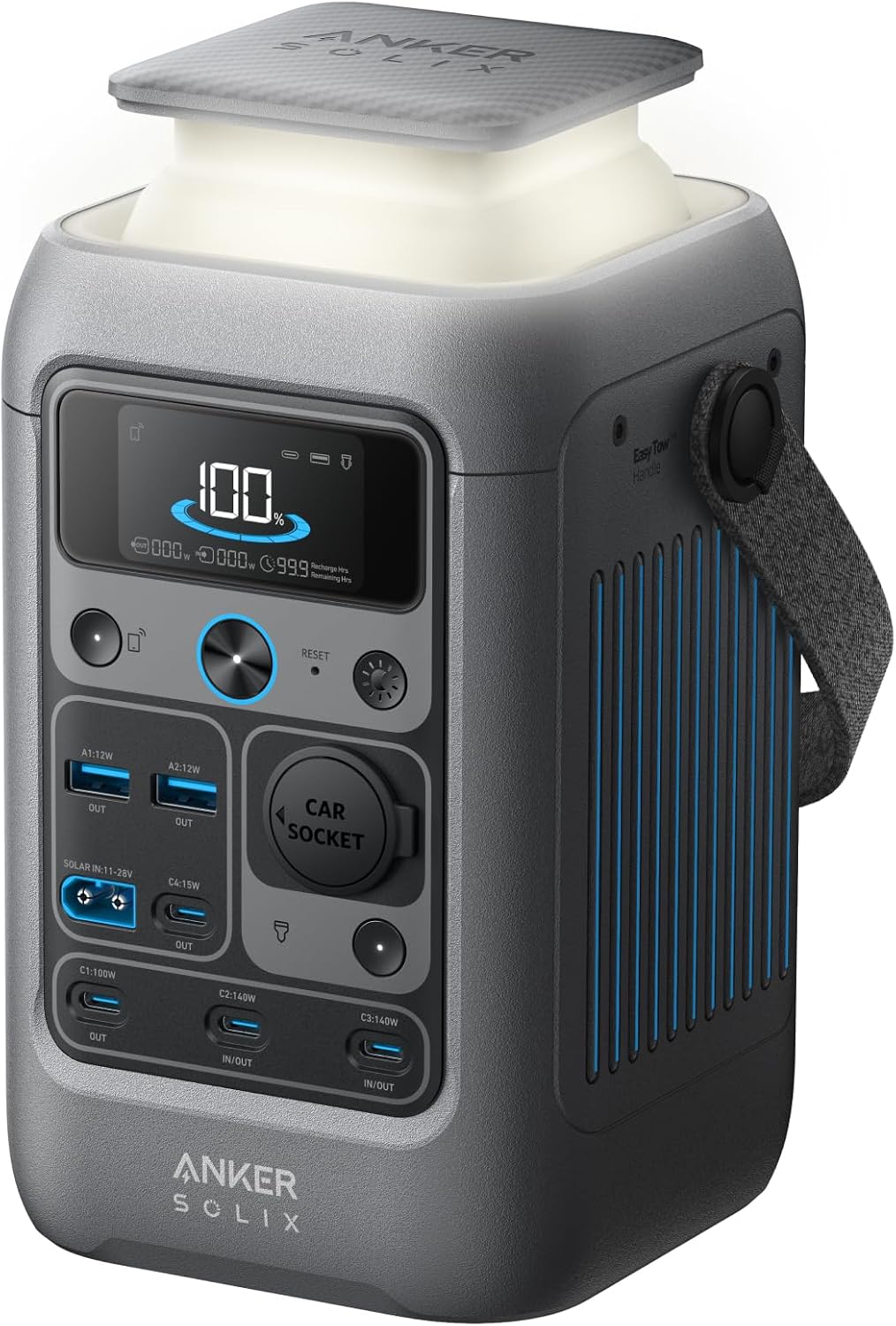
Anker SOLIX C300 DC Portable Power Station, 288Wh, 300W, Outdoor Camping
A 288Wh portable power station rated at 300W and built for camping and van use. It is the anchor of this kit, and everything else on the list exists to keep it charged from the wall, the sun, or the vehicle.
Visit on Amazon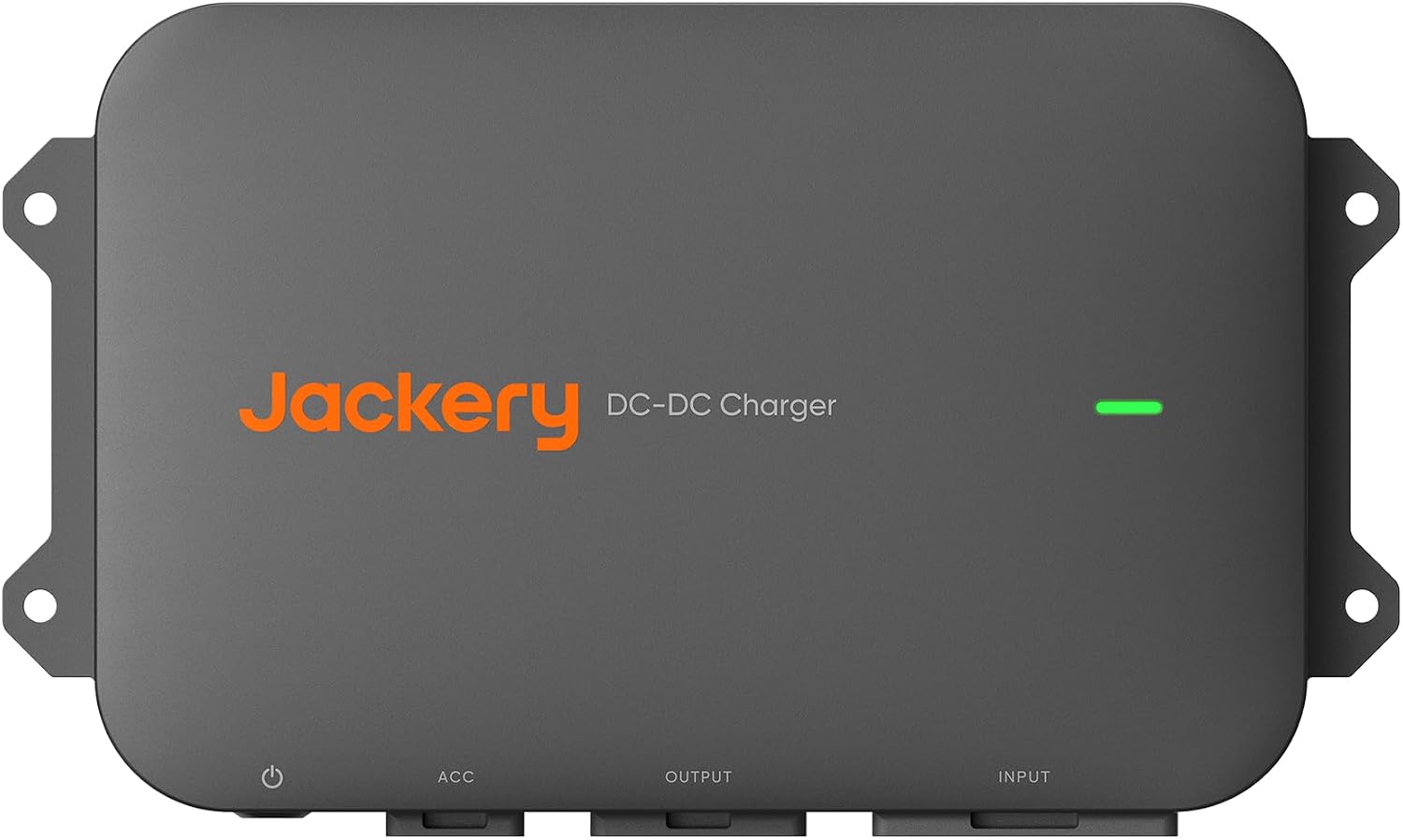
Jackery DC-DC Charger, 600W Alternator Charger
A 600W DC-DC alternator charger that refills a power station from a vehicle's charging system while the engine runs, which matters on long drives where no wall outlet is available.
Visit on Amazon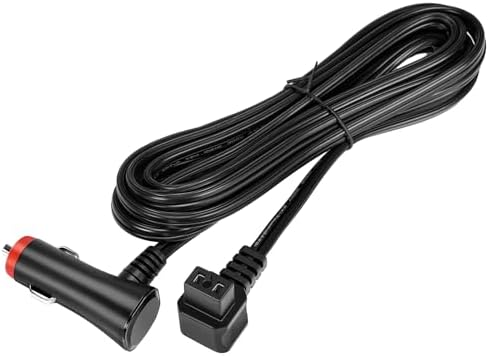
BougeRV 12V/24V DC Power Cord for 12V Car Refrigerator, Fits Most Brands
A 12V/24V DC power cord made for 12V car refrigerators and listed as fitting most brands, useful for running a fridge from a vehicle outlet or a station's DC port.
Visit on Amazon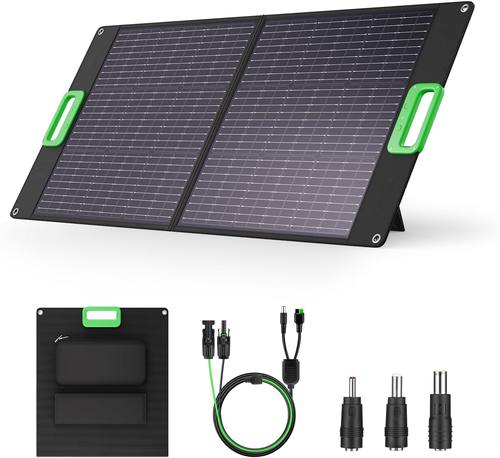
100W Portable Solar Panel for Power Station Generator 23.5% High Efficiency
Check current Amazon price
A folding 100W portable solar panel with a listed 23.5% cell efficiency, sized for topping up a power station generator during longer stays away from outlets.
Visit on Amazon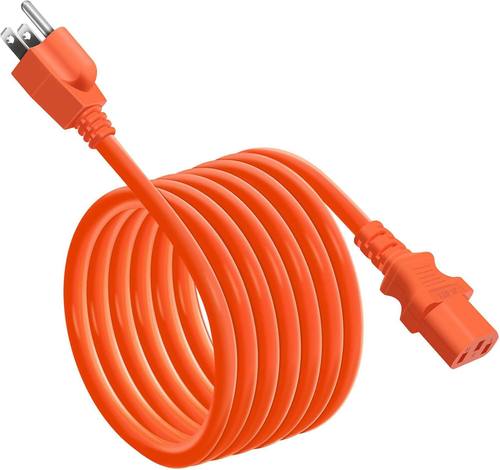
YEZriler 2M/6.6FT Heavy-Duty Charging Cable for Jackery Power Station Explorer 3000/2000/1500/1000, Ecoflow Delta/River/Series, Bluetti EB3A, Anker 757/767, 125Volt 15Amps AC Power Cord - Orange
A 6.6 ft heavy-duty AC power cord rated 125V at 15A and listed for Jackery Explorer, EcoFlow Delta and River, Bluetti EB3A, and Anker 757 and 767 class stations.
Visit on AmazonPrices and availability may change. Check the retailer for current details.
How these products were compared
This guide compares connector type and fit, charging path (wall AC, solar DC, or vehicle alternator), listed watt and amp ratings, stated cable length and rating, and how each item fits into a small station kit. Product names, images, and retailer links are matched by product code so that every card points to the product shown.
Nothing in this roundup is presented as a measured bench result. The figures quoted are the ones each product publishes, and the guidance is built around how those published numbers interact with each other. Where a specification is missing from a listing, the article says so rather than filling the gap with an estimate.
How to choose the right power station charging accessory
Start with connectors, not wattage. DC power paths in this category are not standardized. Barrel plugs, SAE connectors, XT60, and Anderson-style plugs all appear on stations and on 12V appliances, and a cord that fits one refrigerator may not fit the next. The BougeRV cord is listed as a 12V/24V DC cord that fits most car refrigerator brands, which is a useful starting point, but the smart move is to check the physical plug on your fridge against the port on your station before you buy anything.
Next, decide which charging path you actually use. Wall AC, solar DC, and vehicle charging solve different problems. A heavy-duty AC cord such as the YEZriler cable addresses the wall path, giving you 6.6 ft of reach at a listed 125V and 15A rating instead of the short stock cable that ships in the box. The Jackery alternator charger addresses the driving path, pulling from the vehicle while the engine runs. The folding 100W panel addresses the stationary path, for campsites and job sites where the van sits still for a day or two. Most people overspend on solar and underspend on the cord that reaches the outlet.
Match the accessory's rating to the station's input limit. A 600W alternator charger does not push 600W into every station; the station's own DC input ceiling decides what actually flows. The same logic applies on the solar side. A 100W panel only helps if the station's solar input can accept that much, and a station with a lower input cap will simply leave panel capacity on the table. Buy the accessory that matches the station you own, not the biggest number on the page.
Pay attention to length and rating on the AC side. Cable length is the specification people ignore until they are crouched behind a couch with an extension cord. The YEZriler cable lists 2M, or 6.6 ft, which is enough to move a station off the floor and out of a walkway. Its 125V 15A rating is the standard household circuit figure in North America, so it matches a normal wall outlet rather than a 240V circuit.
If you are still deciding how much station you need in the first place, read our guide to Sizing a Power Station to Your Real Load before you buy accessories for a unit that is already the wrong size. Accessories are cheap compared to a second battery.
Anker SOLIX C300 DC Portable Power Station, 288Wh, 300W, Outdoor Camping
The Anker SOLIX C300 DC is the one complete station in this roundup, and it is the reason the other four items have something to connect to. Its listed figures are 288Wh of capacity and a 300W output rating, packaged for outdoor camping. That combination points at a specific kind of buyer: someone running LED lighting, phone and camera charging, a laptop, a small fan, and a router or two through an evening.
The trade-off is capacity, and it is worth being blunt about it. At 288Wh, this is not a station for running a refrigerator overnight, a microwave, or a space heater. If those loads are on your list, you need a larger class of unit, and the accessories in this guide become more important rather than less, because a bigger battery takes longer to refill. Pair the C300 DC with the alternator charger for drive days and the folding panel for stationary days, and the small battery stops being a limitation.
Alternatives to consider
The Jackery DC-DC Charger, 600W Alternator Charger is better suited to van owners and road trippers who want the vehicle doing the charging work, while the BougeRV 12V/24V DC Power Cord for 12V Car Refrigerator, Fits Most Brands is a stronger fit when the goal is running a 12V fridge from a vehicle outlet or a station's DC port rather than adding capacity.
The 100W Portable Solar Panel for Power Station Generator 23.5% High Efficiency, the YEZriler 2M/6.6FT Heavy-Duty Charging Cable, and the Jackery DC-DC Charger, 600W Alternator Charger cover the three charging paths separately: sun, wall, and alternator. The panel handles long stationary stays, the AC cord fixes the reach problem at home or in a rental, and the alternator charger turns driving time into stored watt-hours.
Day-to-day use and maintenance
Coil cables loosely rather than wrapping them tight around a corner. Tight bends are what kill the conductor inside a heavy AC cord over a season of van life. Keep connectors clean and dry, and check the DC plugs on the refrigerator cord periodically, because a partially seated 12V plug is a common source of a fridge that "stopped working" when nothing was actually broken.
Store the folding panel flat and out of the sun when it is not in use, and wipe the cells with a soft damp cloth rather than a solvent. Nameplate solar ratings are measured under standard test conditions, so real output will vary with angle, cloud cover, and shade. Set expectations accordingly and treat the panel as a top-up source rather than a full recharge plan.
For the station itself, follow the manufacturer's storage guidance on charge level and temperature range, and do not leave it plugged into a wall outlet indefinitely unless the manual specifically supports that use. Check the alternator charger installation against the vehicle manufacturer's guidance for your specific 12V system, and confirm the fuse and wire sizing before you connect anything permanently.
Buying checklist
- Measure the distance from your station to the outlet or vehicle port before choosing a cable length.
- Choose the watt rating based on your normal load rather than an occasional edge case.
- Confirm that the exact model includes the connector type your station uses.
- Read the manufacturer's care, storage, and installation instructions.
- Verify the current retailer price, availability, and return terms.
Final recommendation
Choose the Anker SOLIX C300 DC Portable Power Station, 288Wh, 300W, Outdoor Camping when you want a compact station for small loads on camping and van trips, then build the charging side around it with the Jackery DC-DC Charger, 600W Alternator Charger for drive days and the folding 100W Portable Solar Panel for days when the vehicle sits still. Choose the alternator charger as your first purchase instead if you already own a station and your only real complaint is how slowly it refills on the road. Pick up the YEZriler 2M/6.6FT Heavy-Duty Charging Cable if reach at the wall is the problem, and the BougeRV 12V/24V DC Power Cord if a 12V refrigerator is part of your setup. None of these items fixes a station that is the wrong size for the load, so settle that question first.