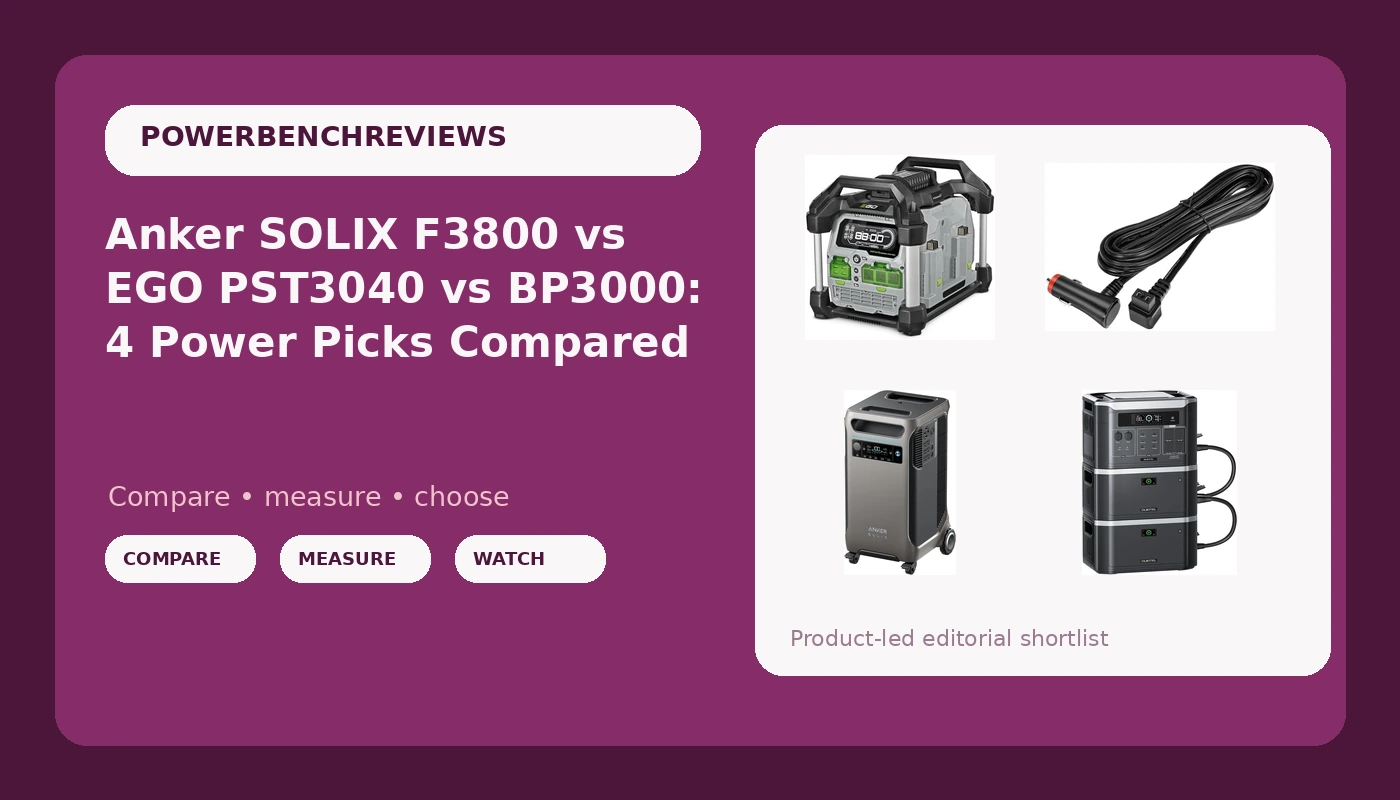
I have been an electrician and a small-scale solar installer for over a decade in a mountain town where the grid drops for days every wildfire season, and the questions at the counter are always the same three: how big, how heavy, and will it run the freezer. This portable power station comparison covers four items on my current bench list, and they are not four versions of the same product. Two are full-size backup boxes, one is a battery-less inverter shell built for people already invested in a tool ecosystem, and one is a short DC cord that quietly decides whether your 12V fridge survives the night.
The short answer: if you want the most battery capacity and the most AC output in one box, the Anker SOLIX F3800 is the one to beat here. If you already own EGO 56V batteries, the POWER+ PST3040 changes the math entirely. The BP3000 sits in the middle as a 3200W-class unit, and the BougeRV DC cord is the cheap accessory that makes any of them more useful in a vehicle.
A note on how this page works: every link goes to the product's Amazon listing, and I do not print prices because they move weekly and a stale number is worse than no number. Check current Amazon price at the link for the unit you are considering.
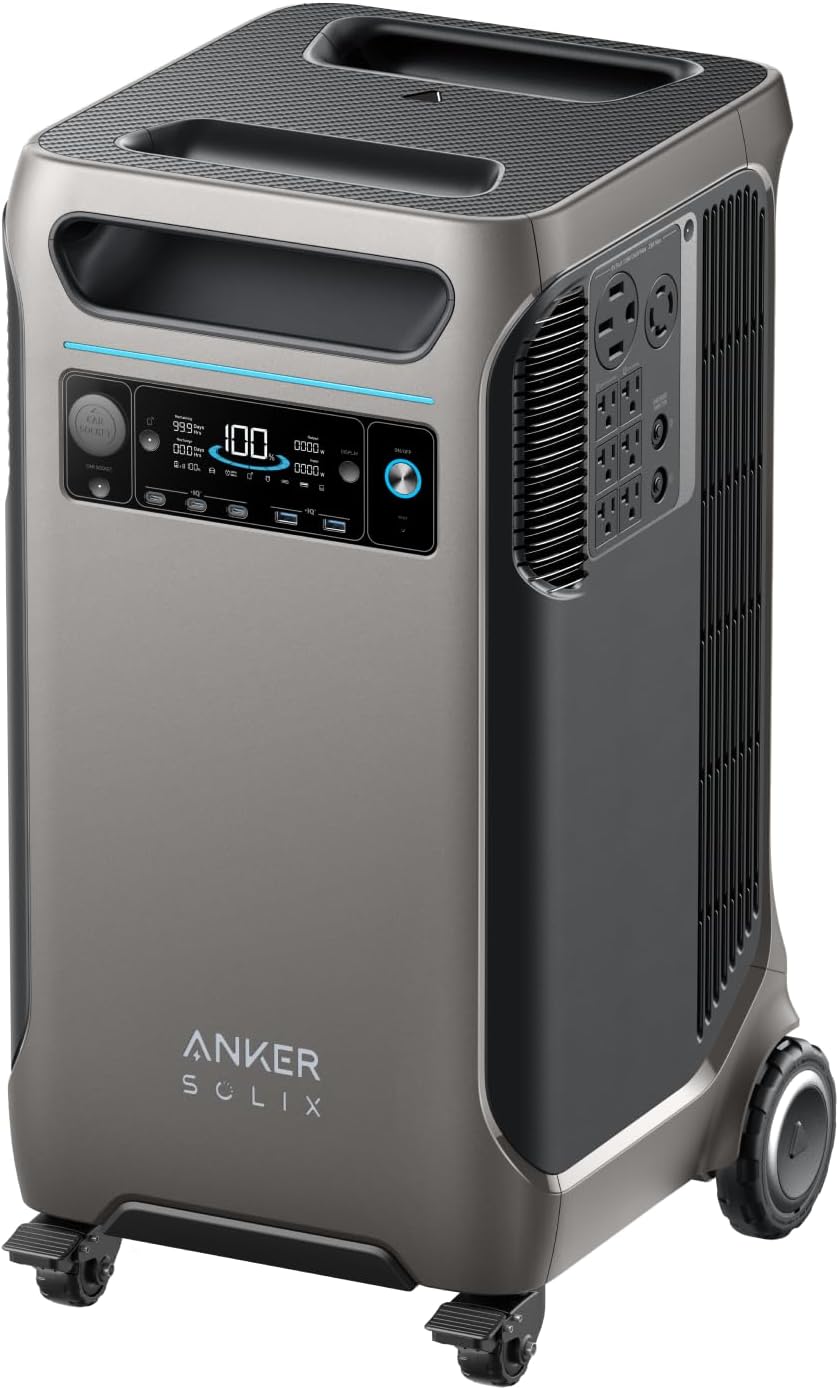
Anker SOLIX F3800 Portable Power Station, 3840Wh, LiFePO4, 6000W AC, 120V/240V (Renewed)
Biggest battery here at 3840Wh, LiFePO4 chemistry, and true 240V output that can feed a well pump or a subpanel circuit
Sold as Renewed, so battery health and warranty handling depend on the seller; it is also the heaviest box in this group
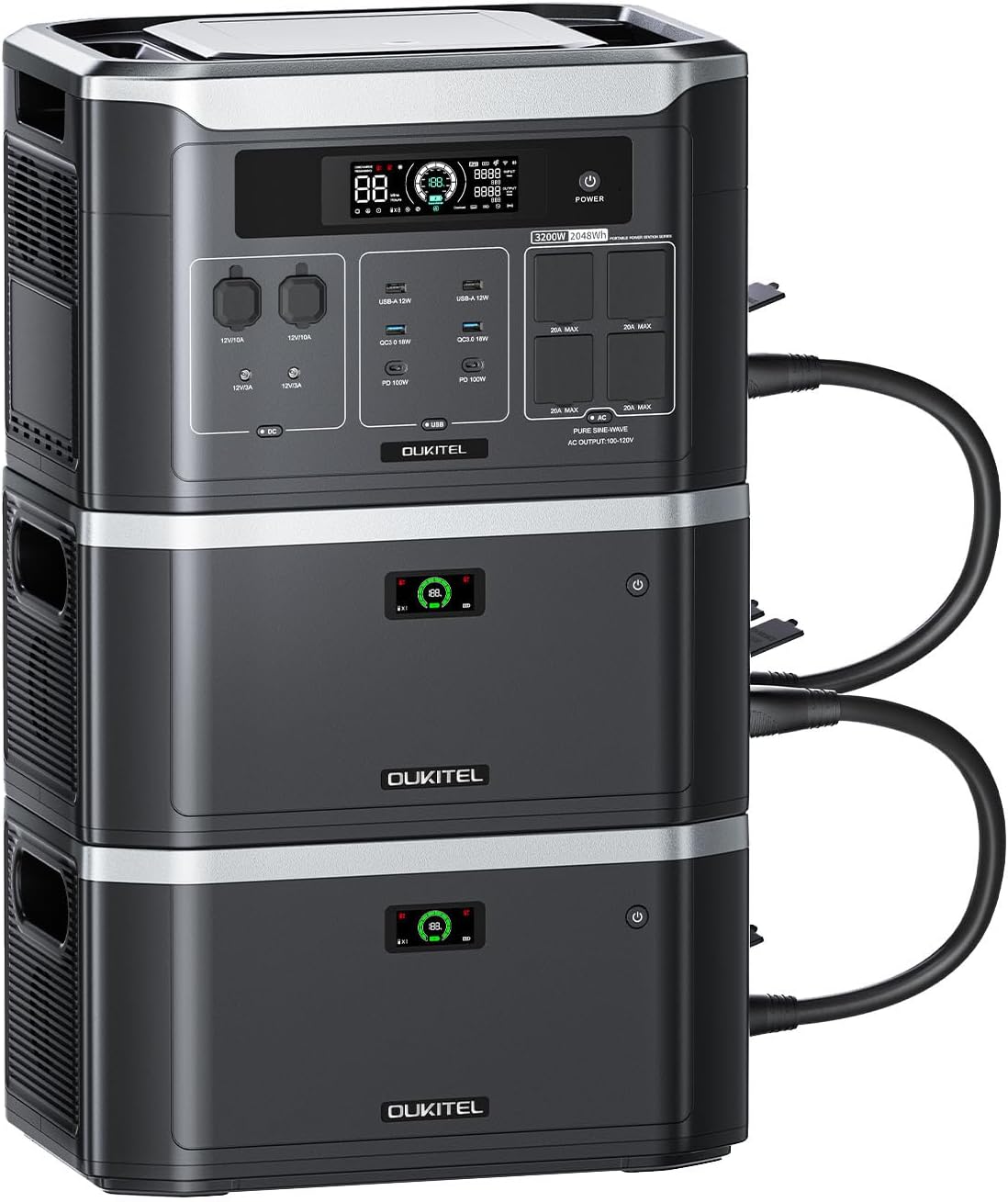
BP3000 3200W Solar Generator Portable Power Station
3200W of AC output puts it in the same working class as the other two, in a package that is easier to move
The listing name never states the battery chemistry or the watt-hour capacity, and those are the two numbers that matter most
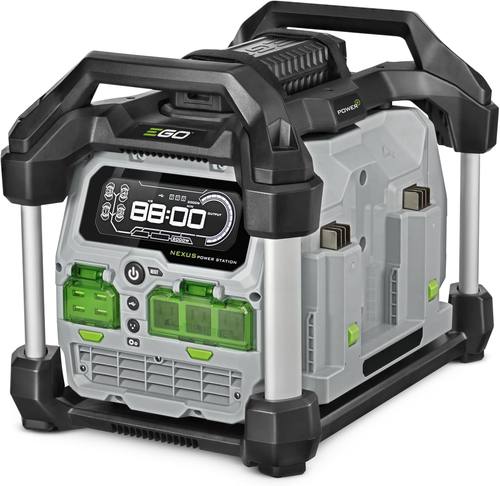
EGO POWER+ Portable Power Station, 3000W, Inverter Generator (Battery and Charger Not Included) - PST3040
If you already run EGO 56V packs, you are buying the inverter box only, which is the cheapest way into this output class
No battery, no charger. Buy it cold and you are shopping for both, and the runtime is whatever packs you happen to own
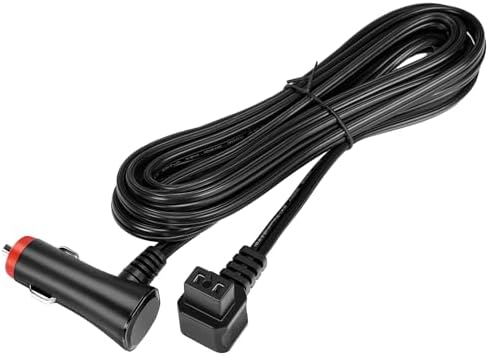
BougeRV 12V/24V DC Power Cord for 12V Car Refrigerator, Fits Most Brands
The least expensive item here and the one that turns a station's DC output into overnight fridge runtime instead of a dead battery
It only does one job, and only if the connector matches both your fridge and your station's 12V outlet
Prices and availability were captured from Amazon Creators API and may change.
How I read these spec sheets
Three of these four items are measured in watts, and watts are the least useful number on the box. Watts tell you what the inverter can push out at one instant. Watt-hours tell you how long it can keep pushing. The Anker listing gives you both (3840Wh and 6000W). The BP3000 listing gives you the watts (3200W) and leaves the capacity for you to chase down. The EGO listing gives you the watts (3000W) and then hands you the capacity problem in the form of "battery not included."
That asymmetry is the whole story of this comparison. The marketing is always loudest about the surge number, and the number that decides whether your night goes well is always the quiet one.
Anker SOLIX F3800 (Renewed): the capacity play
The SOLIX F3800 is the only unit in this group that advertises its battery chemistry in the product name, and it is the right chemistry. LiFePO4 is what I want in anything that lives in a garage or a van, because it holds up to far more charge cycles and far more abuse than the older lithium chemistries, and it does not care much about being left at partial charge. That is the difference between a station you use for five years and a station you use for fifteen.
The headline numbers are 3840Wh and 6000W of AC output, with both 120V and 240V available. The 240V part is the detail most people skim past. A 120V-only station cannot feed a 240V well pump, a dryer, or a subpanel feed, no matter how many watt-hours are in the box. If your outage plan involves the water system, 240V output is not a luxury, it is the requirement, and this is the unit in this group that offers it.
The trade-off is in the parentheses. This listing is for a Renewed unit. That usually means a returned or refurbished station that has been checked and repackaged, and it can be a genuinely good deal, but the condition and the warranty terms come from the seller rather than the original retail channel. Before you buy, read what the listing says about battery health, cycle count, and return window, and confirm who honors the warranty. A Renewed flagship is a value play only if the paperwork is clear.
BP3000 3200W: the middleweight with a blank line
The BP3000 is named for its output class, 3200W, and that number puts it shoulder to shoulder with the other two stations here. For a lot of household loads, that is plenty: a fridge, a freezer, a furnace blower, a router, some lights, a laptop, and a phone charger can all run at once inside that budget with room left over.
The problem is what the name does not say. There is no watt-hour figure and no chemistry in the listing title, and those are exactly the two numbers I would want before spending flagship money. Watt-hours set your runtime, and chemistry sets your lifespan and your tolerance for being stored at 40 percent for a winter.
So treat the BP3000 as a unit that requires one extra step before you commit. Read the full listing for the battery capacity in watt-hours, the cell chemistry, the continuous output rating (not just the peak), and the AC output waveform. If the listing gives you pure sine wave, a LiFePO4 pack, and a capacity in the 3kWh range, it is a serious competitor at a lighter weight than the Anker. If any of those answers is missing, that silence is the answer.
EGO POWER+ PST3040: the ecosystem buy
This is the most interesting listing in the group and the easiest one to misjudge. The PST3040 is a 3000W inverter box that runs on EGO's 56V batteries, and it ships with no battery and no charger. Read that again before you compare it to the others on price, because you are not comparing the same purchase. You are comparing an inverter to a complete station.
If you already own EGO yard tools, this is a genuinely smart piece of kit. You own the expensive part already. The packs you use in the mower and the trimmer become your outage reserve, and you can add capacity by buying more packs over time instead of replacing a sealed battery you cannot service. That is a real advantage, and it is the kind of modular thinking I wish more brands would copy.
If you do not own EGO batteries, the math flips hard. You are now buying a 3000W inverter plus enough 56V packs to run your loads for a meaningful stretch, and the total can sail past what a self-contained station costs. Runtime is also entirely on you to calculate, because it depends on how many packs you slot in. Two packs and a fridge is a different night than six packs and a fridge.
The honest verdict: this is a great second power station and a questionable first one.
BougeRV 12V/24V DC cord: the twenty dollar question
Every one of the stations above has a 12V DC output, and almost nobody uses it well. The BougeRV cord is the adapter that lets a 12V car fridge run straight off that port instead of off the inverter.
That matters more than it sounds. Running a fridge through the AC outlet means the station inverts DC to AC, the fridge's power brick converts it right back to DC, and you lose a slice of your battery to heat at both conversions. Going DC to DC skips both conversions. Same fridge, same battery, longer runtime, and one less fan spinning.
The catch is compatibility, and it is a real one. "Fits most brands" is doing a lot of work in that title. Before you buy, check three things: the connector on your fridge, the connector on your station's 12V port, and whether your setup is 12V or 24V. This cord handles both voltages, but it cannot fix a mismatched plug.
Doing the load math before you spend
Here is the arithmetic I run for anyone standing at my counter. Take the watt-hour rating, cut it to 80 percent to respect the battery, and divide by your average draw.
The Anker's 3840Wh at 80 percent gives you roughly 3,070Wh of usable energy. A modern 12V fridge pulling about 60W at a 50 percent duty cycle averages around 30W, so that is on the order of 100 hours of fridge runtime before you touch anything else. Add a furnace blower cycling at 400W and the same pack gives you a very different, much shorter night. The battery did not change. The load did.
This is why I keep saying watt-hours over watts. A 6000W inverter that empties in twenty minutes is not more useful than a 3000W inverter that runs all night. Size to the load you actually have, then add margin for the load you forgot about, which is always the freezer.
Renewed, bare, or self-contained
The three stations here represent three buying philosophies. The Anker is a self-contained flagship sold as Renewed, so you get the biggest capacity and the lowest price relative to new, in exchange for doing a little homework on the seller. The BP3000 is a self-contained unit that asks you to verify its core specs yourself. The EGO is a bare inverter that assumes you already own the battery platform.
None of those is wrong. They just suit different buyers. If you want one box, one purchase, and a clear answer, the self-contained route is for you. If you are already three EGO batteries deep, pretending the bare unit is a bad deal would be dishonest.
Who should buy which
Buy the Anker SOLIX F3800 if you need real capacity, LiFePO4 longevity, and 240V output, and you are comfortable reading Renewed terms carefully. It is the most capable box in this comparison on paper.
Buy the BP3000 if you want 3200W of output in a lighter package and you are willing to confirm the capacity and chemistry in the full listing before you commit. Do that step and it earns its place.
Buy the EGO POWER+ PST3040 if you already own EGO 56V batteries and want to turn them into a backup system without buying a sealed battery you cannot expand.
Buy the BougeRV cord with whichever station you pick, if you run a 12V fridge. It is the smallest line item on this page and the one most likely to save your weekend.
What I would verify before clicking buy
Four things, every time. The watt-hour capacity, not just the wattage. The battery chemistry, and whether it is LiFePO4. The continuous output rating, as distinct from the peak surge number. And the AC waveform, which should be pure sine wave if anything with a motor or a sensitive board is going to plug into it.
Get those four answers in writing from the listing, and you will not be surprised by what shows up at the door. Skip them, and you will be back at my counter asking why the freezer did not make it through the night.