I have lived in Salida, Colorado long enough to know the grid does not fail on a schedule. Wildfire season takes it out for three hours or for three days, and the difference between those two numbers is what you buy in June, not what you buy when the smoke is already sitting on the ridge. I spent 12 years as an electrician before I moved into solar installs and gear reviews full time, and I still keep a Kill A Watt meter and a paper logbook on the bench. So when someone asks me about a portable power station vs generator, I do not answer with a brand name. I answer with a load list. This comparison covers the four pieces of backup gear I get asked about most: the Anker SOLIX S2000, the Honda EU2200i, the DOKIO 200W folding kit, and the OYMSAE 30W trickle charger.
Related: Watt-Hours vs Watts: How To Size A Power Station
For most households, the Anker SOLIX S2000 is the right first purchase, because 2,010 watt-hours of stored energy covers a fridge, a router, some lights, and a laptop for about a day with no fuel, no noise, and no carbon monoxide. The Honda EU2200i wins when an outage runs past a day and you can keep feeding it gasoline. The DOKIO kit only makes sense if you already own a station with a solar input, and the OYMSAE maintainer is for a battery that sits in storage, not for a power station.
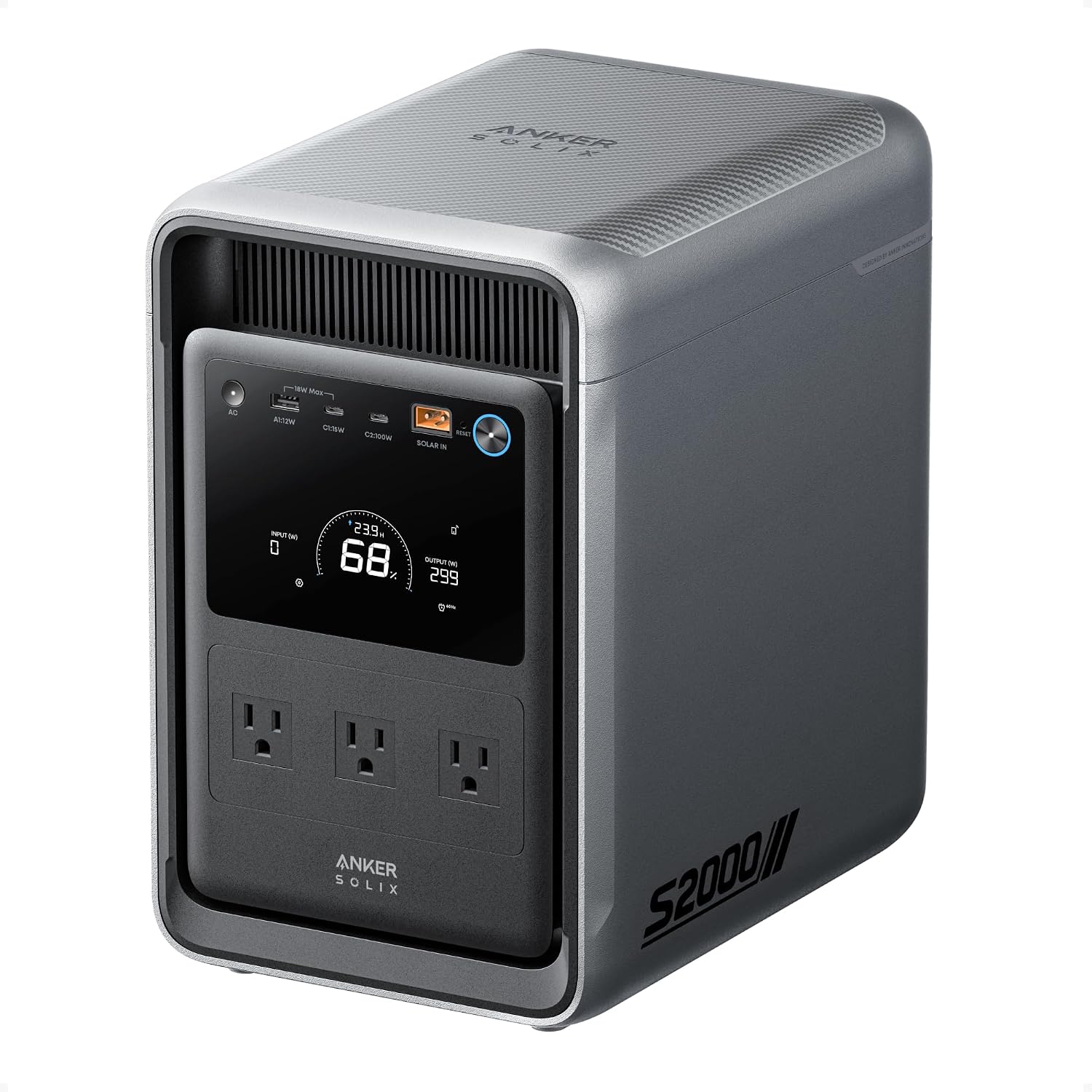
Anker SOLIX S2000 Portable Power Station, 2,010Wh, 3,000W Peak, Home Backup
Stores 2,010Wh behind a 3,000W peak inverter, silent, no fuel, safe to run indoors
It is a battery, not a power plant; heavy loads drain it and you cannot refuel it
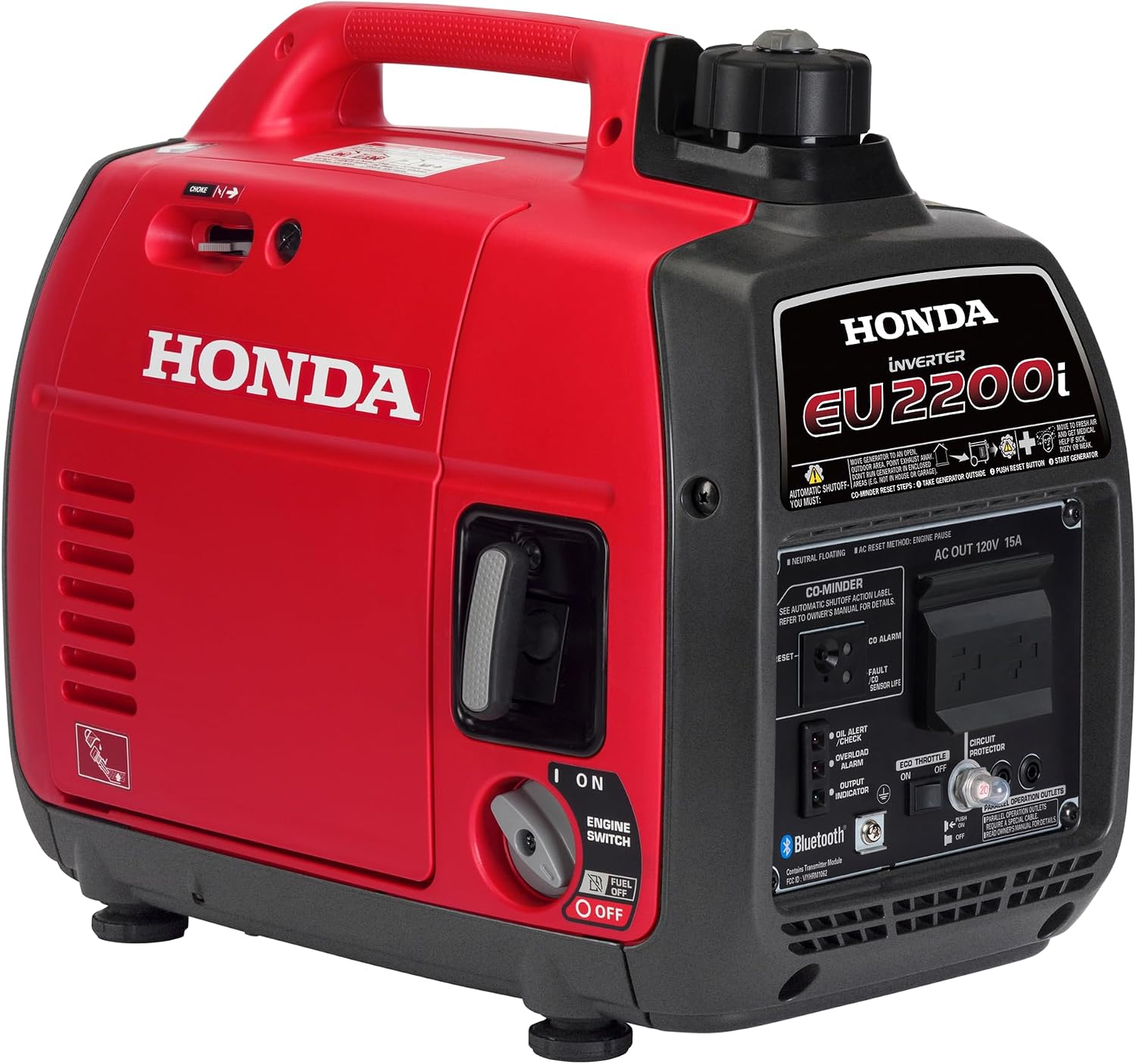
Honda EU2200i 2200 Watt Inverter Generator (EU2200ITAN)
2,200 watts of continuous output you can refuel in minutes, with service parts everywhere
Gasoline, noise, carbon monoxide, maintenance, and it has to run outdoors
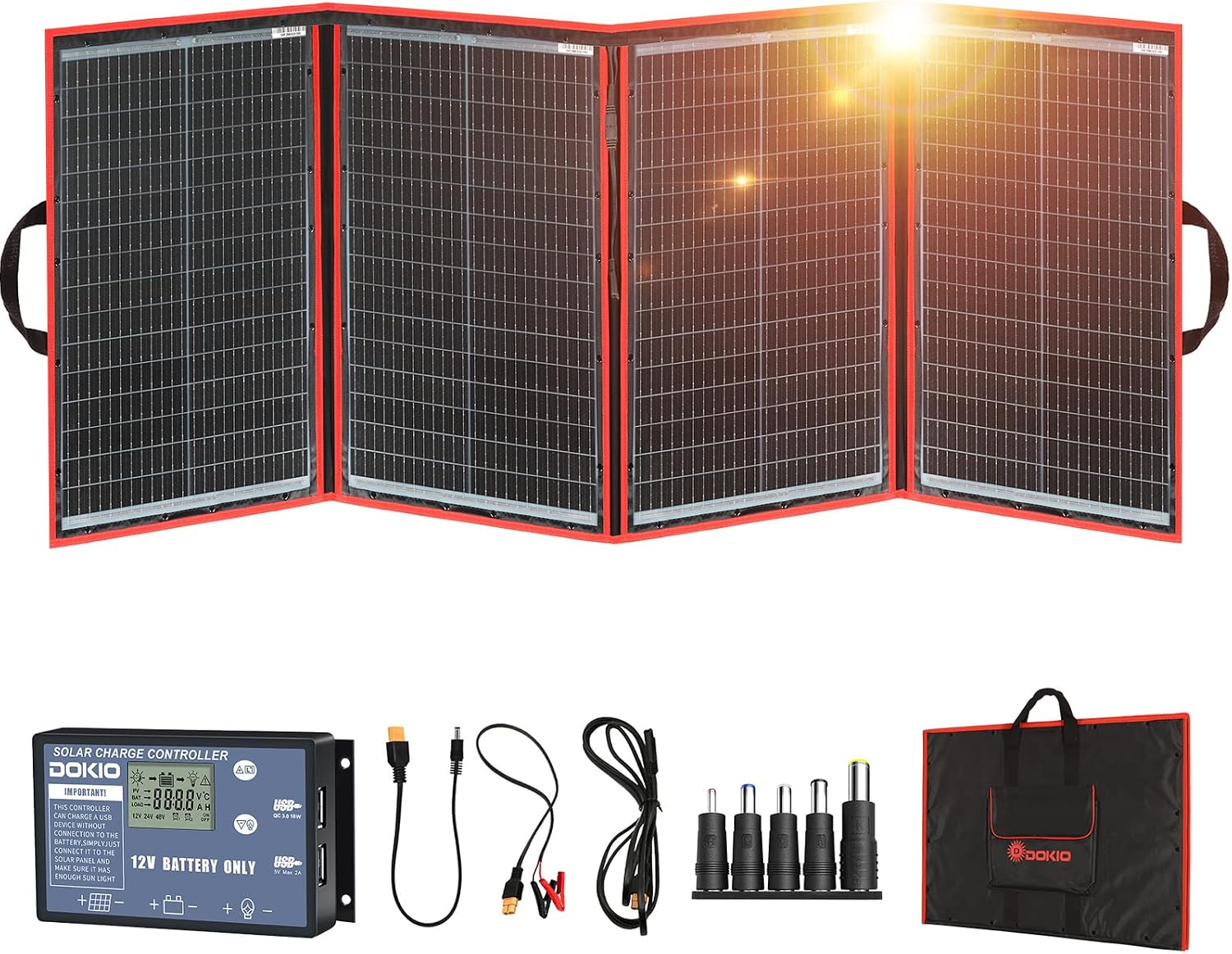
DOKIO 200W Portable Foldable Solar Panel Kit with Charge Controller
Folds flat, includes a charge controller, extends any station that accepts an external panel
Panels are the weakest link in watts per dollar and output depends on sun and angle
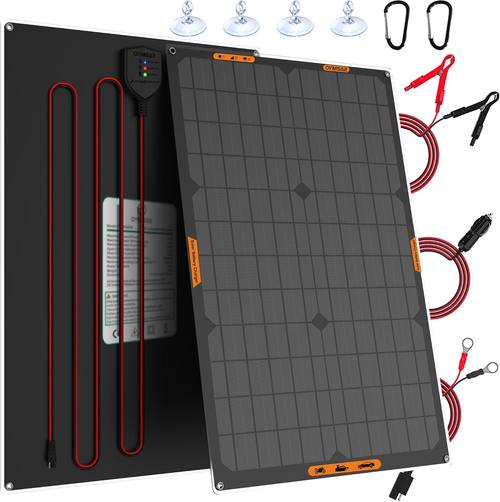
OYMSAE 30W 12V Portable Waterproof Solar Panel Trickle Charger & Maintainer
Waterproof, small, and the cheapest way to keep a stored 12V battery topped up
30W is a maintainer, not a charger; it will never refill a power station
Prices and availability were captured from Amazon Creators API and may change.
Start with the load math, not the product
Every buying mistake I see starts the same way. Someone buys a 2,000Wh station to charge a phone, or buys a 300Wh station to run a space heater, and then they blame the brand. Size to the real load.
Here is the arithmetic I run before I recommend anything. A typical kitchen fridge draws somewhere in the range of 100 to 200 watts while the compressor is running, and it cycles on and off, so call it roughly 1.5 to 2 kWh over a hot day. Add a modem and router at about 15 watts, four LED lights at about 10 watts each, and a laptop at 60 watts. That is a realistic outage list, and it lands near 2 kWh per day. The Anker SOLIX S2000 stores 2,010 watt-hours, which is about one honest day on that list before you recharge anything.
Now swap in a 1,500 watt space heater. At that draw, 2,010 watt-hours is gone in a little over an hour. That is not a knock on the station; it is just what the math says. Watt-hours divided by watts gives you hours, and no marketing department can argue with division.
The Honda side of the ledger works differently. A generator does not store energy, it converts fuel into watts as long as you keep pouring. That is the whole comparison in one sentence: a power station is a bucket, a generator is a hose.
The Anker SOLIX S2000: the quiet default
The SOLIX S2000 is the one I would hand to a neighbor who has never owned backup power. It carries 2,010 watt-hours and a 3,000 watt peak inverter, which is enough headroom to start a fridge compressor without tripping the unit. Peak ratings are not the same as sustained ratings, and that distinction matters, so read the continuous figure on the listing before you plan a load around it.
What it does better than anything else in this comparison is disappear. No fuel to store, no oil to change, no exhaust, no pull cord at 2 a.m. in the snow. You can run it in a bedroom. It passes through to the wall when the grid is up, so the fridge never notices the switch. For a mountain town where the outage is usually measured in hours, that combination is hard to beat.
The honest limits: it is heavy, it cannot be refueled, and every load you add shortens the clock. If the chemistry on the listing is not LiFePO4, walk away and look at a different model. The extra money up front buys charge cycles, not a marketing badge.
If you want to check the current listing, Visit on Amazon.
The Honda EU2200i: the fuel-burning benchmark
The EU2200i is the generator I see on more job sites than any other, and for good reason. It is rated at 2,200 watts, it is an inverter unit, so the output is clean enough for electronics, and Honda dealers stock parts for it in every town with a small engine shop. That last point is not a spec, it is a Tuesday-afternoon advantage.
Where it beats the station is duration. Two thousand watt-hours is a hard ceiling. A generator with a full tank is a rolling ceiling, and you can keep raising it with a gas can. If a wildfire outage stretches to five days and you have a chest freezer full of meat, that is the argument that ends the debate.
Where it loses is everything else. It burns gasoline that you have to store and rotate. It has to run outdoors, away from windows, because carbon monoxide does not care how careful you are. It is loud enough that your neighbors will know your outage schedule. It needs oil checks, a spark arrestor, and an annual carburetor conversation. And it will not sit quietly in a hallway running your internet while you sleep.
If you want to check the current listing, Visit on Amazon.
The DOKIO 200W kit: solar charging with a reality check
The DOKIO 200W kit is a folding panel set with a charge controller included, and it is the most misunderstood product on this page. It is not backup power. It is a way to refill backup power when the sun cooperates.
Two hundred watts of panel is a real number, but it is a nameplate number. Mounted flat on a driveway in September, angled wrong, under a thin cloud layer, you will see a fraction of it. I tell people to plan on half of the rated wattage as a realistic daily average in good conditions, and less in winter when the sun sits low and the days are short. On that assumption, a 200W kit puts roughly 1 kWh back into a station over a decent day. That is meaningful. It is not a generator.
The kit makes sense in two situations. First, you own a station with an external solar input and you want to stretch a multi-day outage without driving for gas. Second, you want a portable panel for a van or a base camp where the alternative is running an engine to charge a battery. Both are good reasons.
The kit does not make sense if you expect it to run a load directly, or if your station uses a proprietary connector that the included controller does not match. Panels are the weakest link in watts per dollar across this entire category, and I say that as someone who owns several.
If you want to check the current listing, Visit on Amazon.
The OYMSAE 30W maintainer: the small job nobody talks about
The OYMSAE unit is a 30W waterproof panel built as a trickle charger and maintainer for 12V batteries. It is not in the same weight class as the other three, and it should not be judged as if it were.
Its job is the one that quietly kills batteries: sitting. The tractor in the shed, the boat on the trailer, the spare battery on the shelf in the garage, the van that gets driven twice a month in winter. A lead acid battery that sits at partial state of charge sulfates and dies early. Thirty watts of panel and a maintainer circuit keeps it topped off for free.
What it will not do is charge a power station. Thirty watts into a 2,010 watt-hour battery is a rounding error, and most stations will not accept a 12V trickle input anyway. Do not buy this thinking it is a solar charger for your SOLIX.
It is cheap insurance for a battery you already own. That is the whole pitch, and it is a good one.
If you want to check the current listing, Visit on Amazon.
Trade-offs the spec sheets hide
Noise. The station is silent. The Honda is not, and no published decibel figure at 7 meters tells you what it sounds like on a porch at midnight. If you have close neighbors, this is the deciding factor.
Fuel and maintenance. Gasoline has a shelf life. It needs stabilizer, rotation, and a safe place to sit that is not your garage wall. The station needs nothing but a wall outlet between outages.
Runtime claims. Any hour figure quoted with zero load math is decoration. Watts times hours equals watt-hours. Ask what the load is before you believe the number.
Connectors. Proprietary solar inputs are the single most annoying thing in this category. If a station will not take a standard MC4 or Anderson connection, you are renting your charging options from one brand.
Peak versus continuous. A 3,000W peak inverter is not a 3,000W inverter. Motor loads like fridge compressors and well pumps pull a surge on startup, and a unit that cannot hold that surge will shut down and leave you debugging at the worst possible time.
Refueling. The station cannot be topped up. The generator can. That single difference decides long outages more often than any spec on the box.
Who should buy which
If you have $700 and one outage a year: buy the Anker SOLIX S2000. It covers the fridge, the router, the lights, and the phones, and it does it without you standing in the cold pulling a cord. Add the DOKIO kit later if you want to extend it.
If you live where outages run past 48 hours: buy the Honda EU2200i. Refueling is the feature that matters, and Honda's service network is the reason to pay for the name.
If you already own a station: buy the DOKIO 200W kit to stretch it, and understand that you are buying days, not kilowatts.
If you have a stored battery that keeps dying: buy the OYMSAE 30W maintainer and forget about it.
If you want both: that is what I run. The station handles the first night quietly, the generator handles day three, and the panels keep the station fed while the generator rests. It is not one product replacing another. It is a layered system.
What I am watching next
Two things. First, prices in the 2kWh class keep sliding, and integrated MPPT is becoming standard rather than a premium feature. When that happens, the gap between a station and a small generator narrows to a question of duration, not capability. Second, watch the used market after every hurricane season. Flooded and abused units show up cheap, and what fails first tells you more about durability than any lab test.
Affiliate disclosure: this page uses Amazon affiliate links. If you buy through one, the site earns a small commission at no extra cost to you. It does not change what I recommend, and every recommendation here starts with the load math, not the price tag.