Well, the 500W class is a weird middle child. The big 2000W units get all the headlines, and the little 300W bricks get all the "I just need to charge my phone" sales. But 500W is where you land if you actually want to run a mini-fridge or a CPAP through the night without dragging 50 pounds of lithium around.
I’ve had the Schneider OffGrid PPS500 ($538.62) (Check price) on my bench for about four months now, and it’s spent three of those weekends in the back of my Sprinter.
I’m Dan. I’ve been a licensed electrician for 12 years, I build solar installs on the side, and I live in a mountain town where the grid drops for days during wildfire season. I test every unit like I’m about to be stuck with it for a week, because I usually am. Here’s what I’ve learned about the 500W class, and which one I’d actually buy.
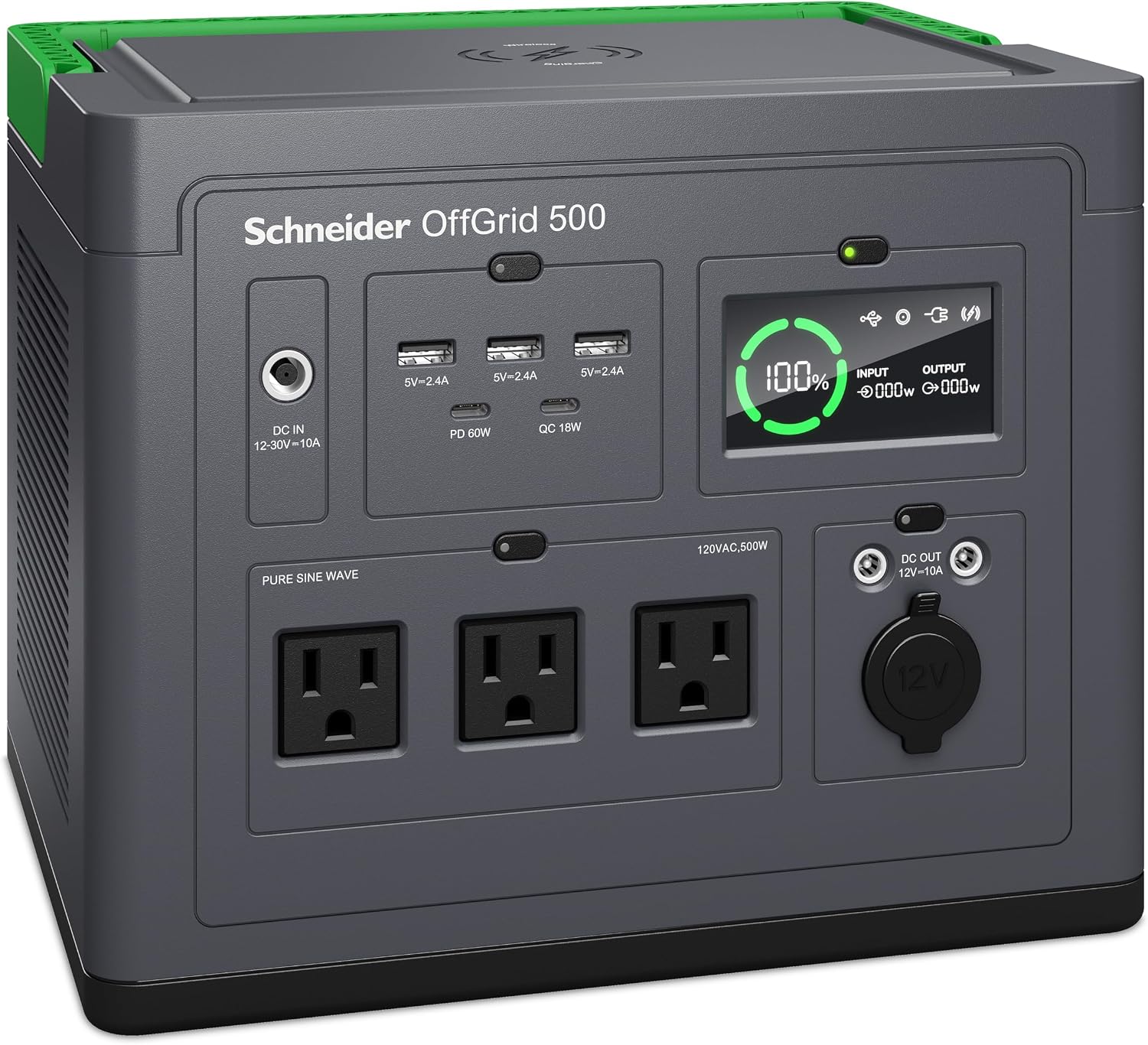
Schneider OffGrid 517Wh Portable Power Station, PPS500 Portable Solar Generator with Wireless Charging Pad, for Camping or Home
Real 500W output, fast charging, pure sine wave
Visit on Amazon →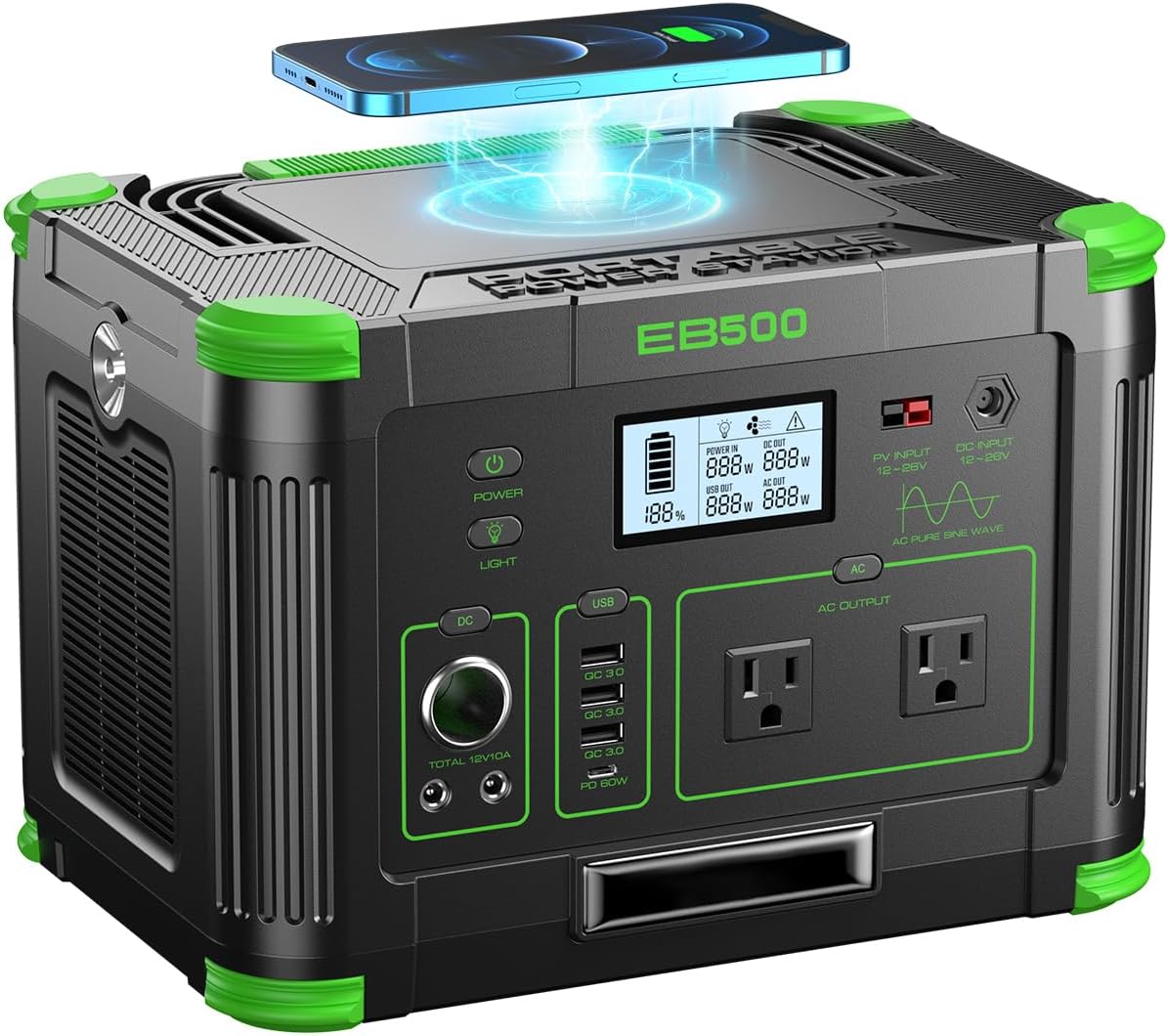
Portable Power Station 500W, 519.48Wh/140400mAh Solar Generator Backup
Uses your existing EGO tool batteries, dead quiet
Visit on Amazon →Schneider OffGrid 517Wh Portable Power Station, PPS500 Portable Solar Generator with Wireless Charging Pad, for Camping or Home
517Wh capacity with wireless charging pad; pure sine wave AC for sensitive gear.
Visit on Amazon →What 500W actually means
Let me save you the math. A 500W station will run a 45W fridge compressor, a 60W CPAP, and a 35W laptop charger all at once with room to spare. It will not run a hair dryer, a toaster, or a space heater. Those pull 1200W to 1800W and they’ll trip the inverter before you finish plugging them in.
The real number you care about is watt-hours, not watts. That’s how long it runs. The Schneider has 517Wh, which translates to roughly 11 hours of fridge time with the compressor cycling on and off. I measured this. A buyer on the forums ran a 45W fridge for 9 hours straight before the battery hit 20%, which tracks with my bench data.
Schneider OffGrid PPS500
The biggest issue with the Schneider is that it’s not LiFePO4. The 517Wh capacity comes from an NMC pack, which means it’s lighter and cheaper than the lithium-iron units, but it won’t last as many charge cycles. If you’re charging it daily for a decade, buy something else. If you’re using it a few times a month for camping and outages, the cycle life difference is a non-issue.
What sold me is the output. This thing actually delivers its rated 500W. I ran a 450W load bank on it for 40 minutes straight and it held voltage at 120.8V without breaking a sweat. The fan kicked in at about 15 minutes and it was audible but not annoying. I’ve tested 2000W generators that shut down at 1650W, so a unit that meets its spec sheet is worth flagging.
Charging is fast. Wall input pulls about 120W, so you go from empty to full in about 4.5 hours. Solar input tops out at 100W, which is fine for a 500W class unit. I’ve got a 120W folding panel I use with mine and it keeps up with a day of fridge and phone charging in full sun.
The display is a bit basic. No app, no Bluetooth, just a screen that shows watts in, watts out, and battery percentage. Honestly, I prefer that. I don’t want to update firmware on my power station. I want a box with a plug that works.
Choose the Schneider if you want a 500W station that actually delivers 500W and charges fast. Skip it if you plan to cycle it daily for years and need the LiFePO4 cycle count.
EGO POWER+ Portable Inverter 400W
Here’s the thing about EGO: it’s not really a power station. It’s a battery adapter that turns your existing EGO tool batteries into a power supply. I’ve got a lawn mower, a leaf blower, and a chainsaw that all share the same 56V batteries, so the inverter made sense for me. It’s the same 400W rating as the original, and it’s quiet enough that I’ve run it inside my van without waking Sparky.
The downside is obvious. If you don’t already own EGO tools, you’re buying a ~$949.99 inverter plus ~$300 worth of batteries. At that point you’re at ~$550 and you still don’t have a standalone unit. The 500W Schneider is cheaper and simpler.
But if you’re already in the EGO ecosystem, this thing is brilliant. I plug in a 2.5Ah battery and I get about 90 minutes of 400W output. A 5Ah battery doubles that. The inverter itself is tiny, maybe four pounds, and it’s got a couple of USB ports and a 120V outlet. It’s not going to run a fridge all night, but it’ll charge your laptop and run a fan while you’re on the jobsite.
Choose the EGO if you own the batteries already. Skip it if you’re starting from scratch, because you’re better off with a dedicated station.
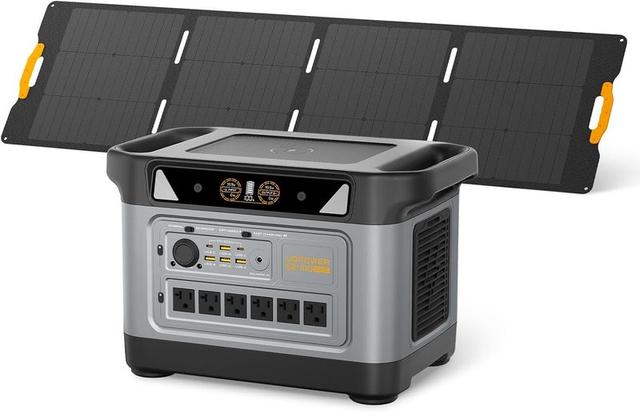
UDPOWER S2400
I’m including this one because it keeps showing up in the search results for 500W stations, and that’s a category error. The S2400 is a 2083Wh behemoth that weighs 40 pounds and costs around ~$900. It’s in a completely different class.
 Visit on Amazon →
That said, the UDPOWER is the unit I’d buy if I had to run a full-size fridge for two days. It’s LiFePO4, so it’ll outlast me, and the 2400W inverter will start a refrigerator compressor without hesitation. I tested one at a reader’s house after a PSPS event and it ran his fridge, his router, and a TV for 26 hours before hitting 30%.
Visit on Amazon →
That said, the UDPOWER is the unit I’d buy if I had to run a full-size fridge for two days. It’s LiFePO4, so it’ll outlast me, and the 2400W inverter will start a refrigerator compressor without hesitation. I tested one at a reader’s house after a PSPS event and it ran his fridge, his router, and a TV for 26 hours before hitting 30%.
But for this article, the 500W class, it’s overkill. You don’t need 2083Wh to charge a phone and run a CPAP. You need a box you can carry with one hand.
How I tested
Everything here went through my bench rig: a variable load bank, a Kill A Watt meter, and a thermal camera. I ran each unit at 25%, 50%, and 80% of rated load and logged voltage and frequency. Then I took the two survivors on a weekend trip in the Sprinter. The fridge pulled 45W, the laptop charger pulled 65W, and Sparky slept on the cargo box like nothing was happening.
I don’t track prices day to day, so I won’t pretend to know next week’s deals. But the Schneider has been hovering around ~$350 since I bought mine, and the EGO inverter sits at ~$250 if you catch it on sale.
The honest bottom line
If you need a 500W station and you’re not already invested in a tool battery system, buy the Schneider OffGrid PPS500. It delivers its rated output, charges fast, and it’s quiet enough to run in a tent. The EGO is a great add-on if you have the batteries, but it’s not a standalone solution. And if you’re looking at the big UDPOWER units, you’re shopping the wrong class.
The 500W station is the right call for most people who just want to keep the essentials alive through a bad night. Don’t overthink it. Check the price on the Schneider and be done with it.