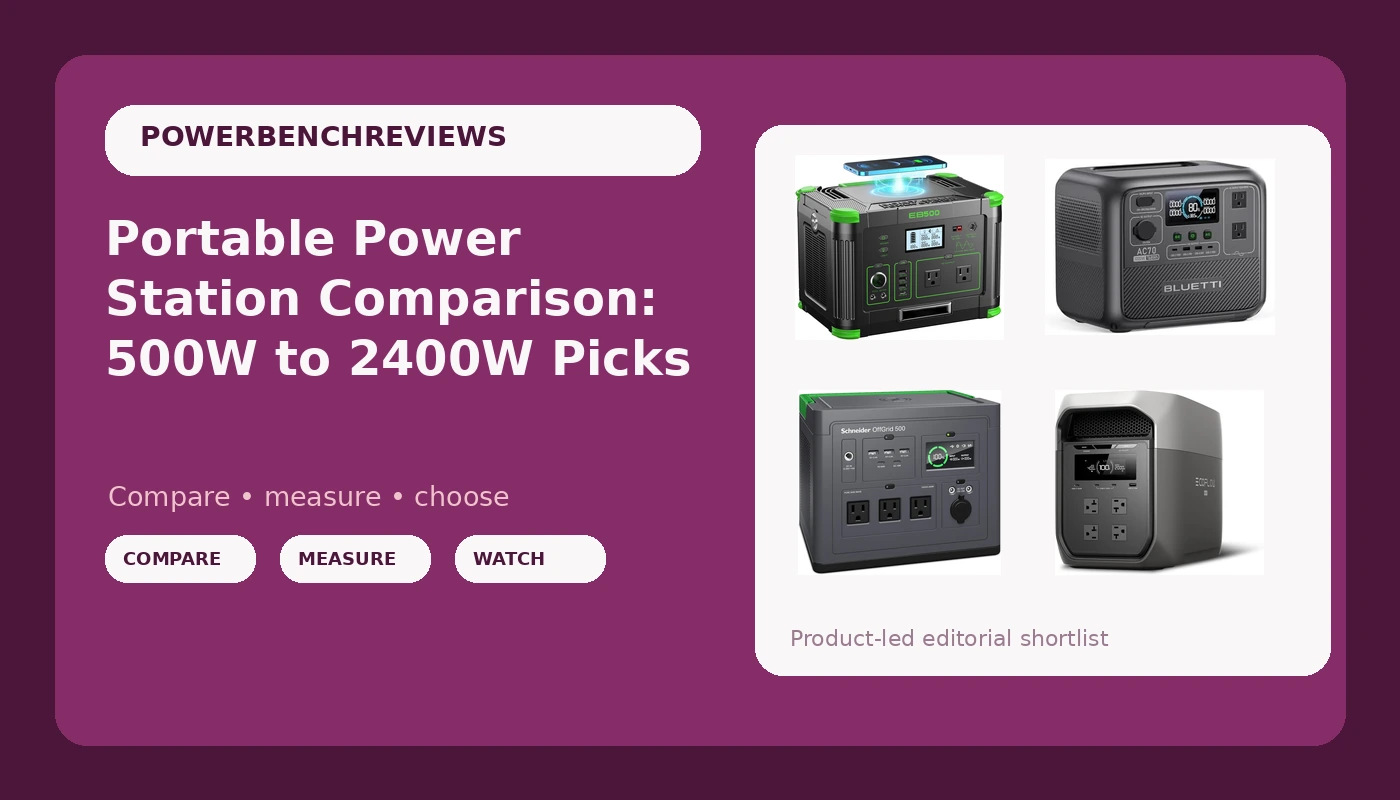
I have been an electrician for twelve years and I have spent the last five of them with a Kill A Watt meter clipped inline to whatever station is sitting on my bench. My town, Salida, Colorado, drops off the grid for days at a time most wildfire seasons, so this is not a hobby for me. Every portable power station comparison I write comes back to the same question, and it is not which unit has the biggest number on the box. It is which unit matches the load you actually own. This comparison lines up four stations, from a 500W camping box to a 2048Wh whole-house backup, and tells you who each one is for.
The short answer: for most households, the BLUETTI AC70 is the pick. It lands in the middle of this group at 768Wh with a LiFePO4 battery and 1000W of AC output, and that combination covers the widest range of real jobs without making you pay for capacity you will never discharge. The rest of this page is about the three situations where that answer is wrong.
One thing before the table, because I would rather be boring than dishonest. This is a spec-level comparison. I have not put my meter on these four units, so I am not going to invent discharge curves or runtime numbers for them. What I can do is read a spec sheet like an electrician, tell you where the marketing stops and the physics starts, and point you at the unit that fits the load you described.
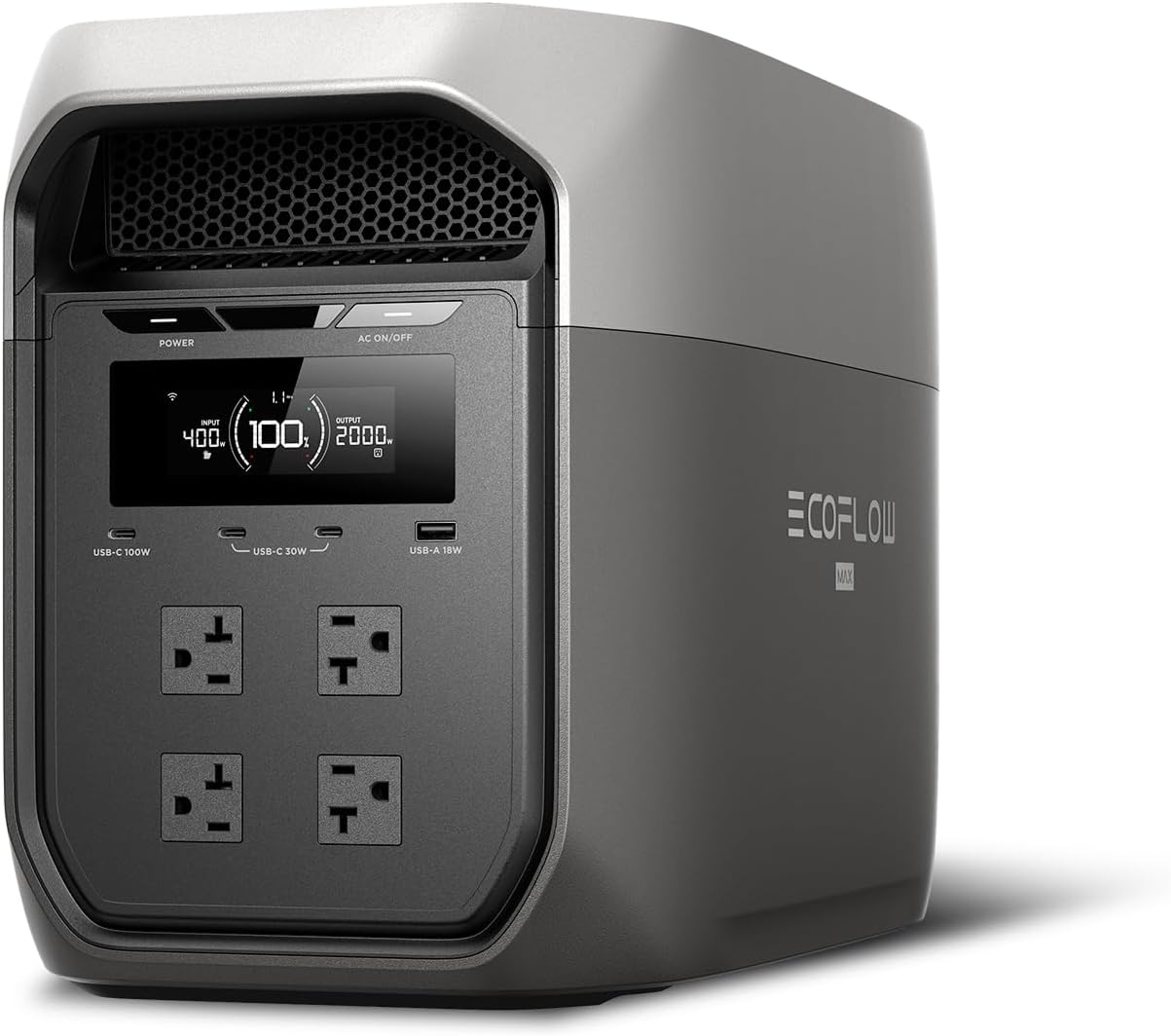
EF ECOFLOW DELTA 3 Max Portable Power Station
The biggest tank in this group by a wide margin. 2048Wh and 2400W will carry a fridge, a freezer, and a furnace blower through a multi-day outage, and the LFP chemistry means cycle life is not the weak link.
You pay for every one of those watt-hours up front. It is the heaviest and most expensive way on this page to charge a phone and a laptop.
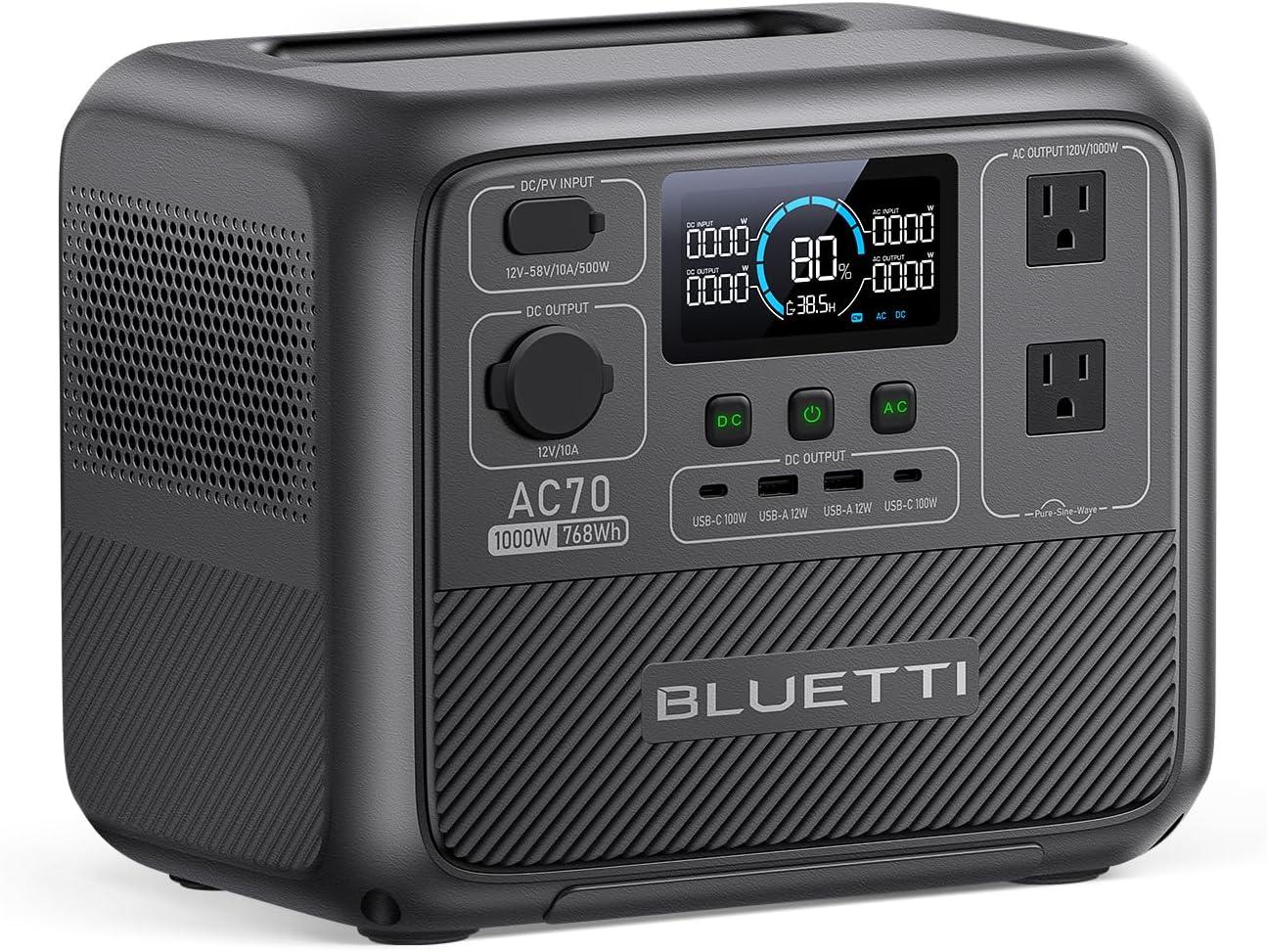
BLUETTI AC70 Portable Power Station
The middle of the range that most households actually need. 768Wh with LFP and 1000W covers a fridge, laptops, lights, and a router through a normal outage.
768Wh still runs dry on a long outage if you add a space heater or a hot plate. Verify the pure sine wave rating before you trust it with anything sensitive.
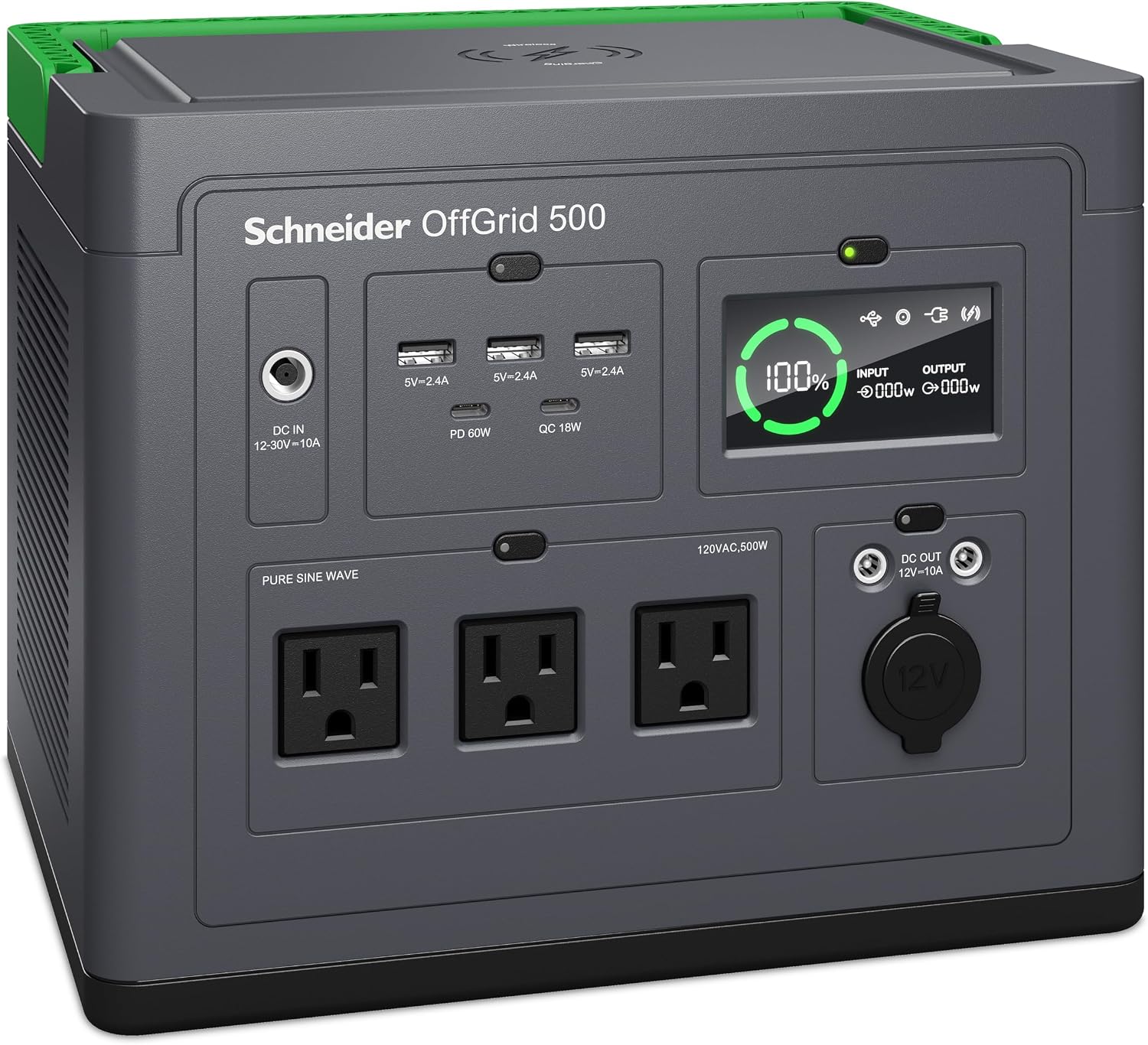
Schneider OffGrid 517Wh Portable Power Station
The wireless charging pad on top is genuinely handy for phones and earbuds, and Schneider is a name electricians already trust from panel and breaker work. Built for camping or home.
517Wh at this money is the thinnest watt-hours-per-dollar in the group. You are paying for the badge and the pad, not for capacity.
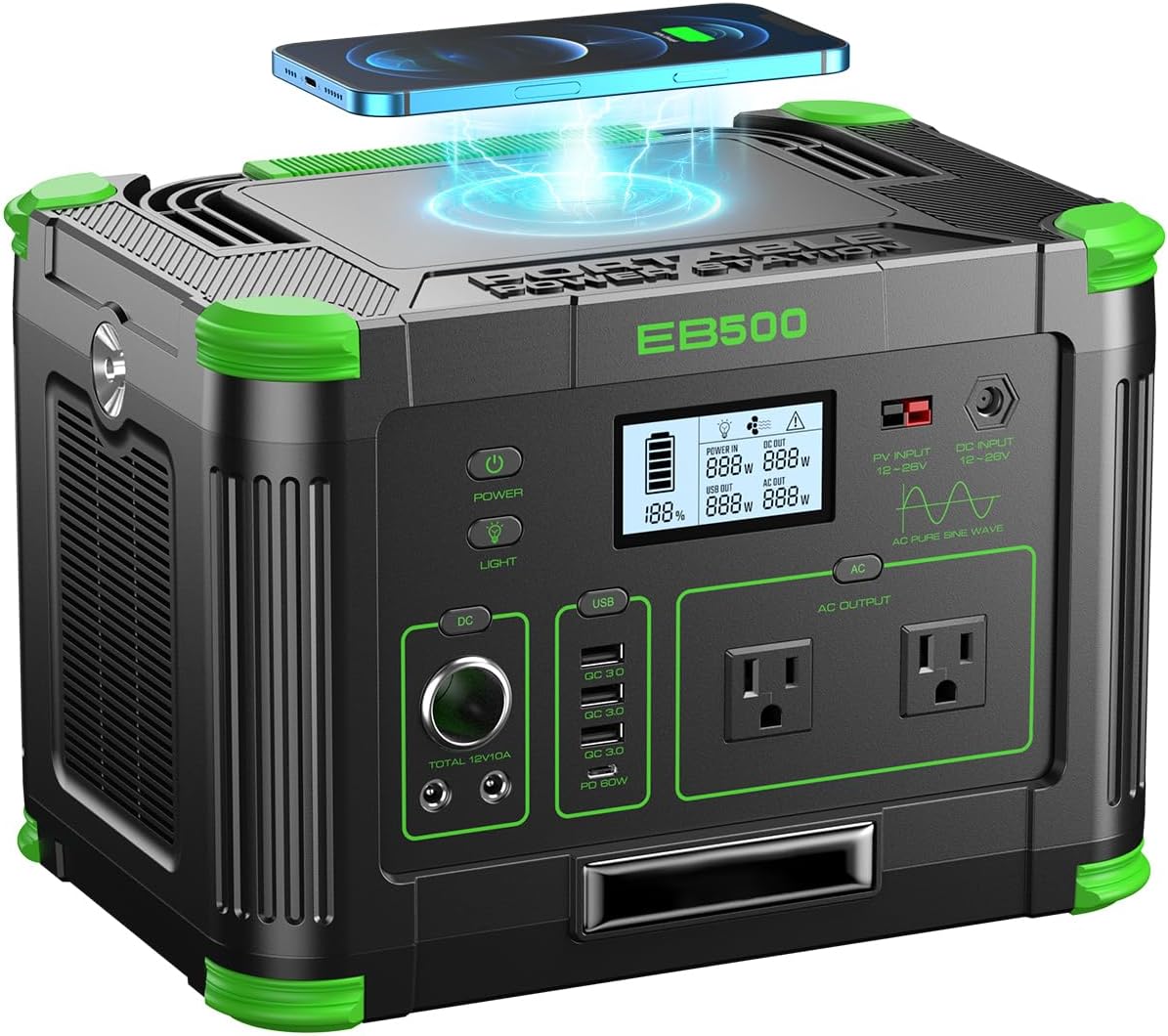
Portable Power Station 500W, 519.48Wh Solar Generator Backup
The cheapest way into this group by a wide margin, and 519.48Wh is respectable capacity for the money. Fine for phones, laptops, lights, a CPAP, and a fan.
500W of AC output is a hard ceiling, so no kettles, no heaters, and no fridge compressor startup. The listing does not name the cell chemistry, and that is the number that decides how many years you get.
Prices and availability were captured from Amazon Creators API and may change.
What the numbers actually mean
Watt-hours is the size of the tank. Watts is how fast you can pour it out. Most buyers confuse the two, and the marketing does not rush to correct them.
A 500W station and a 2400W station can hold the same number of watt-hours and still be completely different products. The 500W unit will run a laptop for a very long time and will not run a hair dryer for one minute. The 2400W unit will run the hair dryer, the microwave, and the coffee maker, and it will empty itself doing it. Capacity decides how long. Output decides what. You need both numbers before you spend a dollar.
The second thing to understand is surge versus sustained. A motor load like a fridge compressor pulls a big spike for a fraction of a second when it starts, then settles to a much smaller running draw. Some listings quote the surge number in big type and never publish the sustained rating. That is not a spec, that is a headline. If a listing will not tell you the continuous AC output in plain watts, assume the real number is lower than you hope.
Third, chemistry. LiFePO4 is the only chemistry I will put my name behind for a station you plan to keep. It costs more up front and it buys you a decade of cycles instead of a few hundred. Two of the four units here are LFP and say so. One does not name its chemistry at all, and that is the single biggest unknown on this page.
EF ECOFLOW DELTA 3 Max: the whole-house pick
If your plan is to keep a fridge and a freezer alive through a four-day October outage, this is the unit on the list that is built for it. 2048Wh is a real tank, and 2400W of AC output is enough to run the loads that make an outage miserable: the fridge, the freezer, the furnace blower, the router, the phones, and the lights, all at once.
The LFP battery matters as much as the capacity here. A station this size gets cycled hard during outage season, and LFP shrugs off deep discharges in a way that older lithium chemistries do not.
The trade-off is honest and it is not small. You are paying for 2048Wh whether you use them or not, and this is the heaviest thing in the comparison. If your actual emergency load is a laptop and two phones, you are buying a dump truck to pick up groceries. Buy it for the fridge. Do not buy it for the camping trips.
BLUETTI AC70: the middle that most people should take
768Wh with a 1000W inverter and an LFP battery is the sweet spot of this group, and I will explain the math rather than just assert it.
A modern fridge runs somewhere in the low hundreds of watts when the compressor is on and almost nothing when it is off. Averages matter more than peaks. 768Wh will not run a fridge forever, but it will run one overnight, and it will run the lights, the router, the laptop, and the phone chargers at the same time without breaking a sweat. That is what a normal outage actually looks like.
BLUETTI has been the value play in this category for years, and the caveat I always give holds here: check the pure sine wave rating before you trust the wattage. Sensitive electronics with motors and switching power supplies want a clean sine wave, and the wattage number on the box says nothing about waveform quality. The spec sheet will, if you read it.
The honest criticism is capacity, not build. 768Wh is not a lot once you plug in a resistive load. A space heater or a hot plate will flatten this unit faster than you can make coffee, and no inverter rating changes that. If heat is on your outage list, you need the 2048Wh class, not this one.
Schneider OffGrid 517Wh: the one that lives in the truck bed
Schneider is a name I know from load centers and breakers, so seeing them in this category got my attention. The PPS500 brings 517Wh, a wireless charging pad on top, and a design brief that says camping or home.
The pad is the interesting part. Dropping a phone onto the top of the unit and walking away is a genuinely better experience than hunting for a cable in the dark, and if you are car camping or tailgating, that is the feature you will use most.
Where it loses is the arithmetic. At 517Wh it carries less than the budget unit on this page and it costs more than the middle pick. You are buying brand, build, and the pad, not watt-hours. If you value those things, that is a legitimate purchase. If you are shopping purely on capacity per dollar, this is the weakest row in the table, and I would rather tell you that than sell you a badge.
Portable Power Station 500W: the budget entry
This is the cheapest unit in the comparison and it does the job a lot of people actually need done. 519.48Wh, listed at 140400mAh, at 500W of AC output. For phones, laptops, LED lights, a fan, a CPAP, and a small camping weekend, that is plenty, and it is not close to the price of the other three.
The 500W ceiling is the thing to respect. A fridge compressor starting up will trip it. A kettle will trip it. A space heater will trip it. This is a small-load station, and as long as you buy it knowing that, it is a good deal.
My one real reservation is the chemistry. The listing does not name the cell type, and that is the number that decides how many years you get before the capacity falls off a cliff. If you are buying this as a one-season camping box, that does not matter much. If you are buying it as ten-year emergency backup, the unknown is the risk, and the AC70 is where I would put the extra money.
Sizing a station against your actual outage
Here is the method I use with clients, and it takes ten minutes.
Write down the loads you cannot live without. Fridge, freezer, furnace blower, router, phones, a couple of lamps. For each one, find the running watts on the label and estimate how many hours a day it actually runs. Multiply watts by hours to get watt-hours per day, then add them up.
A fridge averaging 100W for eight compressor hours a day is 800Wh before you have charged a single phone. That single line tells you why a 517Wh station is a camping box and a 2048Wh station is backup power. Nobody needs a spreadsheet, they need one honest afternoon of arithmetic.
Then subtract. LiFePO4 will give you most of its rated capacity, but inverters are not free, and you lose a percentage converting DC to AC and back. Size your number up by a third and you will be close enough.
The trade-offs the spec sheets hide
Charge time is the one people forget. A station that takes six hours to refill from a wall outlet is fine for an outage and useless for a road trip where you move every day. Check the input wattage, not the output.
The app is a feature, not the product. Every one of these units should run from its own buttons, and if a firmware update bricks the panel, the app does not save you. I have watched that happen to other brands, and I will keep saying it.
Solar is a bonus, not a religion. Panels are the weakest link in every bundle, and most people are better off putting their money into more battery than into more panel. If you do go solar, confirm the connector type before you buy, because proprietary connectors lock you into one brand's panels forever.
Fan noise is real. A station pushing hard at 200W will make noise, and a station sitting in a tent at 2 a.m. is judged on that, not on its inverter rating.
What I would buy at each budget
If your number is under $250, the 500W unit is the entry point. Buy it for phones, lights, laptops, and camping, and do not ask it to run appliances.
If your number is in the middle, the AC70 is the pick, and it is the pick because 768Wh of LFP at 1000W covers an ordinary outage without waste.
If you are protecting a fridge and a freezer through multi-day outages, the DELTA 3 Max is the only unit here sized for the job, and the price is what that costs.
The Schneider is the one for the buyer who wants the wireless pad and trusts the name. That is a real reason. It is just not a capacity reason.
What I am watching next
The 2kWh class keeps sliding toward the middle of the market, and I expect that to continue. Integrated MPPT is becoming standard rather than premium, and the brands shipping buggy apps this year are going to lose the mid-market by next spring.
The other thing I watch is the used market after hurricane season. Flooded units show up cheap, and how they held up tells you more about real durability than any lab test. If you see a deal that looks too good in November, ask where it spent September.
For now, size the station to the load, insist on LFP when you plan to keep it, and read the continuous wattage before the surge number. The meter does not care what the box promised.