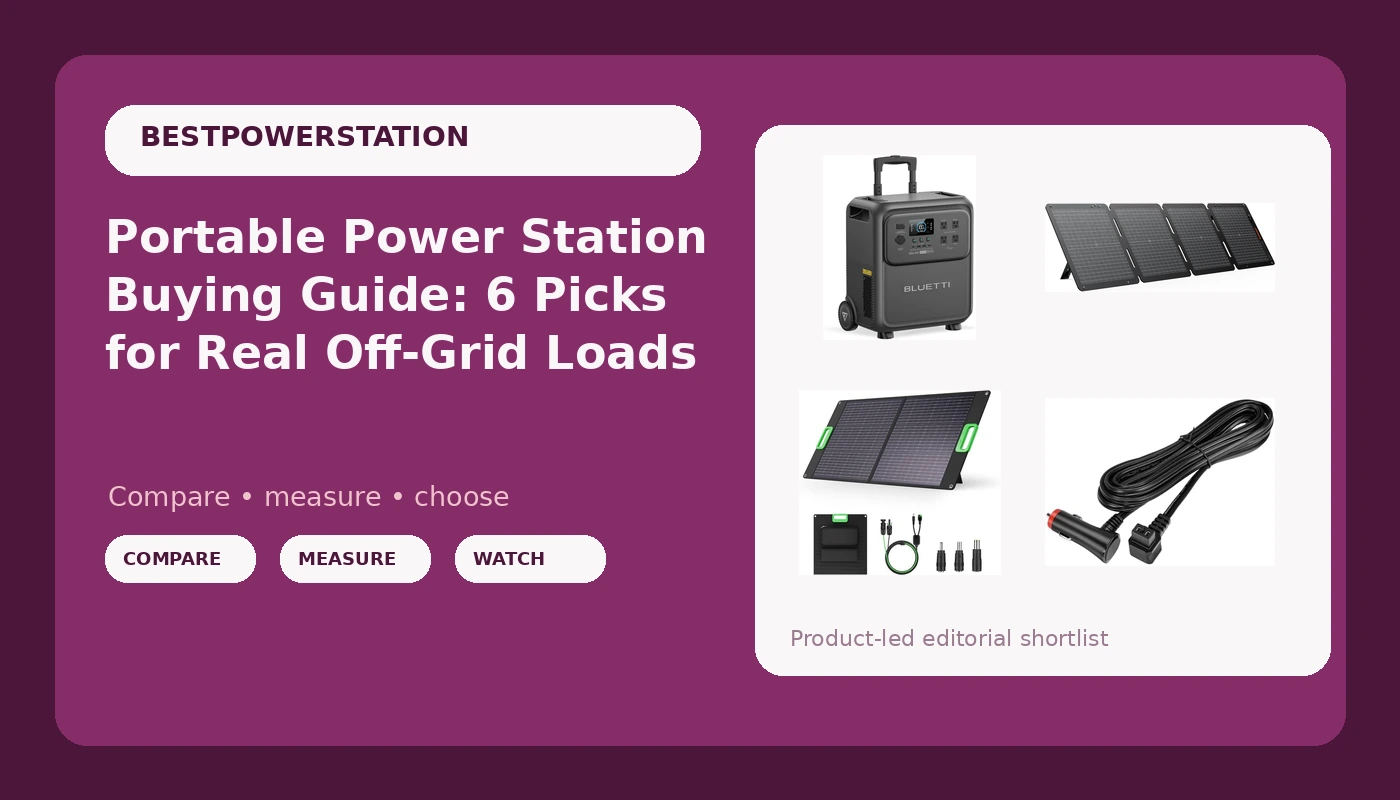
A portable power station is only half of a working setup. The other half is everything that connects to it: a solar panel that can actually refill it, a DC cord that keeps a car refrigerator or a CPAP machine running through the night, and a cover that keeps dust out of the vents when the unit lives in a van, a garage, or a cabin that sits empty for weeks at a time. Buy the big battery and skip the supporting gear, and you end up with a very expensive brick that only charges from a wall outlet.
This guide looks at six items that cover that whole picture. One is a large-capacity portable power station with a LiFePO4 battery. The rest are the accessories that decide whether that station gets used or sits in a corner. I have kept every description to what the product data actually states, and I have not padded anything with made-up numbers. If a spec is not listed by the maker, this guide does not claim it.
Related: How to Size a Portable Power Station Without Overspending
Quick answer
The BLUETTI Elite 400 Portable Power Station 3840Wh LiFePO4 Battery 2600W is the strongest fit for whole-home backup and multi-day off-grid trips because its 3840Wh LiFePO4 battery and 2600W inverter put it in a class that runs real appliances, not just phones and laptops. Choose the Jackery SolarSaga 100W Air Solar Panel, Bifacial instead when you already own a station and only need a folding panel for daytime recharging.
Portable power station gear worth comparing
What separates these six items is function, not brand. A portable power station gets judged on battery chemistry, usable capacity, and inverter output. A solar panel gets judged on rated watts, cell efficiency, and whether its connector matches the input on your station. A DC cord or adapter gets judged on voltage and plug compatibility with one specific device. A cover gets judged on fit and whether it blocks the vents it is supposed to protect.
That is the whole comparison. Capacity tells you how long a load runs. Inverter rating tells you which loads it can start. Panel wattage tells you how fast the battery refills. Connector type tells you whether any of it works together at all. Everything else on a listing page is marketing.
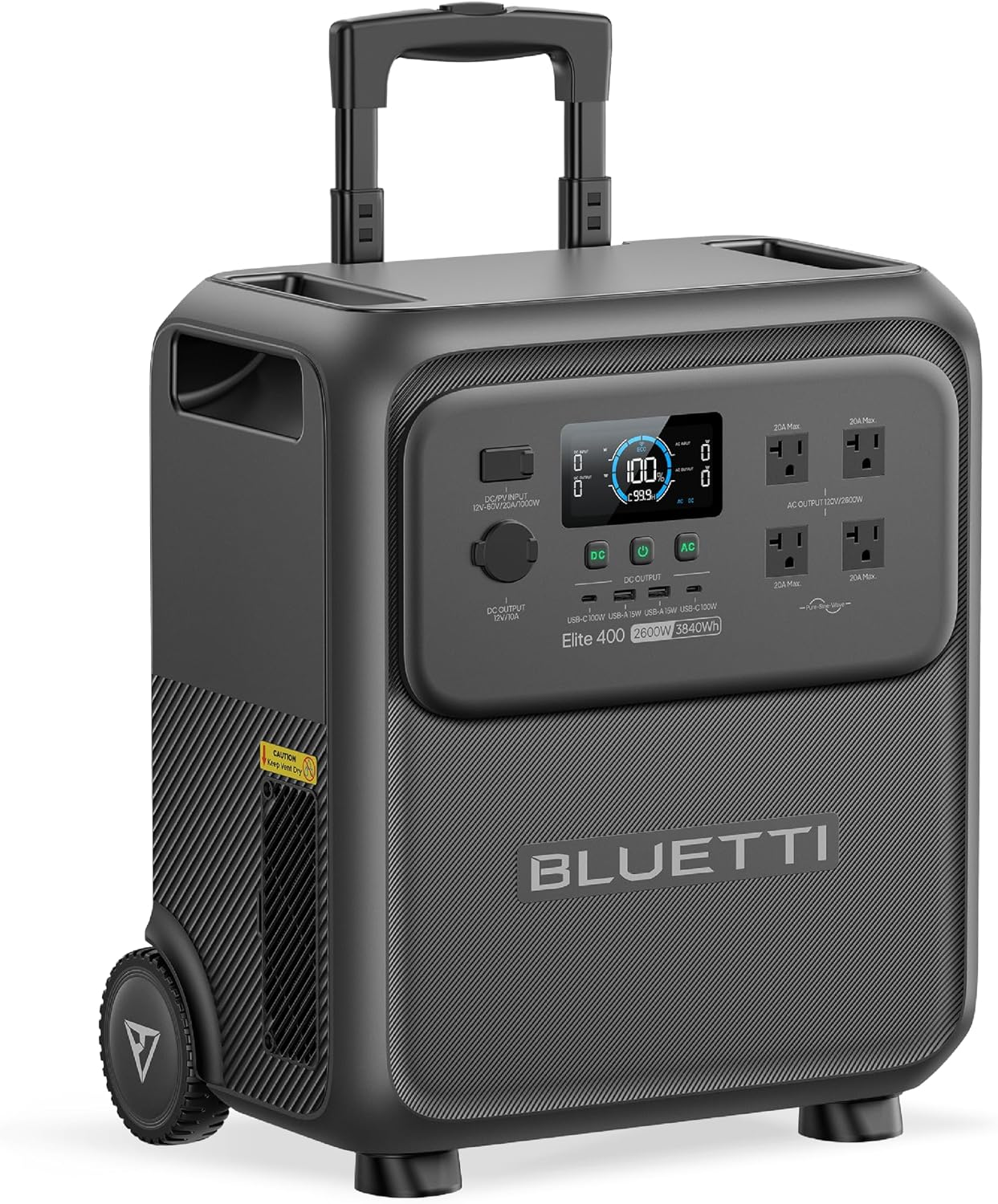
BLUETTI Elite 400 Portable Power Station 3840Wh LiFePO4 Battery 2600W
A 3840Wh LiFePO4 battery paired with a 2600W AC inverter, built for long backup runs and heavier household loads rather than phone charging.
Visit on Amazon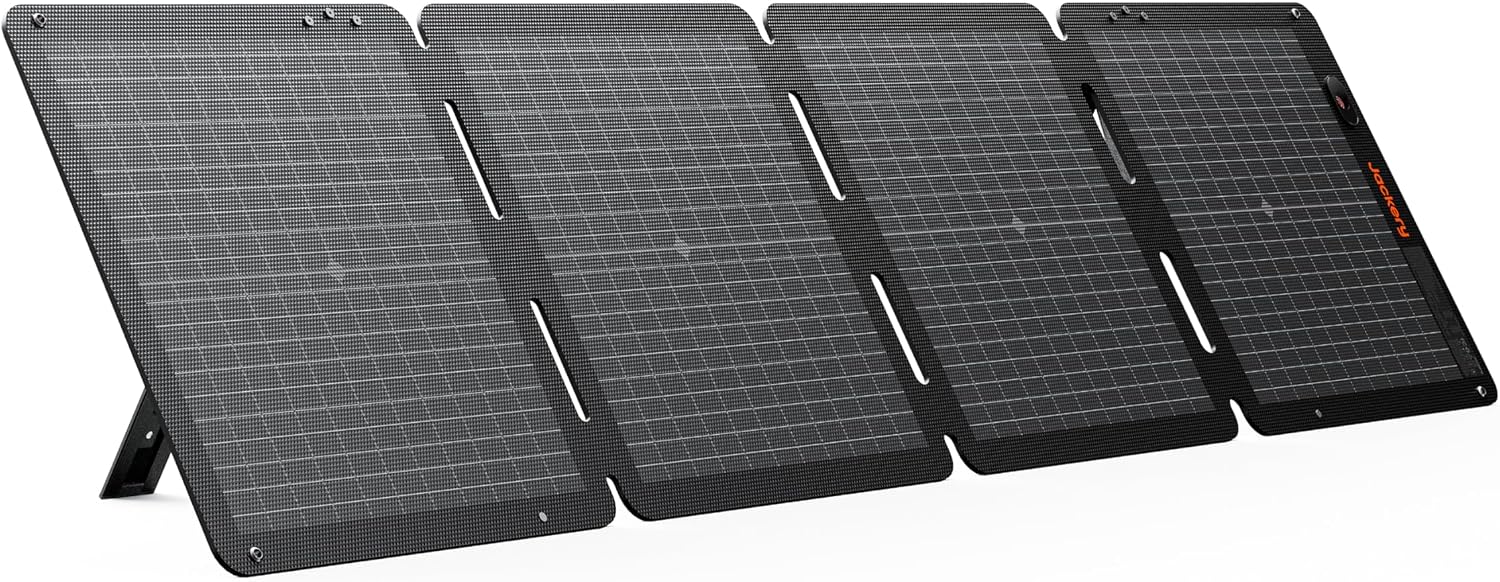
Jackery SolarSaga 100W Air Solar Panel,Bifacial
A folding 100W panel from Jackery's SolarSaga Air line that collects light from both faces, sized for topping up a station during the day.
Visit on Amazon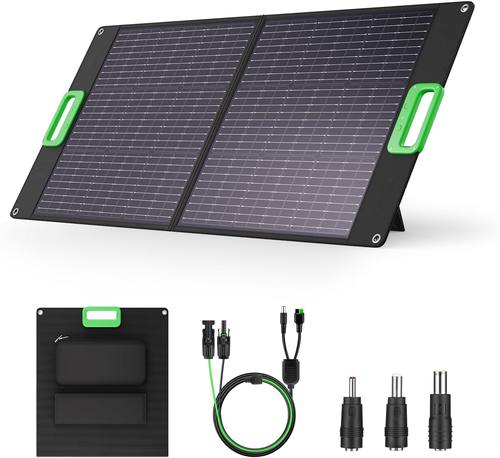
100W Portable Solar Panel for Power Station Generator 23.5% High Efficiency
Check current Amazon price
A folding 100W panel rated at 23.5% cell efficiency, intended as a portable recharge source for a power station.
Visit on Amazon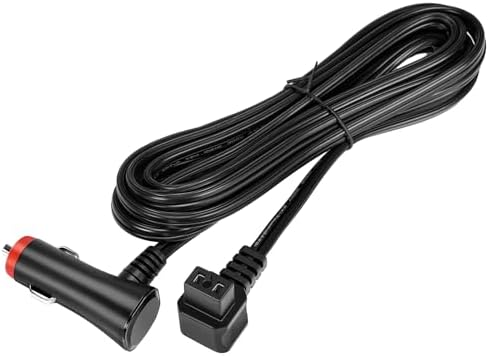
BougeRV 12V/24V DC Power Cord for 12V Car Refrigerator, Fits Most Brands
A 12V/24V DC power cord made for 12V car refrigerators, listed by the maker as fitting most brands.
Visit on Amazon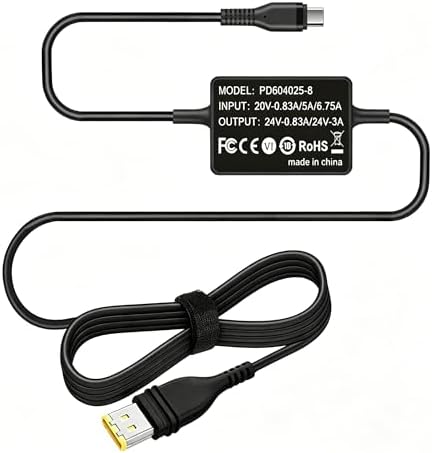
20V CPAP Power Cord for ResMed AirSense 11 AirCurve 11 Elite 39205 & AirMini CPAP Machines Power, CPAP Charger DC Coverter Cable Fit PD 20v Charging Head/ 65W Battery Backup/Power Station/Power Bank
A 20V DC converter cable built for ResMed AirSense 11, AirCurve 11, and AirMini machines, with a PD 20V charging head and support for 65W battery backups and power stations.
Visit on Amazon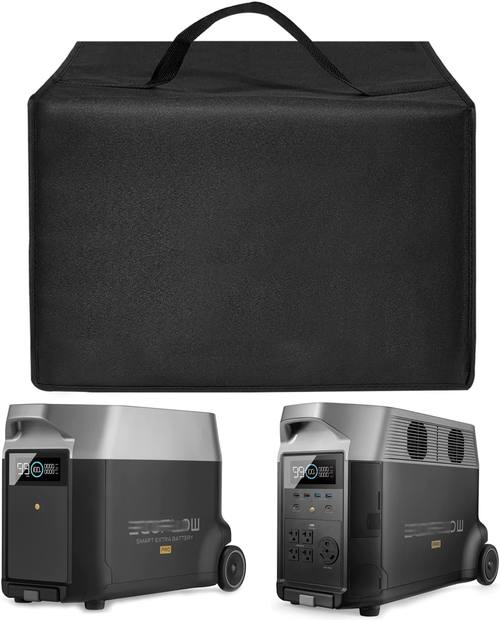
Power Station Dust Cover for EF ECOFLOW DELTA Pro EFD500 Solar Generator
A fitted dust cover sized for the EF ECOFLOW DELTA Pro EFD500, meant to keep vents and ports clean between trips.
Visit on AmazonPrices and availability may change. Check the retailer for current details.
How these products were compared
This guide compares battery chemistry and rated capacity, inverter output and load support, solar input and panel compatibility, connector and voltage matching, and physical protection and upkeep. Product names, images, and retailer links are matched by identifier so that every card points to the product shown and nothing gets crossed with a lookalike model.
Two things are deliberately left out. First, price: numbers move too often to print here, so each card links out and you confirm the current figure yourself. Second, hands-on performance claims. Where a number is not published by the manufacturer, this article does not supply one, and nothing here should be read as a measured discharge curve. Treat every spec as the maker's stated figure and verify it on the listing before you buy.
How to choose the right portable power station
Start with watt-hours, not watts. A 3840Wh battery and a 2600W inverter answer two different questions. The watt-hour figure tells you how long something runs. The inverter rating tells you what can be plugged in at all. A device with a big surge on startup, like a fridge compressor or a well pump, needs the inverter headroom, while a device that runs for eight hours needs the watt-hours. Buying for one and ignoring the other is the most common mistake I see.
Then decide whether you need a battery at all. If you already own a station, the useful purchase is usually a panel or a cord, not another battery. Two 100W panels in this group are aimed at exactly that buyer. Panels are also the weakest link in most bundles, because a 100W panel under real conditions delivers meaningfully less than 100W, and it only delivers anything when the sun is out. Battery capacity works at night. Panels do not.
Battery chemistry deserves a hard line. LiFePO4 packs cost more up front and hold up over far more charge cycles than older lithium chemistries, which is why a station carrying a LiFePO4 pack is usually the better long-term buy even when a cheaper unit shows a similar capacity number. Check the chemistry line on the listing before you compare anything else.
If you are still working out how much battery you actually need, our sizing walkthrough starts from a load list and a runtime target rather than a spec sheet.
BLUETTI Elite 400 Portable Power Station 3840Wh LiFePO4 Battery 2600W
This is the anchor of the group and the only true power station in it. The stated numbers are a 3840Wh LiFePO4 battery and a 2600W AC inverter. That combination puts it in the class people buy when the grid goes down for days, not hours, and when the load list includes a refrigerator, a furnace blower, a microwave, or a run of power tools. On paper, 3840Wh spread across a 300W continuous load works out to roughly twelve hours before any losses are counted. Real runtime lands lower once inverter efficiency and the recommended depth of discharge are factored in, which is exactly why you size up rather than down.
LiFePO4 is the part that matters most over a decade of ownership. The chemistry is the reason this unit can be cycled hard and still hold capacity, and it is why the up-front cost is what it is. If the plan is occasional camping, this is more battery than the job requires. If the plan is keeping a house's critical circuits alive through a wildfire-season outage, the capacity and the inverter rating are the two figures that justify the purchase.
The trade-off is physical. A 3840Wh pack is heavy and takes up real floor space, and it is not something you carry up a trail. It also costs more than the smaller units most people start with, so it only makes sense once you have a load list that supports it. Confirm the AC output waveform, the solar input voltage window, and the connector type on the listing before pairing it with any panel, because a mismatched connector turns a good panel into a paperweight.
Alternatives to consider
The Jackery SolarSaga 100W Air Solar Panel, Bifacial is better suited to someone who already owns a Jackery station and wants a folding panel that packs flat in a vehicle, while the 100W Portable Solar Panel for Power Station Generator 23.5% High Efficiency is a stronger fit when you are pairing a panel with a station from another brand and want the efficiency figure stated up front. Both are 100W class panels, so the real decision is the connector and the physical size when folded, not the badge.
The BougeRV 12V/24V DC Power Cord for 12V Car Refrigerator, Fits Most Brands and the 20V CPAP Power Cord for ResMed AirSense 11 AirCurve 11 Elite 39205 & AirMini CPAP Machines Power, CPAP Charger DC Coverter Cable Fit PD 20v Charging Head/ 65W Battery Backup/Power Station/Power Bank solve the two DC loads that come up most often in a van or a cabin: a refrigerator that runs continuously and a CPAP machine that has to run all night. Running either one on DC instead of through the AC inverter skips an efficiency conversion, which stretches the same battery further. The CPAP cable is device specific, so match your machine model before ordering. The Power Station Dust Cover for EF ECOFLOW DELTA Pro EFD500 Solar Generator covers the low-tech end: a station stored in a dusty garage or a van that sits for weeks will pull grit into its vents and fan, and a fitted cover is cheaper than a repair.
Day-to-day use and maintenance
Keep any station where air moves. Vents and fans need clearance on all sides, and covering a running unit with a dust cover defeats the purpose of both items. Use the cover for storage, not operation. When the unit does come out of storage, check the vents and the fan intake before the first load, because a dust-clogged fan is the fastest way to shorten the life of an inverter.
Store lithium packs partly charged rather than empty, and top them up every few months if the unit is idle. LiFePO4 handles partial states of charge far better than older chemistries, but a pack left flat for a year is still a pack you may not get back. If the station lives in a vehicle, secure it so it cannot slide, and keep the DC cords routed away from sharp edges and hot surfaces. Strain on a connector is the usual cause of a cord that stops working.
Solar panels need very little beyond a wipe with a damp cloth and dry storage. Fold them flat, keep the junction box out of standing water, and check the cable ends for corrosion if they have seen a winter outdoors. If you run a panel on a long extension, confirm the connector type and the polarity before the first connection, since reversed polarity on a solar input can damage the charge controller inside the station.
For CPAP and refrigerator cords, inspect the barrel or blade connectors periodically. These cables carry continuous current for hours, and a loose connection at the plug is a heat source. If a plug feels warm to the touch, stop using that cord and replace it.
Buying checklist
- Measure the space where the unit will live, including clearance for vents and the fan.
- Choose watt-hours based on normal nightly or outage use, not on one worst-case appliance.
- Confirm that the exact model includes the battery chemistry and inverter rating you are counting on.
- Match the solar connector and voltage window to your specific station before buying a panel.
- Verify the CPAP or refrigerator cord against your exact device model number.
- Read the storage, cleaning, and maintenance instructions that come with the unit.
- Check the current retailer price, availability, and return terms through the link on each card.
Final recommendation
Choose the BLUETTI Elite 400 Portable Power Station 3840Wh LiFePO4 Battery 2600W when you need a large LiFePO4 bank and a 2600W inverter to carry real household loads through a multi-day outage or a long off-grid stay. Choose the Jackery SolarSaga 100W Air Solar Panel, Bifacial when you already own a station and the missing piece is daytime recharging rather than more battery. For a van or cabin setup, the DC cords and the storage cover are the cheap additions that decide whether the big battery gets used every week or once a season. Confirm current pricing and compatibility on each listing before you commit, and size the system to the loads you actually run.