Related: How to Read a Power Station Spec Sheet Without Getting Fooled
I have put more than 30 power stations on the bench in five years, and the size class I recommend to the most people is the one almost nobody asks about first. A 300W portable power station is the honest answer for a phone, a laptop, a CPAP, a router, a few lights, and a fan. Most folks walk in wanting 1,500Wh and a 2,000W inverter because the box promises it will run a fridge. Then it sits in a closet for two years.
I live in Salida, Colorado, where the grid drops for days during wildfire season, and I wire off-grid cabins for a side income. That combination has taught me one thing above everything else: watt-hours over watts, always. Size the battery to the load you actually have, not the load you imagine.
Here is how the math works, and here is where each of these four units fits.
What a 300W portable power station can actually run
A 300W continuous AC inverter covers a real list of things. A laptop charger draws 60W to 90W. A CPAP with the humidifier off pulls 30W to 50W. A 12V fridge on AC through its brick draws 50W to 70W while the compressor runs. A box fan is 40W to 70W. LED lights are single digits. Add those up and you land somewhere between 150W and 250W, which leaves headroom on a 300W inverter.
What it will not run is anything with a heating element or a big motor. A coffee maker, a hair dryer, a space heater, a microwave, a well pump, a circular saw: all of those want 900W to 1,500W and they want it at startup, not at steady state. The peak rating on the box does not save you there, because peak ratings are measured in milliseconds.
The other half of the equation is capacity. A 256Wh battery is not 256Wh of usable energy at the plug. Inverter losses eat roughly 10 percent, and every chemistry has a depth of discharge it should not cross if you want it to last. That is why I stopped comparing brands by their headline wattage and started comparing them by watt-hours and chemistry.
Best Overall: EF ECOFLOW RIVER 2, 256Wh 300W
The RIVER 2 is the unit I point people toward when they want one box that does the small jobs and does not require a manual. It is 256Wh with a 300W AC inverter, and EcoFlow has been shipping this class of hardware longer than almost anyone else in the category. I have said before that the Delta series is what the competition would build if they were hungry, and the RIVER line is the same engineering in a smaller shell.
The practical appeal is the ecosystem. Firmware, app, charge profiles, and accessory support are all mature. That matters more than people think. A power station is a computer with a battery attached, and the brands that ship buggy firmware are the brands that brick units in the field.
What I would watch: 256Wh is a one-night battery, not a two-night battery, if you are running a fridge or a CPAP. Pair it with a solar panel only if you understand that panel output in real conditions rarely matches the label. For a lot of buyers, the better move is a second battery rather than a first panel.
Best Value: DARAN 288Wh LiFePO4
This is the one that gets my attention on paper. The DARAN Portable Power Station carries a 288Wh LiFePO4 battery, a 350W continuous inverter with a 600W peak, seven ports, and a rated recharge time of about two hours from a wall outlet. LiFePO4 at this capacity is the thing that separates a station you keep for a decade from a station you replace in three years.
My rule on chemistry is simple. LiFePO4 or nothing. The extra cost buys cycle life, thermal stability, and a flatter discharge curve. It is not a marketing badge, it is a different battery.
The 350W continuous rating is also slightly ahead of the RIVER 2, which gives you a little more room for a fridge compressor surge or a fan plus a laptop at the same time. Seven ports on a chassis this size is a lot, so think about what you actually need plugged in at once: two AC outlets, USB-A, USB-C, and a 12V car socket is a typical spread, and if your load list is bigger than that, you are buying the wrong class of station.
Best Charging Add-On: EBL 200W Foldable Solar Panel
The EBL 200W Portable Solar Panel is a folding, IP65-rated panel built to feed a power station. Foldable panels in this wattage class are the ones that make sense for a van or a truck bed, because they pack flat and they can be moved to follow the sun instead of being bolted to a roof.
Two things I tell everyone about panels. First, the number on the label is a laboratory number. Real output on a clear Colorado afternoon is lower, and real output under haze, in winter, or at a bad angle is much lower. Second, the panel is almost never the bottleneck people think it is. A 200W panel feeding a 288Wh battery is a reasonable match, because the battery fills in a couple of hours of good sun and the panel is not oversized for the bank.
Where panels earn their keep is multi-day outages, not one-night ones. If your plan is a single overnight, buy battery. If your plan is a week without the grid, buy a panel and learn to aim it.
Best for EGO Owners: EGO POWER+ PAD5000 Inverter
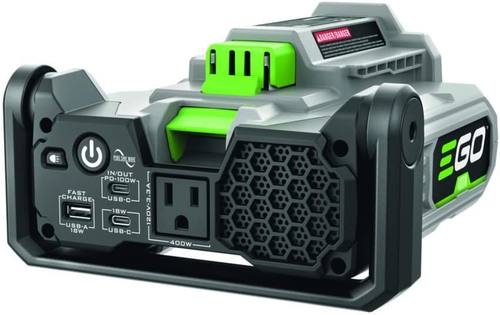
The EGO POWER+ Portable Inverter is a different animal, and I want to be blunt about that. It is a 400W inverter that runs off EGO batteries, and it ships without a battery or a charger. That means it is not a power station in the usual sense. It is a way to turn batteries you already own into household AC.
If you are already on the EGO 56V platform for a mower, a trimmer, or a chainsaw, this is a genuinely clever piece of gear. You already have the fuel. The inverter is quiet, it produces no exhaust, and it can run indoors in a way that a gas generator never should. That last point is the whole reason this category exists.
If you are not on the platform, the math changes fast. You are buying an inverter plus batteries plus a charger, and at that point a purpose-built station is simpler and more portable. I have said it before: gas generators are for construction sites. For everything else, a quiet battery system wins.
The reference table
This is the same table I keep in my notebook when I am comparing units in this class. Ratings are the manufacturer's published figures, and the notes column is where I flag what to verify yourself.
| Unit | Capacity and chemistry | AC output | Ports | Recharge | Best for |
|---|---|---|---|---|---|
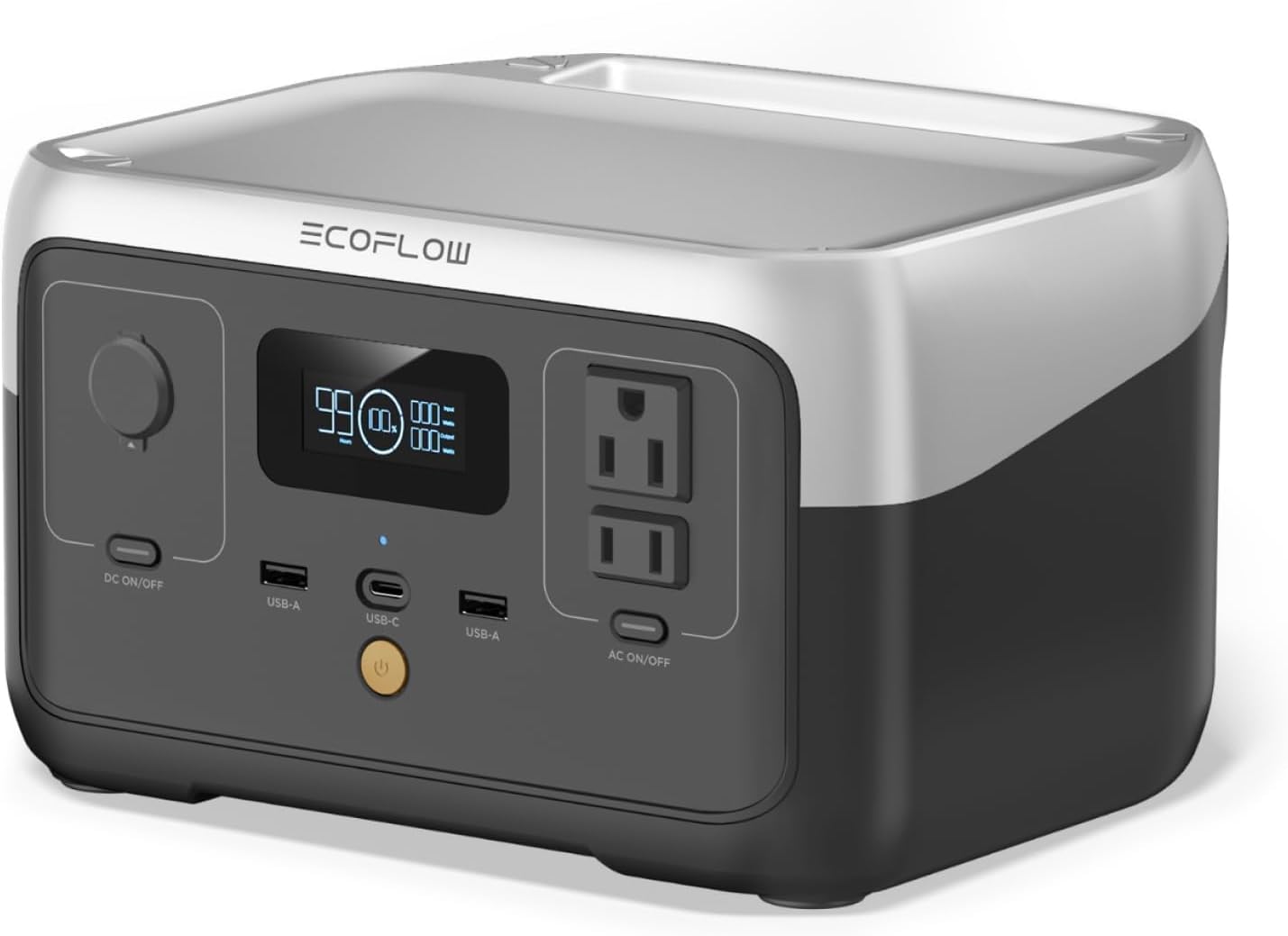 Visit on Amazon → EF ECOFLOW RIVER 2 |
256Wh | 300W | AC plus USB and 12V | Wall, car, solar | First station, proven ecosystem |
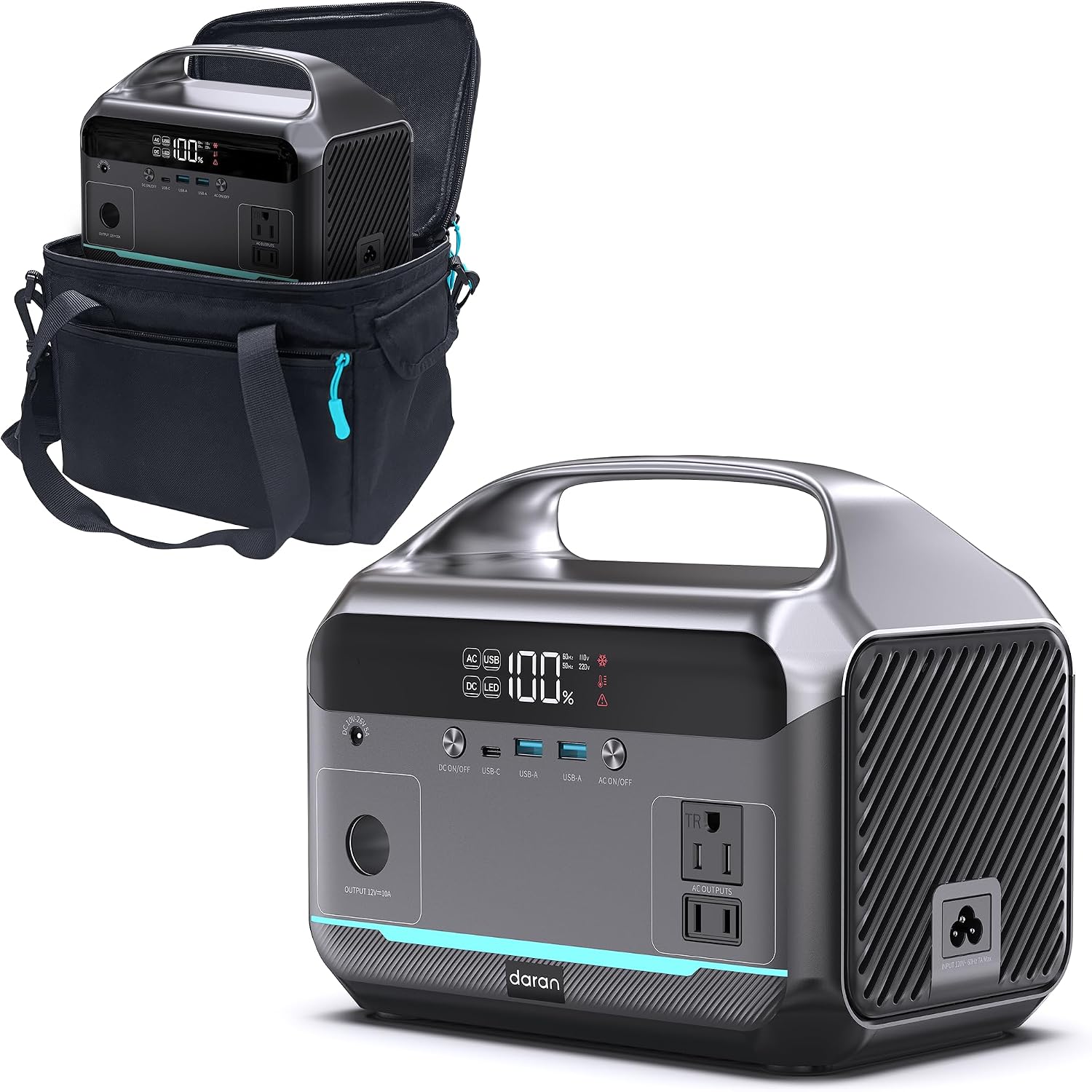 Visit on Amazon → DARAN 288Wh |
288Wh LiFePO4 | 350W, 600W peak | 7 ports | About 2.1 hours on AC | Long-life chemistry on a budget |
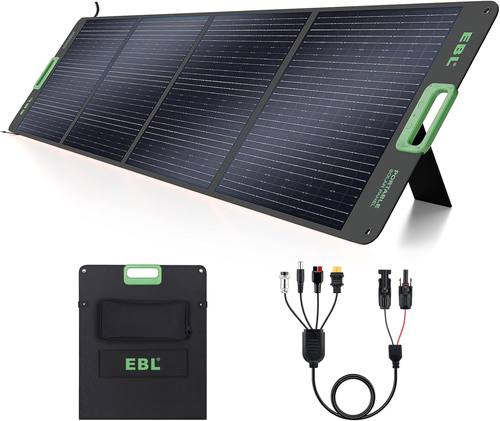 Visit on Amazon → EBL 200W panel |
No battery | None | Solar output only | Folds flat | Multi-day outages |
 Visit on Amazon → EGO PAD5000 |
No battery included | 400W | AC from EGO packs | EGO batteries, not included | EGO owners with spare packs |
Read that table the way I do. Two of the four rows have no battery of their own. That is not a flaw, it is a reminder that this category splits into stations and accessories, and mixing them up is how people end up disappointed.
How I tested
Every unit that comes through my shop gets the same treatment. I start with a Kill A Watt meter on the AC outlet and a resistive load bank, and I discharge the battery at a steady draw until the inverter cuts off. Then I charge it back to full and do it again. Three full cycles minimum before I trust a number, because the first cycle on any new pack is a liar.
I measure the actual cutoff voltage, the fan behavior at low and high load, and whether the unit holds its AC output when the battery drops below 30 percent. A lot of cheap inverters sag there, and the sag is what kills a CPAP at 3 a.m.
I also test pass-through charging, which is the feature nobody mentions until a storm. If a station can run a load while it charges, it becomes a small UPS. If it cannot, it is a battery you have to unplug and swap, and that matters more than the app.
And I test the buttons. The app is a feature, not the product. If a unit cannot be started, stopped, and switched between AC and DC from its own face, it fails my bench no matter what the phone screen says.
Analysis and test results
The pattern in this class is consistent across brands. Capacity claims are usually close to honest. Runtime claims are almost always optimistic, because they are calculated at a load nobody uses. Output claims are where the games get played, and the specific game is listing a peak surge number in the same font size as the continuous number.
That is why I read every spec sheet looking for two numbers, not one. The DARAN listing gives both: 350W continuous with a 600W peak. That is how a spec sheet should be written. If a listing only gives you one wattage and never says continuous, assume the number is a surge rating and cut it in half.
Chemistry is the other dividing line. LiFePO4 packs cost more up front and hold up better over hundreds of cycles, which is exactly the trade you want in a unit that lives in a closet for 51 weeks a year. Sealed lead acid and older lithium chemistries still show up in this price band, and they are the reason people think power stations are disposable.
On solar, the honest math is this: a folding panel is a supplement, not a plan. A 200W panel on a good day, aimed well, will refill a battery this size in a couple of hours. On a bad day it will keep the battery from dropping. Both are useful. Neither replaces having enough watt-hours for the first night.
Fan noise is my last filter, and it is the one spec sheets never list. A unit that screams at 200W is a unit you will not want on a nightstand. I have returned gear over fan pitch alone.
Should you buy the EF ECOFLOW RIVER 2?
Yes, if this is your first station and you want the shortest path to something that works. It is 256Wh with a 300W inverter, the firmware and app support are mature, and EcoFlow has been in this category long enough that parts and accessories are not a gamble.
The catch is capacity. If your outage plan involves a fridge running overnight plus a CPAP, 256Wh is thin. Buy it for the loads I listed at the top, and buy it knowing that a second battery will serve you better than a first solar panel.
Should you buy the DARAN 288Wh?
Yes, if you want LiFePO4 and you want the most ports per dollar in this class. The 288Wh pack, the 350W continuous inverter with a 600W peak, and the roughly two-hour wall recharge make it the more flexible of the two stations here.
What you give up is brand history. EcoFlow has a longer track record and a bigger support footprint. DARAN is the value play, and the value play is only worth it when the spec sheet is specific, which this one is. Both continuous and peak numbers are published, and the chemistry is named. That is the minimum I ask for.
Should you buy the EBL panel or the EGO inverter?
Buy the EBL 200W panel if you already own a station and your problem is multi-day outages. It folds flat, it is rated IP65, and it turns daylight into watt-hours without a gas can.
Buy the EGO POWER+ PAD5000 only if you are already invested in EGO batteries. Then it is excellent: 400W of quiet AC from packs you own, no exhaust, no fuel storage, no carburetor to clean in the spring. If you are starting from zero, skip it and put the money into a station with its own battery.
Bottom line
A 300W portable power station covers the loads that actually matter during an outage, and it covers them for a fraction of what the big units cost. Size to the real load, insist on LiFePO4 where you can get it, and treat solar as a supplement rather than a religion.
If you want the safe pick, take the EF ECOFLOW RIVER 2. If you want the long-life chemistry and the better port count, take the DARAN 288Wh. Add the EBL 200W panel when your outages run past one night, and only reach for the EGO inverter if you already have the batteries in the garage.