Most people start shopping for a portable power station for home backup after the first outage, not before it. The lights drop at 9pm, the fridge starts losing temperature, the router goes dark, and every box with a battery in it suddenly looks like the answer. The trouble is that this category is not one product. It stretches from a 519.48Wh unit you can carry one-handed to a 3,584Wh expandable system that can grow to 21kWh, and those two machines solve entirely different problems.
This comparison lines up six products that tend to appear in the same search results even though they do not belong in the same decision: four battery-based stations, one fuel-powered inverter generator, and one replacement AC adapter. Two of the six are not really competitors at all, and knowing which ones to rule out early saves a lot of wasted reading. The rest of the guide is about matching watt-hours to the load you actually run, not the load you imagine running during a storm.
Related: How to Size a Power Station to Your Real Load
Quick answer
The Anker SOLIX S2000 Portable Power Station is the strongest fit for a household that wants one unit for outage backup and weekend use because its 2,010Wh capacity and 3,000W peak AC output put it in the home backup class rather than the camping class. Choose the Jackery HomePower 3600 Plus Portable Power Station instead when you are backing up essential home circuits, want LFP chemistry, need two 200W solar panels in the box, and want the option to expand the system later.
Portable power station options worth comparing
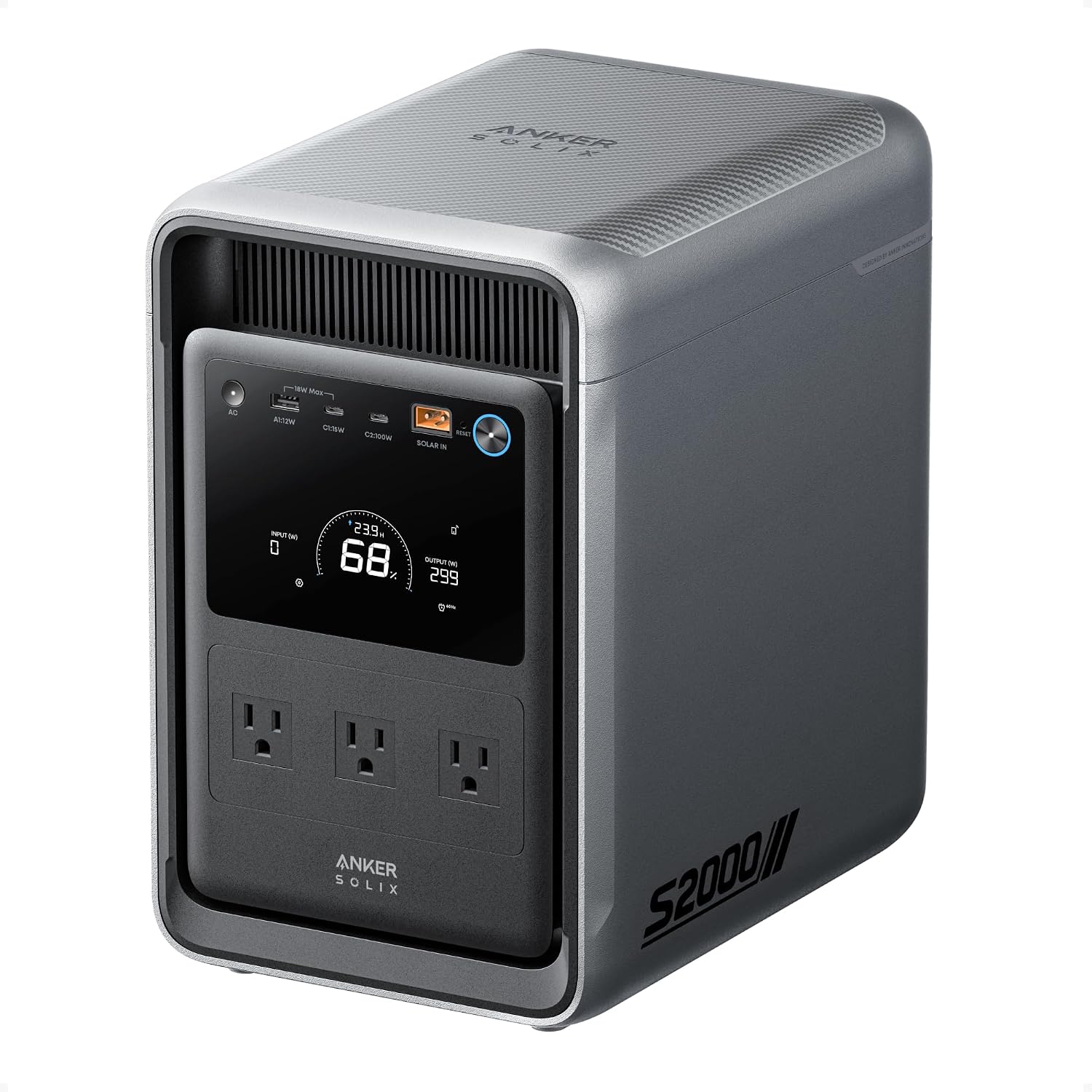
Anker SOLIX S2000 Portable Power Station, 2,010Wh, 3,000W Peak, Home Backup
2,010Wh of stored energy with a 3,000W peak AC output, listed for home backup rather than camping. It sits in the middle of this group on capacity, above the 1,070Wh unit and well below the 3,584Wh system.
Visit on Amazon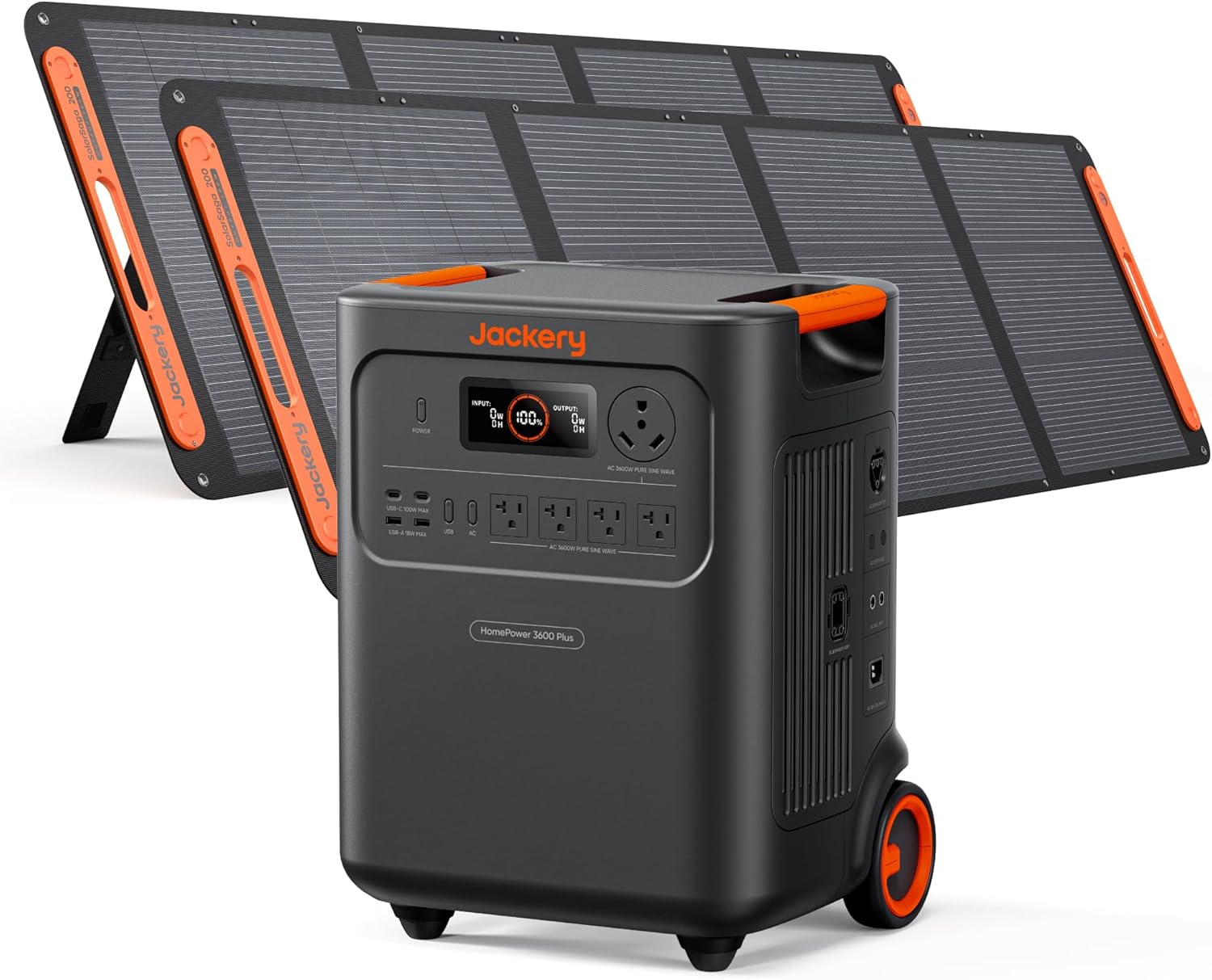
Jackery HomePower 3600 Plus Portable Power Station with 2X 200W Solar Panels, 3600W AC Output, 3584Wh LFP Solar Generator, Expandable up to 21kWh, Essential Home Backup for Home Use, Emergencies, RV
3,584Wh of LFP capacity, a 3,600W AC output, and two 200W solar panels included. Expandable up to 21kWh, which makes it the only pick here sized for essential home circuits rather than a single room.
Visit on Amazon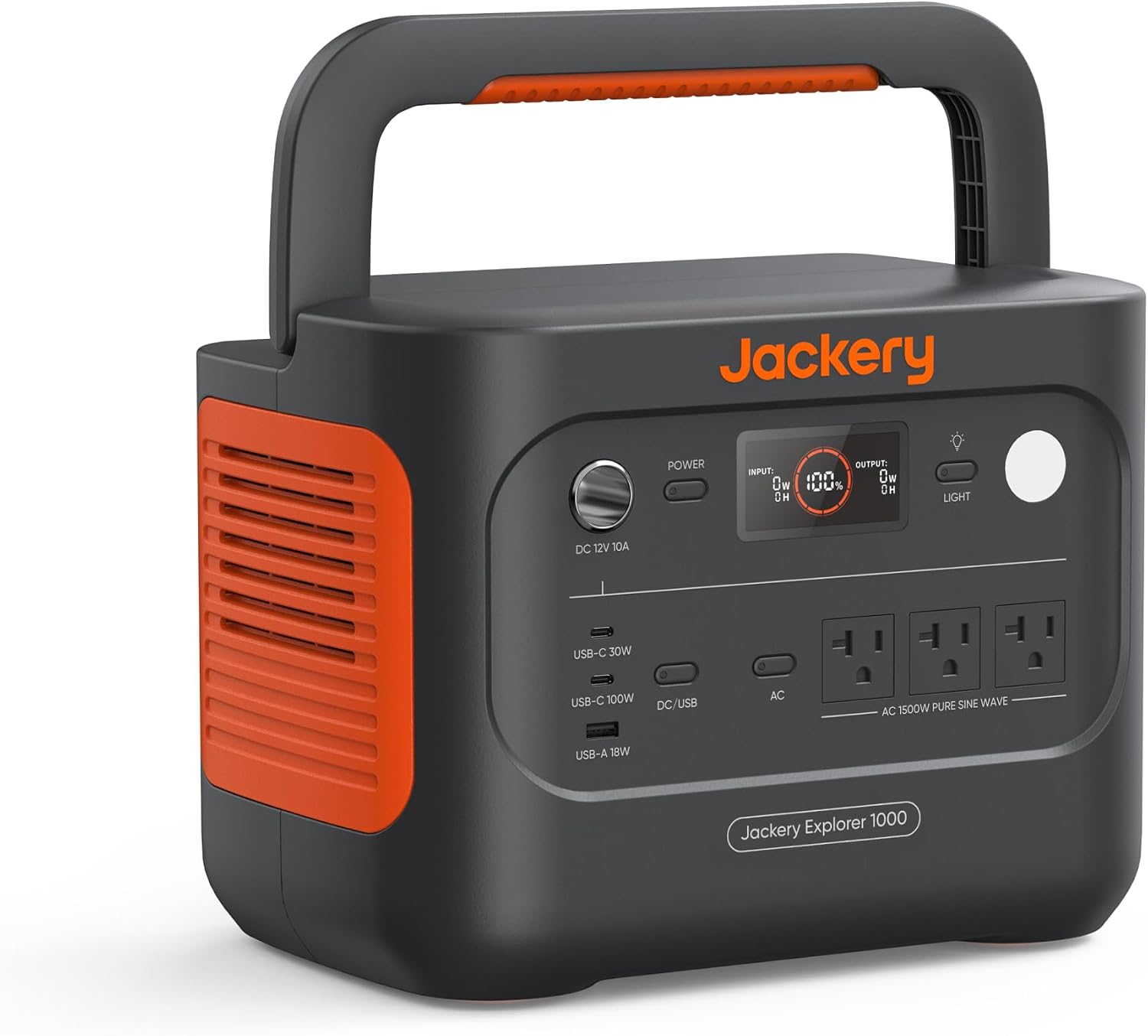
Jackery Explorer 1000 v2 Portable Power Station,1070Wh,1500W
1,070Wh with a 1,500W AC inverter. The middle of the battery group on capacity and the most flexible of the three mid-size stations for moving between a truck bed, a tent, and a garage shelf.
Visit on Amazon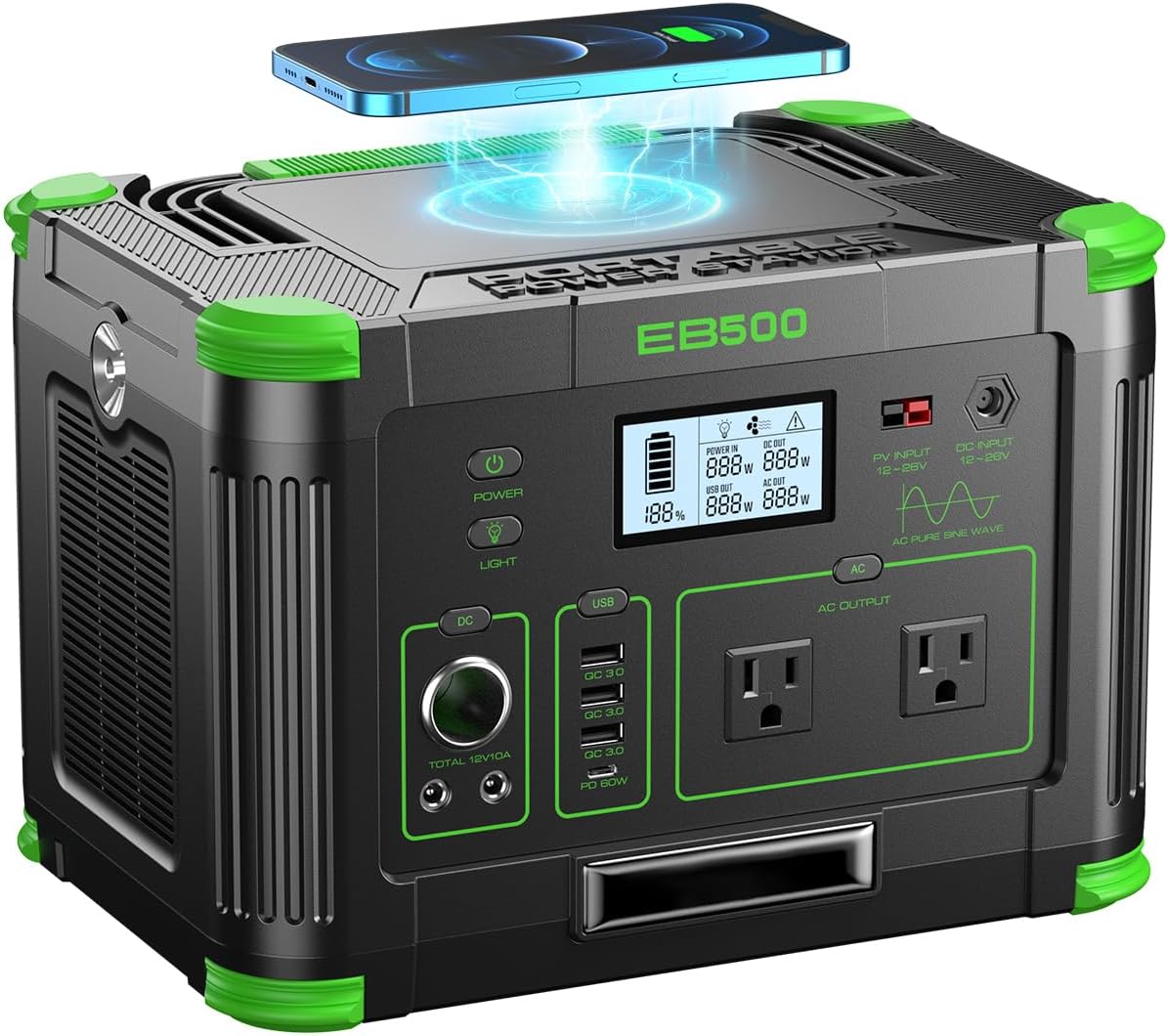
Portable Power Station 500W, 519.48Wh/140400mAh Solar Generator Backup
519.48Wh, or 140,400mAh, with a 500W inverter. The smallest battery station in this group, and the one to look at when the load list is phones, lights, a laptop, and a router rather than a fridge.
Visit on Amazon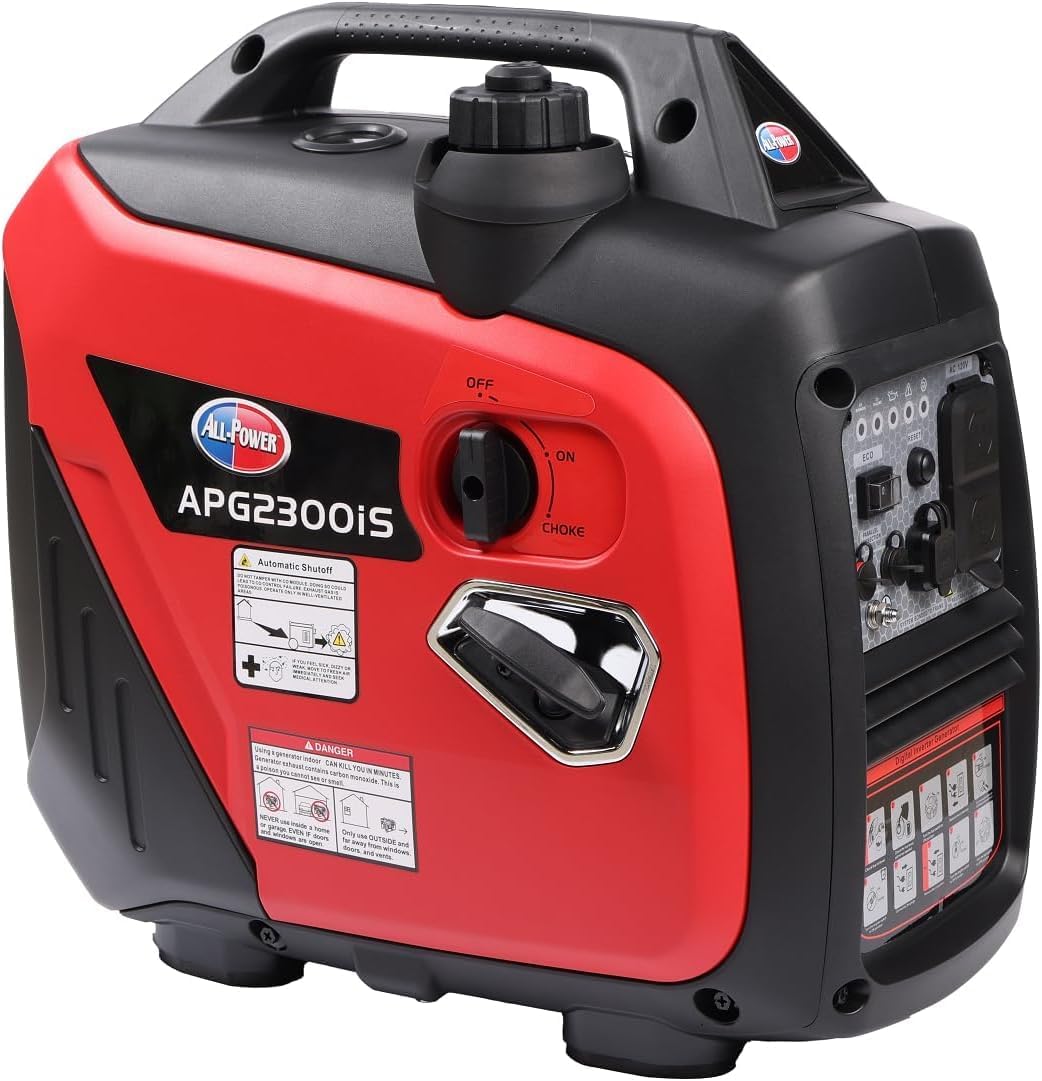
2000W Portable Inverter Generator for Home Use, Quiet Small Generator for Camping Outdoor, EPA Power Station with Fuel Shut Off and CO Minder, ECO Mode
A 2,000W inverter generator that runs on fuel instead of a battery. Fuel shut off, CO Minder, and ECO mode are listed features, but it needs venting and a fuel supply, which is the trade you make for runtime that does not end at a watt-hour count.
Visit on Amazon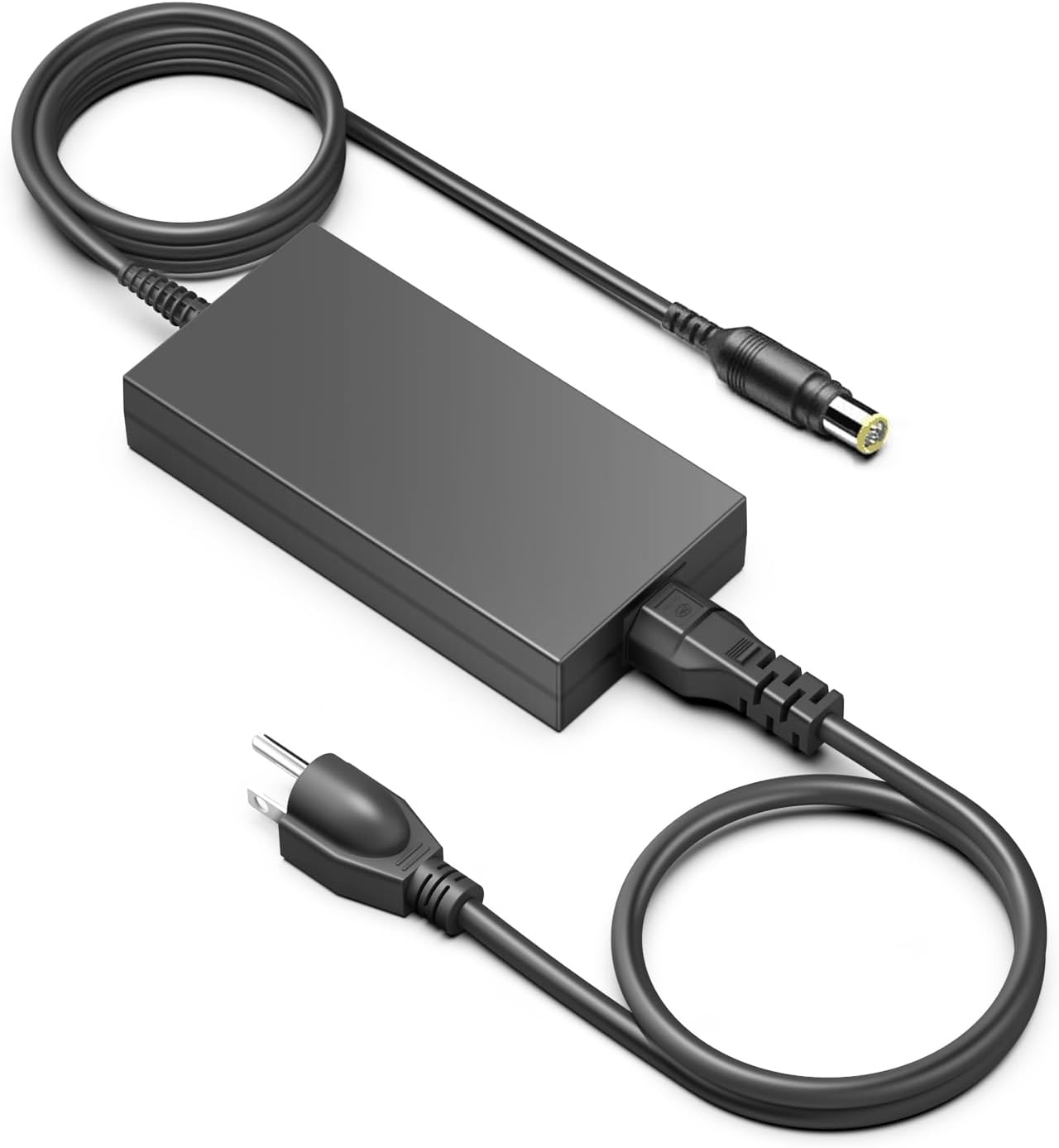
HKY 16V AC Adapter Replacement Goal Zero Yeti X 120W Power Supply Fit Yeti 300/500/700/200X/500X/1000X/1000 Core/1500X/3000X,Yeti 150/400/1250,Yeti Lithium 400/1000/1400/3000 Portable Power Station
Not a power station. This is a 120W 16V AC adapter listed as a replacement power supply for a long list of Goal Zero Yeti models, from the 150 and 300 up through the 1500X and 3000X. It matters here only if you already own one of those units and lost the charger.
Visit on AmazonPrices and availability may change. Check the retailer for current details.
How these products were compared
This guide compares energy capacity in watt-hours, AC output as the manufacturer states it, battery chemistry where the listing names one, expansion and solar charging options, and the practical form factor each product demands. Product names, images, and retailer links are matched so that every card points to the exact product it describes.
The comparison is built from manufacturer specifications and the product listings themselves. It is not a report of hands-on bench testing, and none of the runtime numbers you might see elsewhere in this category should be treated as measured results unless someone tells you what load they ran and for how long. A watt-hour rating is a fuel tank size, not a promise about how long your specific appliance will run.
How to choose the right portable power station
Start with the tank, then the pipe. Watt-hours tell you how much energy is stored, and the AC output rating tells you how much can flow at once. In this group that ratio moves in a straight line: 519.48Wh paired with a 500W inverter, 1,070Wh with 1,500W, 2,010Wh with a 3,000W peak output, and 3,584Wh with a 3,600W AC output. A station with plenty of capacity and a small inverter will run a fridge for a long time but will not start it. A station with a big inverter and a small tank will start the load and then quit an hour later.
Read the output number carefully, because the listings do not all describe the same thing. One product here advertises a peak figure while the others quote an AC output rating, and peak watts are a surge number, not a sustained one. Before you buy, confirm the continuous rating, since that is the number your load actually has to live inside. The same caution applies to the two products that are not battery stations at all: the 2,000W inverter generator makes its own power from fuel and has no watt-hour ceiling, and the HKY adapter is a 120W charger replacement that only serves people who already own a compatible Yeti.
Expansion and chemistry are the second decision. The Jackery HomePower 3600 Plus is the only product here that states LFP chemistry, and the only one that states a path from 3,584Wh up to 21kWh, with two 200W panels already in the box. If your plan is to build a home backup system over a few years rather than buy once, that expandability is the feature doing the work. If your plan is a single unit that covers an outage and then rides in the van all summer, the Anker SOLIX S2000 and the Jackery Explorer 1000 v2 are the two that keep the capacity high without turning the purchase into a permanent installation.
Form factor follows from all of that. The 519.48Wh unit is the one you can move without thinking about it, which is exactly why it exists. The generator is the one that needs outdoor placement, fuel, and maintenance. The adapter is the one that fits in a drawer. Decide which of those three lives in your house before you compare watt-hours at all.
Anker SOLIX S2000 Portable Power Station
The Anker SOLIX S2000 is a 2,010Wh station with a 3,000W peak AC output, positioned by the manufacturer for home backup. That combination is the reason it takes the top pick here. It carries more than twice the stored energy of the 1,070Wh Jackery while staying in a class below the 3,584Wh HomePower system, and its output rating is high enough that the ceiling is set by capacity rather than by the inverter.
For the most common outage load in a house, which is a refrigerator, a router, a few lights, and phone charging, capacity is the number that decides how long you stay comfortable. A 2,010Wh station is a meaningful step up from the 519.48Wh and 1,070Wh options without committing to the size, wiring, and expansion planning that come with a whole-home oriented system.
The trade-off is that Anker states the S2000's figure as peak output rather than as an AC output rating, so the sustained number is the one to verify before you plan around a large motor load. It also does not list solar panels in the box the way the HomePower bundle does, and its ceiling is its own 2,010Wh rather than an expandable bank. If either of those matters more than the capacity per dollar, the next section is where you should be looking.
Alternatives to consider
The Jackery Explorer 1000 v2 Portable Power Station is better suited to travel and camping, where 1,070Wh and a 1,500W inverter are enough for a weekend and the unit still moves easily between a vehicle and a tent. The Portable Power Station 500W is a stronger fit when the honest load list is phones, lights, a laptop, and a router, and when the smaller 519.48Wh footprint matters more than the ability to run a compressor.
The Jackery HomePower 3600 Plus, the 2000W Portable Inverter Generator, and the HKY 16V AC Adapter Replacement cover the rest of the map. The HomePower is for essential home circuits and a system you intend to grow, the inverter generator is for long outages where fuel beats stored watt-hours and you can run it outdoors with the CO Minder doing its job, and the HKY adapter is a single-purpose replacement part for an existing Goal Zero Yeti rather than a product anyone should buy as a first station.
Day-to-day use and maintenance
Battery stations want the same treatment whether they cost a little or a lot. Store them partially charged rather than empty, keep them out of freezing temperatures when they are not in use, and charge them back up every few months so the cells are not sitting at a low state of charge for a season. Pass-through use is convenient, but check the manual for whether your model supports running a load while charging, and follow what it says rather than what seems reasonable.
The inverter generator is the odd one out on maintenance. Fuel left in a carburetor is the most common way small generators fail, which is why a fuel shut off is worth having and worth using every single time. Run it outdoors, never in a garage or against a wall, and treat the CO Minder as a backup to good placement rather than a substitute for it. ECO mode is useful for light loads, but it will not make the unit safe to run indoors.
The HKY adapter has the simplest job in this group: it replaces a lost or failed 120W 16V power supply for a compatible Yeti. Match the model list to your unit before ordering, and keep the original if it still works, since a spare charger is a cheap thing to have on a shelf.
Buying checklist
- Measure the space where the unit will live, and confirm you can lift and move it where it needs to go.
- Choose capacity in watt-hours based on your normal outage load, not on one worst-case appliance.
- Confirm the exact model's continuous AC output rating, not just a peak surge figure.
- Check whether solar panels, expansion batteries, or a charger are included or sold separately.
- Read the storage, charging, and maintenance instructions before the first use.
- Verify the current retailer price, availability, and return terms.
Final recommendation
Choose the Anker SOLIX S2000 Portable Power Station when you want a single 2,010Wh unit with a 3,000W peak output for home backup that also travels, and when capacity is the limit you care about. Choose the Jackery HomePower 3600 Plus Portable Power Station when you are planning essential home circuits, want LFP chemistry and included solar panels, and want the system to expand up to 21kWh over time. Step down to the Jackery Explorer 1000 v2 or the Portable Power Station 500W if your real loads are small, and look at the 2000W Portable Inverter Generator only if fuel-based runtime and outdoor placement fit how you actually live. The HKY 16V AC Adapter Replacement is not an alternative to any of them. It is a spare part, and it only belongs in your cart if a compatible Goal Zero Yeti is already in your garage.