I bought my first power station in 2013 to keep a chest freezer alive through a three day outage, and it taught me the lesson I still lead every review with: a portable power station solar charging setup is only as good as the weakest part in the chain. Twelve years as an electrician and five years of bench testing later, I watch people make the same mistake over and over. They spend the money on the battery, then bolt on whatever panel and cable the algorithm hands them, and then they wonder why the whole thing never quite keeps up.
I live in Salida, Colorado, where the grid drops for days during wildfire season, and I converted a 2004 Sprinter myself, so I have a foot in both camps. The house backup crowd and the van crowd want the same thing from three very different parts.
Related: 12V Vs 120V Charging In A Van
For most people building a van or a small backup kit around this class of battery, the Anker SOLIX C1000 is the part worth spending on, the 100W folding panel is a supplement rather than a plan, and the BougeRV 12V cord is the cheapest runtime extender in the bag. That is the short version. The longer version is about watt-hours over watts, matching the charger to the battery, and knowing which of these three items is doing the actual work.
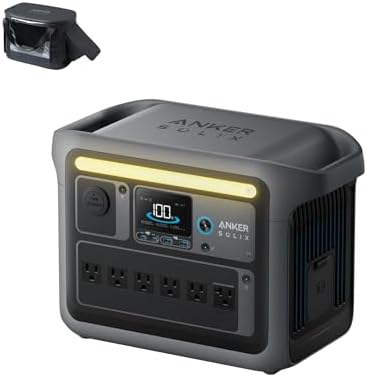
Anker SOLIX C1000 Portable Power Station with Car Charging Cable, 1,056Wh
The battery is the product here: 1,056Wh in a package that still fits under a van bench, with the car charging cable in the box so 12V input works on day one
It is one battery, and its DC input is the bottleneck for anyone trying to refill it from a single small panel
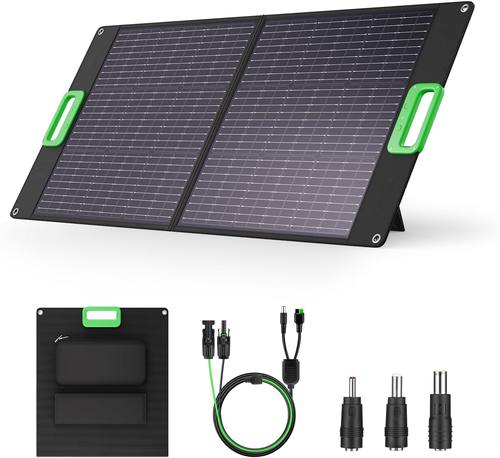
100W Portable Solar Panel for Power Station Generator, 23.5% High Efficiency
High efficiency cells for the footprint, folds flat, and 100W is enough to hold a light load during the day
100W is a trickle against a 1kWh battery, and panel connectors are the most common compatibility headache in this hobby
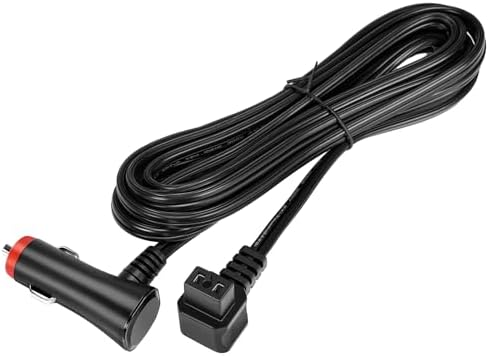
BougeRV 12V/24V DC Power Cord for 12V Car Refrigerator, Fits Most Brands
Turns the station's 12V output into fridge runtime with no inverter in the middle, which is the efficient way to do it
It is a cable. It only helps if you already own a 12V fridge, and the 12V port has a ceiling on how much it will pass
Prices and availability were captured from Amazon Creators API and may change.
Why these three parts end up in the same cart
They look unrelated until you lay them out on a bench. One is a battery, one is a charger, and one is a load. That is a complete system, and a system is what you actually need when the grid goes down or when you are parked somewhere outside Salida with no hookups and a fridge full of food.
The mistake is buying them in the wrong order, or buying the panel first because panels feel like the fun part. Panels are the weakest link in almost every kit I see. The battery is the part that keeps working at 2 a.m. when there is no sun, no alternator spinning, and no shore power within a hundred miles.
The Anker SOLIX C1000 is the piece that carries the kit
At 1,056Wh, this is a real battery, not a toy with a USB port stapled to it. That number is the one that matters, because watt-hours are what you actually spend. A station rated at big surge watts and small watt-hours is a marketing document, not a power supply.
Anker builds the SOLIX line around LiFePO4 cells, which is the chemistry I buy and the chemistry I tell people to buy. It costs more up front and it buys you a decade of charge cycles instead of three good years. If you are going to spend money anywhere in this kit, spend it here.
The car charging cable being in the box matters more than it sounds. A lot of people assume they will charge from the van's 12V socket and then discover they need a separate cable, or a proprietary one, to do it. Having it included means the station works on the drive out and the drive home without a second order.
What it will not do is refill itself quickly. Every battery has an input ceiling, and the smaller the input, the longer the wait. That is the honest limitation of this unit and of every unit in its class. The battery is not the problem. The charging path is.
The 100W panel: doing the math before you buy
Here is the arithmetic nobody does at checkout. A 100W panel, in perfect sun, at a perfect angle, with no shade and no cable losses, produces 100 watts. Run that for ten hours and you have 1,000Wh. That is a full day of ideal conditions to refill a 1,056Wh battery, and ideal conditions are not a thing that happens on a van roof in September.
The 23.5% cell efficiency in the name is genuinely good for a folding panel. Higher efficiency means more watts per square foot, which means a panel that actually fits somewhere. That is a real advantage, and it is the reason this class of panel is worth the money over a cheap rigid one that weighs twice as much.
But efficiency does not change the fundamental relationship. This panel is a top-up device. It holds a light load during the day, it puts something back while you hike, and it keeps a fridge from draining the battery as fast as it otherwise would. It is not a plan for off-grid living. If you want a plan, you buy more battery, not more panels. That is the part solar purists hate hearing.
The other thing to check before ordering any panel is the connector. Proprietary solar connectors are one of my standing pet peeves in this industry, because they turn a universal standard into a brand lock-in. Confirm the plug on the panel matches the input on your station, or budget for an adapter.
The BougeRV 12V cord is the least glamorous useful thing here
This is a DC cord for a 12V car refrigerator, rated for 12V and 24V systems, and it fits most brands of fridge. That is the entire product. It is also the highest-value item in this comparison if you own a 12V fridge, because of what it avoids.
Most people run a fridge off a power station by plugging the fridge's AC brick into the station's inverter. That means the station takes DC from the battery, converts it to AC, and the brick converts it right back to DC for the compressor. Every one of those conversions costs you energy as heat. Skip the inverter entirely and run the fridge off the station's 12V output, and you keep that loss in the battery where it belongs.
The catch is that 12V ports on power stations are not unlimited. They pass a modest amount of current, and a fridge compressor surges on startup. This cord solves the connector problem. It does not solve the port ceiling, and no cable can.
How I test gear like this
Every station that gets a recommendation from me goes through at least three full discharge cycles before I write a word about it. I keep a Kill A Watt meter on the AC side, a thermal camera for anything that runs warm, and a paper logbook, because a spreadsheet lets me fudge a number and paper does not. My old master electrician, Rick, taught me to write down what the meter says even when it embarrasses the brand. That habit has cost me free samples and saved readers a lot of money.
For panels, the test is simpler and more brutal: shade one cell and watch what the output does. For cables, I look at connector fit and conductor gauge, then I run the load and feel for heat. A cord that warms up under a steady load is a cord I will not recommend, no matter how it is marketed.
I also disclose every free sample, and I will not put a link on a page without the test notes behind it. That is the rule I hold myself to.
The trade-offs you are actually choosing between
Buy the C1000 and you get capacity, a real inverter, and a battery you can live with for years. You also get a unit that needs a serious charging path to be useful on a long trip, and a single 100W panel is not that path.
Buy the 100W panel and you get a portable, efficient top-up source that folds into a closet. You also get a device that underdelivers in shade, in clouds, and in winter, and that will never keep pace with a 1kWh battery on its own.
Buy the BougeRV cord and you get a cheap, efficient way to run a fridge for days instead of hours. You also get a cable that does nothing at all if there is no 12V fridge in your life.
Stacked together, the three make sense: battery as the bank, panel as the trickle charger, cord as the efficient load. That is a coherent kit, and it is roughly what I run in the Sprinter.
Who should buy which one
If you have $600 to spend and a real outage risk, buy the station. Capacity first, always. A power station with no panel still runs your fridge overnight. A panel with no battery runs nothing after dark.
If you already own a capable station and you want to stretch it, add the panel. It will not refill the battery in a day, but it will slow the drain enough to matter on a three day trip.
If you own a 12V fridge and you are still running it through an AC brick, buy the cord. It is the smallest purchase in this article and the one most likely to change how long your battery lasts.
What I am testing next
The question on my bench right now is whether 12V-only charging is worth it at all. Alternator charging is free once the cable is in place, but the input is slow and it only works when the engine runs. Solar is silent and free after the purchase, but it depends on weather you cannot control. The people who are happiest with these systems are the ones who stop treating either one as a religion and size the battery to the real load.
I am also watching the 2kWh class. My standing prediction is that the price gap between 1kWh and 2kWh units keeps closing, and when it does, a lot of people who bought a 100W panel to rescue a small battery will wish they had just bought more battery. Watch the used market after the next bad storm season. Flooded units tell you more about durability than any spec sheet ever will.
One last note on ordering. If you want to check today's numbers on any of these three, the product pages are below, and I would rather you verify the fit yourself than take my word for a connector size.
Visit on Amazon → for the Anker SOLIX C1000 Portable Power Station.
Visit on Amazon → for the 100W Portable Solar Panel.
Visit on Amazon → for the BougeRV 12V/24V DC Power Cord.