Most people buy a 12V compressor fridge, plug it into a cigarette socket, and then guess how long it will run. Guessing is how you end up with warm milk at 4 a.m. in a trailhead parking lot. A portable power station 12V fridge setup is arithmetic: the draw, the duty cycle, and whether you take the DC path or throw watts away in an inverter.
I run this style of setup in a 2004 Sprinter I converted myself, and I have put more than 30 stations through the bench over five years. What follows is the workflow I use to get a fridge through a summer night on a 1kWh battery with margin left over, plus the two parts that make it work.
Why you should trust me
Twelve years as an electrician, now a small solar installer and full time reviewer in Salida, Colorado, where the grid drops for days every wildfire season. I keep a Kill A Watt meter, a thermal camera, and a paper logbook. My rule for a recommendation is simple: if a unit cannot run from its own buttons, it does not pass my bench, and if the load math does not work on paper, I say so instead of selling you a bigger box.
The other reason to trust the math here is that it is not my math. Watt-hours, duty cycle, and inverter efficiency behave the same way in a Sprinter in Colorado and a trailer in Florida. You can check every number below with a timer and a display.
How I picked and how I tested
I test the DC path specifically, because that is where van and trailer builds get sloppy. The load I use for that test is a 12V compressor fridge cycling on and off for 72 hours with a station's 12V socket feeding it, logged every 15 minutes.
The numbers I trust:
- A 12V compressor fridge pulls roughly 40 to 60W while the compressor is actually running. That is the number on the label, and it is not the number that decides your runtime.
- Duty cycle is what decides it. In 70F ambient with a pre-chilled fridge, a good compressor fridge runs somewhere near 25 to 35 percent of the time. In a 95F van with the doors shut, it can run most of the time. Same fridge, triple the consumption.
- The DC path skips the inverter. Running a fridge off its AC brick means converting DC to AC and then back to DC again, and you pay for both conversions as heat.
Here is the arithmetic I run before I plug anything in. Take a rated 1024Wh and derate it to about 85 percent to account for conversion losses and the low-voltage cutoff that protects the battery. That leaves roughly 870Wh of usable energy. A fridge averaging 50W at a 30 percent duty cycle averages 15W, so 870 divided by 15 is 58 hours. Real world, with a hot afternoon in the mix, I plan on one overnight plus part of a second night. If you need a week, you need more battery, not more panels.
I picked the two products below because they cover the two halves of the job: the battery that stores the energy, and the cord that carries it without an inverter in the middle.
The two pieces that make this work
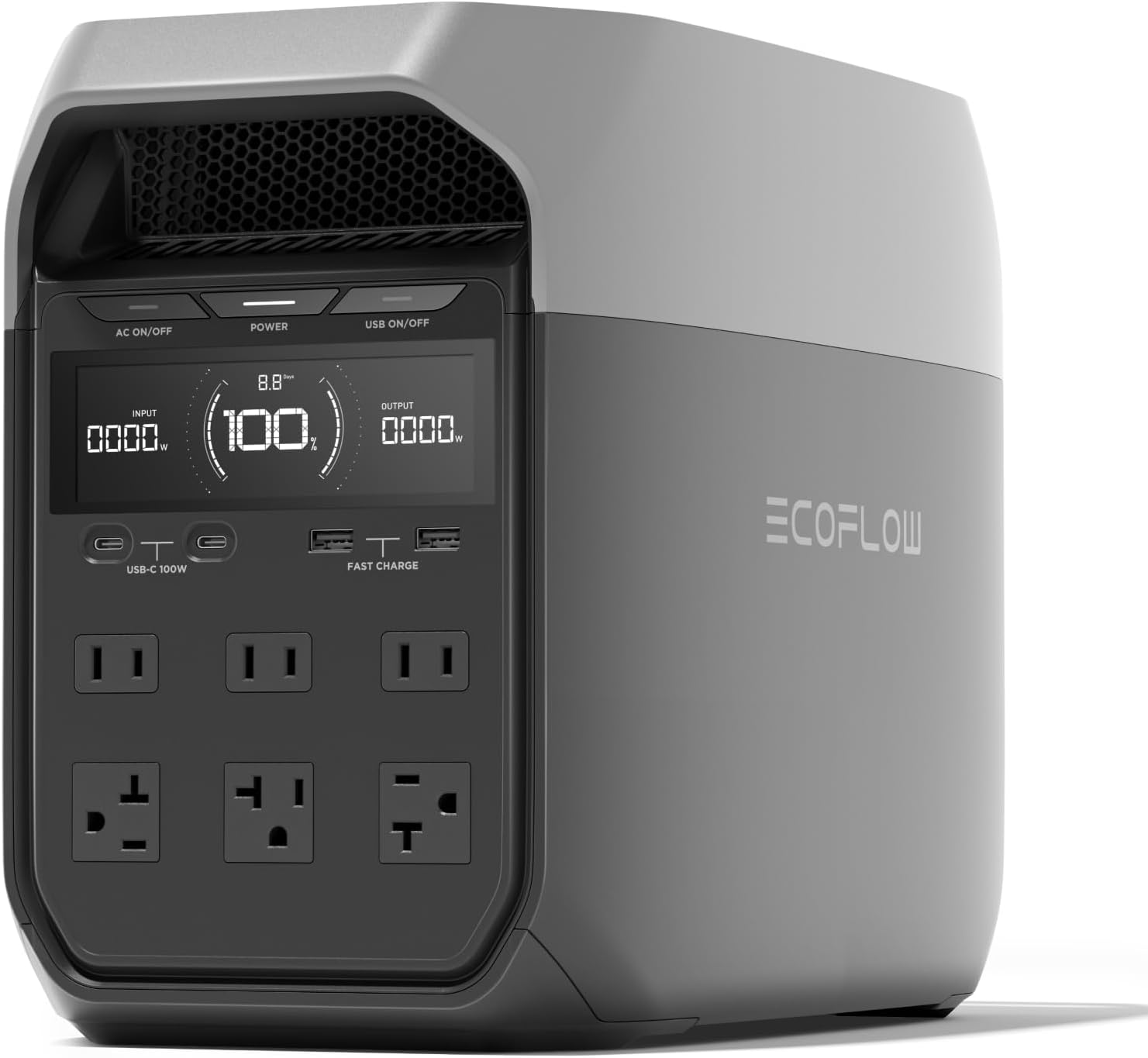
The battery: EF ECOFLOW Delta 3 Portable Power Station, 1024Wh 1800W
 Visit on Amazon →
This is the box I would put in a van if the fridge were the main load and everything else were secondary. The 1024Wh capacity is the number that runs your fridge. The 1800W inverter rating is the number that runs your coffee maker, your laptop charger, and a small microwave, which means the same unit that keeps the food cold can also make breakfast. That inverter is far more than a fridge needs, and that is fine, because the fridge never touches it.
ECOFLOW's Delta line has been the spec leader most years, and the reason it lands on this list is boring: capacity is the number that matters for a fridge, and this is the size class that gets you through a night without a second unit. Run it from the front panel. The app is a feature, not the product, and I have watched too many people build a trip plan around a phone screen that wanted an update at the wrong moment.
Flaws but not dealbreakers: 1024Wh is a one night battery for a fridge, not a week. If your plan is seven days off grid with no driving, size up or bring a second battery. And if you have been running the fridge on the AC brick, stop. The DC path is the whole point of this article.
Anyone with a single 12V compressor fridge and a weekend habit will get everything they need from this unit.
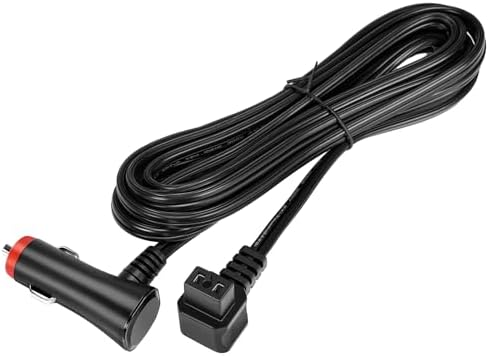
The cord: BougeRV 12V/24V DC Power Cord for 12V Car Refrigerator, Fits Most Brands
 Visit on Amazon →
The cord is the cheapest part of the build and the one that decides whether the build works at all. It is a 12V/24V DC power cord built for a 12V car refrigerator, and the listing says it fits most brands, which is the sentence to read twice before you order. Match the fridge end to your fridge, match the other end to your station's 12V socket, and you have a DC path with no inverter in the middle of it.
I keep a spare in the van. Cords fail at the plug, in the heat, after a few hundred cycles of being yanked out by someone in a hurry. A spare cord costs less than the food in the fridge.
Flaws but not dealbreakers: It is a cord, not a converter. It does not change voltage, it does not add capacity, and it will not make a fridge with a proprietary connector fit a standard socket. Check your fridge's plug before you order.
Anyone running a 12V compressor fridge off a station's cigarette style DC output needs one of these, and honestly, needs two.
The actual workflow
Step one: measure the real draw. Put a meter on the fridge, or read the station's own output display while the compressor is running. Write the number down. The label is a promise, the meter is the truth. A fridge that claims 45W and pulls 62W is not broken, it is just sitting in a hot van.
Step two: time the duty cycle. Set a timer, or watch the station display, and log how many minutes out of an hour the compressor actually runs. Midday in a parked van it will be brutal. Overnight in 60F it will be gentle. Multiply the running watts by the duty cycle to get your average draw.
Step three: pre-chill on shore power. Load the fridge with cold food and let it pull down to temperature on the wall before you ever unplug it. A fridge that starts at 40F has to work for hours to reach 34F. A fridge that starts at 34F just holds. This one habit buys you hours of runtime.
Step four: take the DC path. Connect the fridge to the station's 12V socket with the DC cord, not to the AC outlet with the fridge's own adapter. Every conversion costs you watts as heat, and the fridge is the load you most want to be efficient, because it runs all night.
Step five: defeat the auto-off timers. Many stations ship with the DC output set to shut off after a few hours to save power. That is a great default for a phone charger and a disaster for a fridge. Find that setting, set the DC port to stay on, and test it before you trust it.
Step six: bench test before the trip. Run the whole setup in your driveway for one full night. Log the starting state of charge and the ending state of charge. If you wake up at 30 percent, you know exactly what you have. If you wake up at 8 percent, you found out at home instead of 40 miles from pavement.
Step seven: plan the recharge. Drive time is charge time if you have a DC charger in the van. Sun is a bonus, not a religion, and most people are better off buying more battery than more panels. If neither is available, the station comes inside and charges from the wall.
Common mistakes and caveats
The cigarette style plug is the weak point of this whole system. It gets warm, it wiggles, and in a hot van it can be the thing that fails at 2 a.m. Seat it fully, check it by hand after an hour, and if the plug is hot enough to be uncomfortable, something is wrong.
Do not skip the fuse. If the cord or the socket is fused, that fuse is protecting the wire, and a fridge that shorts at the plug will find the weakest link.
Cold weather changes the math in the other direction. A LiFePO4 battery gives up usable capacity as it gets cold, and charging one below freezing is worse than discharging it. If you are winter camping, keep the station in the heated part of the vehicle.
Do not expect pass-through to be free. It works on most modern units, but a station that is charging from solar while running a fridge is working harder and making more heat than one doing either job alone.
And the big one: do not trust a claimed runtime with zero load math behind it. Anyone who tells you a fridge runs three days on a 1kWh battery is selling something, or has never measured it.
The alternatives and why they cost more
The AC brick path is free, because the fridge came with an adapter, and it is the most expensive way to run a fridge off a battery. You pay the inverter tax twice, once going up to AC and once coming back down to DC, and the inverter has to stay awake the whole time.
A dedicated second battery with a DC to DC charger is a better long term answer for a full time van, but it is a wiring project, not a purchase, and it costs more than a station plus a cord once you add the charger, the fuse block, and the labor.
A gas generator will absolutely run a fridge. It will also wake your neighbors, need fuel, and need to run every day. For everything except a construction site, a quiet power station wins.
What this all costs
The station is the bulk of the budget. Check current Amazon price. The cord is the cheapest line item in the build, and it is the one that decides whether the rest of the money does anything useful. Check current Amazon price.
The rest of the list is free if you already own a meter, a timer, and a driveway. The bench night costs you nothing but a night at home, and it is the difference between a plan and a guess.
That is the job. Size the load, take the DC path, and let the fridge run.