A 12V car fridge power station setup is the rare off-grid project where the math tells the truth. A compressor fridge draws a known number of watts, runs a known fraction of the day, and either your battery covers that number or it does not. No marketing language survives a thermometer dropped into the milk jug.
I have been an electrician for twelve years, and I run a small solar install business out of Salida, Colorado, where the grid drops for days every wildfire season. My 2004 Sprinter has carried a 12V compressor fridge since the second summer I owned it, and I have pushed more than 30 power stations through discharge cycles on my bench with a Kill A Watt and a paper logbook. A spec sheet is a promise. The meter is the truth.
What follows is the workflow I use to hang a fridge on a portable station: size the real load, match the cord, run a discharge test at home, then plan the recharge. Do it in that order and you will never wake up to warm cheese and a station sitting at 8 percent.
Why the load math comes first
Most people buy the station, then find out what the fridge actually costs them. That is backwards, and it is expensive.
A fridge nameplate says something like 45W or 60W. That is the compressor running, at full pull, at a given ambient temperature. It is not what the fridge uses per hour, because the compressor cycles. It runs for a while, the plate gets cold, it shuts off, then it starts again when the thermostat tells it to.
The number that matters is watt-hours per day. That is nameplate watts times duty cycle times 24 hours. In a 70 degree van, a decent 12V compressor fridge cycles somewhere around 25 to 40 percent of the time. Parked in direct sun on a 95 degree afternoon, that duty cycle can climb past 50 percent. Same fridge, nearly double the daily draw.
Buying a 2000Wh station to run a fridge that needs 350Wh a day is like buying a dump truck to get groceries. You paid for capacity you will never discharge, and you carried the weight of it every mile. Size to the measured load, not the sticker on the box.
What you need before you start
Two pieces of gear. One of them is the expensive part, and one of them is the piece people get wrong.
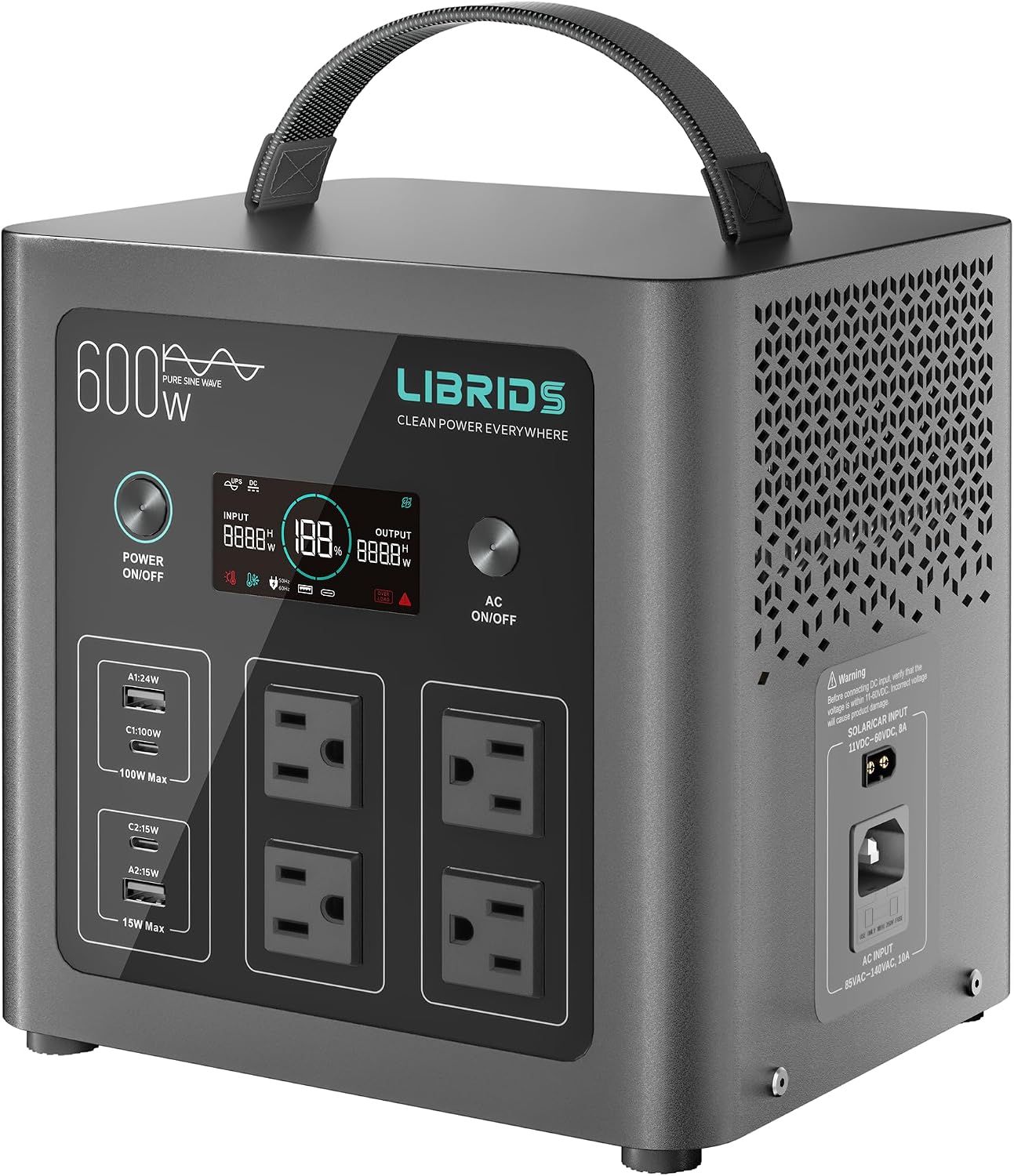
The power source: LIBRIDS Portable Power Station 640Wh, 1200W Surge, Solar Generator 4 AC
 Visit on Amazon →
This is a 640Wh station with four AC outlets and a 1200W surge rating. Here is how I read those numbers for fridge duty. LiFePO4 chemistry tolerates a deep discharge, so plan on roughly 90 percent of the rating as usable, which puts you near 575Wh of real work. Divide that by a 350Wh day and you get about a day and a half of fridge runtime before the station needs a charge. That is a weekend unit for a fridge, not a week-long unit, unless you are recharging it as you go.
The 1200W surge rating is the spec worth checking if you plan to start the fridge on AC. Compressor startup inrush is the hard part of the load, not the running watts, and a station that cannot handle the inrush will trip its inverter the moment the compressor kicks on. This one has the headroom for that job.
Flaws but not dealbreakers: This is a mid-size station, and it behaves like one. Run the fridge, a laptop, and a small fan and you are fine. Add a coffee maker or an induction burner to the same day and the runtime math collapses. Four AC outlets do not mean four heavy loads at once.
Anyone running a single 12V compressor fridge on weekend trips, or using the station as a home backup for a router and a freezer, is in the right size class here. If you want to run a full-size fridge for three days, this is not that unit.
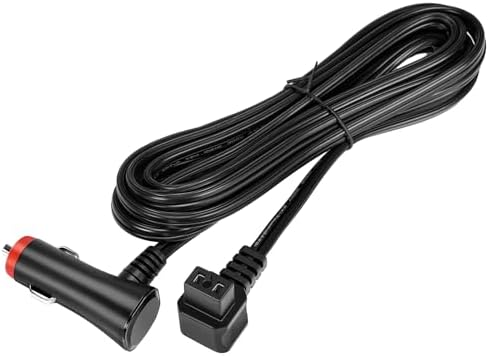
The cord: BougeRV 12V/24V DC Power Cord for 12V Car Refrigerator, Fits Most Brands
 Visit on Amazon →
This is the cheapest part of the setup and the one that decides whether you lose 10 to 15 percent of your capacity to an inverter you did not need to use. The station stores DC. The fridge runs on DC. Every time you convert DC to AC and back to DC, you pay a tax in heat and lost watt-hours. A DC cord lets the fridge run straight off the 12V output and skips the whole conversion.
The "fits most brands" language is the part to take seriously. Fridge makers have never agreed on one plug. Some use a two-pin DC connector that looks like a cigarette plug, some use a barrel plug, and a few use proprietary connectors. Check the plug on your fridge before you order, and check the polarity diagram on the cord against your fridge's manual, because reversing polarity on a compressor control board is an expensive mistake.
The cord covers 12V and 24V. Most portable fridge and van setups are 12V, so verify the input voltage on your fridge's label before you plug anything in.
Flaws but not dealbreakers: This cord does not create a 12V outlet where none exists. If your station only has AC outlets and USB ports, you will be running the fridge on its own AC adapter, and you will pay the inverter tax on every cycle.
Step one: get the fridge's real daily draw
Do this before you buy anything else.
Look up the rated watts on your fridge's label, then estimate the duty cycle honestly for your climate and your season. Multiply: rated watts times duty cycle times 24. A 45W fridge at one third duty cycle is 45 x 0.33 x 24, which lands near 356Wh per day. Round up, not down. Fridges work harder in summer, in a hot parked van, and when you keep opening the lid.
If your station reports output watt-hours, use that readout as your real number instead of your estimate. That is the meter talking. If you want a hard number on a DC circuit, a clamp meter around the positive lead will give you actual running amps, and that is better data than any label.
Step two: run the fridge on DC, not AC
Plug the fridge into the station's 12V output with the DC cord, not into an AC outlet with the fridge's wall adapter.
Keep the run short. At 12 volts, a long thin cord drops voltage, and a compressor that sees low voltage pulls more current to make up for it, which is how cords and fuses get hot. Use the cord that was built for this job, keep the slack coiled rather than stretched across the van, and check that any inline fuse in the cord is seated properly.
Step three: pre-chill, then test at home
This is the step people skip, and it is the one that saves the trip.
Pre-chill the fridge on AC power or on the van's alternator before you switch it to the station. Pulling an empty fridge down from room temperature is the single biggest load the compressor will ever see. Starting from cold, the station only has to hold temperature, not build it.
Then load the fridge with water bottles or already-cold food. A full fridge holds its temperature better than an empty one because the contents are thermal mass. An empty fridge is a box of air that loses its cold the moment you open the lid.
Now run a full discharge test at home, in your driveway, with the fridge set to its normal temperature. Write down the station's percentage every couple of hours and note the outside temperature. When the test ends, you know your real runtime in your real conditions. Do this once and you will never guess again on the road.
Step four: plan the recharge before you leave
A 640Wh station running a fridge is a two-day battery at best, so the recharge plan is not optional.
The easy option is driving. Most stations accept a 12V car charging cable, so the fridge runs off the station overnight and the station refills from the alternator while you are on the road. That is the classic van pattern and it works well on any trip where you move every day or two.
Solar is the second option, and this is where I stop people from overspending. The station is sold as a solar generator, which means it takes a panel, but a 100W panel in good sun typically delivers 60 to 70W into the battery after real-world losses. Over five good hours that is roughly 300 to 350Wh, about one fridge day. That is a top-up, not a religion. Buy the panel that matches the station's input rating and let it stretch your stay, do not expect it to carry the whole load in the shade of a pine tree.
Campground AC is the third option, and it is the one that resets everything. Plug in overnight, start the next day at 100 percent.
One caveat on all of this: check whether your station supports pass-through charging, meaning it can charge and power a load at the same time. Some do it cleanly, some limit it, and some get warm doing it. Test it at home first.
Step five: trim the load at the fridge
The cheapest watt-hour is the one you never spend.
Set the fridge to its normal food-safe temperature rather than its coldest setting. Every degree colder costs compressor time. Fill the empty space with water bottles. Keep the fridge out of direct sun and off hot floor surfaces, because ambient temperature drives the duty cycle more than anything else you control. Open the lid less, and pull everything you need in one grab. Pre-chill groceries at home before they go in.
The cost math
Run the arithmetic with the current prices before you decide this is expensive.
The alternative is buying ice. A bag or two a day for a week-long trip adds up fast, and ice melts, soaks your food, and is gone by day two. The station and cord are a one-time purchase that keeps working for years, and the station has other jobs when the trip is over: home backup for a router, a freezer, a phone bank during an outage. That is the case for the setup. Do the division over five years of use and the per-day number is small.
Caveats and hard limits
A few things this setup will not do, so you are not surprised.
It will not run a full-size household fridge. That is a 2000Wh and up class of unit with a transfer switch, and it is a different article.
It will not last a week on its own. You need a recharge plan, full stop.
Cheap thin-gauge DC cords will drop voltage and stress the compressor. Buy a cord rated for the job.
If your station only has AC outlets, you lose the inverter efficiency and the runtime math gets worse.
LiFePO4 batteries do not like being charged below freezing. Discharging in the cold is fine, charging is not. In a Colorado winter, keep the station inside the heated space or warm it before you plug in a panel or a charger.
Quick answers
How long will a 640Wh station run a 12V fridge? With a 350Wh daily draw, about a day and a half of usable capacity. Pre-chilled food and a cooler ambient temperature stretch that.
Can I run the fridge while the station charges? Only if the station supports pass-through charging. Test it at home before you rely on it.
Do I need solar? No. Driving and campground AC will cover most trips. Solar buys you extra days parked in one spot, and it is a supplement, not a replacement for a real charge source.
Can I use the fridge's own AC adapter instead of a DC cord? You can, and you will lose 10 to 15 percent of your capacity to the inverter doing it.
Get the draw number first, then match the station and the cord to it. That is the whole job, and it is the difference between a fridge that runs all weekend and a fridge that quits on Saturday night.