Every 12V car refrigerator power station setup I look at fails for one of two reasons: the cord is wrong for the outlet, or the battery was sized off the sticker instead of off the meter. The fridge is almost never the problem. The math is.
I run a 12V compressor fridge in a Sprinter I wired myself, and I have watched a 100Ah battery that "should" run it for two days quit after nine hours. The van was 90 degrees, the fridge was loaded with warm groceries, and the compressor never got to rest. Nobody measured the duty cycle, so nobody saw it coming.
This is the order I do it in: measure the load, size the battery, match the cord to the inlet, then run the whole thing through a real overnight before I trust it with food. No sticker math, no peak-wattage fantasy.
Why you should trust me
I spent 12 years as an electrician before I started doing solar installs and testing power gear full time out of Salida, Colorado. The grid here drops for days during wildfire season, so a station that cannot hold a fridge through a long outage is a paperweight to me, not a product.
I have bench tested more than 30 power stations over five years. My kit is boring on purpose: a Kill A Watt meter, a clamp meter, a thermal camera, and a paper logbook where every number goes down with a date. I will not publish a runtime I have not discharged at least three times, and I will not recommend a unit that cannot run from its own buttons when the app is offline.
Free samples get disclosed. Units that fail get written up the same way units that pass do.
How I picked and how I tested
The gear in this guide solves the two hard parts of a fridge build: getting the connector right, and having enough watt-hours to survive a multi-day outage instead of one night.
The method is the same one I use on every fridge setup. I measure running amps at the fridge inlet, not at the battery, because that is where voltage sag shows up. I measure startup surge, because a compressor motor is not a resistive load and it does not ask politely. Then I log duty cycle over a full 24 hours in a van sitting in the sun, because duty cycle is the number nobody measures and the number that decides whether your battery lasts two days or ten hours.
The math I trust: watts equals amps times volts. Watt-hours per day equals running watts times the hours the compressor actually runs. A 12V compressor fridge in the 40 to 60 quart class usually pulls somewhere in the 3 to 6 amp range while the compressor is running, and in a van at 75 to 85 degrees the duty cycle is often a third of the time or less. Hot van, warm load, and that duty cycle climbs toward half. That swing is the difference between a comfortable margin and a dead battery at 2 a.m.
The two pieces that matter
Everything else in a fridge build is wire, fuses, and patience. These are the two parts that decide whether the system works.
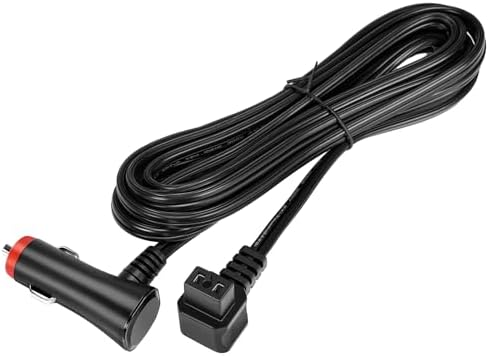
The cord that decides the whole build: BougeRV 12V/24V DC Power Cord for 12V Car Refrigerator, Fits Most Brands
 Visit on Amazon →
This is the part people skip, and it is the part that fails first. The cord is built for 12V and 24V systems and it is made to fit most refrigerator brands, which matters because the inlet on a compressor fridge is not standardized across manufacturers. A plug that does not seat fully is a resistor. It heats up, it drops voltage, and the compressor either short-cycles or refuses to start on a hot afternoon.
Two things to check before you order. First, look at the inlet on your own fridge. If it uses the common two-pin 12V style, this cord is the right part. If your fridge has a proprietary twist-lock connector, no universal cord will save you and you need the brand's own cable. Second, check polarity and pin orientation against the cord before you plug anything in. Getting that backwards is how people kill a fridge controller.
Flaws but not dealbreakers: It is one cord, not a system. There is no fuse in the line and no strain relief beyond what the plug provides, so if your fridge sits across the van from the outlet, add an inline fuse and keep the run short. Long, thin 12V runs are where voltage goes to die.
Anyone running a 12V compressor fridge off a station's DC outlet, or off a van's house battery, needs one of these in the bag as a spare. They are cheap insurance.
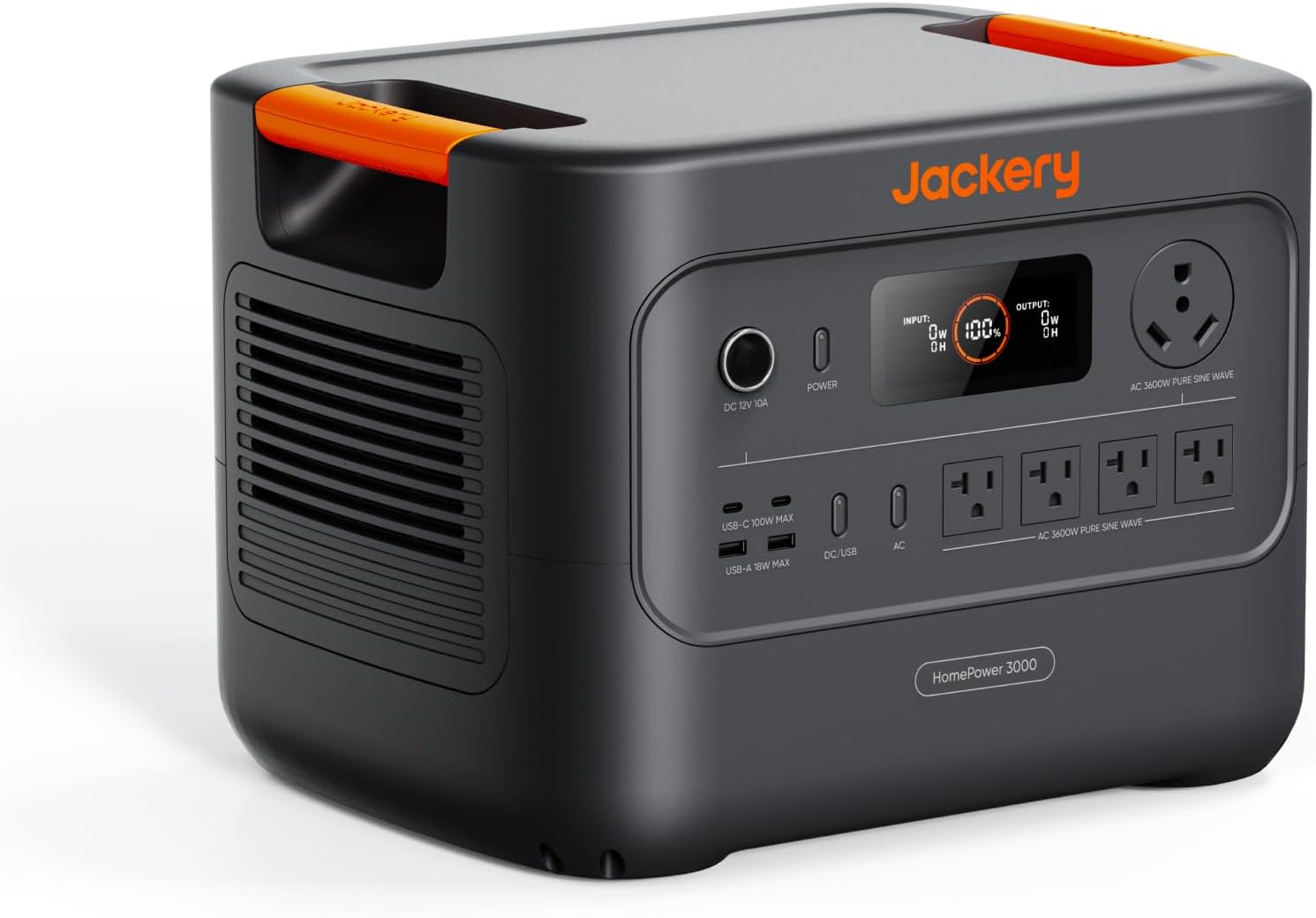
The battery for a multi-day outage: Jackery HomePower 3000 Portable Power Station, 3072Wh, 3600W AC Output
 Visit on Amazon →
This is the other end of the problem. A fridge that eats 700Wh a day is a two-day proposition on a 1,500Wh station and a four-day proposition on this class of unit, and the difference matters when the grid is out and you are also running a freezer and a few lights. The 3072Wh capacity is the number I care about here, and the 3600W AC output is what lets the same box carry a well pump, a full-size fridge, or a chest freezer during an outage without tripping.
For the van, the honest advice is to run the fridge on DC where you can, because inverting 12V up to 120V and then back down to 12V inside the fridge costs you roughly 10 to 15 percent of your stored energy as heat. That is energy you paid for and then threw away. The AC side is the fallback and the home-backup side, not the efficiency play.
Flaws but not dealbreakers: It is a big box with a premium price, and if all you need is a weekend of fridge cooling in a small van, you are buying capacity you will not use. Match the station to the load, not to the spec sheet. Also confirm the rating on your station's DC outlet before you hang a fridge off it, because a socket that is fused for less than your compressor's surge will pop at the worst time.
Anyone who wants one box that covers the van fridge, the home freezer during an outage, and a few days of real load should look here first.
The step-by-step setup
This is the order I do it in, and I do not skip steps two or five.
Step one: Measure the fridge's real draw. Clamp meter around the DC positive lead, fridge running, compressor on. Write down running amps and startup surge. If your fridge also has an AC adapter, a Kill A Watt on that side gives you a second number to check against.
Step two: Convert to watt-hours per day. Running watts times hours of compressor run. Do not use 24 hours. Use your measured duty cycle, and if you have not measured it, use half for a hot van and a third for a cool one. Then add margin, because duty cycle climbs when the fridge is in direct sun.
Step three: Add the inverter tax if you are running AC. Inverting costs roughly 10 to 15 percent. On a 700Wh day that is up to 100Wh you never get to use. DC is the efficient path whenever the outlet is rated for it.
Step four: Size the battery with margin. Daily watt-hours times the days you need, plus 20 to 30 percent for cold weather, aging cells, and the fact that you should not plan to use 100 percent of a battery's capacity. LiFePO4 is happiest living between roughly 20 and 90 percent state of charge.
Step five: Match the cord to the fridge inlet. This is where the BougeRV cord earns its place. Check the connector style on your fridge, check polarity, then check it again.
Step six: Check the outlet rating and the fuse. Know what your station's DC outlet is rated for and know what your fridge surges to. If surge exceeds the socket rating, you need a different plan, not a bigger fuse.
Step seven: Pre-cool on shore power. Put the fridge on AC at home the night before a trip. Every degree you do not have to pull down on battery is watt-hours you keep.
Step eight: Load it full and cold. A full fridge holds temperature far better than an empty one. Frozen water bottles and cold drinks are thermal mass, and thermal mass is free runtime.
Step nine: Log the first overnight. Write down start percentage, end percentage, outside temperature, and fridge setting. One night of real data beats a week of guessing, and it tells you whether your margin is real.
Common mistakes that kill a fridge run
Trusting peak wattage instead of sustained draw. A compressor's surge number tells you whether it will start. It says nothing about how long you can run.
Using a long, thin 12V cord or a cheap extension. Voltage drop at the fridge inlet is the enemy, and the compressor will brown out before your battery is anywhere near empty.
Blocking the vents. A fridge needs airflow across its condenser and a station needs airflow across its own electronics. Stack gear against either one and you are heating the box you are trying to cool.
Setting the fridge to its coldest setting for no reason. A few degrees colder costs real watt-hours every single day.
Draining the battery to zero. Depth of discharge is what kills cycles. Plan to stop well above empty, every time.
Assuming solar will save the day. A 100W panel on a van roof in the shade of a pine tree is not a 100W panel. Solar is a bonus, not a religion, and most people are better off buying more battery than more panels.
The competition and why it lost
A dual-battery setup with an isolator is a great answer if you drive every day and you are comfortable running your own wiring. It is a bad answer for a rig that sits parked for a week.
A dedicated fridge battery box is fine for a single appliance and useless for everything else, and it usually costs close to a real station while giving you a fraction of the usable watt-hours.
A gas generator will run a fridge forever on a gallon of fuel, and I still will not recommend one for a van or a cabin you are sleeping in. Noise, exhaust, and maintenance. Gas is for construction sites. For everything else a quiet station wins.
An AC-only cooler is not in this conversation at all. It is a different product with a different job.
What this all costs
The cord is the cheapest part of the build and the one that causes the most failures, so buy it and keep a spare. Check current Amazon price on the BougeRV cord, and check current Amazon price on the HomePower 3000, then do the only math that matters: divide the total by the number of days you will actually use the setup over five years.
A van fridge that runs 100 days a year for five years is 500 days. Even a premium station plus a $20 cord lands in the low single digits per day, and that is before you count the food it saves during a four-day outage in July.
Size the load first, buy the battery second, and match the cord to the inlet before you plug anything in. Do that and the fridge runs all weekend. Skip it and you will be the person writing a one-star review about a station that was never the problem.