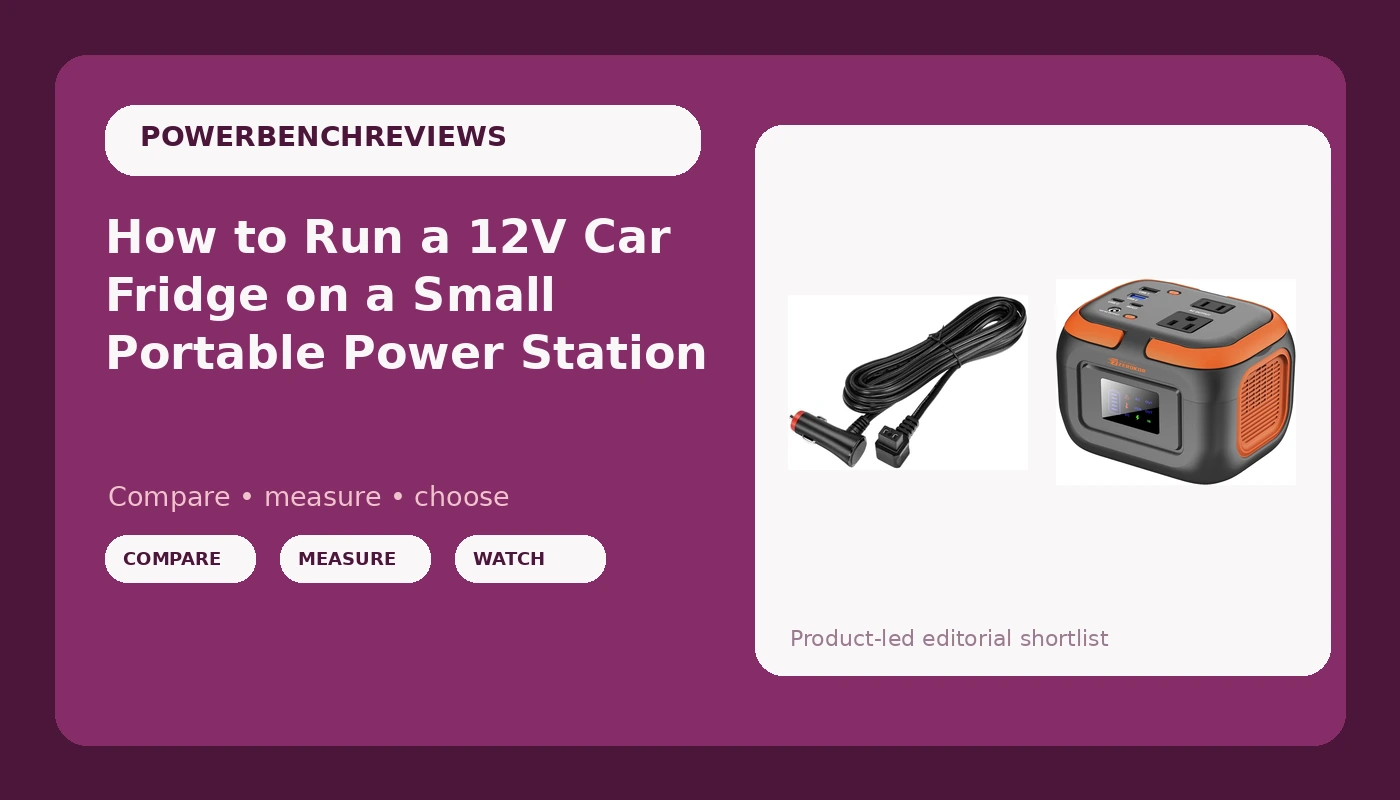
Most people buy the station first, then find out the fridge does not run the way they pictured it. A car fridge power station setup is a math problem before it is a shopping problem: a 45W compressor that cycles a third of the day eats roughly 360Wh in 24 hours, and no product page says that as plainly as your own arithmetic does.
I am Dan. I have been an electrician for 12 years, I run a small solar install business out of Salida, Colorado, and I have put more than 30 portable power stations through a bench test with a Kill A Watt meter, a clamp meter, and a thermal camera. The grid here drops for days every wildfire season, and I spend 20-plus nights a year in a Sprinter van I wired myself, with a fridge humming in the back.
The whole job comes down to four moves: pick a station with a real 12V DC outlet, get a cord that actually fits your fridge, run the duty-cycle math before you buy, and test the setup for heat and pass-through behavior before you trust it with a week of food.
Why you should trust me
I left a crew job in 2019 and have been wiring off-grid cabins and van electrical systems since. A power station's spec sheet is a promise and the meter is the truth, so every runtime claim I make has a number behind it and a dated entry in a paper logbook. I do not write about a unit I have not run from its own buttons with the app uninstalled, and I disclose every free sample.
I care about this specific job because I have watched people spend money twice. They buy a big station for a load that needed a small one, or they buy a small station and try to run the fridge through the AC outlet, and the compressor trips the inverter on the first hot afternoon.
How I picked and how I tested
I do not recommend a station I have not discharged at least three times, and I do not recommend a DC cord without knowing the plug fits both the socket and the fridge inlet. For this guide I picked against four criteria: a real 12V DC outlet with a documented current rating, a watt-hour figure published in the listing, buttons that run the unit without the app, and a price that makes sense for the load. The cord had to be purpose-built for 12V and 24V fridge duty and had to fit more than one brand of inlet.
What you need before you start
Two pieces of gear do the work here, and only one of them is expensive. The station supplies the 12V DC, and the cord carries it to the fridge. Everything else in the workflow below is free.
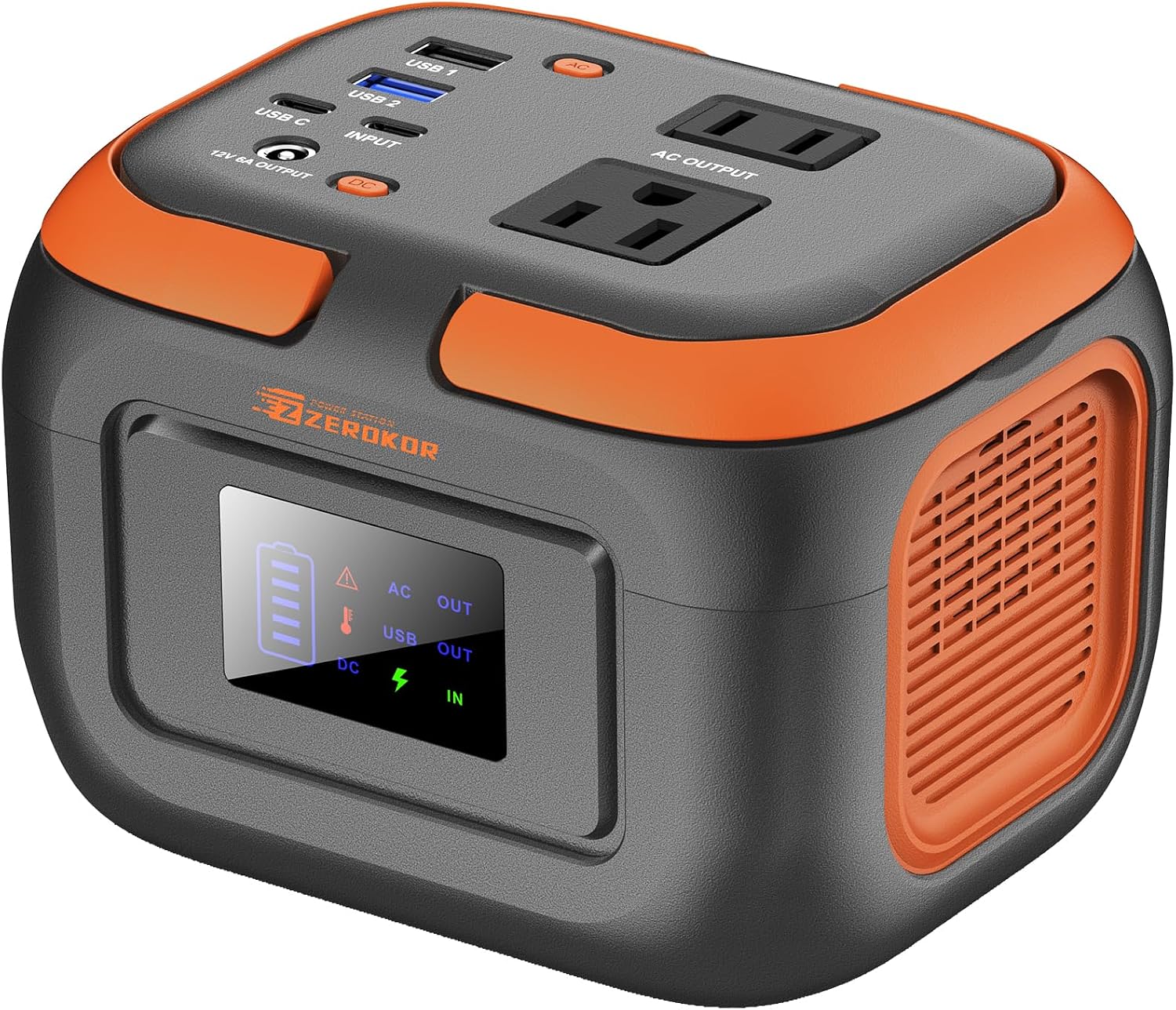
Our pick: Portable Power Station 120W, 110V Power Bank with DC AC Outlet
 Visit on Amazon →
Read the name on this one carefully, because the numbers in it are not the numbers that matter. The 120W is the AC inverter's rating, and the 110V AC outlet is the part of the unit you will mostly ignore for a fridge. The outlet you want is the 12V DC one, because a compressor fridge is a DC appliance that happens to ship with an AC adapter.
What decides how long your food stays cold is watt-hours, so open the listing and find that figure before you buy, then divide it by your daily number from the math below. If the listing gives you a watt-hour rating and your fridge eats 360Wh a day, you know in ten seconds whether this is an overnight station or a weekend station.
The word "power bank" in the name is marketing. This is a battery with a small inverter and a DC outlet, and treating it that way keeps your expectations honest.
Flaws but not dealbreakers: A 120W AC inverter has almost no headroom for a compressor's startup surge, which is exactly why this guide runs the fridge on DC. The AC side is for a laptop, a phone, and a light. Do not plan on a coffee maker.
This is the right class of station for a single-zone fridge in a van, a truck bed, or a tent camp where you recharge every day or two.
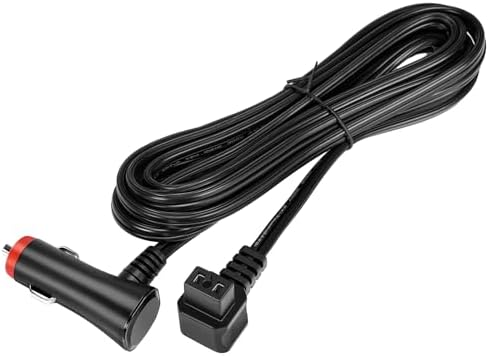
The cord that makes it work: BougeRV 12V/24V DC Power Cord for 12V Car Refrigerator, Fits Most Brands
 Visit on Amazon →
This cord is the difference between a fridge that runs and a fridge that complains. It is built for 12V and 24V systems, it has a socket plug on one end and a fridge inlet on the other, and it is meant to fit most brands rather than one.
Use a cord made for the job instead of a generic extension. The plug has to seat deep enough in the station's DC socket to carry compressor current without heating up, and the fridge end has to lock into the inlet the way the original cord did. A plug that backs out a quarter inch on a washboard road turns into a hot spot.
Flaws but not dealbreakers: "Fits most brands" is not "fits yours." Look at your fridge's inlet before you order, and check the cord's plug against the station's DC socket before you head out.
Anyone running a compressor fridge from a 12V socket, whether that socket is on a power station or in a van, needs one of these.
The actual workflow
Step one: Do the load math in watt-hours, not watts. Find the fridge's rated current on its label or in the manual and multiply by 12 for running watts. Then apply a duty cycle. A compressor does not run constantly; in a warm van it typically runs somewhere between a third and half the time, and less overnight when ambient temperature drops. A 45W fridge at a 33% duty cycle is about 360Wh per day. Write that number down. It is the only number that matters when you shop.
Step two: Match the station's watt-hours to your window, not your whole trip. If you need the fridge cold from Friday night to Sunday morning, you are sizing for roughly 36 hours, not a week. Take your daily figure, multiply by the hours you need, and add a 20% cushion for conversion losses if you ever run anything on AC.
Step three: Run the fridge on the DC outlet, never the AC outlet. Every conversion costs you. A compressor that draws 45W on DC might pull 55W or more through the inverter, and that loss shows up as heat and shorter runtime. There is also the surge problem: a compressor's inrush current for a split second can be several times its running current, and a small inverter has no room for that. DC to DC is the simpler, cooler, more efficient path.
Step four: Connect the cord and check the fit. Plug the cord into the station's DC socket and into the fridge inlet, then push and pull gently on both ends. You want a firm seat with no wobble. If the plug rocks in the socket, stop and figure out why before you leave it running overnight.
Step five: Set the fridge's battery protection correctly. Most compressor fridges offer low, medium, and high cutoff settings, and they exist to keep the fridge from draining the source battery flat. On a power station you have a second layer of protection built into the station itself. Read both manuals, pick a setting, and understand which device will shut off first when the battery sags.
Step six: Test pass-through behavior before you trust it. Plug the station into a charger while the fridge is running, then unplug it, then plug it back in. Watch the fridge. If the DC output drops for even a second during that switch, a fridge with a compressor protection delay may take several minutes to restart, and if the pattern repeats your food pays for it. Find out at home, not at a trailhead.
Step seven: Feel every connection after 20 minutes of running. Put a hand on the station's DC socket, both ends of the cord, and the fridge's inlet. Warm is normal at these currents. Hot means resistance, resistance means voltage drop, and voltage drop makes the compressor work harder and draw more. I use a thermal camera for this, but a hand works fine for a first pass. Fix heat before it fixes itself.
Step eight: Plan the recharge, not just the discharge. A 360Wh day out of a small station means you recharge almost every day. The 12V socket in a van while you drive is the cheapest charge you own. A folding solar panel is a bonus, not a religion, and you rarely see a panel's rated watts in the real world, so do not build the plan around the number on the box. If you are choosing where to spend the next dollar, more battery usually beats more panel per usable watt-hour.
Where this setup falls apart
The single biggest mistake is running the fridge through the AC outlet because it was easier. It works until a hot afternoon raises the duty cycle and the compressor's surge trips the inverter. Run it on DC.
A dual-zone fridge set to freeze draws more than a single-zone set to fridge temperatures, sometimes a lot more, so redo the math if you change how you use it. Ambient temperature moves the duty cycle too: the same fridge in a 95F van can run twice as long as it does at 65F.
Do not charge a lithium station below freezing. Cold storage is fine, cold charging is not. If your setup lives in a cold van, bring the station inside to charge or look for a unit with low-temperature charge protection.
And do not expect a small station to run a fridge for days without a recharge. Buy for the overnight and the recharge cycle you can actually hit, not for the marketing picture of a week off-grid.
What this all costs
There are two line items in this build: the station and the cord. The station is the real money and the cord is a rounding error next to it, which is why it makes no sense to save a few dollars on the wrong cord and burn your runtime on resistance.
Check current Amazon price on both before you commit, and check it again before a trip, because this category moves. The honest math is cost per usable watt-hour, not sticker price. Take the station's watt-hour rating, divide by what you pay, and compare that to a bigger unit you were considering. If the bigger unit costs a good deal more for twice the watt-hours, the bigger unit wins on math, provided you will actually carry it.
The third line item is the fridge, and you probably already own it. If you do not, buy the fridge first. It is the load, and the load decides everything downstream.
The short version
Find the fridge's running watts, apply a realistic duty cycle, and write down the daily watt-hours. Buy a station whose watt-hour rating covers the window you need with a cushion. Run the fridge on the 12V DC outlet with a cord built for the job. Set the battery protection, test pass-through, and check for heat at every connection after 20 minutes.
Do that, and a small station will quietly keep a fridge cold for years. Skip it, and you will be the person at the campsite at 10 p.m. moving warm cheese into a cooler.