The fastest way to ruin a long weekend is to trust the box. You buy a 12V compressor fridge, you buy a small station, you plug one into the other, and on the second morning the food is warm and the battery is flat. A 12V fridge power station setup is a math problem before it is a wiring problem, and the math lives on the fridge label, not on the marketing page.
The good news is that the math is short. A small station and the right cord will hold a single-zone 12V fridge through a weekend if you size it honestly and you run the fridge on DC instead of AC. Get either of those two things wrong and no solar panel in the catalog will rescue the trip.
This is the guide I wish someone had handed me the first time I tried it.
Why you should trust me
I'm Dan. I spent twelve years as an electrician, and for the last several I've run a small solar install business out of Salida, Colorado, while reviewing power gear the rest of the time. The grid here drops for days during wildfire season, so a station that can't hold a load is not a hobby problem for me, it's a Tuesday.
My bench rules are simple. I keep a Kill A Watt meter, a thermal camera, and a paper logbook. The spec sheet is a promise; the meter is the truth. I size to the real load, not to the peak surge on the front of the box. I drive a 2004 Sprinter I converted myself and I spend 20 plus nights a year in it, which is exactly where a fridge setup either works or gets left in the garage.
How I picked and how I tested
I don't judge a fridge setup by how it looks on a kitchen counter with a phone plugged in. I judge it by whether the load runs through a full discharge cycle without the station tripping, and whether the connector stays seated after a day of washboard road.
So here is the checklist I run before anything gets recommended for this job:
- A real DC output. The station has to feed 12V DC directly, not force you through an AC brick.
- An honest watt-hour number. Watts tell you the ceiling. Watt-hours tell you the tank.
- A fused cord. The cheapest insurance in the whole build.
- No proprietary connector on the fridge side, unless the fridge forces one on you.
- A low-voltage cutoff that actually shuts the unit down instead of dragging the cells flat.
The two pieces below are what I'd hand someone who asked me this question at the counter. Neither one is exotic. That's the point.
The two pieces you need before you plug anything in
You do not need a 2kWh class station to run one fridge. You need a station with a genuine DC output, and a cord that fits the inlet on the back of your fridge. Everything else is noise.
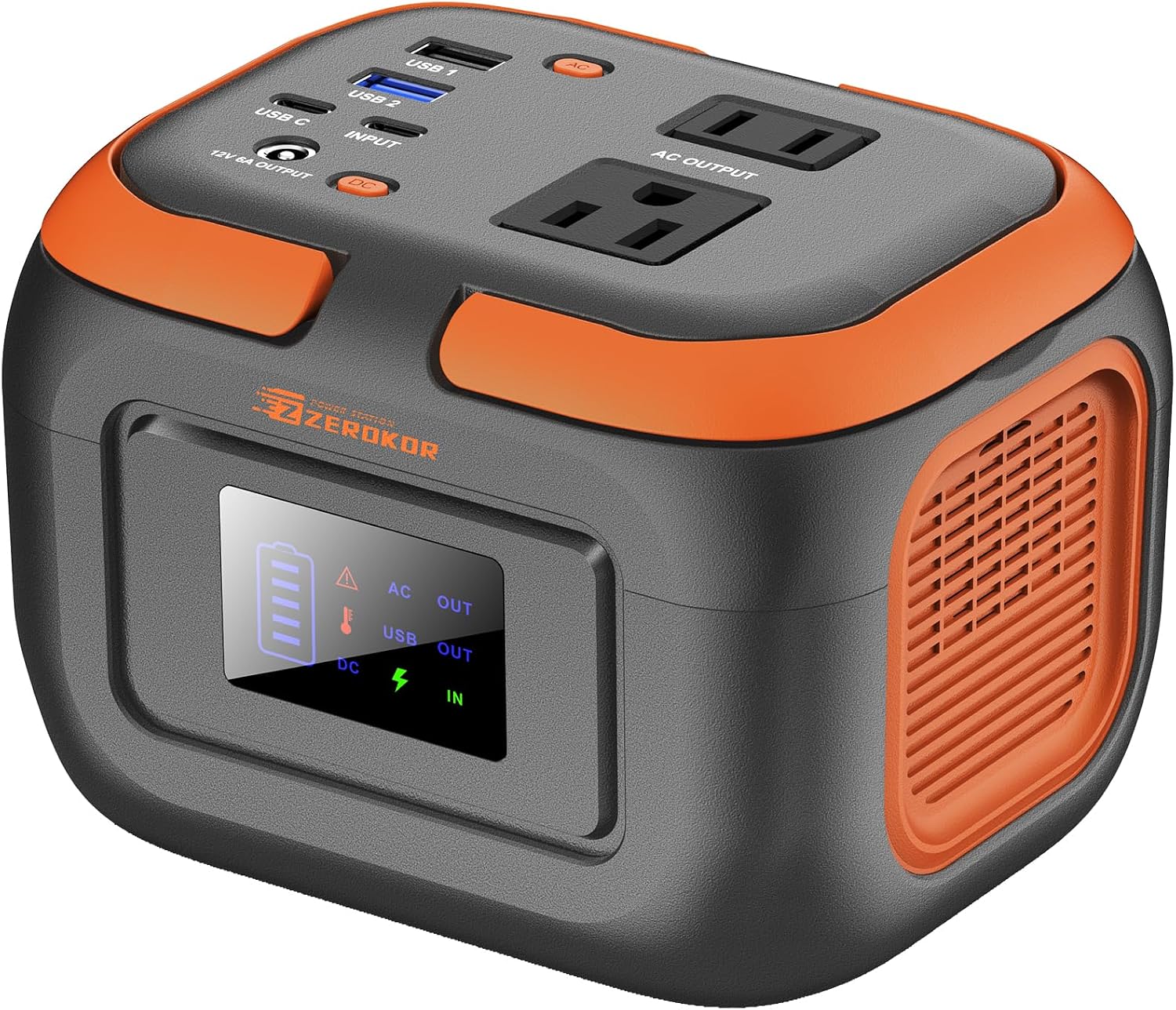
The station: Portable Power Station 120W, 110V Power Bank with DC AC Outlet
 Visit on Amazon →
The headline number here is 120W, and the headline is not the point. This is a compact station with a DC output and a 110V AC outlet, and for fridge duty the DC output is the one that matters.
Here's why. A 12V compressor fridge wants 12V DC. If you run it from the AC outlet through a 12V wall brick, you convert DC to AC inside the station and then back to DC inside the brick. Every conversion costs you energy as heat, and you pay that tax twice. Feed the fridge straight from the DC side and you skip both conversions.
Two numbers to check before you buy. Find the DC output rating on the label or the listing, in amps, and compare it to the running amps printed on your fridge. Then find the watt-hour rating, because that is the size of the tank. A 120W ceiling tells you what the unit can push at once. It says nothing about how long it can keep pushing.
Flaws but not dealbreakers: This is the small end of the category. It's built for a single-zone fridge, a phone, a light, and a laptop. Ask it to run a dual-zone fridge, a coffee maker, and a CPAP at the same time and you'll blame the station for your own load math.
Anyone with one fridge and a weekend of driving will get what they need here. If your plan is a week off grid with two fridges, you're shopping watt-hours, not watts, and this is the wrong class of unit.
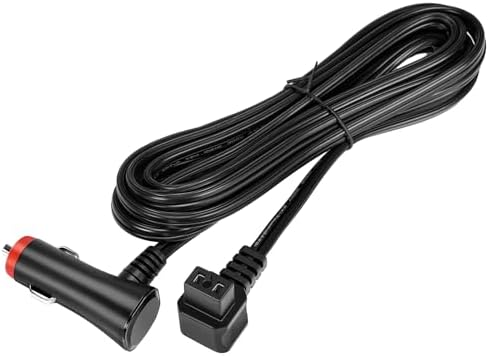
The adapter: BougeRV 12V/24V DC Power Cord for 12V Car Refrigerator, Fits Most Brands
 Visit on Amazon →
This is the part people forget to order, and then they're standing in a parking lot holding a fridge with one kind of inlet and a station with a cigarette-style socket. The cord bridges the two: it takes 12V or 24V DC from the vehicle or the station and feeds a 12V car refrigerator, and the listing says it fits most brands.
Check two things before you buy. First, the shape of the inlet on your fridge, because "most brands" is not "all brands," and a cord that doesn't seat fully is a cord that will vibrate loose on a rough road. Second, the fuse. A fused plug is the cheapest insurance in the whole setup. A short in an unfused fridge cord means the station's protection circuit is the only thing standing between you and a melted connector.
Flaws but not dealbreakers: It's a cord. It does one job. If your fridge uses a proprietary connector, buy that brand's cord instead and eat the markup, because a universal cord will not fix a proprietary inlet.
Anyone running a fridge from a vehicle socket or a station's DC output should keep one of these in the bag as a spare.
The actual setup, step by step
Now the part you came for. This works with any station that has a real DC output and any single-zone 12V compressor fridge.
Step one: Read the fridge label. Find the running amps or watts. If the label gives you amps at 12V, multiply to get watts. A fridge that lists 4.5A at 12V pulls about 54W while the compressor is running. Write that number down.
Step two: Convert running watts into daily watt-hours. A compressor does not run nonstop; it cycles on and off. In a hot van it cycles more, in a cool garage less. If you don't know the duty cycle, assume half. Take the running watts, multiply by 24 hours, then multiply by the fraction of time the compressor runs. Using the example above at 50 percent: 54W times 24 hours times 0.5 equals 648Wh per day. That's your target.
Step three: Compare that target to the station's tank. This is where most people get it wrong, because they compare watts to watts. Match your daily watt-hour number to the station's watt-hour rating and leave yourself a 20 percent margin for conversion losses and a cold morning. If the tank is smaller than the daily number, you're not off grid, you're just charging more often.
Step four: Wire the DC side, not the AC side. Run the cord from the station's DC output to the fridge inlet. Skip the AC outlet entirely for the fridge. It's the single biggest efficiency gain available in this setup, and it costs nothing.
Step five: Check polarity and the fuse before you power up. Read the plug, read the socket, and confirm the fuse is seated. Reversed polarity on a compressor fridge is an expensive lesson.
Step six: Run one full cycle at home. Load the fridge with cold food, plug in, and let it run overnight. Log the charge level before bed and again in the morning. If the station is flat at sunrise, you learned that in your driveway instead of 40 miles up a forest road.
Step seven: Recharge on the move. If your station accepts 12V input from the vehicle, charge it while you drive. If it doesn't, plan your stops around a wall outlet or a bigger tank. A fridge setup without a recharge plan is a countdown, not a system.
Where this setup falls apart
Three places, and all three are predictable.
Heat is the first. A fridge in a closed van in July works harder than the same fridge in a garage, and the duty cycle you assumed in step two gets longer. Park in shade, crack a window, and add margin to your math.
Compressor surge is the second. A compressor pulls a brief spike on startup, and a small inverter can shut down on it. That's another reason to stay on the DC side, where you aren't waking an inverter at all.
Capacity creep is the third. The fridge runs fine, so you add a laptop, then a fan, then a light bar. Now the station is doing four jobs and you're surprised it quits at 2 a.m. Do the math for every load you add, not just the first one.
The competition and why it lost
The obvious alternative is a much larger station in the 2kWh class. It will absolutely run your fridge, and it will also cost several times as much and weigh like a cinder block. Buying that much battery to run one 54W compressor is the dump truck for groceries problem. Size to the real load first.
A solar bundle is the next temptation. Bundles look like deals until you do the math on watts per dollar, and panels are the weakest link in any kit. In a van parked in the shade, a 100W panel is a rounding error. Most people are better off buying more battery than more panel.
A gas generator will run a fridge forever and will also wake every camper within a quarter mile, plus you're storing fuel. Gas is for construction sites. This is not one.
An AC-only power bank with no DC output is the wrong tool entirely. It can run the fridge through a brick, but you pay conversion losses on both ends of every cycle, and you'll be recharging twice as often for no benefit.
And a second deep-cycle battery with a DC-DC charger is the right answer for a permanent van build. It's more wiring, more cost, and more time than most weekenders want, which is exactly why a small station wins for the occasional trip.
What this costs
The shopping list is two items. The station: Check current Amazon price. The cord: Check current Amazon price.
The number that actually matters isn't the sticker, it's the cost per night. Take what you pay for both pieces, divide by the nights you'll genuinely use the setup over five years, and compare that to what you'd spend on ice, coolers, and soggy food. For most people who camp a dozen nights a year, the two pieces pay for themselves inside a couple of seasons, and they don't leave a puddle in the footwell.
That's the whole job. Read the label, do the multiplication, feed the fridge on DC, and test it in your driveway before you trust it in the mountains. Your fridge was built to do this. Let it.