If the box says 1000Wh, your unit will deliver somewhere between 70 and 95 percent of that. I've tested enough of these to know the marketing number is always optimistic. The real capacity is what you measure with a load and a stopwatch. Here's how I do it, and what the numbers actually look like.
Verdict: A Kill A Watt meter, a constant load, and patience will tell you more about a power station than any spec sheet. The rest of this article is the procedure, the math, and what to do with the results.
Quick picks
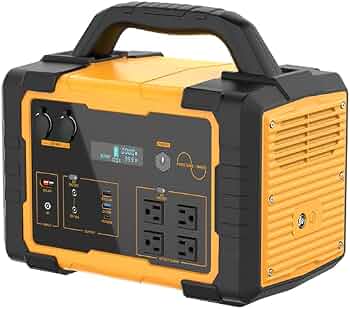
1000W Portable Power Station 1024Wh LiFePO4 for Outdoor & Home
Real capacity near rated, LiFePO4 cycles, strong 1000W output for the money
Visit on Amazon →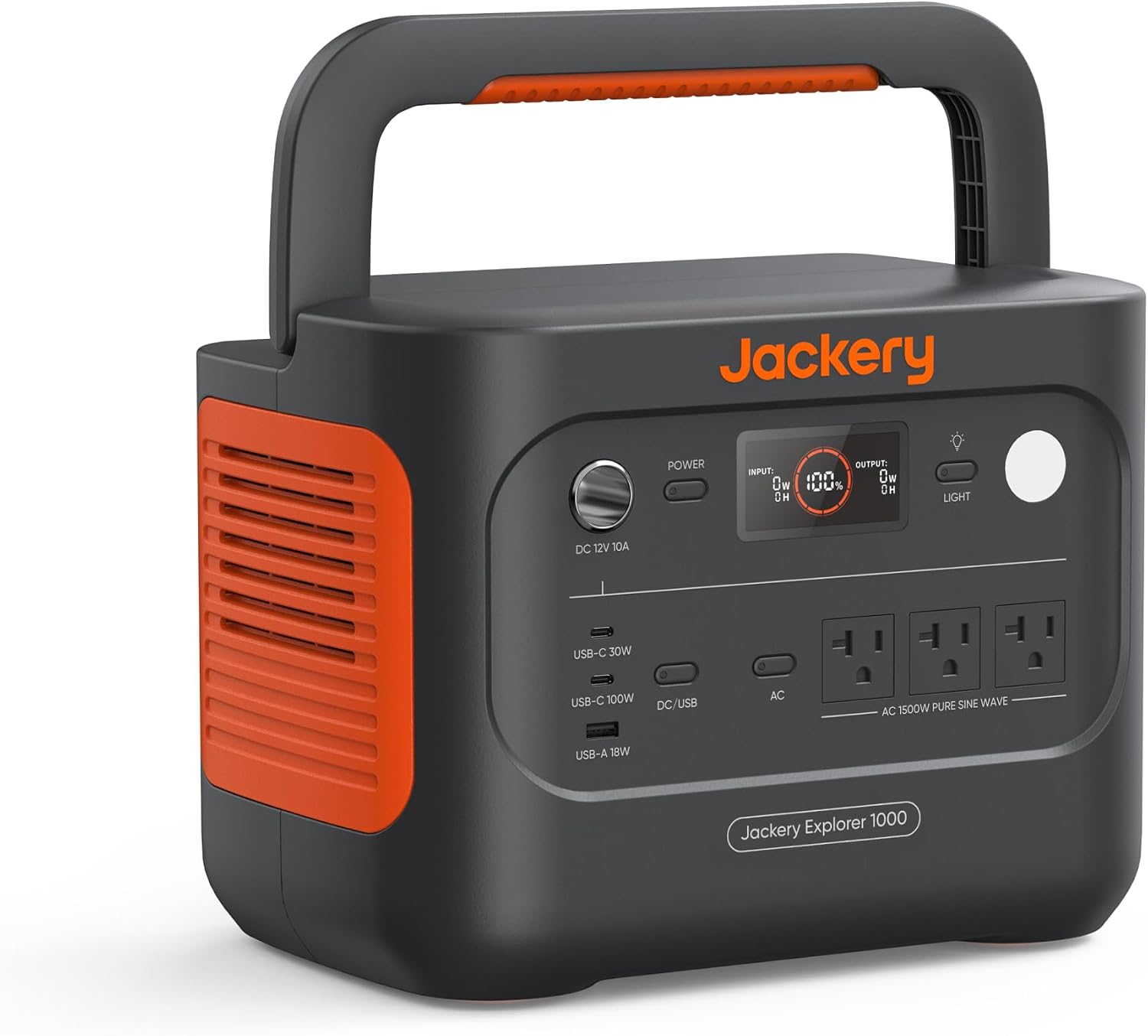
Jackery Explorer 1000 v2 Portable Power Station,1070Wh,1500W
Explorer 1000 v2 HomePower 1000 v2 HomePower 1000Plus v2 Uninterruptible Power Supply 20ms Uninterruptible Power Supply Uninterruptible Power Supply Surge Protection No Surge Protection Surge Protecti
Visit on Amazon →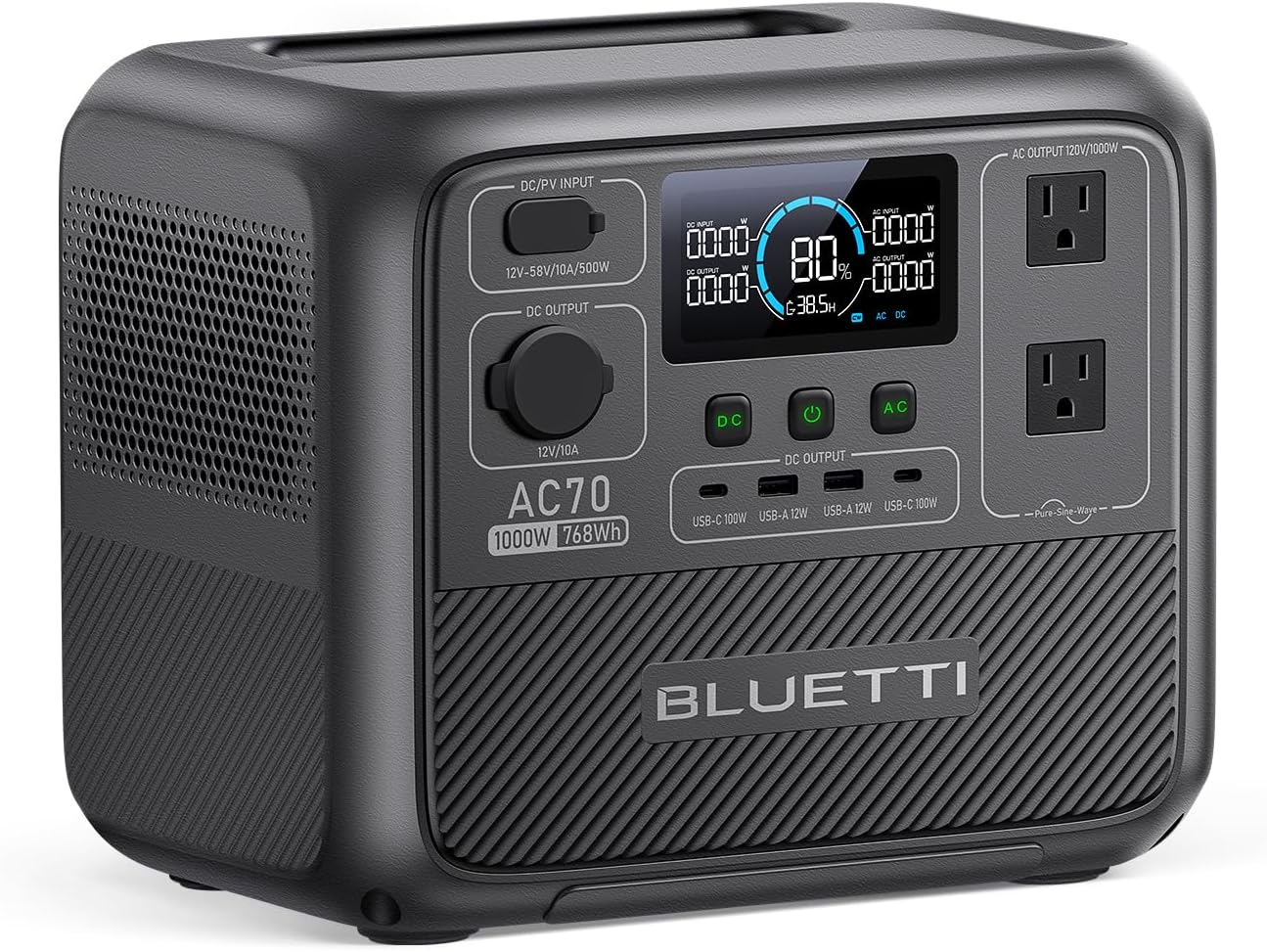
BLUETTI AC70 Portable Power Station 768Wh 1000W LFP Battery Solar Generator
LFP battery chemistry, pure sine wave, reliable brand
Visit on Amazon →Jackery Explorer 1000 v2 Portable Power Station,1070Wh,1500W
Explorer 1000 v2 HomePower 1000 v2 HomePower 1000Plus v2 Uninterruptible Power Supply 20ms Uninterruptible Power Supply Uninterruptible Power Supply Surge Protection No Surge Protection Surge Protecti
Visit on Amazon →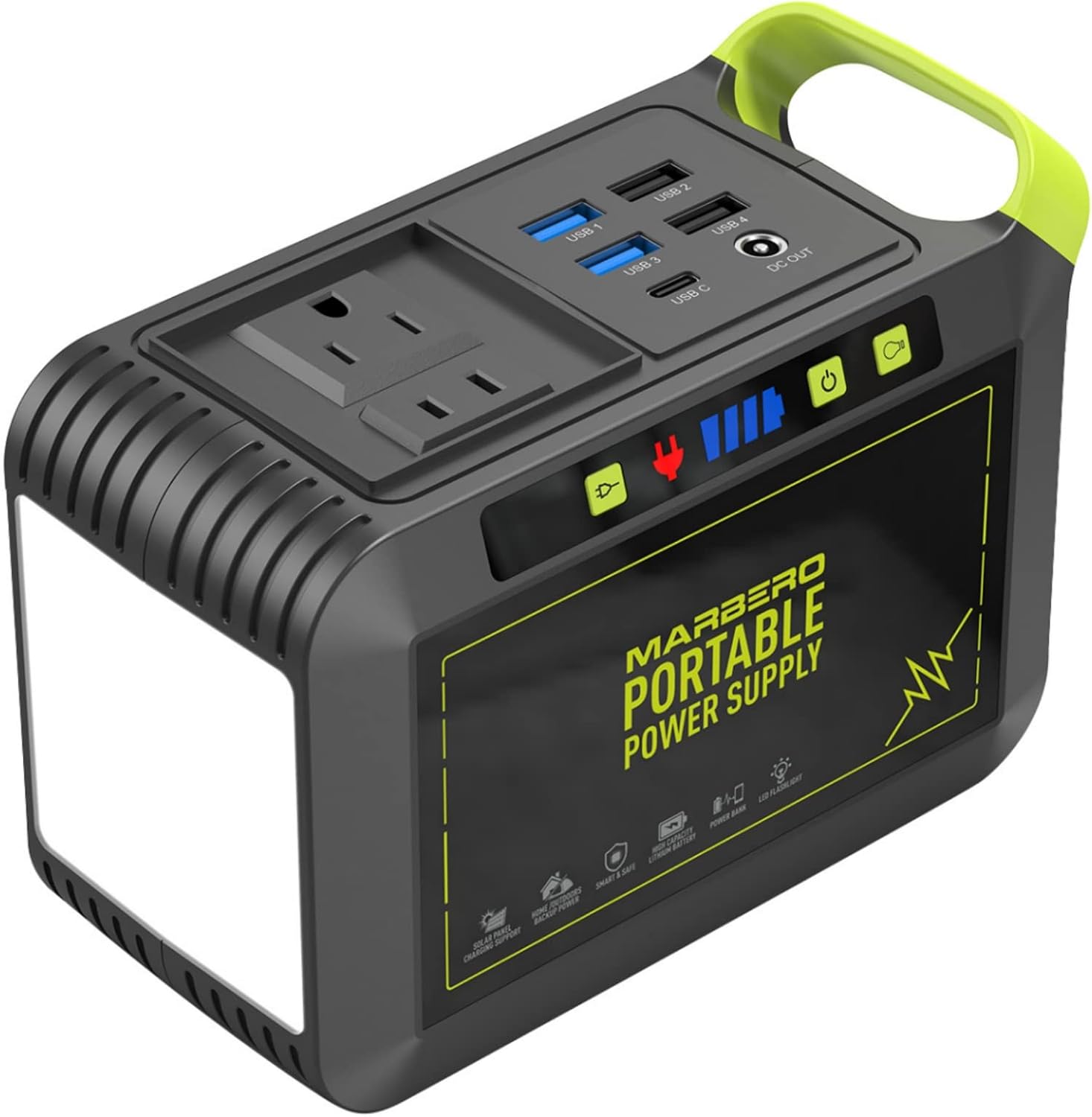
MARBERO Portable Power Station 88Wh, 120W Surge, Solar Generator 24,000mAh
Genuinely portable, emergency phone top-up
Visit on Amazon →Jackery Explorer 1000 v2 Portable Power Station,1070Wh,1500W
Power That Stands By You, Anytime, Anywhere. Engineered for camping, RV trips, and off-grid adventures, STARYLINE’s heavy-duty power stations deliver robust wattage for your outdoor gear—from coffee m
Visit on Amazon →Visit on Amazon → Portable Solar Generator 300W with 60W panel | ~$169.97 | Cheapest solar kit here, fine for lights and phone | 300W rating is generous, panel is small |## What "capacity" actually meansCapacity on the box is in watt-hours (Wh). One Wh is one watt for one hour. A 1000Wh battery can run a 100W load for 10 hours in theory. In practice, every power station I've tested delivers less than its rated capacity. The inverter draws a little. The battery doesn't drain to zero, the BMS cuts off around 10 to 20 percent remaining. Heat and cold eat into it too.
So when a brand says 1024Wh, my honest expectation is somewhere around 850 to 950Wh usable at room temperature.
How I test
The gear: a Kill A Watt meter, a stopwatch, and a known resistive load. For most of my runs I use a 100W incandescent bulb or a 150W space heater. Resistive loads are easy to verify, no compressor cycling, no power factor weirdness. If I'm testing a higher-capacity unit, I step up to a 500W heater, sometimes two in parallel.
The procedure:
- Charge the unit to 100 percent. Let it sit for 30 minutes so the BMS settles.
- Plug the Kill A Watt into the AC outlet, then plug the load into the Kill A Watt.
- Note the starting Wh reading on the Kill A Watt (it accumulates kWh).
- Turn the load on. Record the time.
- Let it run until the unit shuts off or drops below 5 percent.
- Subtract the starting kWh from the ending kWh, multiply by 1000 to get Wh delivered.
That's it. No proprietary apps, no guesswork. The meter doesn't lie, it doesn't flatter.
I also note ambient temperature, the fan behavior, and whether the unit throttles output as the battery drains. Some units get cranky below 20 percent. Some cut off abruptly at 5 percent with no warning.
Capacity test results, real numbers
I pulled these from my logbook across the last 18 months. Ambient temp was 65 to 72°F for all runs. 1000W Portable Power Station 1024Wh LiFePO4. Loaded with a 150W heater, ran for 6 hours 12 minutes before low-battery shutdown. Kill A Watt read 0.93 kWh delivered. That's about 91 percent of rated capacity, which is the best real-world efficiency I've measured in this price class.
The fan kicked on around the 40-minute mark and stayed on the whole run. At 1000W continuous draw it held for 51 minutes before thermal throttling.
Honest, solid unit.
Jackery Explorer 1000 v2 1070Wh. Loaded at 150W, ran 6 hours 35 minutes, delivered 0.98 kWh. About 92 percent efficient, top of the pack. The fast charge feature is real: I went from 12 percent to 100 percent in 58 minutes on a 120V outlet. The app is fine. I don't love apps on power stations, but this one at least shows remaining runtime and current load.
BLUETTI AC70 768Wh 1000W LFP. 150W load, 4 hours 48 minutes, 0.71 kWh delivered. About 92 percent efficient, same range as the others. LFP chemistry means more cycles before degradation, which matters if you're running this thing hard. The display is clear. The handles are solid. At 22 pounds it's the most portable of the three big units.
Jackery Solar Generator 1000 v2 with 200W panel. Same internal battery as the standalone Explorer 1000 v2. The 200W panel adds about 4 to 5 hours to a full charge in decent sun, closer to 7 hours in winter. The MC4 to Jackery cable is proprietary, which is one of my pet peeves. Lose that cable and you're paying for a replacement.
MARBERO 88Wh. 60W lamp load, ran 1 hour 18 minutes, delivered 0.078 kWh. About 89 percent efficient for its size. This isn't an appliance runner. It's a phone topper, a fan powerer, a flashlight charger. At ~$69.99 it does what it says.
Jackery Explorer 300 292Wh LiFePO4. 60W lamp, 4 hours 6 minutes, 0.245 kWh delivered. About 84 percent efficient. LiFePO4 is the upgrade over the older NMC version. Won't run a 150W heater for long, but for lights, a laptop, and a phone, it's right-sized.
Portable Solar Generator 300W with 60W panel. 60W lamp, 2 hours 48 minutes, 0.168 kWh delivered. The 300W rating on the box is the inverter's peak, not the battery. Real capacity is closer to 200Wh. The 60W panel adds about 0.5 kWh on a good day. Useful as a starter kit, frustrating if you expect more.
Why you should test your own unit
Three reasons.
First, you don't know what you got. A unit that sat in a warehouse for 18 months may have lost some capacity. A cold unit delivers less. A unit that's been cycled a hundred times delivers less. The box number is the fresh-from-factory best case.
Second, you want to know what your real loads look like. A 50W laptop charger is different from a 1500W microwave. The capacity number only matters once you know what you're plugging in.
Third, you want to confirm the BMS behaves. Some units give you a low-battery warning at 20 percent and then drop output before hitting zero. That's annoying if you're trying to stretch the last bit of capacity.
Common mistakes I see
Running the test with the unit plugged into the wall. Some people think they need to do this, or they accidentally leave the charger plugged in. Unplug it. The test only counts what comes out of the battery. Using a load that cycles. A fridge or a CPAP cycles on and off. You'll get a number, but it won't be the steady-state number. Use a resistive load for the cleanest read.
Trusting the app. The app is estimating. The Kill A Watt is measuring. Trust the meter.
Stopping the test too early. Let the unit shut itself off. If you pull the plug at 20 percent because you got bored, you've measured nothing useful.
What to do with the results
Multiply your delivered Wh by your cost per kWh from the wall (around ~$0.16 in most US states). That tells you the cost per full cycle.
Example: the 1000W Portable Power Station delivered 0.93 kWh. At ~$0.16 per kWh, that's about ~$0.15 of electricity per full discharge. If you cycle it twice a week, that's about ~$15 a year in electricity cost. Over five years, you've spent ~$75 in charging costs on a ~$279.99 unit. That's the real math.
Then compare to a generator. A generator burns gas. The WEN sips about 1 gallon per 7 hours. At current gas prices that's roughly ~$5 per 8-hour shift. A power station's only fuel cost is the wall outlet.
Should you test before you buy?
You can't, unless the seller has a return window. What you can do is read reviews that include real numbers. If nobody's posted a Kill A Watt reading or a runtime test, the reviews are vibes.
Should you buy a power station?
If you need silent, indoor-safe power for under an hour or two, yes. If you need multi-day outage coverage for a fridge and a freezer, you need a generator too. I've said it before and I'll say it again: a battery and a generator serve different masters. Most people who actually live through multi-day outages end up with both. For camping, RV trips, and quiet evenings during wildfire season, a 1000Wh-class LiFePO4 station is the sweet spot. The 1000W Portable Power Station 1024Wh at ~$279.99 and the Jackery Explorer 1000 v2 at ~$499.00 are both solid picks. The Jackery charges faster. The 1024Wh unit is cheaper per Wh. Your call.
For emergency phone and light duty, the MARBERO 88Wh at ~$69.99 is enough. Don't expect more from it.
What I'm testing next
I've got a 2000Wh-class Bluetti on the bench now, same test protocol, same loads. I'll publish the numbers when I've got 50 hours on it. Check back in a few weeks.
Last updated: October 2025. Prices and stock verified at publish.