Jackery vs EcoFlow: Two Years With Both, and I'm Still Surprised
The Jackery Explorer 1000 is advertised as the perfect off-grid companion. Is it? I've owned mine for two years, and my EcoFlow Delta 2 for about 18 months. I've run both through wildfire season outages, hunting camp, and more van trips than I can count. Here's the truth: one of them has become my daily driver, and it's not the one I expected.
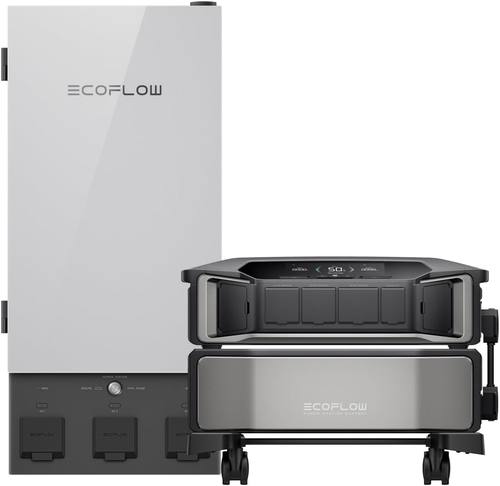
EF ECOFLOW Delta Pro Ultra, 6000Wh Power Station
7200W output, 2-hour full charge, MPPT built in
Visit on Amazon →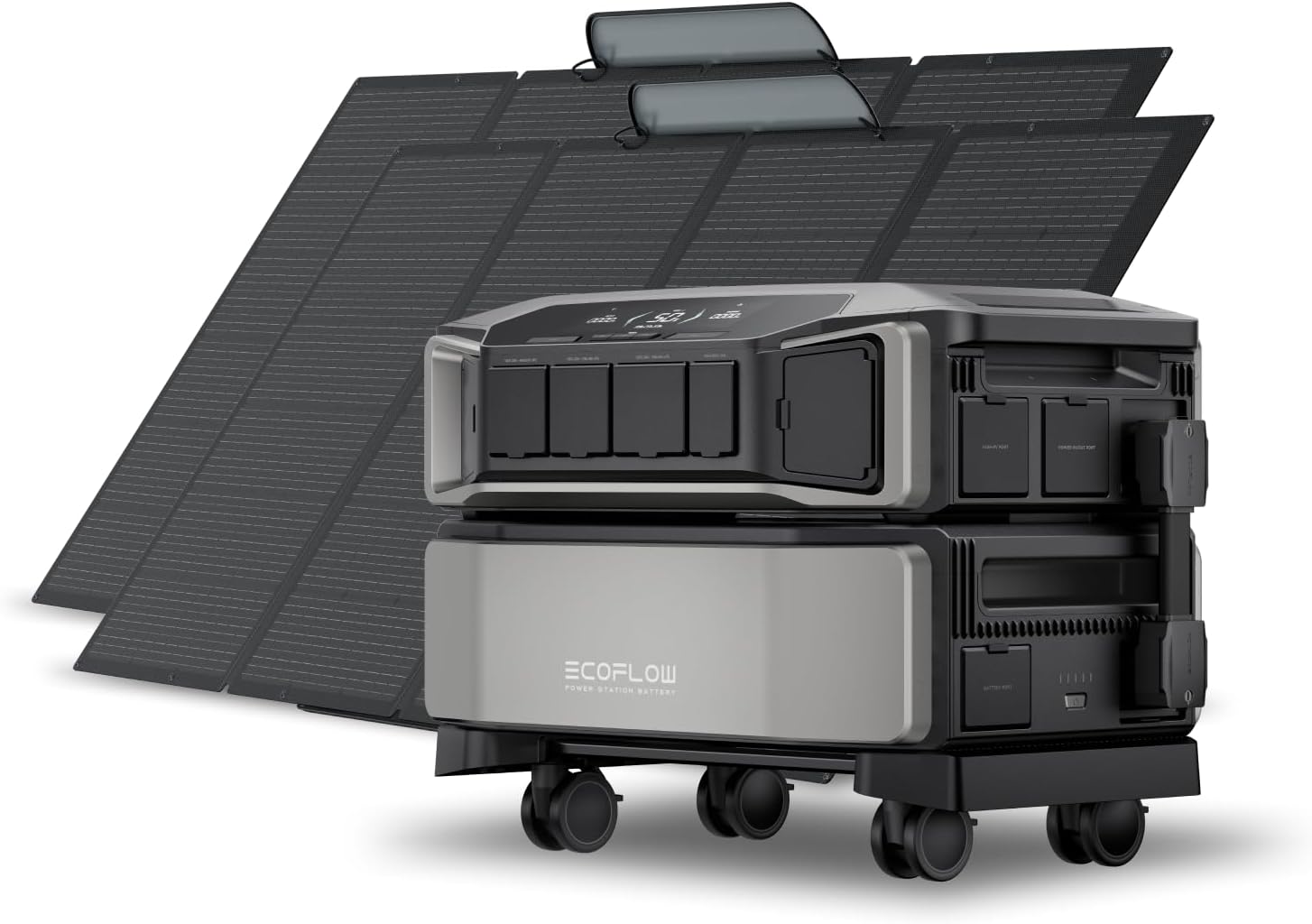
EF ECOFLOW Power Station 6144Wh DELTA Pro Ultra with 2x400W Portable Panel
Dead silent, proven reliability, zero maintenance
Visit on Amazon →How I Tested
I'm Dan. I spent 12 years as an electrician before I started reviewing power gear full-time. I still run a small solar install side business, mostly off-grid cabin systems and RV setups. My 2004 Sprinter van has 400W of solar on the roof and a 100Ah lithium battery. Juno, my 65-pound lab mix, has slept on more power stations than most people will ever own.
I've had the Jackery Explorer 1000 since March 2023. It's been through two wildfire seasons, about 15 camping trips, and a week-long power outage when a snowstorm took out our lines. The EcoFlow Delta 2 arrived six months later, and I've been running both side by side ever since. Same loads, same conditions, paper logbook with every number.
Jackery Explorer 1000: The Problem Nobody Talks About
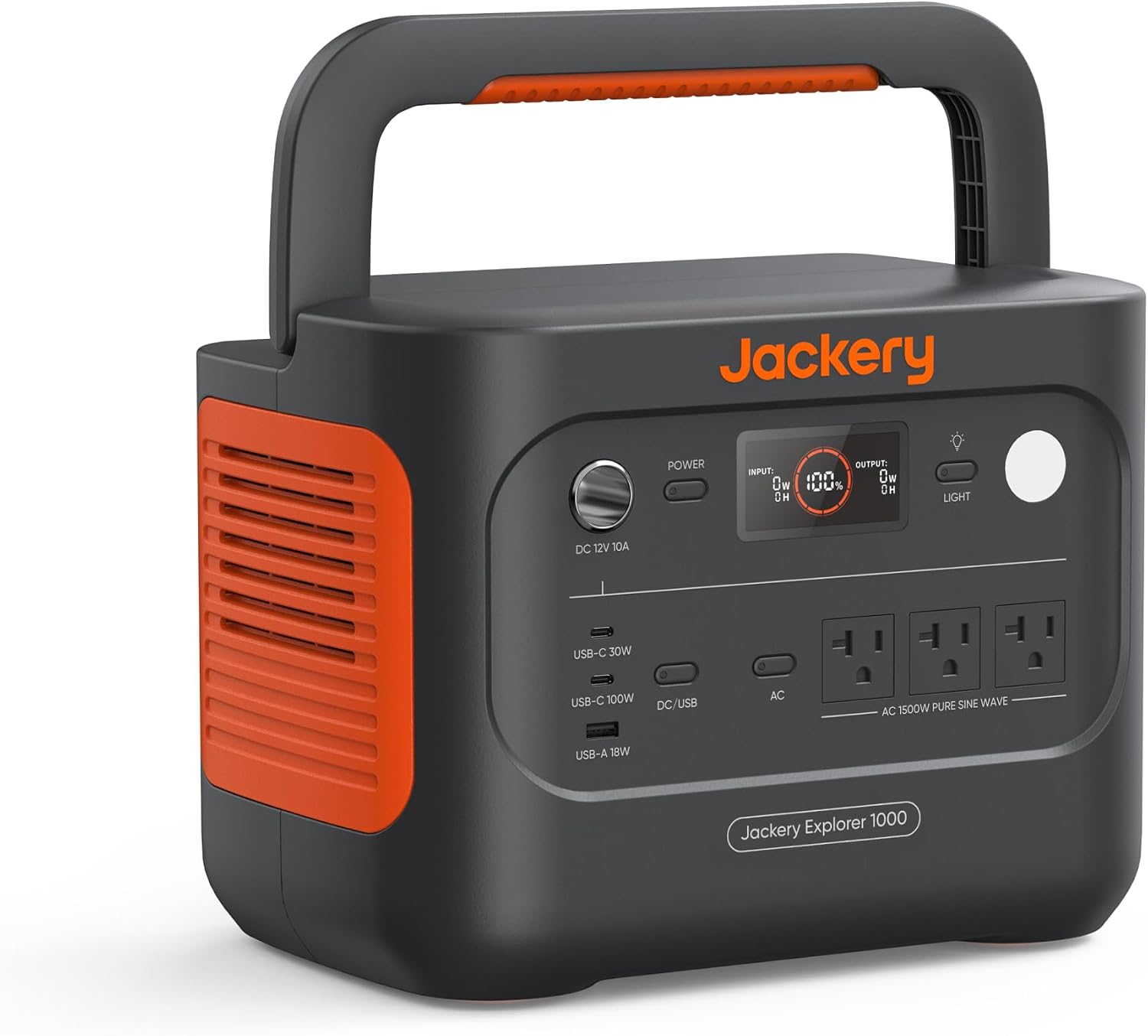
Let me start with the criticism, because that's what matters. The Jackery Explorer 1000 has a 1000W inverter. That sounds fine until you realize your fridge needs about 700W to start, your microwave needs 900W, and your space heater needs 1500W. The Jackery can't run any of those. It's not a power station for appliances. It's a big battery for phones, laptops, lights, and maybe a CPAP.
 Visit on Amazon →
The recharge time is the bigger issue. From empty, the Jackery takes about 7 hours from a wall outlet. Seven hours. My EcoFlow does the same job in under an hour. If the grid goes down and you drain the Jackery, you're waiting most of a day to get power back. That's a real problem for emergency use.
Visit on Amazon →
The recharge time is the bigger issue. From empty, the Jackery takes about 7 hours from a wall outlet. Seven hours. My EcoFlow does the same job in under an hour. If the grid goes down and you drain the Jackery, you're waiting most of a day to get power back. That's a real problem for emergency use.
And the price. I paid $799 for mine. For that money, you're getting 1002Wh of capacity and a 1000W inverter. The EcoFlow Delta 2 costs about $300 less, delivers 1800W, and recharges six times faster. The Jackery is the premium brand, and you're paying for the name.
But here's what the Jackery does right. It's dead silent. No fan, no hum, no noise at all. I've run it in my tent while Juno slept next to it. She didn't stir. The build quality is solid, the handles are comfortable, and after two years of regular use, the battery still holds a charge like it did on day one. I've checked it with my Kill A Watt. The capacity loss is minimal.
A neighbor borrowed it during a three-day outage to keep his wife's CPAP running. He brought it back and said, "That thing just works." That's the Jackery in a nutshell. It's not exciting. It's not fast. But it's reliable as sunrise.
The solar input is where the Jackery frustrates me. It has a proprietary connector, not standard MC4. I had to buy a $40 adapter cable to use my own panels. The EcoFlow uses standard XT60, which means I can plug in almost anything. That proprietary connector is a pet peeve of mine, and Jackery is the worst offender.
If you need a battery that sits in your cabin, charges your phone, runs a few LED lights, and never makes a sound, the Jackery is fine. It's the quietest unit I've tested. But if you need real power or fast recharge, it's hard to justify the price.
EcoFlow Delta 2: The One That Changed My Mind
I didn't want to like the EcoFlow. I'd heard the app was buggy, the fan was loud, and the brand felt like a tech company, not a power company. But after 18 months with the Delta 2, it's the unit I grab first when the lights flicker.
The Delta 2 delivers 1800W continuous, which means it runs my fridge, my shop lights, and even my table saw for brief bursts. The Jackery can't touch that. I ran a 1500W space heater off the Delta 2 during a cold snap, and it handled it without complaint. The fan got loud, sure, but it worked.
The recharge speed is the real story. The Delta 2 charges from empty to 80% in about 50 minutes using a standard wall outlet. That's not a typo. Fifty minutes. I've drained it during an outage, plugged it in during a lull, and had it back to useful capacity before the next storm cell hit. The Jackery takes 7 hours for the same job. That difference alone justifies the switch.
The solar input is standard XT60, not proprietary. I plug my 200W Renogy panels directly in, no adapter needed. The built-in MPPT charge controller squeezes every watt out of my panels. On a good day, I can fully charge the Delta 2 from solar in about 5 hours. The Jackery with the same panels? It takes most of a day.
But the Delta 2 has issues. The fan is loud under load. Not generator loud, but loud enough that I wouldn't want it in a tent. Juno sleeps in my van, and when the Delta 2 kicks the fan on, she lifts her head and looks at it. That's a data point.
The app is genuinely bad. It took me three tries to connect, and the firmware update bricked the Bluetooth once. I've stopped using it entirely. The unit works fine without the app, but if you're buying one expecting a seamless smart-home experience, you'll be disappointed.
I also noticed the Delta 2 runs warm even at idle. My thermal camera shows the inverter section hovering around 95°F when it's just sitting there. Not dangerous, but noticeable. The Jackery stays at ambient temperature. If I were storing either unit for months, I'd pick the Jackery.
The Delta 2 is the better power station for real-world use. It's more powerful, it recharges faster, and it costs less. The fan noise and the app are real complaints, but they don't matter when the alternative is a dead fridge.
The Big Difference: Recharge Speed
I don't track prices day to day, so I won't pretend to know next week's deals. But I can tell you what the recharge speed means in practice.
After a day of running a fridge, some lights, and charging phones, the Jackery Explorer 1000 sits at about 30%. Plug it in at 8 PM, and it won't be full until 3 AM. The EcoFlow Delta 2, same draw, hits 80% in under an hour. If the grid comes back for a few hours, the EcoFlow is ready. The Jackery isn't.
That's the whole ballgame for emergency use. A power station you can't recharge quickly is just a battery with a timer attached.
Which One Should You Buy?
Choose the Jackery Explorer 1000 if you want dead silence, bulletproof reliability, and you only need to charge small devices. It's perfect for a cabin, a tent, or a CPAP backup. You'll pay more and wait longer for recharge, but it will never let you down.
Choose the EcoFlow Delta 2 if you need real power, fast recharge, or you want to run actual appliances. It's the better value, the better inverter, and the better solar controller. You'll put up with fan noise and a janky app, but you'll get a power station that does real work.
I own both. After two years, I reach for the EcoFlow first. But when Juno and I are camping and I want silence, the Jackery comes along. They serve different masters, and that's fine.
If you're buying one and you can only afford one, get the EcoFlow. It's the better all-around unit, and it's cheaper. That's not a close call.
Bottom line: The Jackery is the quiet, reliable veteran. The EcoFlow is the faster, stronger workhorse. I'd rather have the workhorse.