I have wired enough 12V systems in vans, cabins, and one very cold Sprinter to know where a portable power station setup actually fails. It is rarely the battery. It is the cable and the connector between the battery and the load, and it is almost always the part people buy last, after they have already spent the money on the station itself. This comparison covers four links in that chain: a small 120W station with its own AC outlet, a heavy duty AC input cord rated 125V/15A, a 14AWG car charging cable with a DC8020 plug, and a 12V/24V DC cord built for a car refrigerator. Three of the four are portable power station cables. The fourth is the load you plug into them.
Related: 12V Car Fridge Power Draw Explained
The short answer: if you already own a Jackery Explorer from the recent generations, the 14AWG car charging cable solves the most real problems, because the socket in your dash is the cheapest power source you already have. If you are starting from zero, the 120W station is the only item here that makes AC power at all, and it is sized for phones, laptops, and routers, not for a fridge or a space heater.
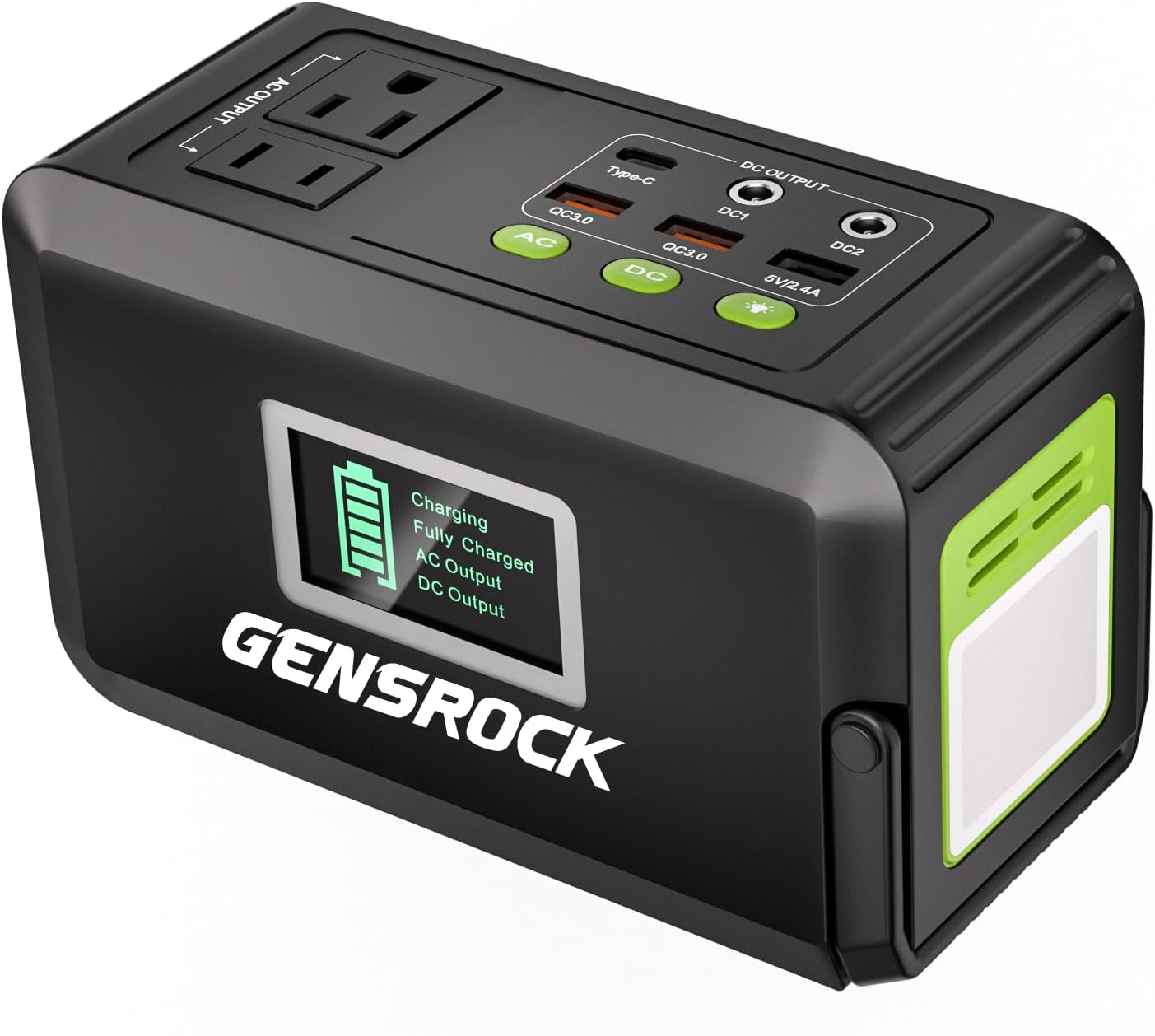
GENSROCK Portable Power Station 120W, Power Bank with AC Outlet 24000mAh
The only unit here that turns DC into AC, so it can run small loads with no wall outlet in sight
120W of inverter is a phone and laptop class ceiling, and capacity is quoted in mAh rather than watt hours
BougeRV 12V/24V DC Power Cord for 12V Car Refrigerator, Fits Most Brands
Works on both 12V and 24V systems and fits most fridge brands, so it is the most flexible DC cord in this group
It only does one job. It feeds a fridge, it does not charge a station
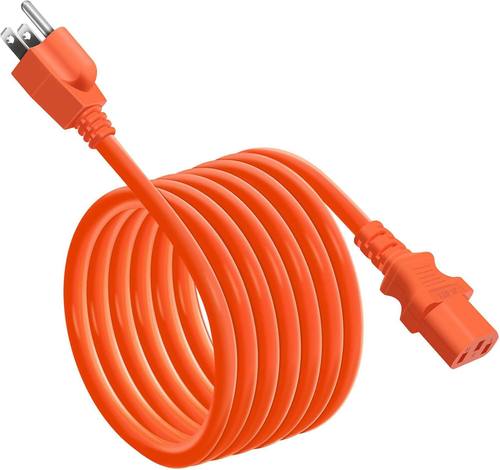
YEZriler 2M/6.6FT Heavy-Duty Charging Cable for Jackery Power Station Explorer 3000/2000/1500/1000, Ecoflow Delta/River/Series, Bluetti EB3A, Anker 757/767, 125Volt 15Amps AC Power Cord - Orange
125V/15A covers the full AC charge draw of every station it lists, and 6.6 ft is the right length for a van or garage bench
It is a replacement or extension part. If your station came with a working cord, you gain nothing
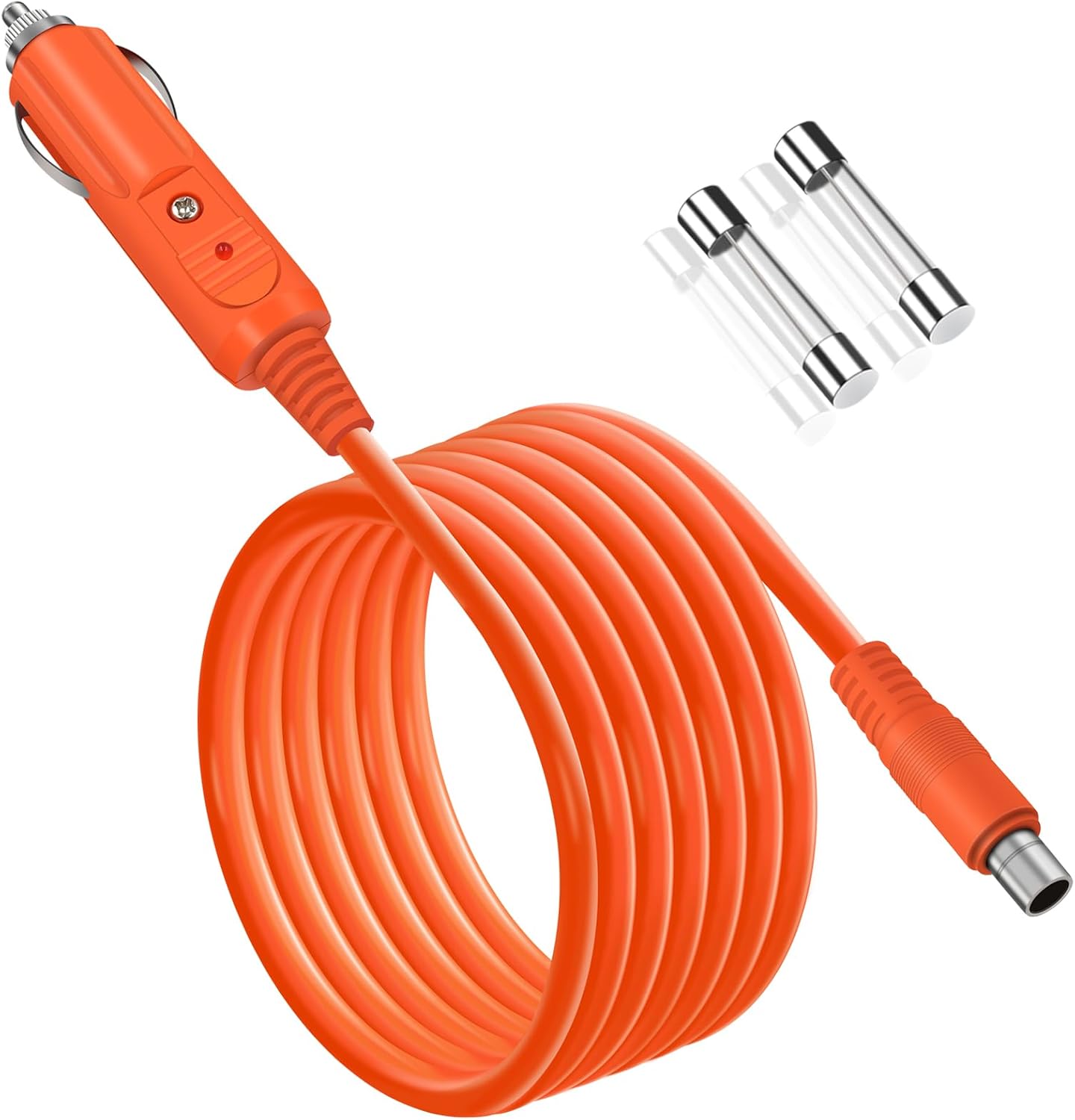
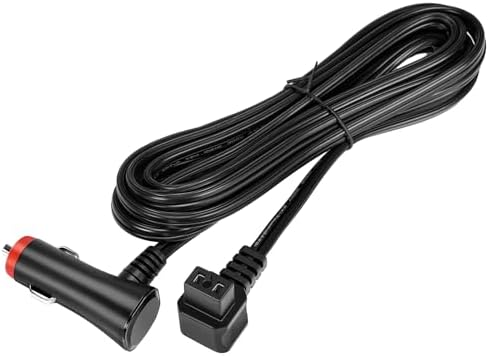
YEZriler 14AWG Car Charging Cable for Jackery Portable Power Station Explorer 3000 Pro 2000 Plus 2000 Pro 2000 v2 2000 1500 Pro 1500 1000 Pro 1000 v2 1000 - DC8020 Plug 2M/6.6FT
14AWG over a 6.6 ft run keeps voltage drop low for the current a fused 12V socket supplies
The DC8020 plug is family specific, so it is useless on a station with a different DC input
Prices and availability were captured from Amazon Creators API and may change.
How I judge a cable before it earns a spot in the van
I do not care what a cable looks like. I care about three things: the gauge against the length and the current, the connector against the socket it has to seat in, and whether the plug holds when the van hits a washboard road. Everything else is packaging.
Gauge is the one people skip. A 14AWG copper conductor over a 6.6 ft run handles the current a fused 12V accessory socket supplies with room to spare. Drop to 18AWG and the same run turns current into heat, which means slower charging and a warm plug. A thermal camera is how I check that, and a warm connector at the end of a run is the first sign of a cord working too hard. On the AC side the math is simpler: 125V at 15A is 1,875W of capacity, far more than any station in this class pulls while charging. A 15A cord is the floor, not an upgrade.
Then there is fitment, which is where most returns happen. A DC8020 plug is not the same as an XT60, an Anderson, or the barrel style input on older units. Before you buy any charging cable, put your station's model and generation next to the fitment list in the product listing. Brands change inputs between generations, and the plug that fit a 2021 unit may not seat in a 2025 one.
The 120W station: what it can and cannot run
The GENSROCK unit is the only product here that turns DC into AC, and the name tells you the design intent: 120W inverter, AC outlet, capacity quoted as 24,000mAh. That last figure is the one I would push back on. Milliamp hours only mean something when you know the cell voltage they were measured at, and even then they describe the battery, not what comes out of the AC outlet after inversion losses. Watt hours are the number that travels. If you want to compare this against a 300Wh or a 500Wh station, do that conversion yourself before you decide.
A 120W inverter ceiling sets the menu. Phones, laptops, a router, LED lights, a small fan, a camera battery charger, a CPAP without a heated humidifier: all fine. A car fridge, a kettle, a space heater, a microwave, or a power tool charger: no. That is not a knock on the unit, it is a statement about what 120W buys, and buying a bigger station than your load needs is the same mistake in the other direction.
Where a station this size earns its keep is as a permanent low draw backup: the router and the modem during an outage, the phones overnight, the laptop on a van trip. Visit on Amazon → if that is the load list you actually have. If it is not, no cable in this comparison fixes that.
The 14AWG car charging cable and the DC8020 plug
This is the one I would buy first if I already owned a compatible Explorer. Charging a station from a vehicle is the cheapest energy you have access to on the road, and the limiting factor is almost never the alternator. It is the cord and the socket. A 12V accessory socket is usually fused in the 10 to 15A range, which at 12V works out to roughly 120 to 180W before conversion losses. That is not fast. It is, however, free while you drive.
The 14AWG rating on this YEZriler cable is the right call for that job, and 6.6 ft is a realistic length to route from a dash socket to a station on the floor between the seats. The DC8020 plug is the part to verify. The listing covers a long list of Explorer models, including the Pro and v2 generations, which tells you the plug pattern is specific to that family. Match your model against that list. A cable that does not seat is a cable that does not charge, and this is not a plug you adapt with a barrel converter from a drawer.
One more thing about DC charging: check the station's own DC input ceiling before you expect a cord to deliver more. A cable can be rated above what the station will accept, and the station wins that argument. Visit on Amazon →
The AC input cord: 125V/15A, 6.6 ft, orange
Most people never think about the AC input cord until they lose it or need a longer one. It is the cord between the wall and the station's AC inlet, and it carries the full charge current. The YEZriler cord is rated 125V/15A at 6.6 ft, and it lists fitment across Jackery Explorer models, EcoFlow Delta and River units, the Bluetti EB3A, and the Anker 757 and 767. That is a wide net, and it is worth reading the list rather than assuming, because AC inlets are not universal across brands even when the wall end looks identical.
Two details matter. First, the 15A rating. A station pulling 300W on AC charge draws under 3A at 125V, so the cord has plenty of headroom and will not be the bottleneck. Second, the orange jacket. That sounds cosmetic until you are hunting for a cord in a dark van or on a garage shelf. Visibility is a feature. Visit on Amazon →
What this cord will not do is make a slow charging station fast. If your station charges at 200W on AC, it still charges at 200W. A cord carries current, it does not create it.
The 12V/24V DC cord for a car fridge
The BougeRV cord is the odd one out in this group, and that is exactly why it belongs in the comparison. Its job is not to charge a station. Its job is to feed a 12V car refrigerator, and it is rated for both 12V and 24V systems, which matters if you run a fridge off a truck, a boat, or a 24V battery bank.
A compressor fridge is a duty cycled load, not a constant one. It pulls hard when the compressor runs and almost nothing when it does not, so the cord and connector get cycled constantly across a season. That is where cheap cords fail: not in the conductor, but at the molded plug and the strain relief. If you are running a fridge from a station's 12V output instead of a vehicle socket, this is the cord that keeps the fridge on the right side of the power budget, because it does not drag the inverter into the equation. Inverting 12V up to 120V and back down to 12V for a fridge is a loss you pay twice. Visit on Amazon →
Where the trade-offs actually land
Here is the honest split. The station is the expensive item, and it is the one you will replace first if you size it wrong. The cables are cheap, and they are the parts that decide whether the expensive item behaves the way you expect. A 120W station with the wrong cord is a paperweight with a handle. A big station with the right cord is a system.
The second trade-off is compatibility. Every cable here is built for a specific family of inputs, and that is the cost of the market right now. Proprietary connectors protect the brands and cost you money. Before you buy a cord for a station you do not own yet, buy the station first. Fitment lists are not suggestions.
The third trade-off is length. 6.6 ft is the sweet spot for a van, a truck cab, or a garage bench, and it is short enough that voltage drop stays low on the DC side. If your run is longer than that, do not chain extensions. Move the station closer or buy a heavier gauge.
What to check before you buy
- Connector first. Match the plug pattern to your exact model and generation, not to the brand.
- Gauge second. 14AWG is right for a 6.6 ft DC run in the 10A range. Thinner is not cheaper, it is hotter.
- Rating third. A 125V/15A AC cord covers any station in this class with headroom to spare.
- Length last. Measure the run, then buy. Cords that are too short get used with a power strip, which adds a failure point.
- Skip anything with a molded plug that runs warm. Warmth is resistance, and resistance is wasted battery.
The bottom line
If you own a recent Jackery Explorer and you want to charge from the van, the 14AWG car charging cable is the pick. If you need a longer or replacement AC input cord, the 125V/15A cord is the safe choice. If a 12V fridge is part of your setup, the BougeRV cord keeps that load off the inverter. And if you need a small AC source for phones, laptops, and a router during an outage, the 120W station is the only item here that does that job, as long as you accept the 120W ceiling and do the watt hour math before comparing it to anything else.
Buy in that order: station first, then the cord that matches the job. Everything else on this list is a cheap part that decides whether the rest of it works.