I keep a Kill A Watt meter, a thermal camera, and a paper logbook on my bench, and I have spent five years running portable power station cables and panels through real loads instead of reading spec sheets for fun. Four pieces of gear landed here in the same week: a small solar generator kit, a folding 100W panel, a 12V fridge cord, and a heavy-duty AC cable. Three of them are accessories. One of them is the actual battery. That split matters more than any single number in the table below, because the accessory pile is where most people overspend, and it is where listings hide the real cost of getting a station to do useful work.
Related: Portable Power Station Sizing: Watt Hours Vs Watts
The short version: buy the battery first, the panel second, and the cables last, because watt-hours are what you run out of, not watts. A 292Wh station with a 40W panel will keep a phone, a laptop, a router, and a CPAP running through an outage. It will not run a space heater, and no cable in this article changes that. Size to the real load, then buy the cord that makes the load possible.
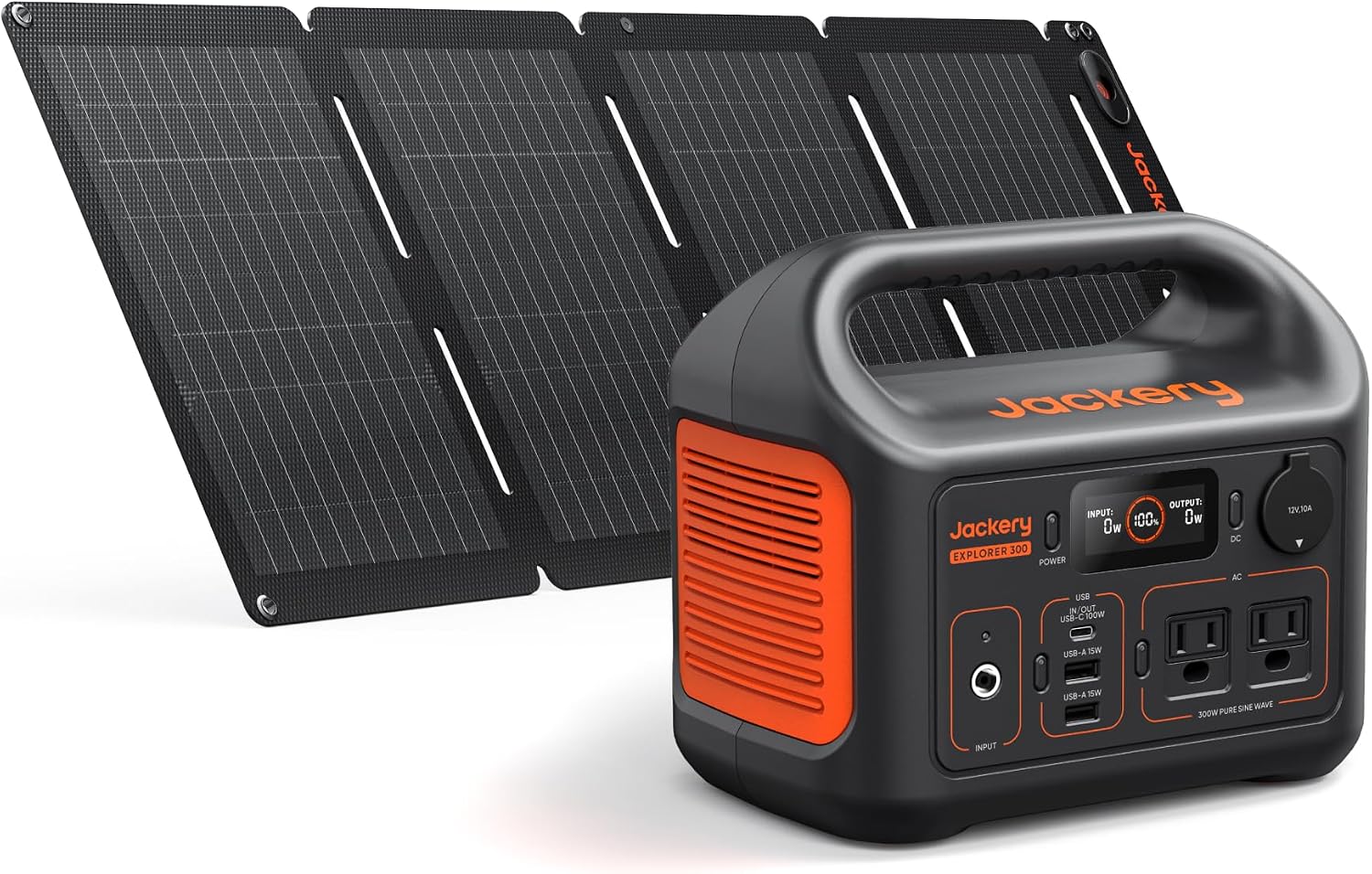
Jackery Solar Generator 300 and 40W Solar Panel, 292Wh, 300W AC
A complete first setup: 292Wh of storage, a 300W AC inverter, and a 40W panel in one box under one warranty
292Wh drains fast under a real load, and the 40W panel is the weakest link in the bundle
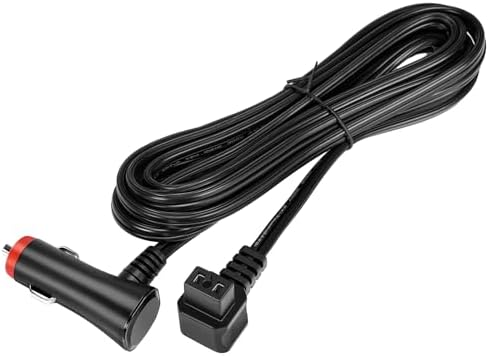
BougeRV 12V/24V DC Power Cord for 12V Car Refrigerator, Fits Most Brands
Turns a car fridge into a station load instead of a battery killer, and the listing says it fits most brands
DC only, so it does nothing for AC loads, and it is dead weight if you do not run a 12V device
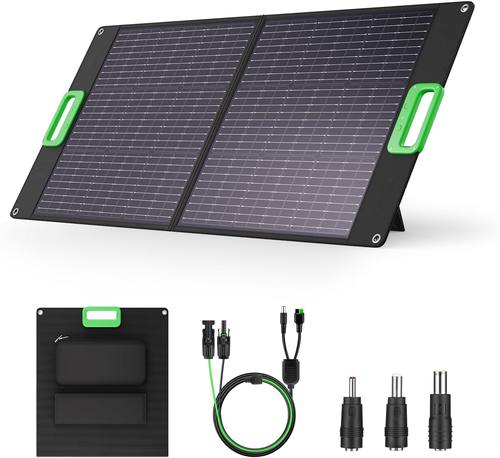
100W Portable Solar Panel for Power Station Generator, 23.5% High Efficiency
100W of folding panel with a 23.5% cell efficiency claim is a real step up from a 40W trickle
Panel only, no battery and no controller, so connector compatibility is on you to verify
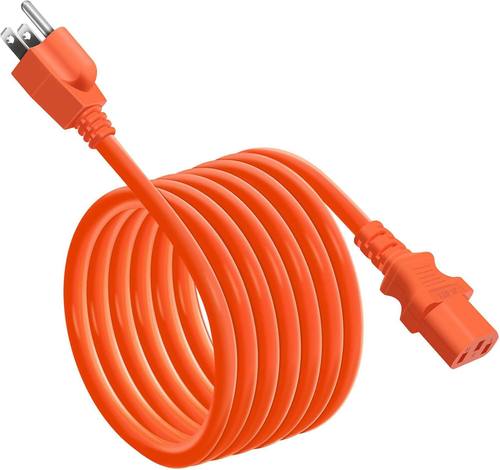
YEZriler 2M/6.6FT Heavy-Duty Charging Cable for Jackery Power Station Explorer 3000/2000/1500/1000, Ecoflow Delta/River/Series, Bluetti EB3A, Anker 757/767, 125Volt 15Amps AC Power Cord, Orange
6.6 feet of 125V 15A rated cord, orange so it stays findable, and it lists a long run of popular stations
It is still just a cable, and it only helps if your station's AC inlet actually matches
Prices and availability were captured from Amazon Creators API and may change.
How I judge cables and panels
Three things decide whether an accessory earns bench space: whether it moves energy in the right direction, whether it survives the amps it claims, and whether it fits the gear I already own.
For cables, I look at the rating printed on the jacket before anything else. The YEZriler cord is rated 125V at 15A, which is the standard North American branch circuit number. That does not mean your station pulls 15A. It means the cord will not be the bottleneck when the station pulls what it actually pulls. A 300W AC inverter at 120V is drawing about 2.5A at full tilt, and most 1kWh to 2kWh stations sit in the 10A to 15A range on the input side. Undersized cord, warm jacket, wasted watts.
For panels, the number that matters is not the efficiency badge, it is the watts that actually arrive at the battery. A 23.5% cell efficiency figure is a cell-level claim. Panel-level output in real sun is lower, and it drops hard with heat, haze, and a bad angle. I still want the higher-efficiency cells, because on a small panel every watt of roof or van space counts, but I never plan a trip around the badge.
For 12V cords, polarity and plug size decide everything. Get those wrong and you either get nothing or you get a popped fuse.
The kit: 292Wh with a 40W panel
The Jackery Solar Generator 300 is the only thing here with a battery in it, so it sets the ceiling for everything else. 292Wh of storage and a 300W AC inverter is a small but honest first station. Nameplate math says 292Wh divided by a 40W panel is a bit over seven hours of perfect sun to go from empty to full. Real sun in Colorado in September is not perfect for seven straight hours, so plan on a full day of decent light, or plug into a wall and treat solar as the backup plan.
What it runs: phones, tablets, a laptop, a router and modem, LED lights, a box fan, and a CPAP without humidifier. What it will not run: anything with a heating element, a coffee maker, a microwave, or a space heater. The 300W inverter ceiling is the hard limit, and motors and compressors surge well above their running watts, so give yourself headroom.
My honest gripe with bundles in general is the math. You are paying for a battery and a panel together, and the panel is almost always the weaker half. If you already own a bigger station, a 40W panel is a trickle charger, not a charging strategy. If you are starting from nothing, the bundle is the cheapest way to learn what a watt-hour actually feels like.
The 100W panel and watts per dollar
Here is where the bundle math gets uncomfortable. A 100W folding panel moves two and a half times the watts of a 40W panel. Same sun, same angle, same station, and the recharge time on that 292Wh battery drops from a full day to roughly three or four good hours. That is the difference between solar being a novelty and solar being a plan.
The 23.5% efficiency claim is worth something on a portable panel, because you are trading surface area for portability. Folding panels with decent cells pack smaller for the same output, and in a van build, packed size is a real constraint. I converted a 2004 Sprinter myself, and I can tell you that every square foot of storage gets argued over.
The catch is compatibility. A panel-only purchase means you are responsible for the connector chain between panel and station. Anderson, XT60, MC4, 8mm barrel, and brand-specific inputs all show up in this class. Check your station's solar input voltage window and its connector before you buy, and budget for an adapter if the listing does not include one. This is the single most common reason a panel gets returned.
The other catch is the same one that applies to every panel: output falls off a cliff when the sun is low, when it is hot, or when you leave it flat on the ground with a shadow across one cell. Tilt it, move it twice a day, and keep it out of shade. That routine is worth more than any efficiency number on the box.
The 12V cord: the cheapest useful upgrade
The BougeRV DC cord is the accessory I recommend most often to van and truck owners, and it is the one people skip. Running a 12V car fridge off a station's 12V socket instead of its AC outlet avoids an inverter conversion in each direction. You go DC to DC instead of DC to AC back to DC. That is less heat, less loss, and fewer watts burned to move the same cooling.
The listing says it fits most brands, which is the useful part, because fridge plug standards are a mess. Before you trust any cord, check the plug diameter and the polarity of your fridge against the cord. Reversed polarity on a compressor fridge is a bad afternoon.
Where this cord does nothing: any AC load. It will not run a laptop charger, a lamp, or a fan that wants a wall plug. It is a single-purpose tool, and if you do not own a 12V fridge or cooler, it is money you should put toward the battery instead.
The heavy-duty AC cable: spares, gauge, and visibility
The YEZriler cord is a spare-part purchase, and spare parts are underrated until the night your factory cable walks off. It is 2 meters, about 6.6 feet, rated 125V at 15A, and it lists compatibility across Jackery Explorer 3000/2000/1500/1000, the Ecoflow Delta and River series, Bluetti EB3A, and Anker 757 and 767. The orange jacket is a small thing that turns into a big thing when you are packing a van in the dark.
What it does not do is make a small station bigger. A heavier cord does not raise your inverter ceiling or your watt-hours. What it does is remove one failure point: a frayed, lost, or too-short factory cable that leaves a perfectly good station unusable at the worst time.
Check your inlet before ordering. Some stations use a standard IEC-style connector, and some use a proprietary shape. If yours is proprietary, this cord is not the answer, and that is exactly the kind of lock-in that keeps me irritated with premium brands.
The trade-offs, laid out
Bundle versus separate is the real decision. The kit gives you one box, one warranty, and a panel that works on day one, at the cost of a small battery and a slow panel. Buying the 100W panel separately gives you a much better recharge rate, but only if you already own a station and you have verified the connector.
The order I would spend money: battery first, panel second, spare cord third, 12V fridge cord only if you own a fridge. Solar charging is a bonus, not a religion. For most people in a town where the grid drops for a few days a year, more battery beats more panel every single time, because you can charge a battery from a wall in two hours and you cannot charge a panel at night.
And do not buy a 2kWh station to charge a phone. That is a dump truck for groceries. Match the storage to the load you actually measured, not the load you imagine.
Who should buy what
If you are building your first outage kit and you want one purchase, the 292Wh kit with the 40W panel is the low-risk starting point. Add a better panel later if solar matters to you.
If you already own a station in the 300Wh to 1000Wh range and you want faster solar, the 100W folding panel is the upgrade with the clearest payoff.
If you run a 12V fridge in a van, truck, or camper, the DC cord is a cheap fix for a real efficiency problem.
If your factory AC cable is lost, frayed, or too short, the orange heavy-duty cord is a five-minute solution. Just confirm the inlet.
What I am testing next
The 100W panel goes into the van for a weekend with a fridge pulling duty cycles, and I want the amp-hours logged against the same load on AC. That comparison is where the DC cord either earns its place or does not. I will also log charge times from a 40W panel versus the 100W panel on the same 292Wh battery, same sun, same angle, because that is the number people actually need when they are deciding what to buy next. Every claim gets a number behind it, or it does not make the logbook.