I have lived in Salida long enough to stop treating an outage as an emergency. Wildfire season cuts the grid here for days at a time, and the first thing I check when the lights drop is not the fridge. It is whether the small unit on the shelf can keep the router, a CPAP, and two phones alive until morning. That is the job 300W class power stations do in my house, and it is the job most people actually need done.
Related: How To Size A Power Station To Your Real Load
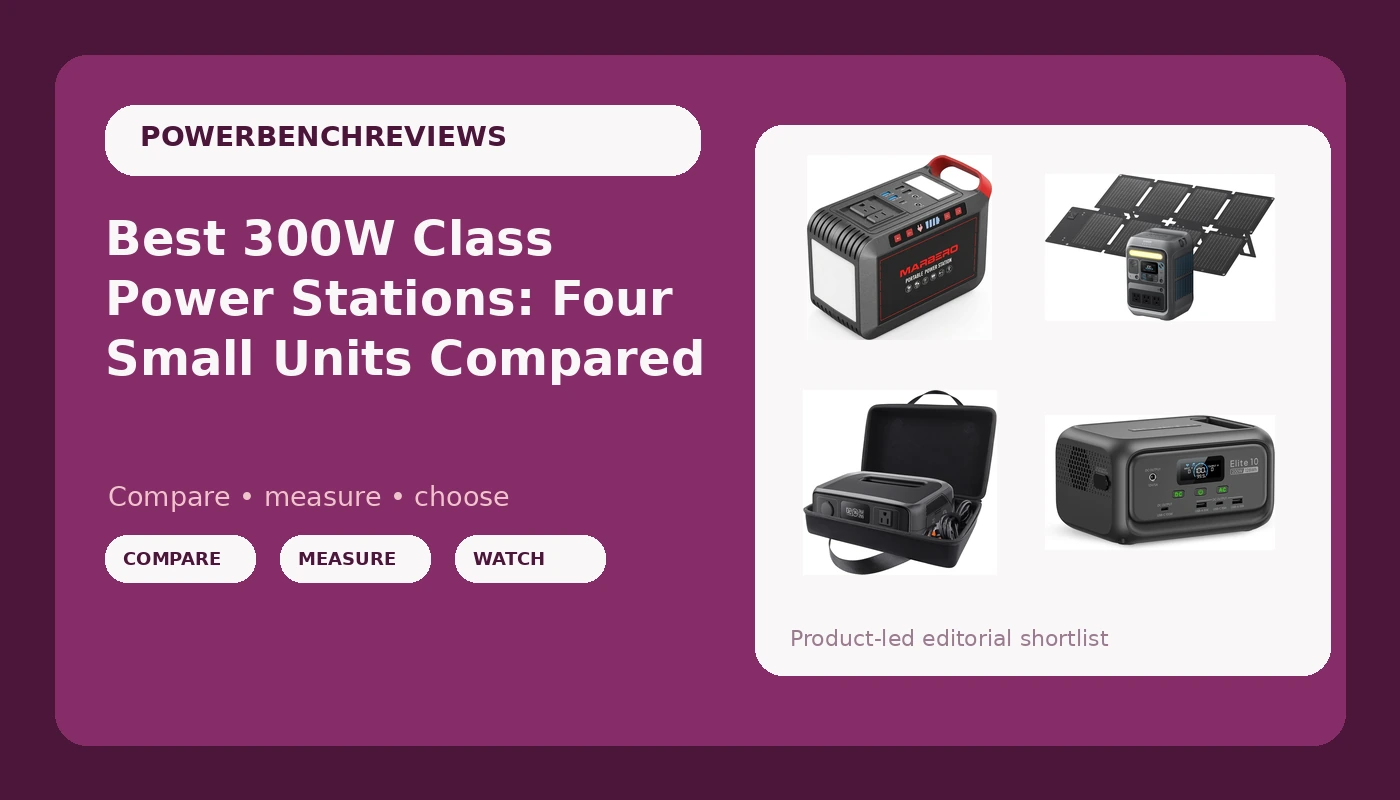
The short answer: the Anker SOLIX C300 with its bundled 60W panel is the most capable system in this group, the BLUETTI Elite 10 Mini is the one I would hand to somebody who only needs a phone and a lamp to keep working, and the MARBERO sits between them with a pure sine wave inverter and more watt-hours than either. The co2CREA hard case is not a power station at all, and I will explain why it belongs in the table anyway.
All three real stations here have an actual AC inverter, which is the line I hold. No inverter, no review. They also land in the same weight class, which means they get compared on watt-hours, inverter quality, and how they behave when you ask them to do something for eight hours straight rather than for a demo.
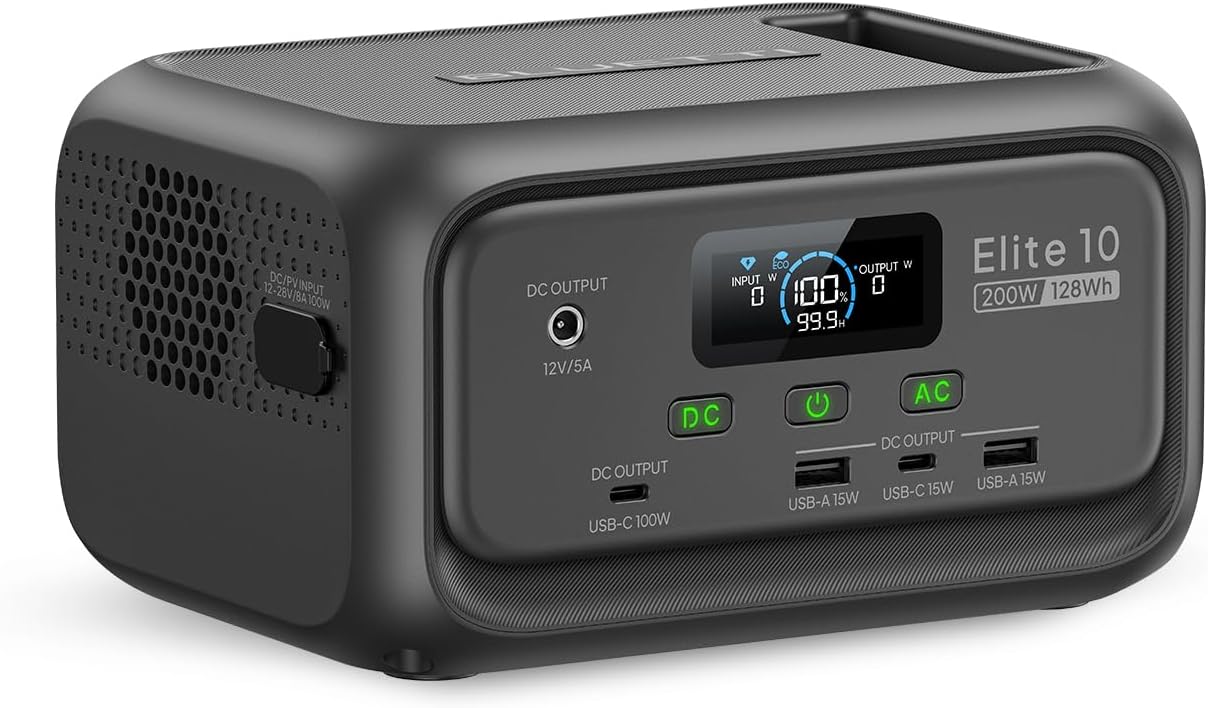
BLUETTI Elite 10 Mini Portable Power Station
Smallest and lightest of the three real stations, easy to keep topped up and grab on the way out the door
128Wh is a short night, not a weekend, and a 200W inverter caps what you can plug in
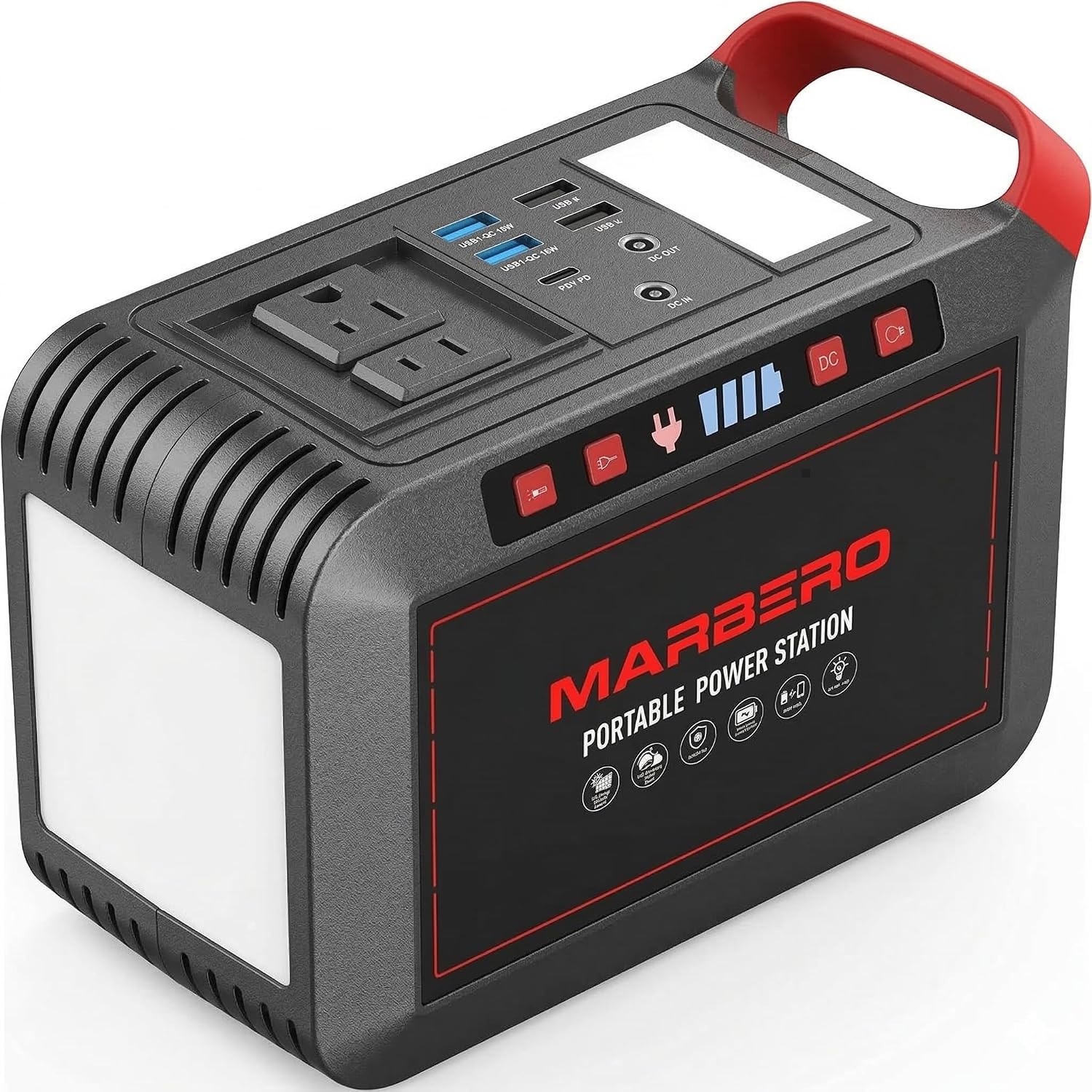
MARBERO 237Wh Portable Power Station
Pure sine wave output at a budget price, with USB C, USB A, and DC ports covering the small loads
Least familiar brand in the group, and the very long product name hides a fairly plain 237Wh pack
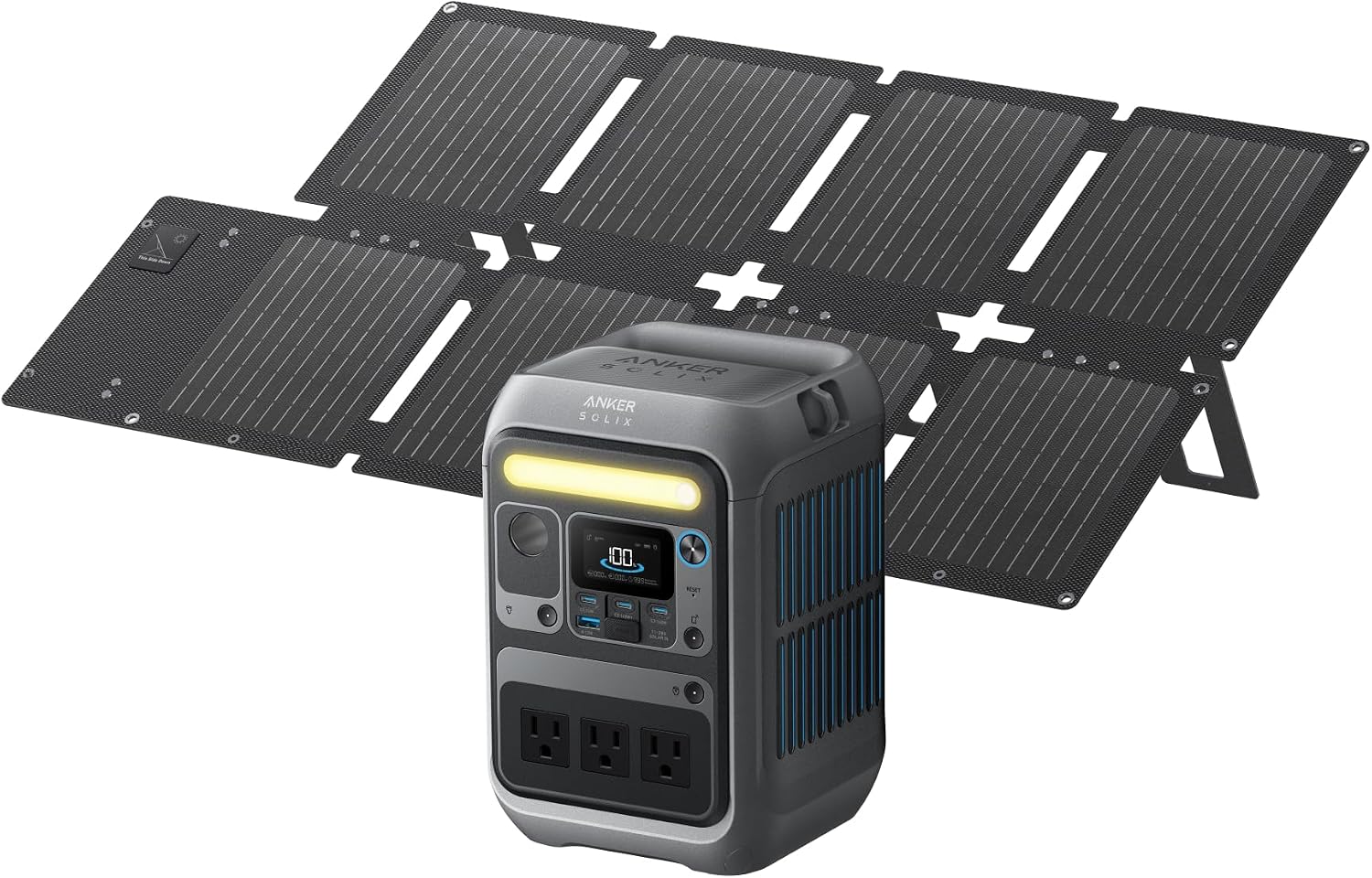
Anker SOLIX C300 Portable Power Station with 60W Solar Panel
288Wh and a 300W inverter, and the panel comes in the box so the whole system arrives at once
The bundle is the most expensive way into this class, and a panel never delivers its nameplate in real sun
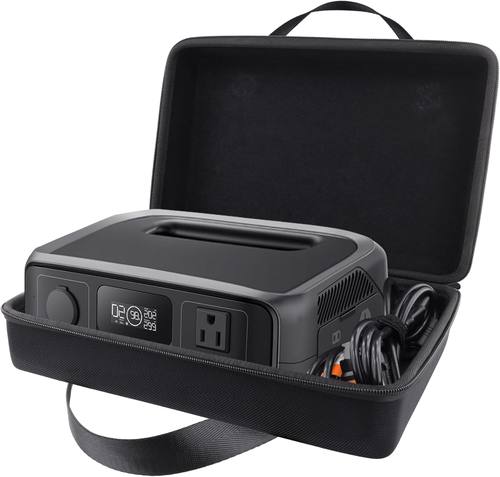
co2CREA Hard Travel Case for the EF ECOFLOW RIVER 3
Cheap protection for a station you already own, and it keeps the cables in one place
It is a case, not a power station, and it does not fit the other three units here
Prices and availability were captured from Amazon Creators API and may change.
How I judge a small station
The Kill A Watt meter goes on the AC outlet first, because the label on the box tells you what the marketing department wanted and the meter tells you what the inverter will actually pass. After that I care about three things, in this order.
Watt-hours over watts. A 300W rating with 237Wh behind it is a different animal from 300W with 128Wh behind it. The wattage tells you what the inverter can push for a moment. The watt-hours tell you how long you get to keep doing it. When a product page leads with the big watt number and buries the battery capacity in paragraph four, that is usually a tell.
Pure sine wave. Every one of the three stations here claims it, and that matters more than most buyers realize. Motors, CPAP machines, and anything with a cheap switching supply run cooler and quieter on a clean sine wave. Modified sine wave output is the thing that makes a fan hum and a laptop brick run hot. If a listing does not say pure sine wave, assume it is not.
Chemistry. LiFePO4 is the standard I hold now. It costs a little more up front, it tolerates being left at partial charge, and it gives you a decade of cycles instead of a few hundred good ones. If a station at this price does not tell you what cells it uses, that silence is an answer.
The 128Wh tier: BLUETTI Elite 10 Mini
BLUETTI rates the Elite 10 Mini at 128Wh with a 200W inverter, which makes it the smallest real station in this comparison. That is not a knock. There is a whole class of buyer who wants a brick they can keep charged in a closet and carry in one hand, and this is that brick.
Do the math before you buy it, though. A CPAP drawing 45W for eight hours is 360Wh. A phone is roughly 12Wh per full charge. A laptop is 50 to 60Wh. So 128Wh is a phone and a laptop and a couple of LED lamps, or it is one night of CPAP and nothing else. Neither of those is wrong, but only one of them is what you pictured when you read the word "outage."
Where the Elite 10 Mini wins is the 200W ceiling. It is honest about what it is. You are not going to run a space heater on it, and the unit is not pretending you will. For a nightstand or a van shelf where the goal is keeping communication and light alive, small and light beats big and heavy.
Check current Amazon price for the BLUETTI Elite 10 Mini.
The 237Wh tier: MARBERO
MARBERO is the name most people have not heard before, and this unit is the reason it showed up in my search. It lists 237Wh with a 300W pure sine wave inverter, plus a 110V AC outlet, USB C, USB A, and a DC port. On paper that is the middle of this group and the best balance of capacity and inverter headroom.
The pure sine wave rating is the part I would underline. At this price point, a lot of budget stations quietly ship modified sine wave inverters and never say so. A CPAP, a fan, or a modem on a modified sine wave inverter can run warm, buzz, or refuse to start. A clean sine wave at 237Wh is a genuinely useful combination for a night of medical gear plus a phone.
What you give up is brand history. Anker and BLUETTI have track records you can read, warranty networks you can call, and years of field reports. MARBERO does not have that depth yet, which is exactly why the price looks the way it does. That is the trade. You are buying the spec and accepting the unknown.
One practical note: the product title is enormous, which makes it hard to compare against anything else in a search result. Ignore the title, read the capacity and the inverter rating, and decide from there.
Check current Amazon price for the MARBERO 237Wh portable power station.
The 288Wh tier: Anker SOLIX C300
Anker rates the SOLIX C300 at 288Wh with a 300W inverter, and it bundles a 60W solar panel in the same box. That combination is why it takes the top spot in this table. You are not buying a station and then shopping for a panel that uses the right connector. The system shows up complete.
The 288Wh is the largest battery here, which buys you roughly one comfortable night of the same loads that would drain the 128Wh unit before midnight. It also has more margin for the inverter's own overhead, which is the part people forget. Every inverter burns a few watts just being on.
The app is the other thing Anker does well, and I will be honest about how I feel about apps. A phone app is a feature, not the product. If a station cannot be run from its own buttons, it fails my bench no matter how nice the interface is. Anker's units run from their own controls, and the app is genuinely useful on top of that for watching state of charge from inside the house.
The panel is where I would temper expectations. A 60W panel is a nameplate rating measured under test conditions nobody camps in. In real sun, with real angles, and clouds, expect a fraction of that, and expect it to take most of a good day to refill a 288Wh battery. Solar charging is a bonus, not a religion. If your plan is to live off the panel, buy more battery instead.
Check current Amazon price for the Anker SOLIX C300 with 60W solar panel.
Why a travel case is in a power station comparison
The co2CREA hard travel case is built for the EF ECOFLOW RIVER 3, not for any of the three stations above. I put it in the table because it is the accessory that shows up in the same search results as everything else, and because somebody reading this already owns a RIVER 3 and has been carrying it loose in a tote bag.
A hard shell case earns its place for one reason: the inverter and the display are the fragile parts, and a station that rides in a truck bed or a van floor gets bumped constantly. The case also keeps the AC brick, the car cable, and the solar cable together, which is the difference between a working kit and a drawer full of orphan cables.
The trade is obvious. It does not fit the BLUETTI, the MARBERO, or the Anker, and it adds nothing to the actual power problem. If you own a RIVER 3 and you move it around, buy it. If you do not, skip this row entirely and put the money toward watt-hours.
Check current Amazon price for the co2CREA hard travel case.
Which one for which person
If your load is a phone, a laptop, and a couple of lights, and you want the smallest thing that will do it, the BLUETTI Elite 10 Mini is the right size. Buying a bigger station for that job is like buying a dump truck for groceries.
If you have a CPAP, a fan, or any motor load, and you want a clean sine wave without paying a premium brand tax, the MARBERO is the value pick. Just go in knowing you are early on a less established brand.
If you want the most usable system out of the box, with the most capacity and a panel already in the box, the Anker SOLIX C300 is the one I would put on my own shelf. It costs more because it does more, and the bundle removes the worst part of solar shopping, which is matching connectors.
What I'm watching next
Two predictions from the bench log. The 2kWh class will drop below $400 within 18 months, and integrated MPPT will be standard rather than a bullet point at this price tier. Both of those squeeze the small-station market from above, which is good news for buyers and bad news for anyone still selling a 200Wh brick at a premium.
Watch the used market after storm season, too. Flooded units show up cheap every fall, and how a station survives being stored wet is the durability test no spec sheet runs.