Related: How to Size a Power Station Without Guessing
I have lived in Salida, Colorado long enough to stop treating the grid like a utility and start treating it like a neighbor who disappears for a week every summer. Wildfire season does that. Twelve years as an electrician taught me to read a nameplate before I read a product page, and five years of reviewing power gear taught me the rest: the spec sheet is a promise, and the meter is the truth.
So when somebody asks me to pick a portable power station for home backup, I do not start with wattage. I start with a load list. A fridge compressor that pulls a hard surge when it kicks on, a furnace blower, a modem and router, a few LED lamps, a phone. Add them up, convert to watt-hours, multiply by the hours you actually need, then add margin for inverter losses. That math takes ten minutes and it keeps people out of the wrong class of machine. Buying a 2,000Wh station to charge a phone is like buying a dump truck to pick up groceries.
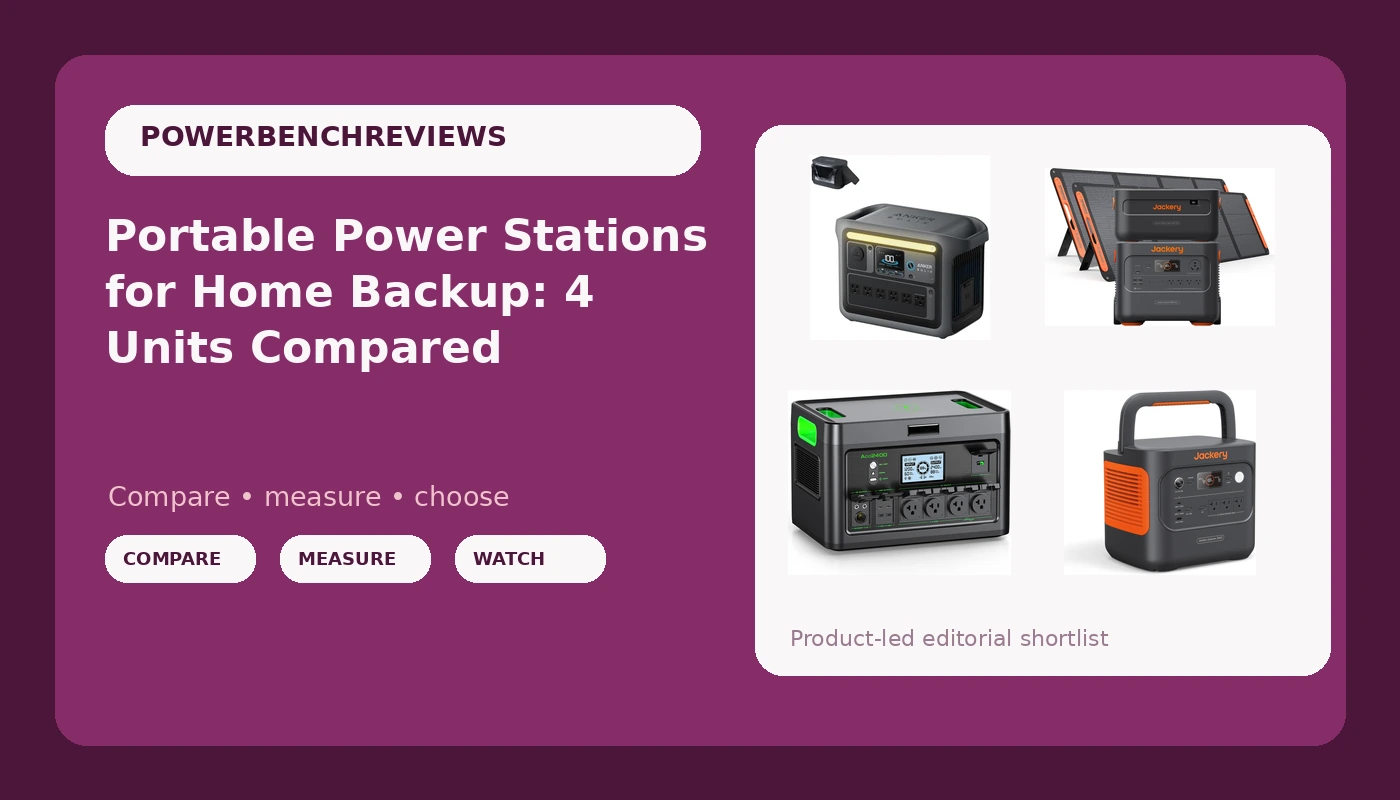
The four units below cover the range I end up recommending: one compact 1kWh class box that fits behind a van seat, two 2kWh class machines that can carry a house circuit, and one bundle that stacks past 4kWh for the multi-day outages we get out here. Listings move, so check current Amazon price on each before you commit.
Best Overall: Jackery Explorer 2000 v2
2,042Wh of capacity and 2,200W of AC output sits right in the middle of this class, and the middle is where most houses live. Capacity is the tank. Output is the pipe. The 2,200W number decides which appliances are even in the conversation. A 1,500W space heater is a real load here. A well pump is a conversation you need to have with your own breaker panel before you buy anything.
Jackery built this market and then got comfortable in it. My gripe with the brand is unchanged: proprietary cables and premium pricing while the rest of the field caught up on capacity per dollar. What you get in return is a platform with a deep accessory ecosystem and controls simple enough that you can hand it to a family member mid-outage without a training session. The app is a feature, not the product. This unit runs from its own buttons, and that is the test I apply to every machine on my bench.
Two things to check before you buy. First, weigh the capacity against your load list. If your biggest load is a 1,500W heater and you want it running overnight, 2,042Wh is not enough, and nothing at this price is. Second, decide whether the brand's proprietary solar connector is a problem for you. If you already own panels with a different plug, that question answers itself.
Best for the Van: Anker SOLIX C1000
1,056Wh in a box roughly half the size of the 2kWh class, and this one ships with a car charging cable. Anker SOLIX is the engineering dark horse in this category, and this is the unit I point at for van builds and truck camping.
Here is why that cable matters. In a converted Sprinter, the alternator is a generator you already paid for. A 1kWh box that tops up while you drive and then runs a 12V fridge, a laptop, and a fan overnight is worth more on the road than a 2kWh box that only charges from a wall outlet. If your trip is two nights and your loads are small, capacity you cannot recharge is capacity you cannot use.
The SOLIX app is the best in the business, and I say that as somebody who distrusts apps. Firmware updates have bricked enough units in this category that I treat every app as a liability until it proves otherwise. The difference here is that the machine still works from its own buttons when the app misbehaves, which is the only version of smart I trust.
For home backup, 1,056Wh is a bridge, not a plan. It will run the modem, the router, the lamps, and charge every phone in the house for a day. It will not run your fridge for two days. Size it for the electronics and let a bigger machine handle the compressor.
Best for Long Outages: Jackery Explorer 2000 Plus Bundle
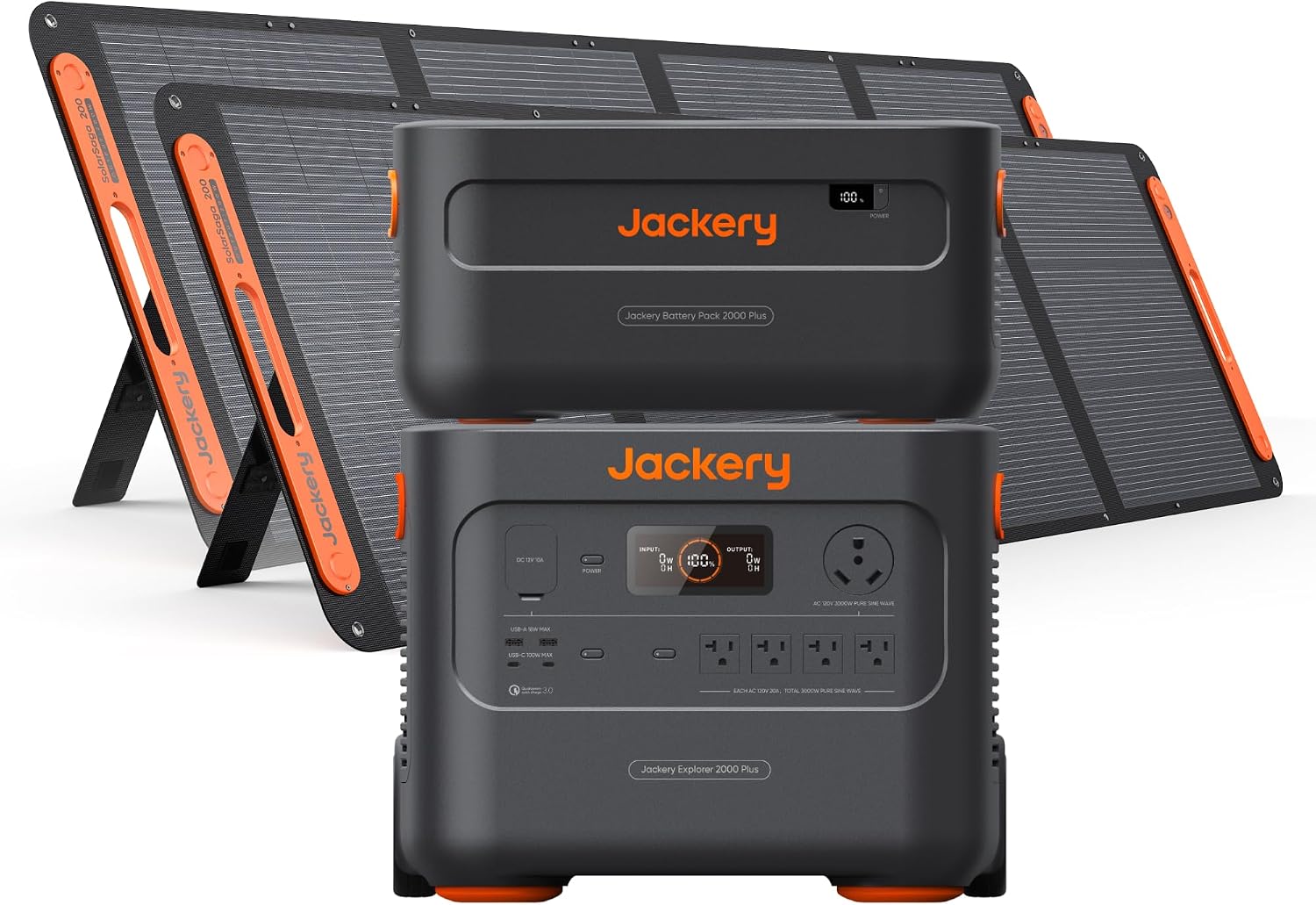
4,085Wh across the main unit and an extra battery, with 3,000W of AC output and two 200W panels in the box. This is the answer for the three-day outage, and the extra battery is the part that earns its place.
Stacking batteries is how you get real runtime. One 2kWh box runs the essentials through an evening. Two boxes run the same essentials through a weekend with the furnace blower cycling. The 3,000W output is high enough that the conversation shifts from what can I run to what should I run, which is a better problem to have.
The panels are where I slow down. Bundles look like deals until you do the math on watts per dollar, and solar is the weakest link in almost every bundle I have looked at. Two 200W panels in real conditions, with angle losses, cloud, and short winter days, put back less than the sticker suggests. If you are buying this for outage planning, buy it for the battery capacity and treat the panels as a bonus. Most people in a mountain town are better off putting that money into more battery than into more panel.
Best Budget Pick: 2400W Portable Power Station, 1843.2Wh
1,843.2Wh of capacity with a 2,400W AC output. Notice the shape of those numbers: the inverter is rated higher than the Jackery 2000 v2's 2,200W while the tank is smaller. That tells you where the money went. For somebody who wants to run a heavy load for a short time, that trade can be the right one.
Budget gear fails in predictable ways, and none of them are mysterious. Fans that scream at 200W. Apps that brick the unit during a firmware update. Wattage printed as a peak surge with no sustained rating next to it. Claimed runtime with zero load math behind it. The way you protect yourself is boring: confirm the listing states a sustained output number, put a real load on the unit when it arrives, and return it inside the window if it does not hold.
At 1,843.2Wh, this is a solid middle option for a household that wants the fridge, the modem, and the lights covered for a day without paying for the 4kWh bundle. It is the value play of this group, and value is a real category, not a consolation prize.
How I Size and Test a Station
Everything starts with the Kill A Watt. Before I look at a spec sheet, I plug the actual loads into the meter and write down what they pull at startup and what they pull once they settle. Surge is the number that trips inverters. Running draw is the number that decides runtime. People mix those two up constantly, and it costs them a return shipping label.
Then the load list becomes arithmetic. Take the watt-hours you need, add margin for inverter losses, and compare that against the capacity on the label. If the number on the label is smaller than the number your house needs, no feature list saves you.
On the bench, a station has to survive three full discharge cycles before I will recommend it to anybody. I run a thermal camera over the inverter under load to see where heat concentrates. I check whether the output is a clean sine wave, because motors and control boards care. I check pass-through behavior, because a unit that cannot run from the wall while it charges is a unit that leaves your fridge warm during the switch. And I check whether the thing works from its own buttons with the app closed.
The numbers in this article come from the nameplate, which is the manufacturer's promise. The meter is what turns a promise into a fact, and that step happens at your house, with your loads, on your circuit.
What the Numbers Mean
Watt-hours is the tank. Watts is the pipe. A big tank with a small pipe runs small loads for a long time. A small tank with a big pipe runs big loads for a short time. Most buying mistakes come from reading one number and ignoring the other.
Here is the ladder in this group. 1,056Wh is the electronics-and-lights class. 1,843.2Wh and 2,042Wh are the fridge-and-furnace-blower class for a day. 4,085Wh is the multi-day class. That is the whole decision, and every other spec is a detail hanging off it.
Chemistry matters more than capacity on a spec sheet. LiFePO4 is what I buy, because the extra money buys charge cycles and depth of discharge headroom, not a marketing badge. Ask what the cell chemistry is before you ask about the app.
Sine wave matters if you are plugging in anything with a motor or a sensitive board. A modified sine wave inverter will happily run a lamp and quietly annoy your fridge. Pure sine wave is the spec to confirm in writing before you buy.
Reference Table: Capacity, Output, and Best Use
This is the table I keep open when somebody asks which one to buy. Capacity and output come from the manufacturer's nameplate. What each unit is best at is my read on those two numbers plus the price bracket.
| Product | Capacity | AC output | Best for | Price |
|---|---|---|---|---|
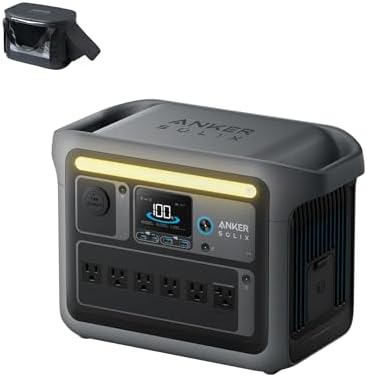 Visit on Amazon → Anker SOLIX C1000 |
1,056Wh | Not listed as a single figure in the listing title | Van life, electronics, lights | $499.99 |
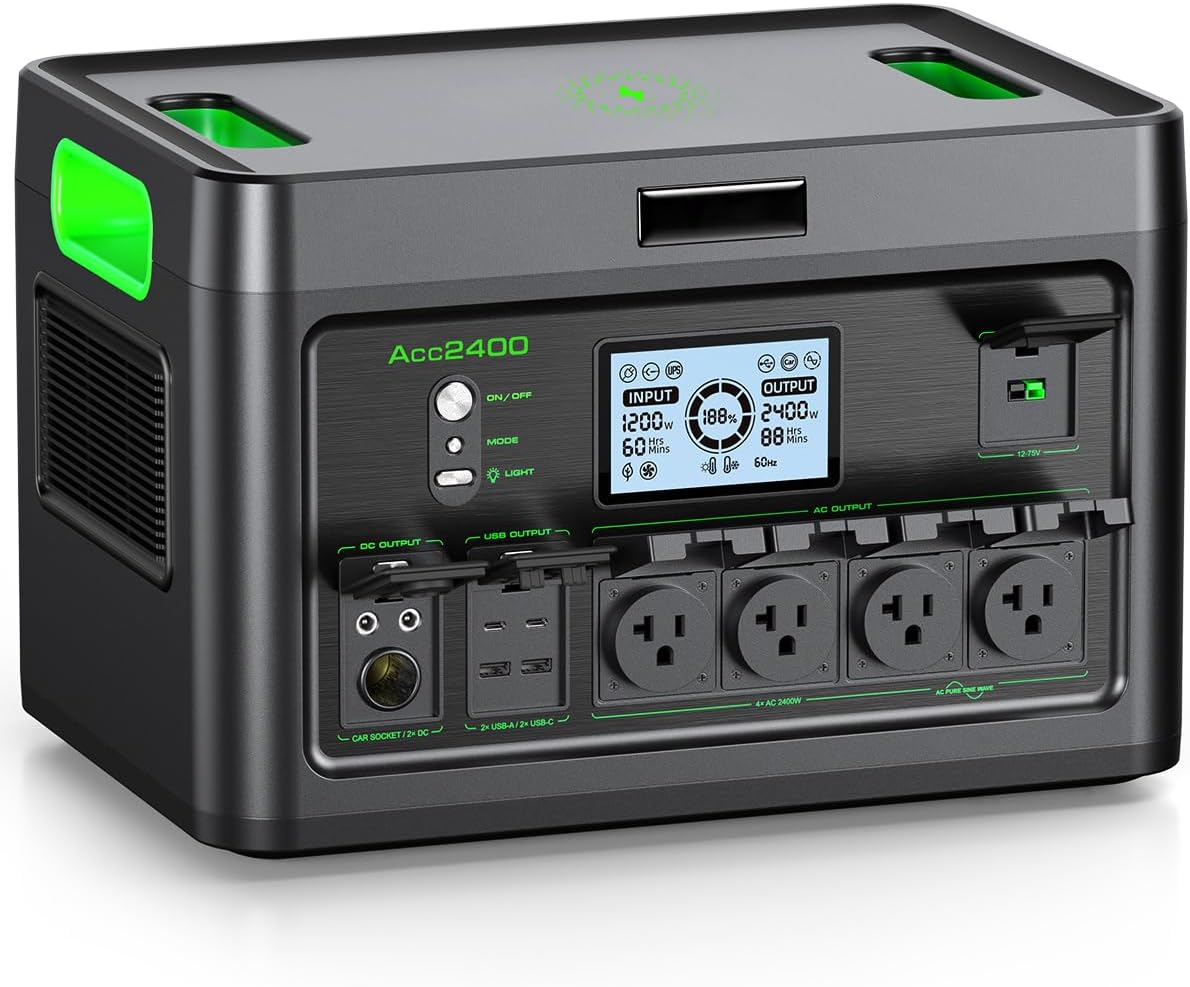 Visit on Amazon → 2400W Portable Power Station, 1843.2Wh |
1,843.2Wh | 2,400W | Short heavy loads on a budget | $499.97 |
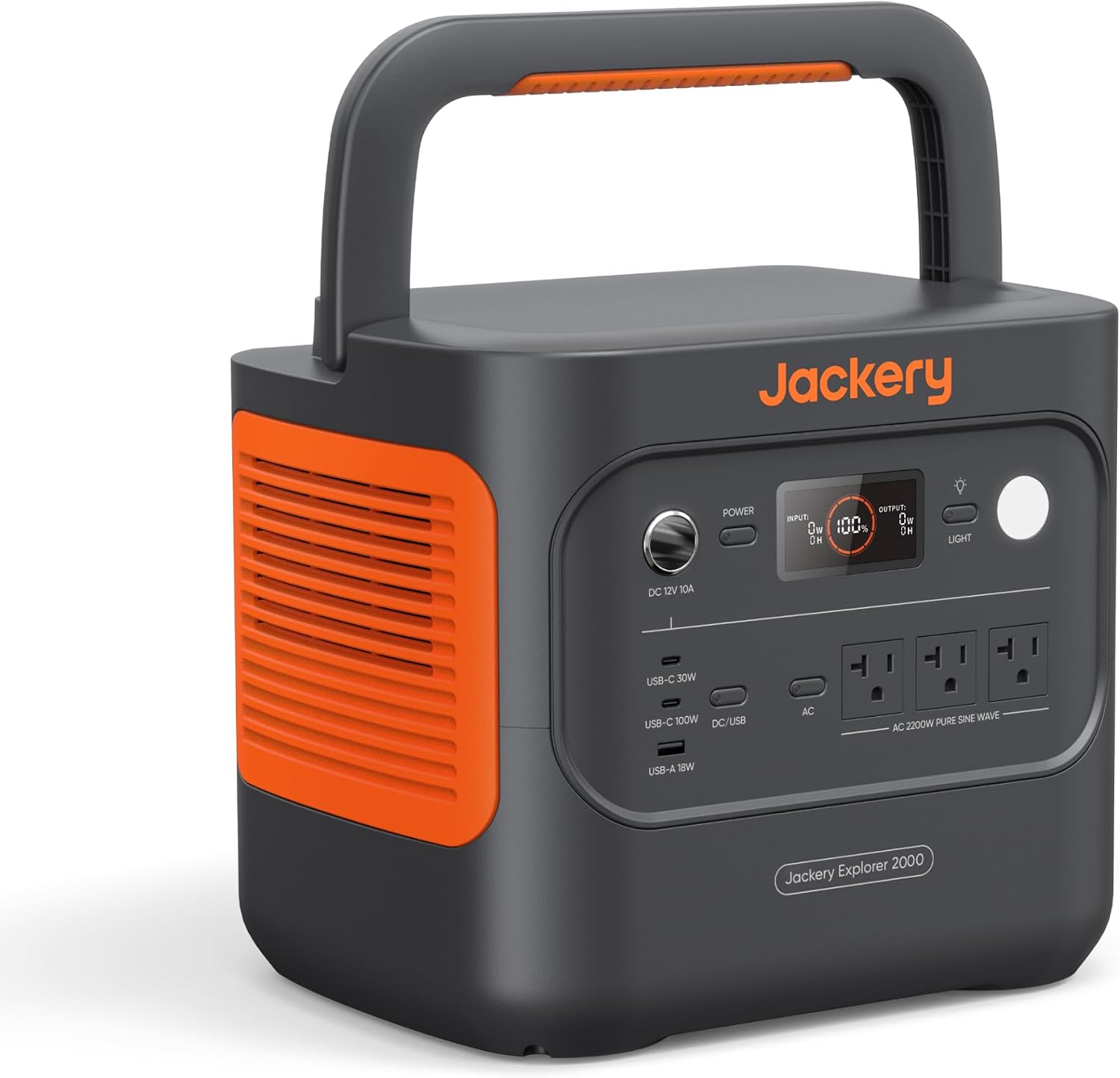 Visit on Amazon → Jackery Explorer 2000 v2 |
2,042Wh | 2,200W | One house circuit for a day | $999.00 |
 Visit on Amazon → Jackery Explorer 2000 Plus bundle |
4,085Wh | 3,000W | Multi-day outages, whole essentials panel | Visit on Amazon → |
Read the table left to right and the decision usually makes itself. If your load list is electronics and lights, stop at the top row. If it includes a compressor, start at row three.
Should you buy the Jackery Explorer 2000 v2?
Yes, for most households. 2,042Wh and 2,200W covers the load list I see most often, and it does it from the most familiar platform in the category. The gripes are real and unchanged: proprietary cables and a premium price while the rest of the field caught up. What you are buying is a mature unit with deep accessory support and controls simple enough for anybody in the house to use during a bad night.
Should you buy the Anker SOLIX C1000?
Yes, if your loads are small and your charging happens in a vehicle. The car cable turns the alternator you already own into your charger, and the app is the best in the business without being the only way to run the machine. Just be honest about the ceiling. 1,056Wh runs electronics and lights for a day and will not carry a fridge for two.
Should you buy the Jackery Explorer 2000 Plus bundle?
Yes, for multi-day outage planning. 4,085Wh across two boxes with 3,000W of output is a different class of answer, and stacking batteries is how you buy runtime. Pay for the capacity. Treat the two 200W panels as a bonus, because panels are the weakest link in every bundle I have looked at, and watts per dollar on solar rarely survives the math.
Should you buy the 2400W Portable Power Station?
Yes, if you want the biggest inverter per dollar here. 2,400W of AC output against 1,843.2Wh is a short-heavy-load trade, and for a household running a few big draws rather than one long small one, it is the right trade. Test it on arrival with a real load and keep the box until you are satisfied, because that is how you get value out of budget gear instead of a lesson.
For more on sizing these machines against real household loads, see power station versus gas generator for home backup.