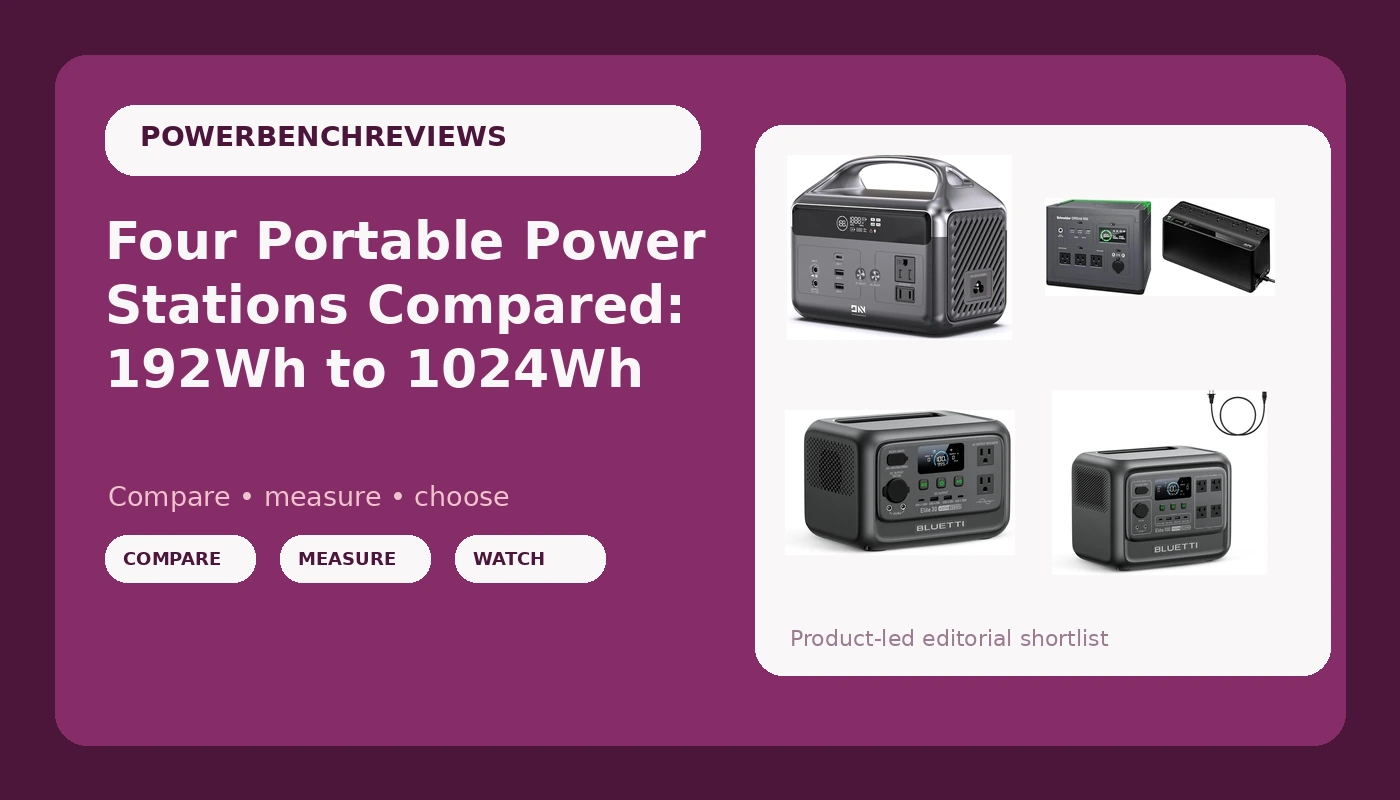
I keep a Kill A Watt meter, a resistive load bank, and a paper logbook on a bench in my garage in Salida, Colorado, because the grid drops here for days every wildfire season and I have watched too many neighbors buy the wrong box in a panic. This portable power station comparison covers four very different answers to one question: how much stored energy do you actually need, and what does it honestly cost to get it. Two of these units are small enough to carry one-handed, one is a bundle built around a home office UPS, and one is a true 1kWh class station that will run a fridge overnight.
One thing I want to be straight about up front. The specifications below come from the manufacturers, not from my bench. What I bring is the sorting logic I use on every unit that crosses that bench: watt-hours before watts, chemistry before marketing, and load math before anybody's claim about "hours of runtime."
Related: How To Size A Power Station For A Fridge
For most people, the BLUETTI Elite 30 V2 is the pick on this list. It pairs 288Wh of LFP with a 600W inverter, which covers a real weekend of small loads without the price of the 1kWh class. If you want to spend the least money learning what you actually use, the DaranEner 192Wh unit is the honest starting point. The BLUETTI Elite 100 V2 is the one to buy when you already know you need to run appliances, not gadgets.
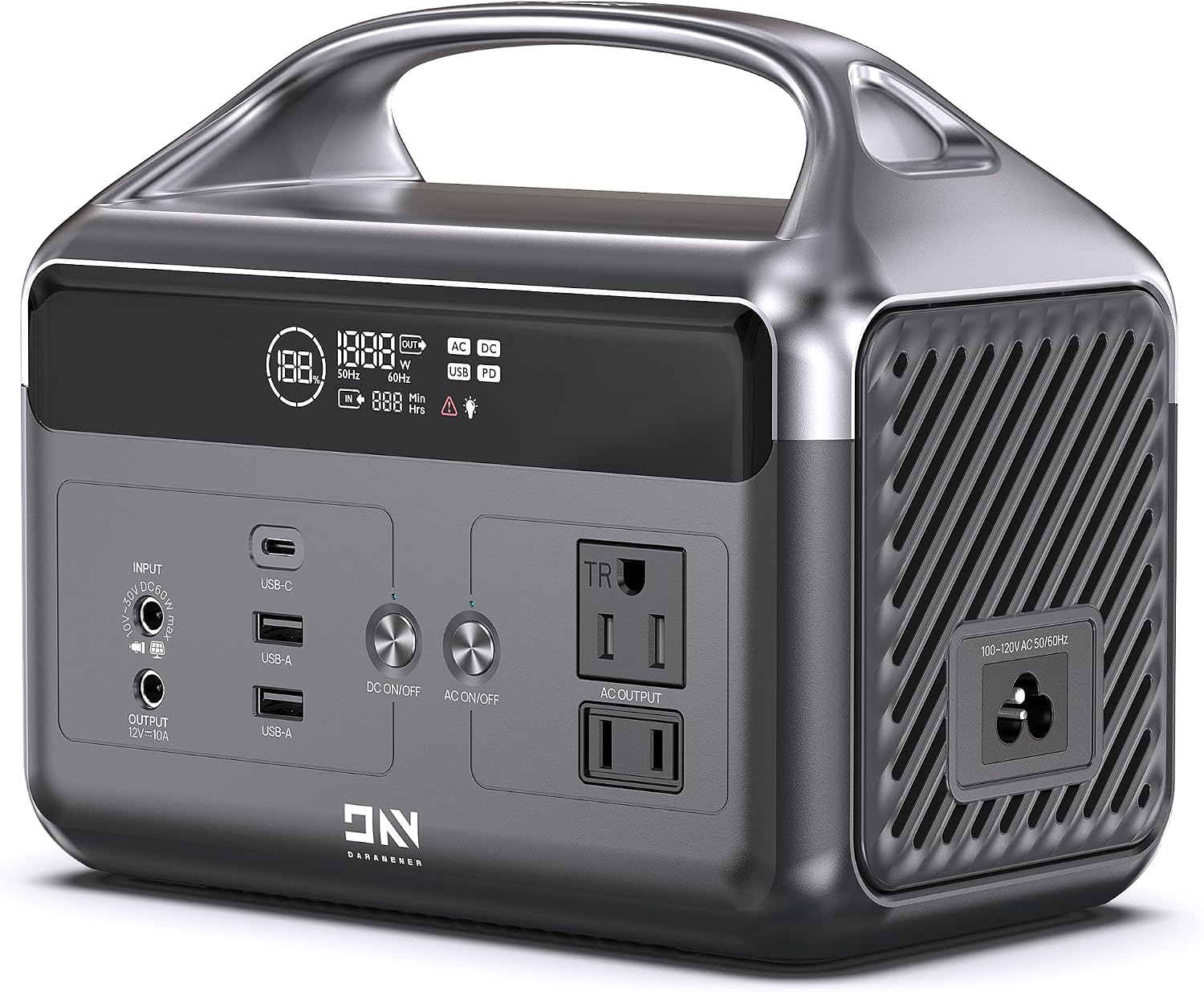
DaranEner 192Wh LiFePO4 Portable Power Station
LiFePO4 chemistry at the lowest entry cost here, 300W sustained with 600W surge headroom, USB-C PD 60W for laptop charging
192Wh empties fast, only two AC outlets, no meaningful app story
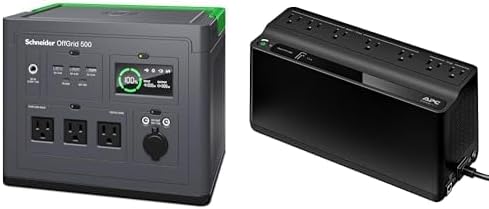
APC UPS and Solar Generator Power Bundle (600VA UPS plus 500W station)
Two jobs in one purchase, a 600VA UPS that sits on the desk and a 500W station that travels
Highest cost per watt-hour of the four, two batteries to maintain, the station half is mid-tier
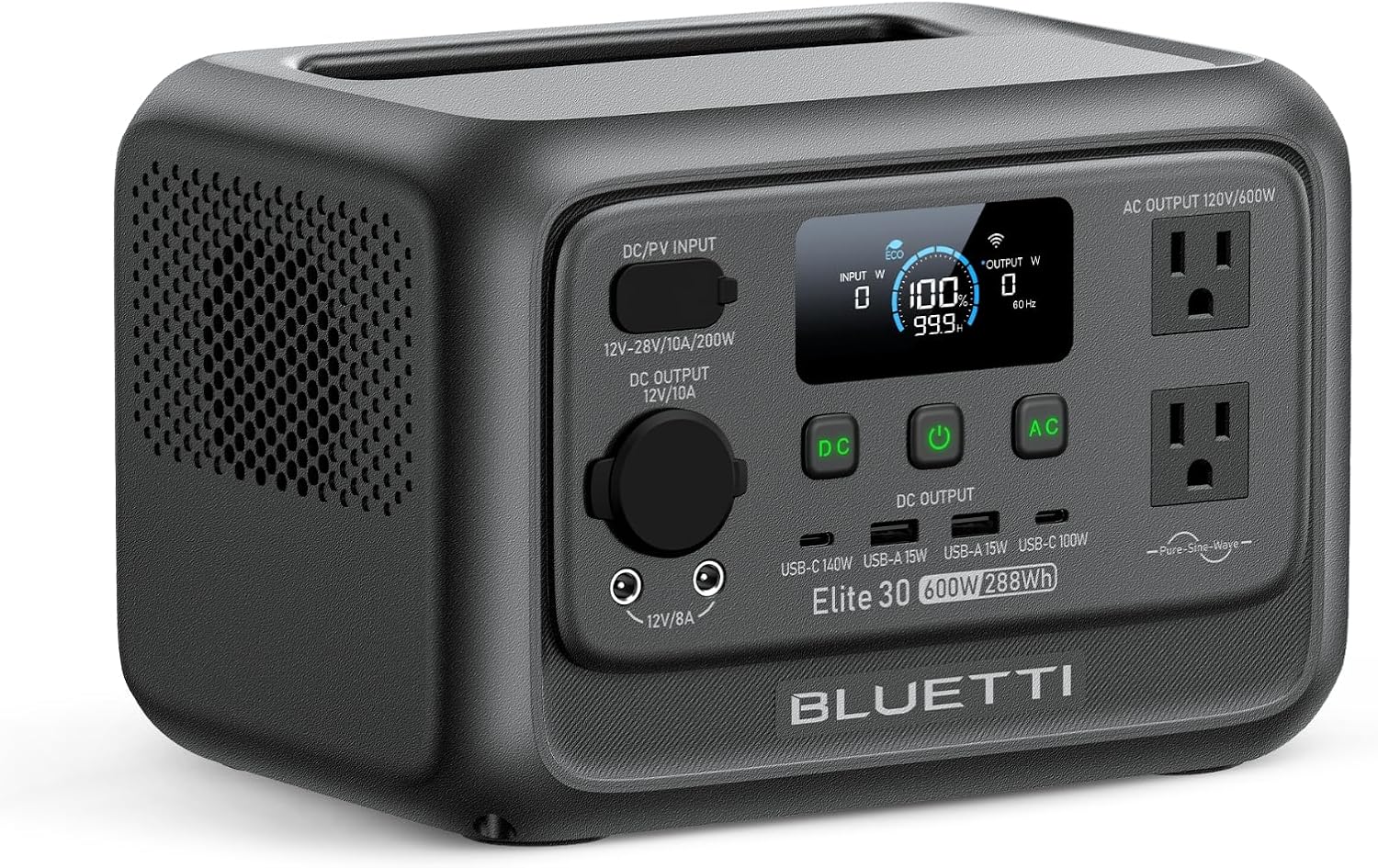
BLUETTI Elite 30 V2 Portable Power Station 288Wh 600W
600W inverter in a 288Wh LFP package, the best ratio of capacity to inverter here
Not built as a desk UPS, so transfer behavior is not its job
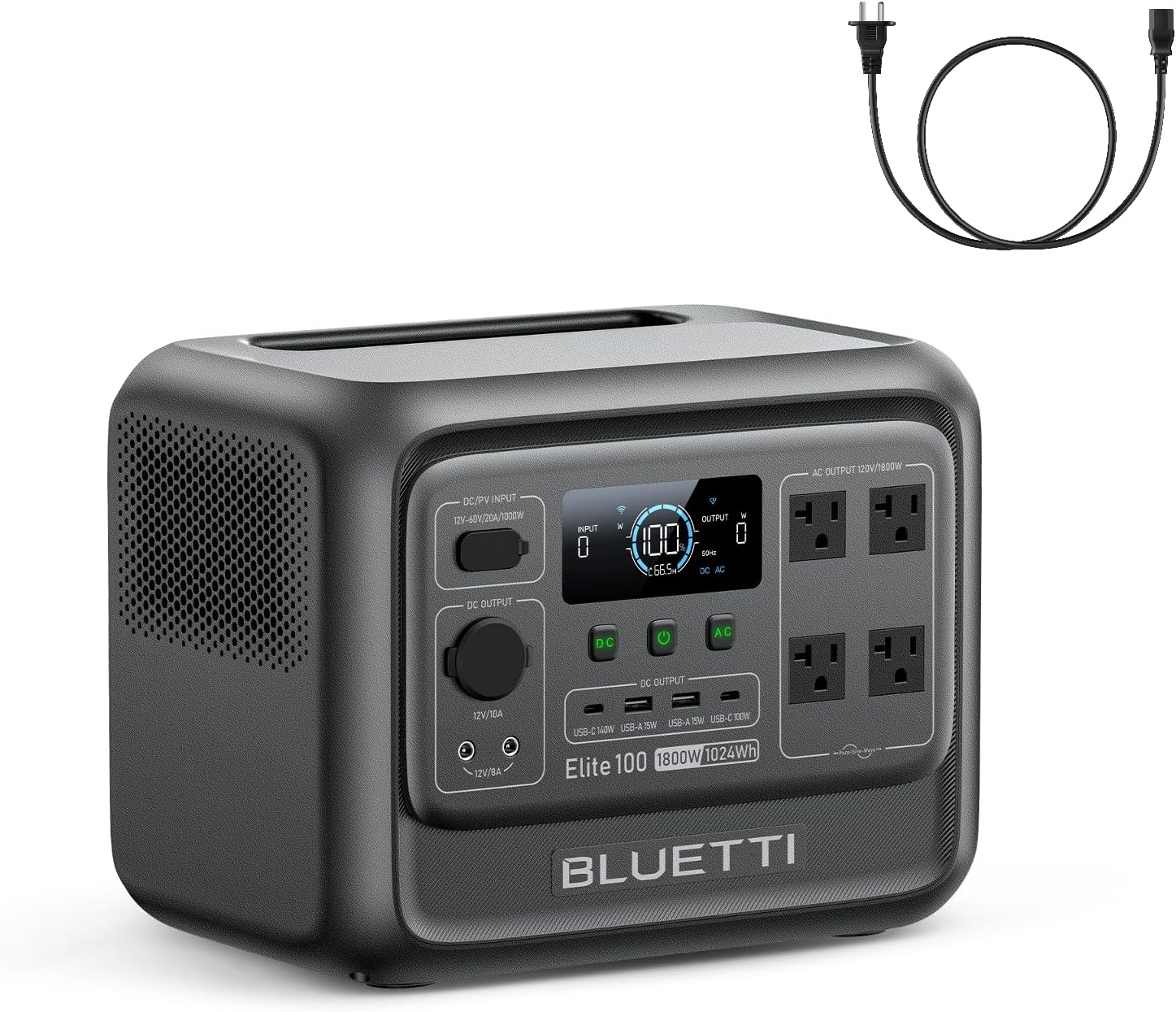
BLUETTI Elite 100 V2 Portable Power Station 1024Wh 1800W
1024Wh and an 1800W inverter, the only unit here that runs real household appliances
The heaviest and priciest option, and overkill if your loads are phones and a laptop
Prices and availability were captured from Amazon Creators API and may change.
The math I run before I read a spec sheet
Every one of these four is sold on watts, and watts are the least useful number on the box. A 600W inverter tells you what the unit can push at one instant. The watt-hour rating tells you how long it can push it. Those two numbers together tell you whether the thing is a tool or a toy.
Here is the arithmetic I do in my head in the aisle. Add up the loads you actually care about in watts, then multiply by the hours you need them. A laptop charger pulling 60W for three hours is 180Wh. A modem and router pulling 20W for eight hours is 160Wh. A CPAP with the humidifier off, around 30W for eight hours, is 240Wh. Stack those and you can see why a 192Wh unit is a day-trip tool and a 1024Wh unit is a small appliance machine.
Then apply the derate. Inverters are not lossless, and you should assume you get roughly 85 percent of the nameplate watt-hours out of the AC outlets before the unit shuts down. That single adjustment turns a marketing claim into a plan.
The 192Wh class: DaranEner
The DaranEner is the cheapest way onto this list, and it is the one I would hand to somebody who has never owned a power station. The chemistry is LiFePO4, which matters more than the capacity. LFP cells tolerate deeper discharge and far more cycles than the old lithium-ion packs, so a small LFP unit that gets used hard every summer will outlast a bigger pack that was built cheap.
The 300W sustained rating with a 600W peak is honest for the size, and the USB-C PD 60W port means you can charge a laptop directly without burning inverter overhead, which is the single most efficient thing you can do with a station this small. Two AC outlets will cover a fan and a light, or a modem and a router.
Where it loses: 192Wh is a small tank. Run a 60W load and you are into the derated capacity quickly. There is no app worth mentioning, which for me is a feature rather than a fault, but it does mean no scheduling and no remote monitoring. If your plan is "keep the fridge alive for a day," this is the wrong unit and the BLUETTI Elite 100 V2 is the right one.
The UPS bundle: APC
The APC bundle is the odd entry, because it is not really one product. You get a 600VA UPS sized for a home office and a separate 500W portable station, sold together.
The UPS half is the part most people skip and then regret. A UPS sits in line between the wall and your equipment, passes utility power through, and switches to battery in milliseconds when the grid drops. That is a different job than a power station does. If your concern is losing a work session, a NAS, or a desktop PC mid-afternoon, the transfer speed matters and a standard power station will not match it. Pair that with a 500W station you can carry to the garage or the campsite and the bundle covers two scenarios with one purchase.
Where it loses: cost per watt-hour. This is the most expensive entry here and the capacity is split across two boxes, each with its own battery to keep healthy. You also inherit two product manuals and two support paths. If you already own a UPS, buying this bundle means paying for hardware you have on the shelf.
The middle: BLUETTI Elite 30 V2
The Elite 30 V2 is the one I would put in most homes. A 288Wh LFP pack behind a 600W inverter is the sweet spot for the way people actually use these things: a weekend of phone, laptop, light, and fan loads, plus enough surge to start a small motor.
BLUETTI's reputation is value, and my standing note on the brand applies here. Check the waveform rating before you trust the wattage, because anything with a motor or a sensitive electronics brick wants a clean sine wave. The 600W inverter on a 288Wh pack is a generous ratio; you are getting real headroom instead of a peak number printed in bold.
Where it loses: this is not a desk UPS, and it was not designed to be one. If you want pass-through power with instant transfer, that is the APC bundle's job. It also sits in an awkward middle for people who already know their loads. If your list includes a fridge, a space heater, or a microwave, 288Wh runs out before the appliance finishes its cycle, and you should be looking at the 1024Wh unit instead.
The 1kWh class: BLUETTI Elite 100 V2
The Elite 100 V2 is the only unit here that changes what is possible. A 1024Wh LFP pack with an 1800W inverter will run a full-size fridge through a night, a microwave for short bursts, a space heater at low settings, or a full home-office setup for days. If your reason for buying is wildfire season or a multi-day outage, this is the class you want and the other three are compromises.
The 1800W inverter is the number that matters, not the capacity. It is the difference between a station that runs electronics and a station that runs appliances. It ships with an AC cable, which sounds trivial until you have bought a unit that expected you to source your own charging cord.
Where it loses: weight and price. This is the heaviest box here and the most expensive single unit. It is also the wrong purchase for someone whose real load is a phone and a laptop, because you are paying for inverter capacity you will never call on. Bigger is not better; matched is better.
Trade-offs I would check before buying any of them
Waveform. A pure sine wave output is the spec that keeps a CPAP, a modem, or a furnace control board happy. Marketing pages love to bury it. Ask before you buy, especially on budget units.
Surge versus sustained. The 600W peak on a 300W unit is a starting current allowance, not a working rating. Size your loads to the sustained number.
Solar input. All four can accept panels, and none of them should be bought for solar first. Panels are the weakest link in most bundles, and the watts-per-dollar math on a folding panel rarely beats simply buying more battery. Charge from the wall, treat solar as the backup plan.
App dependence. A station that cannot run from its own buttons is a station that becomes a brick the day the app breaks. Every unit here has physical controls, which is part of why they are on this list.
Fan noise. A unit that screams at 200W of draw is a unit you will not want in a tent or a bedroom. This is the kind of thing that only shows up in a real discharge, which is why I do not trust a spec sheet for it.
Chemistry. LiFePO4 or nothing. The premium buys cycle life, not a badge, and every unit in this comparison uses LFP.
What I would buy
If you are spending your own money and you want one answer, it is the BLUETTI Elite 30 V2. It covers the realistic load list for a household that is not trying to run appliances, and it does it at a price that does not require a spreadsheet to justify.
If the budget is tight and the goal is education, buy the DaranEner. Carry it for a season, log what you plug into it, and you will know exactly how many watt-hours your life requires. That logbook is worth more than any review, including this one.
If you work from home and losing power mid-day costs you money, buy the APC bundle. The UPS half is the point, and the portable station is a useful second act.
If you have already been through an outage and you know you need the fridge, the modem, and the lights at the same time, skip the small units and go straight to the BLUETTI Elite 100 V2. Buying twice is the most expensive way to solve this problem.
What I am watching next
The 1kWh class keeps sliding toward the price the mid-size units used to occupy, and integrated MPPT is becoming standard rather than a premium feature. Within a year I expect the 288Wh tier to be the entry point and 192Wh units like the DaranEner to be clearance items. Watch the pure sine wave ratings as prices fall, because that is usually the first spec a brand quietly drops when it chases a lower shelf price. If a station cannot run from its own buttons and its own meter, it does not belong on your shelf, no matter what the box promises.