Most people who start searching for a best affordable power station have already priced the big 2kWh units and decided this is not the month. The honest answer for that buyer is a smaller inverter, a modest battery, and a charger that is actually rated for the job. That is a cheaper and more specific problem than the one the premium brands advertise against, and it is the one this guide covers. Every product below was selected on published specifications rather than on wattage badges, and where a listing is thin on detail the article says so instead of guessing.
I'm Dan. I spent twelve years as an electrician before the solar side work turned into a full-time review habit, and I live in a Colorado mountain town where the grid drops for days every wildfire season. My bench rules do not loosen for budget gear: watt-hours matter more than watts, a unit needs a real AC inverter to count, and a chemistry that will not survive a decade is a false economy. An affordable power station can pass those tests. It just has to be sized to a load you actually have.
Related: How to Size a Power Station to Your Real Load
Quick answer
The DARAN 350W Portable Power Station is the strongest fit for phones, a router, a laptop, and a lamp during a short outage, because its record lists a 350W continuous inverter rating with a 600W surge and 288Wh of capacity, which is a genuine AC output rather than a USB battery with an outlet bolted on. Choose the Clore Automotive PL2320 instead when the real job is keeping a 6V or 12V lead-acid battery charged and maintained between trips, since that is a charger task and no small station does it well.
Affordable power station and charging gear worth comparing
An affordable power station is only half of a working setup. The other half is the gear that keeps the batteries you already own alive: the lead-acid battery in the boat, the NiMH cells in the headlamps, the tool batteries on the shelf. What follows is my short list for the best affordable power station search, one real AC unit and five chargers that support it, and each card is matched to its exact retailer listing so the product shown is the product you get.
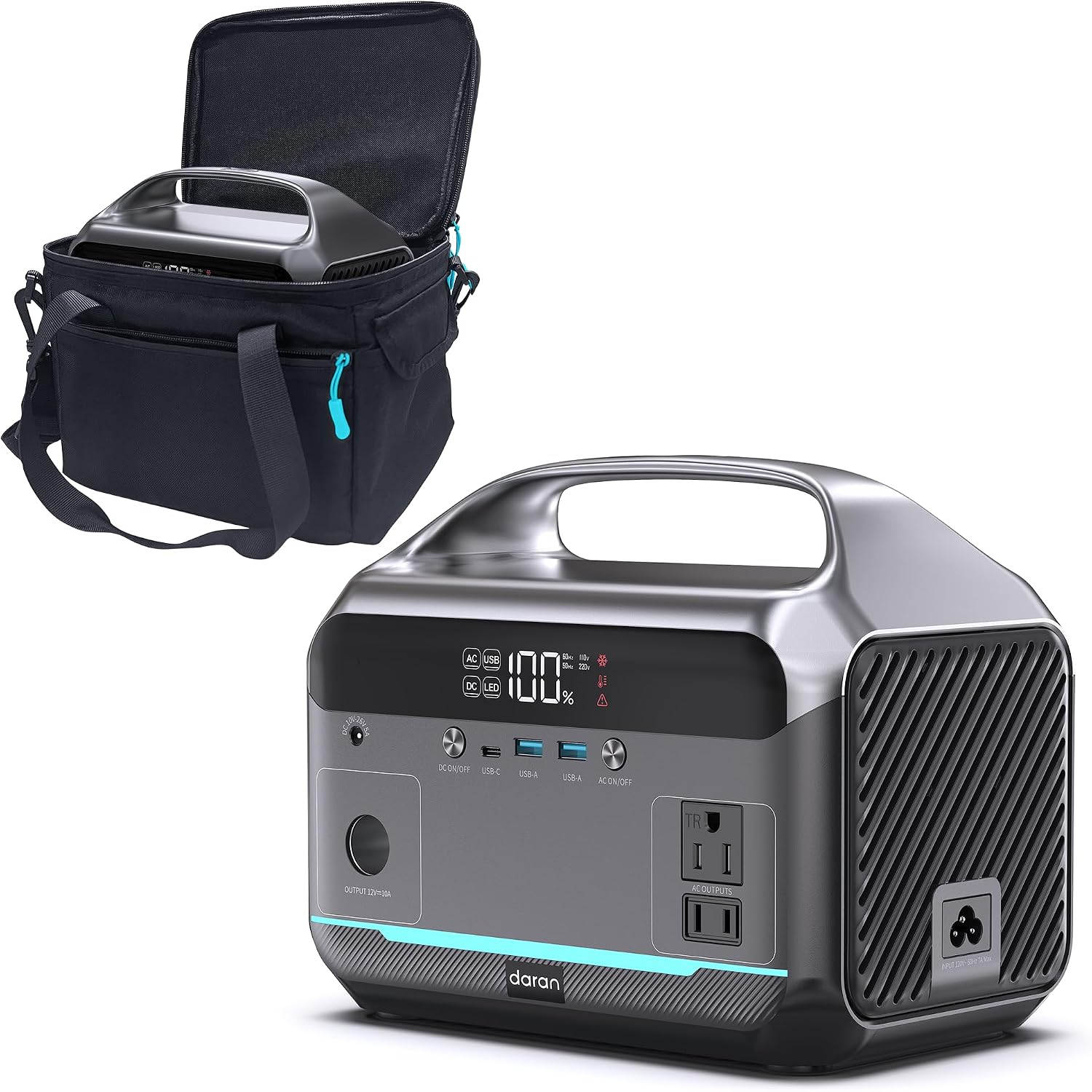
DARAN 350W Portable Power Station 600W Surge, 288Wh with
A 288Wh pack rated 350W continuous with a 600W surge. That is a real AC inverter rather than a USB battery with an outlet, and it is enough for a router, a laptop, and a lamp at the same time. Confirm battery chemistry and outlet types on the listing.
Visit on Amazon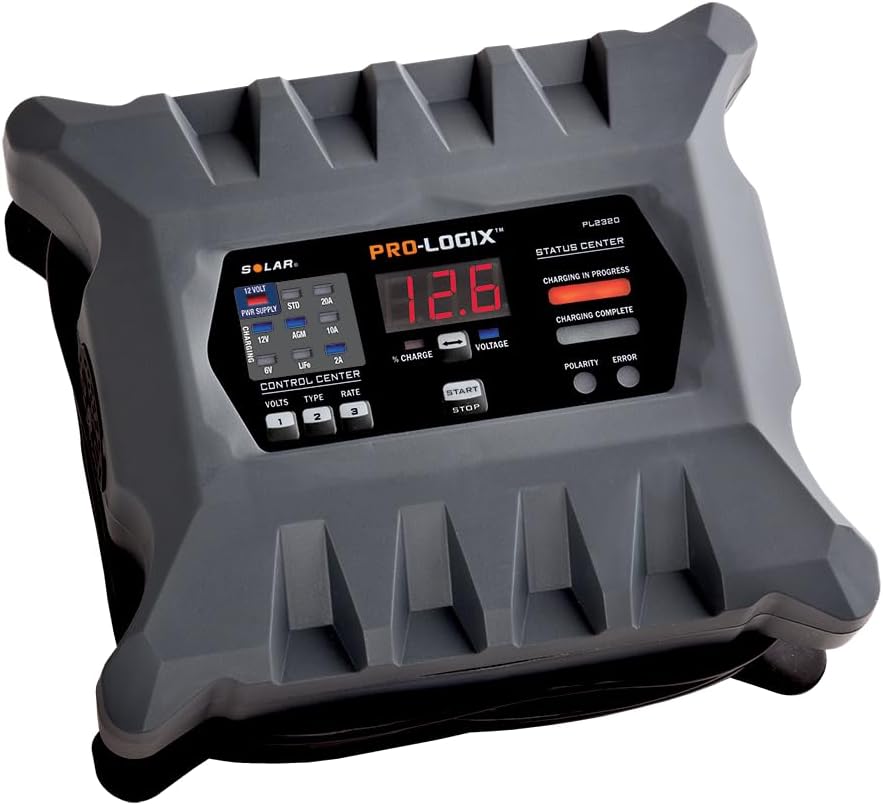
Clore Automotive PL2320 20-Amp Fully-Automatic Smart Charger, 6V and 12V Battery Charger, Battery Maintainer, and Stable Power Supply with Temperature Compensation
A 20-amp fully automatic charger for 6V and 12V batteries, with temperature compensation, a maintainer mode, and a stable power supply mode. The tool for keeping a lead-acid bank or a truck battery healthy between outages.
Visit on Amazon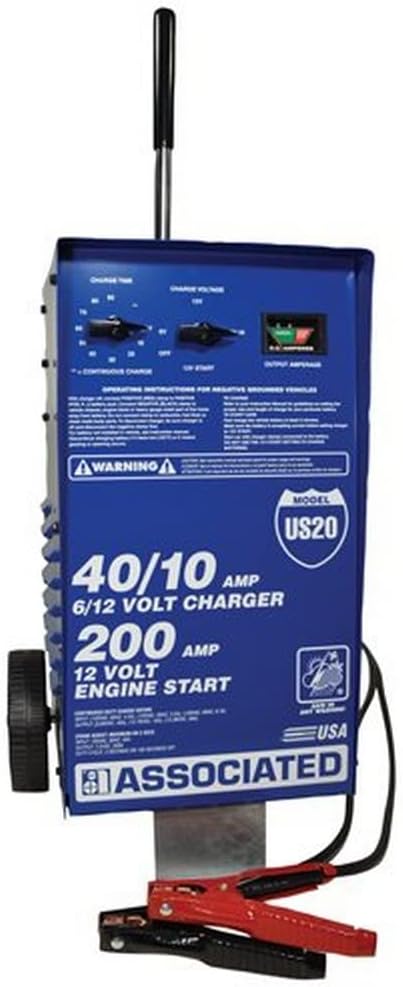
Associated Equipment US20 6/12 Volt Value Battery Charger Blue 24 Inch
A 6V and 12V value charger in a 24-inch blue housing. Plain lead-acid charging for the mower, the boat, or the second vehicle, which are the batteries a small power station cannot top off on its own.
Visit on Amazon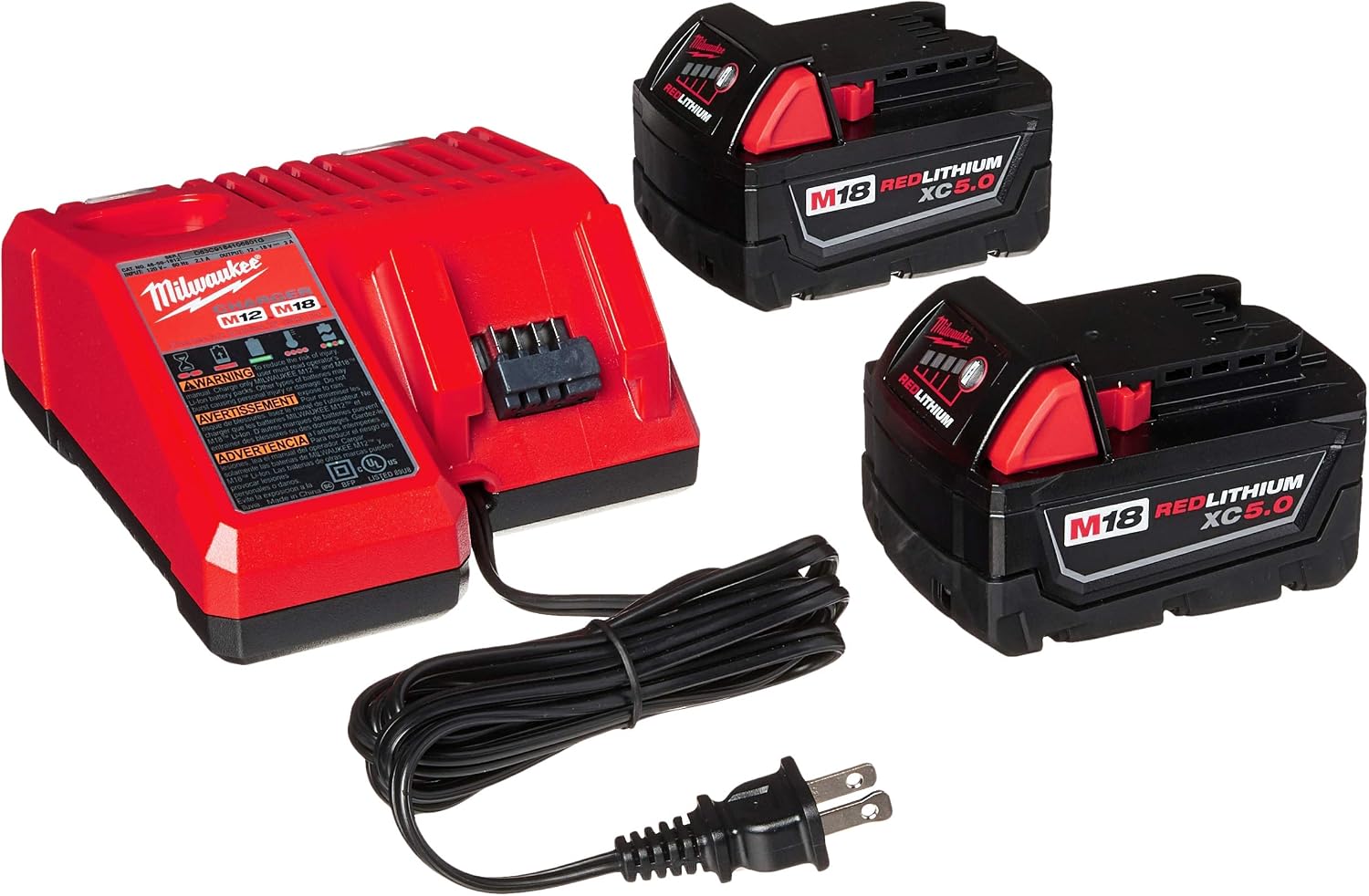
Milwaukee 48-59-1850 M18 RED LITHIUM XC 5.0 Ah Batteries (2) + 48-59-1812 M12 and M18 Multi Voltage Charger kit
Two M18 RED LITHIUM XC 5.0 Ah batteries paired with a multi-voltage M12 and M18 charger. Tool batteries are a battery bank many households already own, and this kit extends capacity you can carry to a job site.
Visit on Amazon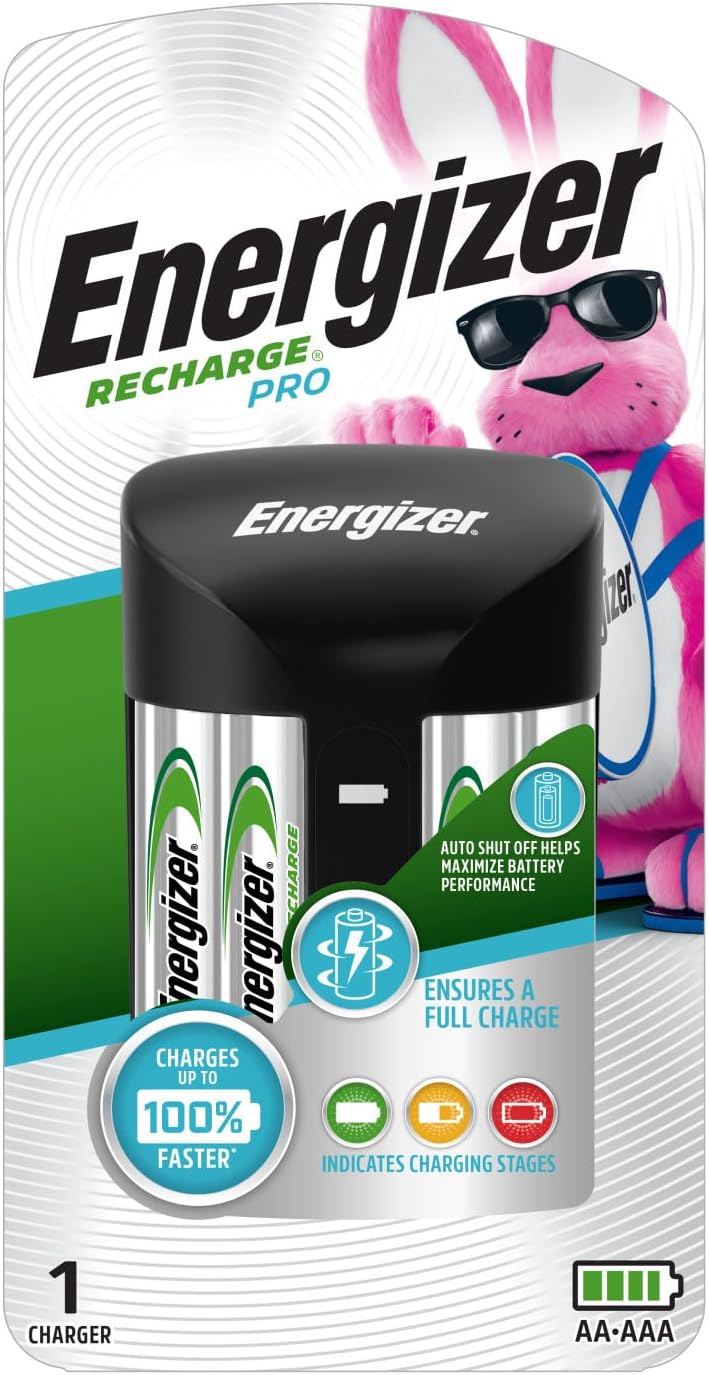
Energizer Recharge Pro Rechargeable AAA and AA Battery Charger With 4 NiMh Rechargeable AA Batteries, Provides a Full Charge in 3 Hours
Charges AA and AAA NiMH cells and ships with four AA batteries included, with a stated three-hour full charge. Keeps headlamps, radios, and multimeters running when the grid is down for a stretch.
Visit on Amazon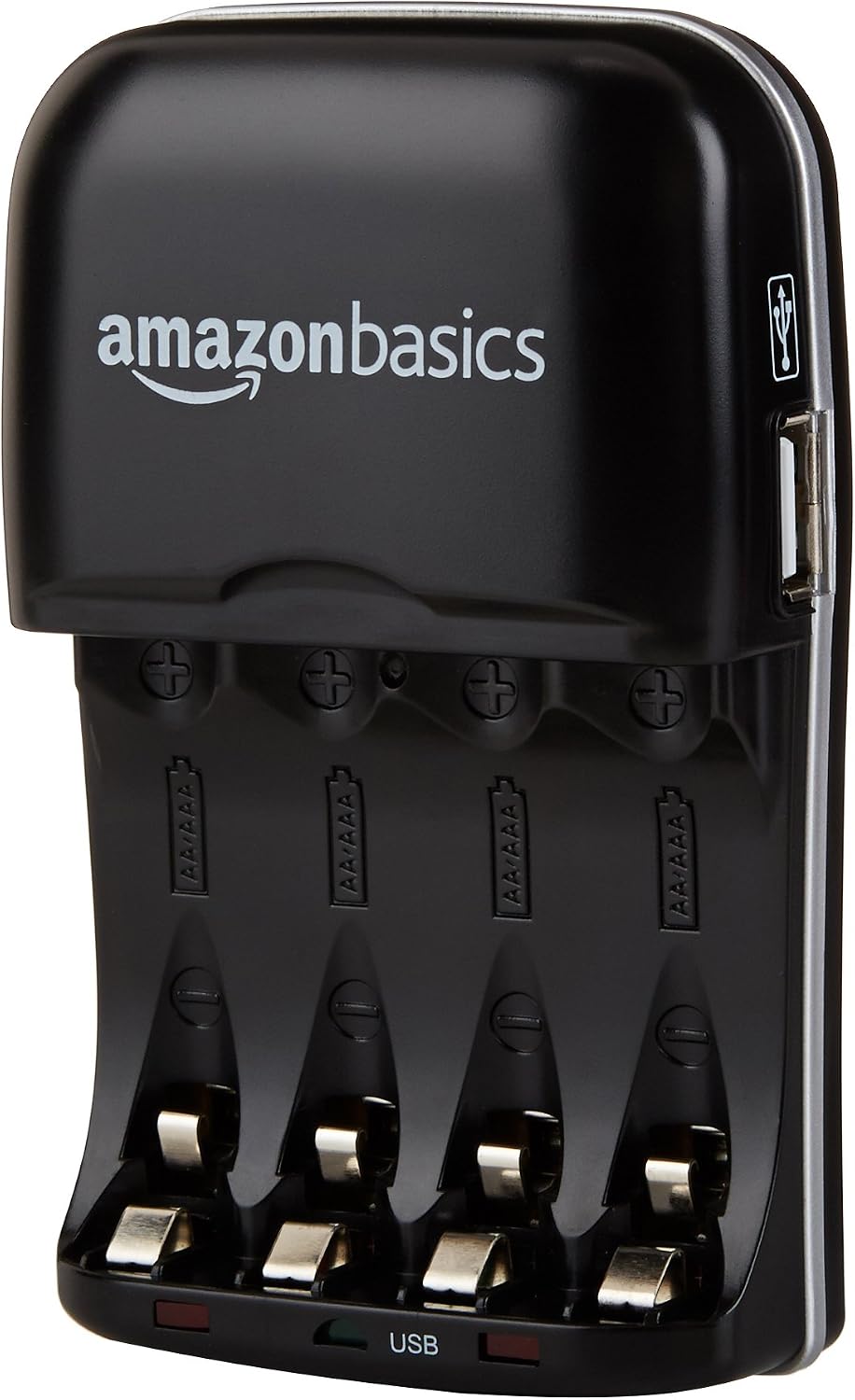
Amazon Basics Rechargeable Battery Charger for AA & AAA Ni-MH Batteries with USB Port, Portable, Travel-Friendly, Over-Charge Protection, Black
An AA and AAA NiMH charger with a USB port, over-charge protection, and a travel-friendly body. A simple way to keep small cells cycling instead of feeding a disposable habit.
Visit on AmazonPrices and availability may change. Check the retailer for current details.
How these products were compared
This guide compares stated continuous and surge wattage, battery capacity in watt-hours, charger amperage and the chemistries each charger supports, outlet and connector compatibility, and how cleanly the listed model matches the retailer listing. Product names, images, and links are matched by listing so that every card points to the product shown.
These are comparisons of published specifications, not discharge curves from my bench. That distinction matters more in this price band than in any other, because a budget listing is exactly where a surge figure gets printed in the space where a continuous rating belongs. Where a number is missing from the record, this article says so rather than filling the gap with a brand claim. Use the link on each card to confirm current price and availability, since both move.
How to choose the right power station
Start with the load, not the label. Write down the watts of everything you want to run at the same time, add them up, then decide how many hours you need. A router and a laptop might be 90W together; adding a small fridge compressor changes the math completely. Multiply watts by hours to get watt-hours, then add about 20 percent for inverter losses. That number, not the surge rating on the box, is what you are shopping for. If you want the long version of that arithmetic, how to size a station to your real load walks it through with worked examples.
Then check the shape of the power. A 350W continuous rating with a 600W surge will start a small compressor and run a fan, but a resistive load like a heater will eat the whole budget in an hour. For anything with a motor, look for a pure sine wave output, and treat a missing waveform spec as a no. Chemistry is the next filter. LiFePO4 costs more up front and gives you charge cycles that pull the cost per year well below a lithium-ion pack of the same capacity, which is why the case for LiFePO4 in budget units is worth reading before you commit.
Charging options decide whether the thing is useful or a shelf ornament. Wall charging is table stakes. A 12V car lead is genuinely useful if the unit lives in a van or a truck, and a solar input is a bonus rather than a plan; most buyers are better off putting money into watt-hours than into panels. If you are weighing a 12V-only unit against one with a wall charger, whether 12V-only charging is worth it covers that trade.
DARAN 350W Portable Power Station 600W Surge, 288Wh
The case for this unit is arithmetic. 288Wh with a 350W continuous inverter puts it in the class where a router, a laptop, two lamps, and a phone can run for an evening, and where the 600W surge is enough to start a small compressor or a fan. It is the only product on this list with a real AC inverter, which is the line I will not cross for budget gear. Everything else here is a charger.
The trade-off is capacity and documentation. At 288Wh it will not carry a fridge overnight, and it will not run a space heater at all, so if your outage plan includes either of those, save for a bigger unit instead of adding a second small one. The product record does not state battery chemistry, and in this price band that is the detail that decides how many seasons you get. Confirm the chemistry and the outlet types on the listing before you commit.
Alternatives to consider
The Clore Automotive PL2320 is better suited to keeping a 6V or 12V lead-acid battery charged and maintained, with a 20-amp fully automatic charge, temperature compensation, and a stable power supply mode for the times you need the battery to hold a voltage rather than sit on a charger. The Associated Equipment US20 is a stronger fit when you want a plain 6V and 12V value charger for the mower, the boat, or the second car, where the only requirement is that the battery is ready when you need it.
The Milwaukee 48-59-1850 kit, the Energizer Recharge Pro, and the Amazon Basics charger cover the batteries a station cannot: two 5.0 Ah M18 packs with a multi-voltage M12 and M18 charger for tool batteries, four AA NiMH cells with a stated three-hour full charge for headlamps and radios, and a compact AA and AAA charger with a USB port and over-charge protection for everything else. None of them is glamorous. All of them keep a household running on cells it already owns.
Day-to-day use and maintenance
A power station wants to live at partial charge, not full and not empty, and it wants to live somewhere cool. A van that hits 120F in the sun is the fastest way to shorten a pack's life. Recharge a small unit to roughly half before you store it, top it up every few months, and run it under a real load now and then so the inverter is exercised rather than idling.
Lead-acid batteries are the opposite problem: they sulfate when they sit discharged, which is why a maintainer mode matters and why the Clore and the US20 belong in this list at all. NiMH cells lose charge on the shelf, so charge a set the night before a trip rather than a month ahead, and lean on over-charge protection instead of leaving cells in a dumb charger for a week.
A few habits pay for themselves. Label the outlets you use most, keep the manual with the unit, and test the whole setup once a season by running your actual outage load for an hour. If a breaker trips or the fan ramps hard at a light load, that is information, and it is cheaper to learn it in October than in a storm.
One caution that is not optional: do not run a power station next to a fuel appliance in a closed space, do not backfeed it into house wiring without a transfer switch, and do not charge a swollen or damaged battery. Store charger leads where they cannot short.
Buying checklist
- Measure the load you actually run, in watts, before you look at capacity.
- Choose watt-hours based on normal use rather than an occasional edge case.
- Confirm the exact model's continuous rating, surge rating, and battery chemistry on the listing.
- Check the outlet types and whether the unit accepts wall, 12V, or solar charging.
- Read the charging and storage instructions for both the station and any battery charger.
- Verify the current retailer price, availability, and return terms.
Final recommendation
Choose the DARAN 350W Portable Power Station when your outage list is phones, a router, a laptop, a lamp, and a fan, and when 288Wh behind a 350W continuous inverter covers that with margin. Choose the Clore Automotive PL2320 when the battery you actually depend on is a 6V or 12V lead-acid one that needs charging and maintaining rather than a box with an outlet on the front. Add an AA and AAA charger either way, because the small cells are what fail first in a long outage.
Where the record is thin, as it is on chemistry for the station here, I would rather send you to check the listing than pretend to a certainty the data does not support. That is the whole discipline behind this guide: an affordable power station is worth buying when the spec sheet survives a second read, not when the badge is the biggest text on the box.