Related: Best Portable Power Station for CPAP: Sizing a Night of Runtime
Every fall in Salida the grid starts dropping. Not for an hour, for days, when a fire takes a line down and the crews cannot get in. I spent twelve years as an electrician before I started reviewing gear full time, and the mistake I see most often has nothing to do with brands. It is the math. If you are shopping for portable power station solar charging, the panel is the last thing you should pick, not the first.
Here is the order that works. Add up the watts you need to run at the same time. Multiply by the hours you need them. That is your watt-hour target. Then check the continuous inverter rating, because a station that surges to 200W but runs at 100W will trip the moment you plug in a load that lives above 100W. Only then do you decide how to refill the battery.
This guide covers four pieces of gear: a 192Wh LiFePO4 station, an 80W power supply for a Philips DreamStation 2, a 200W foldable solar panel, and a 100W Renogy panel kit with a PWM controller. Two are batteries, two are solar, and one is an accessory people buy for the wrong reason.
Best Overall: The 192Wh LiFePO4 Station
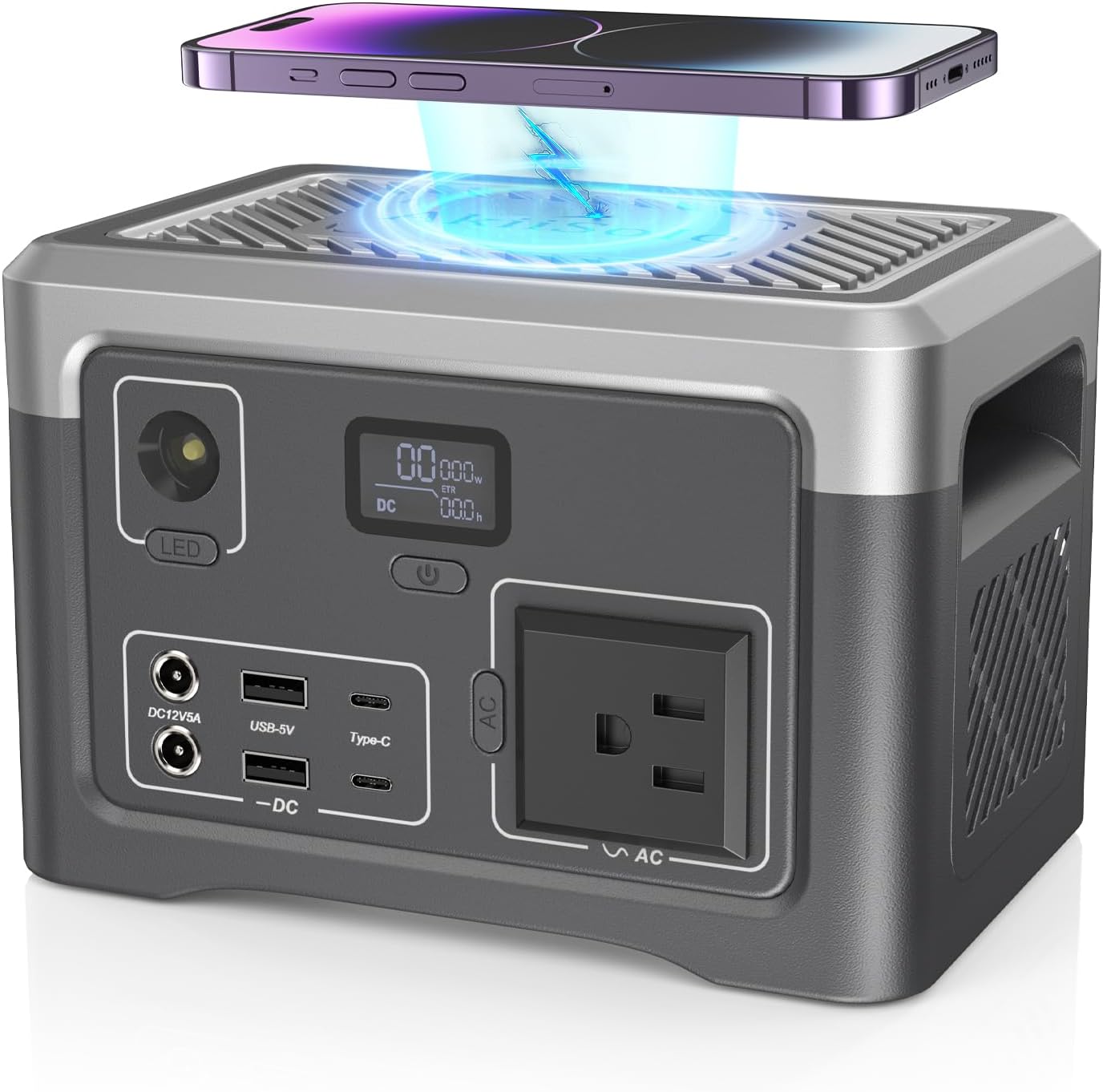
This is the small end of the market, and small is not an insult. The listing puts it at 192Wh with a 100W AC outlet that surges to 200W, and it weighs 3.9 pounds. That is a one-hand carry, which is the whole point of a station this size. It runs lights, the router, a fan, a laptop, and the phone chargers that keep a household sane during a two-day outage.
The math is easy to say out loud. 192Wh divided by a 10W load is roughly 19 hours on paper. Divide the same 192Wh by the full 100W continuous rating and you get under two hours. Inverter losses take a bite out of both numbers, so treat them as ceilings, not promises. That is not a knock on this unit. It is how every station in this class behaves.
LiFePO4 is the reason I would look at it at all. The chemistry costs more up front and gives you a battery that is still useful long after a cheaper lithium-ion pack has been retired to a shelf.
The LED lights and the music player are not why you buy it. But they draw almost nothing, and in a blackout a light that runs off the same box as your phone is genuinely useful. Just do not let a speaker sell you a battery.
Best for CPAP: The 80W DreamStation 2 Power Supply
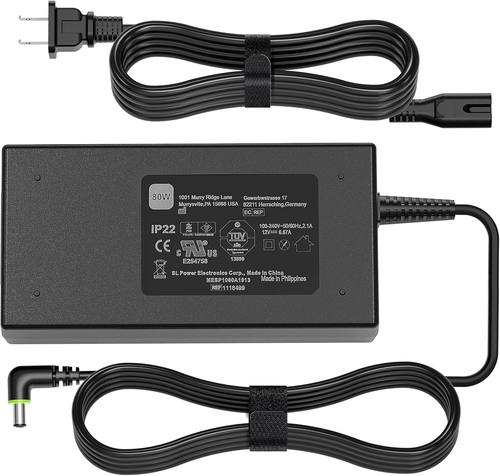
If you sleep on a CPAP, a station stops being a hobby and becomes medical equipment. This is the accessory side of that. The HHZ unit is an 80W power supply with a 7.4 by 5.0 mm tip, built to work with a Philips DreamStation 2.
Two things matter, and neither is exciting. First, the tip. A replacement supply is only a replacement if the barrel fits, and this is the size that machine takes. Second, the 80W rating. If you feed that supply from a station's AC outlet, 80W is 80 percent of the 100W continuous rating on the station above. That leaves 20W of headroom, and headroom is what keeps a station from tripping at 2 a.m.
Here is the part people miss. This is a wall supply. Running it from a station means DC to AC and back to DC, and every conversion costs you something. A 12V car adapter for the same machine would skip the inverter entirely. If a full night is the goal, 192Wh is tight. I am not going to hand you a runtime number I cannot measure from a listing.
Best Portable Panel: The 200W Foldable N-Type
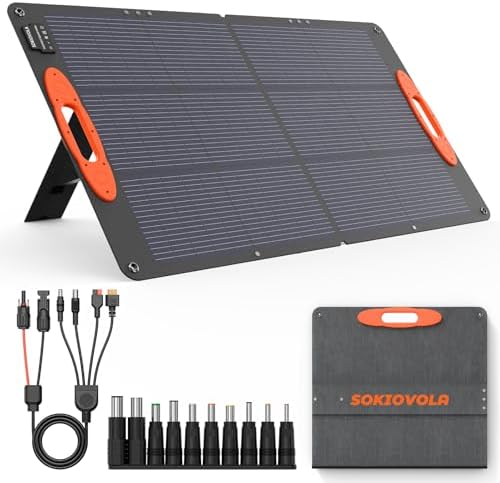
The SOKIOVOLA panel is the one I would pack. It is a 200W foldable with N-type 16BB cells, a 25 percent efficiency rating, and an IP68 waterproof rating. The listing names EF, Jackery, Bluetti, and Anker as compatible stations, which tells you the panel side is standardized and the adapters live on the station side.
That is the detail to check before you buy. Proprietary solar connectors are the most common reason a good panel ends up in a closet, and the fix is usually a small cable nobody mentions on the product page. Know which connector your station takes, and know what is in the box.
The other thing to check is the station's solar input limit. A 200W panel feeding a station that accepts less simply runs at the lower number. Watts on the panel are a ceiling, not a delivery. Foldable and IP68 matter more than most spec sheet numbers, because a panel you leave in the van is a panel you actually use.
Best 12V Kit: Renogy 100W Starter Kit
This one is not for your portable station, and I want to be blunt about that, because the confusion costs people money. The Renogy kit is a 100W 12V panel with a 30A PWM charge controller, and that controller is built to charge a 12V battery bank. A station with its own charge controller wants panel input, not a second controller in the middle.
If your plan is a van or a cabin with a house battery, this is the kit to start with. A 100W panel on a 12V system makes about 8 amps, so a 30A controller has real headroom, roughly 360W of panel capacity at 12V if you expand later. That is a starter kit you do not have to replace.
PWM versus MPPT is the tradeoff. PWM clamps the panel to battery voltage and throws away the difference. On a single 100W panel that loss is small and the price is right. MPPT converts the extra voltage into current, and it earns its keep with higher voltage panels and cold mornings. My prediction from two years ago still stands: integrated MPPT becomes standard on mid-range gear, and PWM lives where it belongs, on small starter systems.
How I test gear like this
My bench is boring by design. A Kill A Watt meter on the AC side, a paper logbook, a thermal camera for anything that gets warm, and a discharge count. A station does not get a recommendation from me until it has been run flat at least three times, because the first discharge tells you the capacity and the third tells you whether the fan screams.
None of these four listings has been through that bench yet. What you are reading is spec math and pattern recognition, not measured results. I am telling you that because the difference matters. When I have discharge curves, I will publish them.
Analysis: what the specs actually promise
Watt-hours over watts, every time. A 100W inverter rating tells you what you can plug in. The 192Wh tells you how long. People buy the wattage and then wonder why the box quits at midnight.
Surge is not sustained. The 200W surge figure covers motor starts and power supply inrush. If your load lives above 100W, that number is irrelevant to you.
Panels are the weakest link in every bundle I have priced. A 200W panel will not fix a battery that is too small. Most people are better off buying more battery, because the panel is how you refill the bank, not how you run it.
The 80W supply is a load, not a solution. It is the right part for a DreamStation 2, and the wrong part to plan a whole night around unless you have done the humidifier math.
The kit reference table
This is the table I keep open when someone asks what to buy first. Each row is one of the four pieces above, the spec column is the number that decides whether it belongs in your kit, and the last column is the thing that bites people.
| Product | Role in a kit | The spec that decides it | The catch |
|---|---|---|---|
 Visit on Amazon → 192Wh LiFePO4 station |
The battery | 192Wh, 100W continuous, 200W surge, 3.9 lb | Under two hours at full output |
 Visit on Amazon → 80W DreamStation 2 supply |
CPAP accessory | 80W, 7.4 by 5.0 mm tip | Wall supply, needs the AC outlet |
 Visit on Amazon → 200W foldable N-type panel |
Portable solar | 200W, 25 percent efficiency, IP68 | Connector and station input limit |
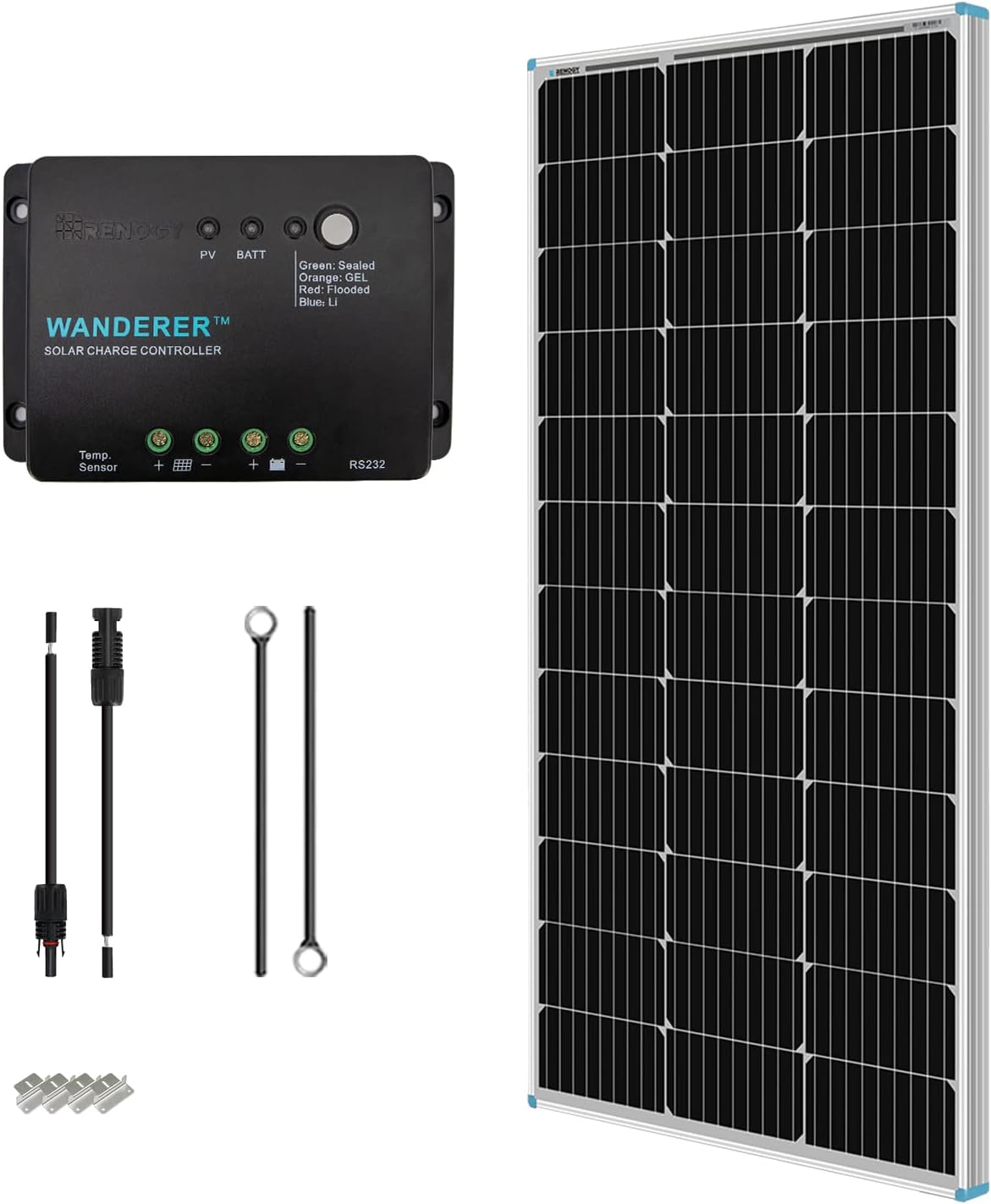 Visit on Amazon → Renogy 100W starter kit |
12V system solar | 100W at 12V, 30A PWM controller | Controller is for a battery bank |
Should you buy the 192Wh station?
Yes, if your loads are small. It is the right size for a phone-and-router outage kit, a weekend of van lights, or a trip where the LED lights and speaker earn their keep. It is the wrong size if you think you are going to run a fridge. The 100W continuous rating is the wall you hit, and no panel fixes it. Visit on Amazon →
Should you buy the 200W foldable panel?
Yes, after one bit of homework. Confirm your station's connector and its solar input limit. Do that and you get a light, waterproof, high efficiency panel that stays useful long after the station it charges has been replaced twice. Visit on Amazon →
Should you buy the Renogy kit?
Yes, if you are building a 12V system. No, if you are trying to charge a portable station with it. The 30A controller is the giveaway: this kit is designed around a battery bank, and the headroom means you can grow it. Visit on Amazon →
And the CPAP supply? Buy it if you need a replacement or a travel spare. It is the right tip and the right wattage for a DreamStation 2, and it is a bad place to save money on a machine you sleep with.