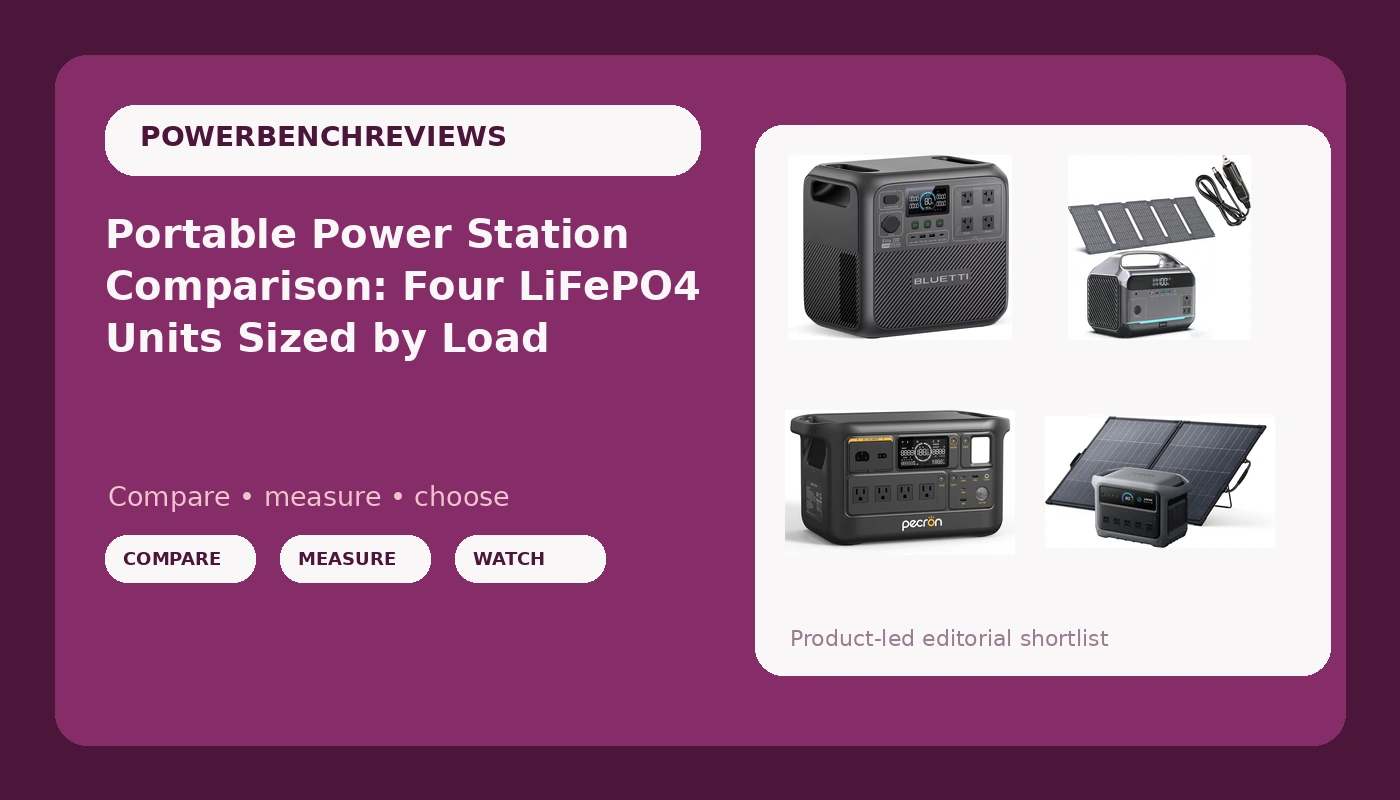
I've wired enough off-grid systems in Chaffee County to know that the number printed on the box is rarely the number that shows up at the outlet. A portable power station comparison only earns its keep when it starts from the load you actually need to run, not from the biggest wattage that surfaces in a search. Four units are in this round: one 2kWh heavyweight, a pair of 1kWh middleweights, and a small solar bundle. All four use LiFePO4 cells, so the chemistry argument is settled before we start. What separates them is usable capacity, inverter size, weight, and what ships in the box.
Related: How Many Watt Hours Do You Actually Need
For most households, the PECRON F1000LFP is the one to beat: 960Wh of LiFePO4 capacity, a 1500W AC inverter, UPS pass-through, and 23.9 pounds. It will run a fridge, a modem, a router, a few lamps, and a round of phone charging without turning into a two-person lift. The BLUETTI Elite 200 V2 is the pick when you need to carry a well pump, a mitre saw, or a space heater for a stretch. The Anker SOLIX C1000 Gen2 bundle makes the most sense if you want the panel in the same purchase. The DARAN 300W is a starter kit, and I mean that as a category, not as an insult.
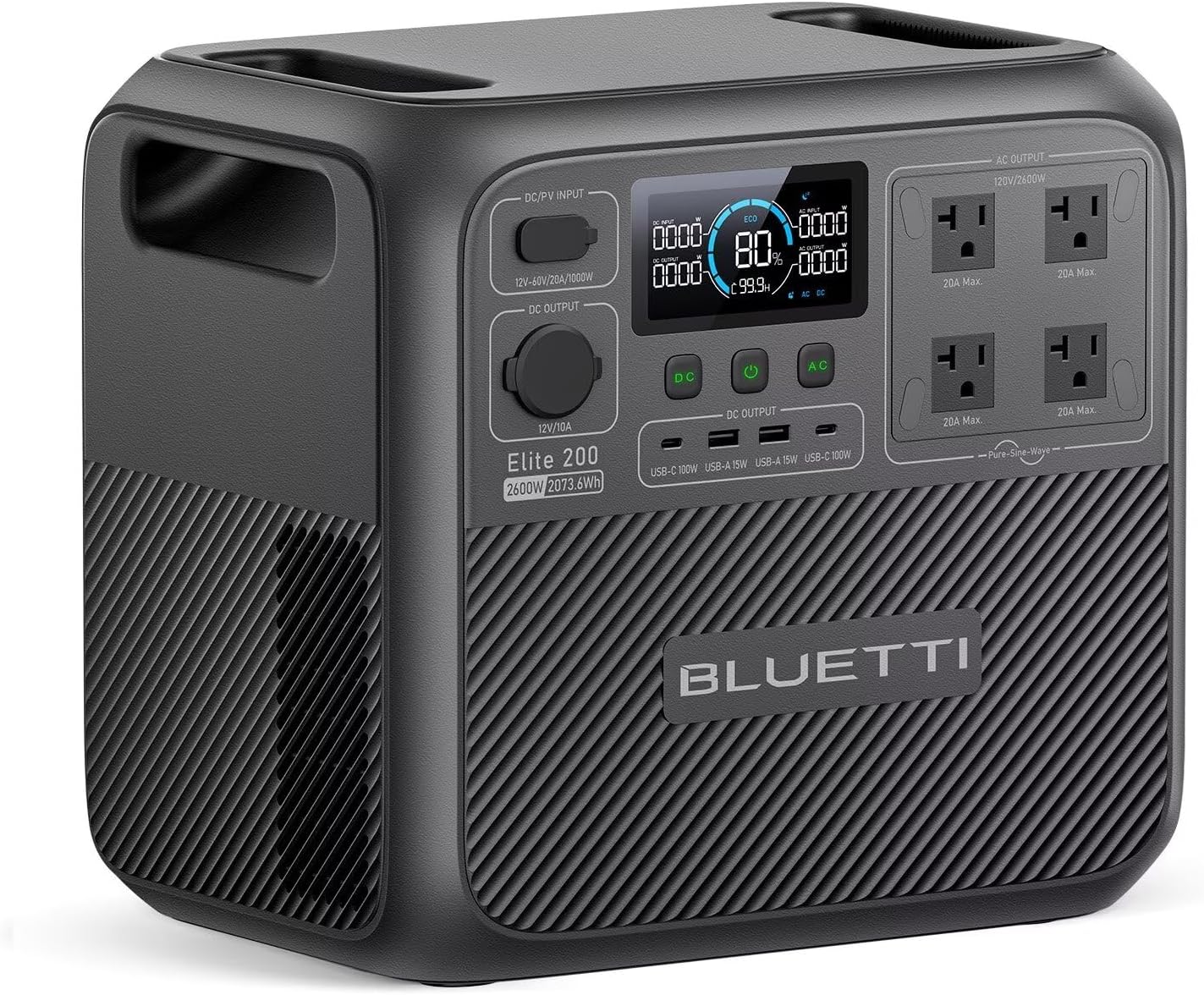
BLUETTI Elite 200 V2 Portable Power Station 2073.6Wh 2600W Solar Generator
The largest battery and the largest inverter in this group at 2073.6Wh and 2600W AC, so heavy resistive loads are on the table
Heavy and bulky for the class, and far more capacity than a phone-and-laptop household will ever cycle
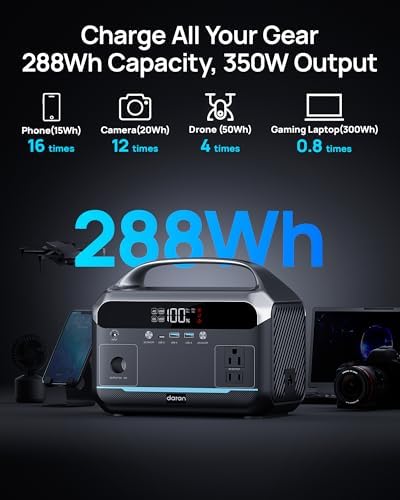
DARAN 300W Portable Power Station with 60W Solar Panel, 288Wh (90,000mAh) LiFePO4 Battery & Portable Power Station DC Power Cable
A panel and a DC cable are in the box, so it is a complete off-grid starter kit with LiFePO4 cells
288Wh and a 300W inverter put a hard ceiling on what it can run, and it will not touch a fridge
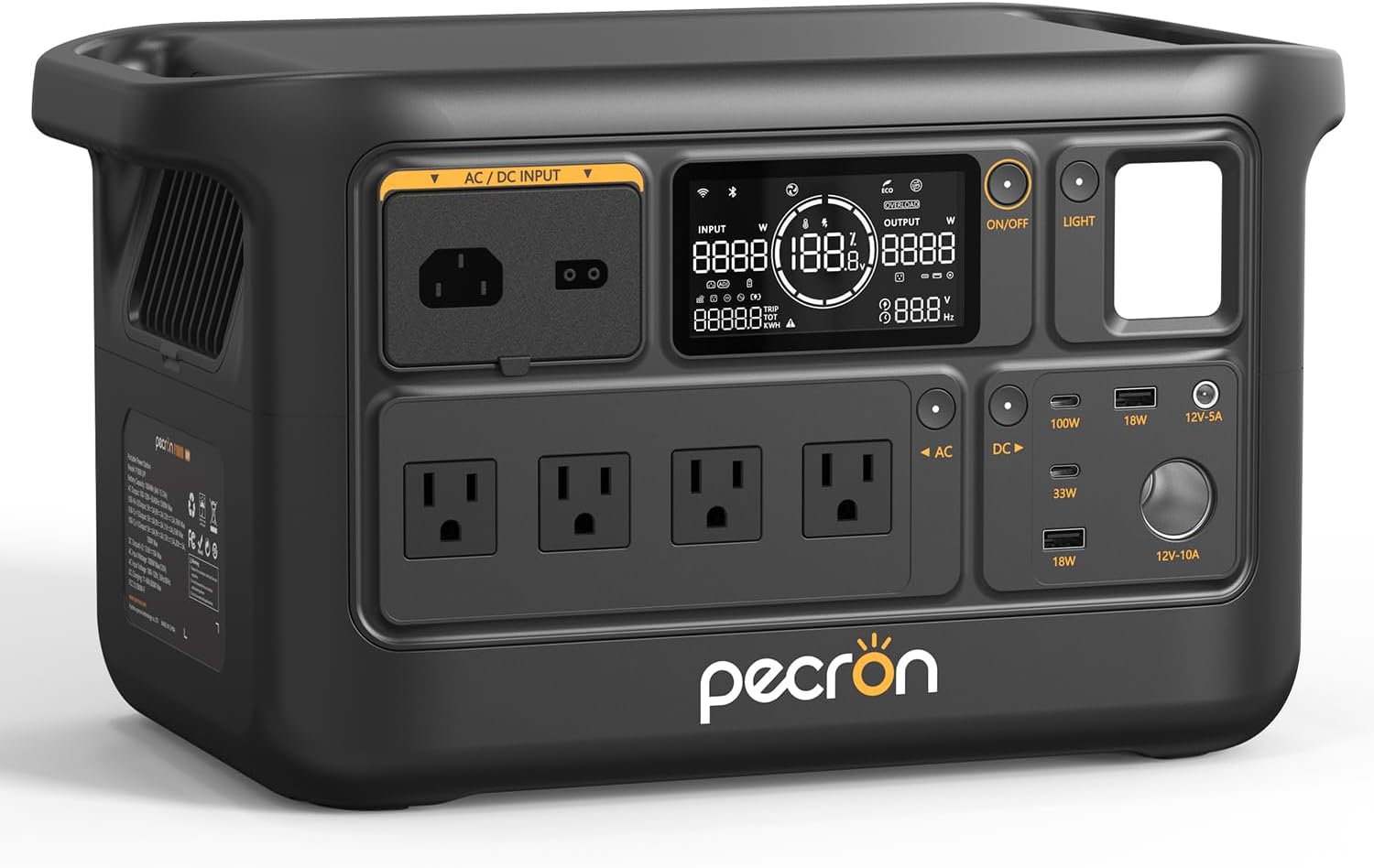
PECRON F1000LFP Power Station, 1500W AC Output, 960Wh Solar Generator, UPS, LiFePO4 Battery, Fast Charging, Just 23.9lb
960Wh with a 1500W inverter and UPS pass-through at 23.9lb, which is the best capacity-to-weight ratio here
Smallest inverter of the three large units, and it does not ship with a solar panel
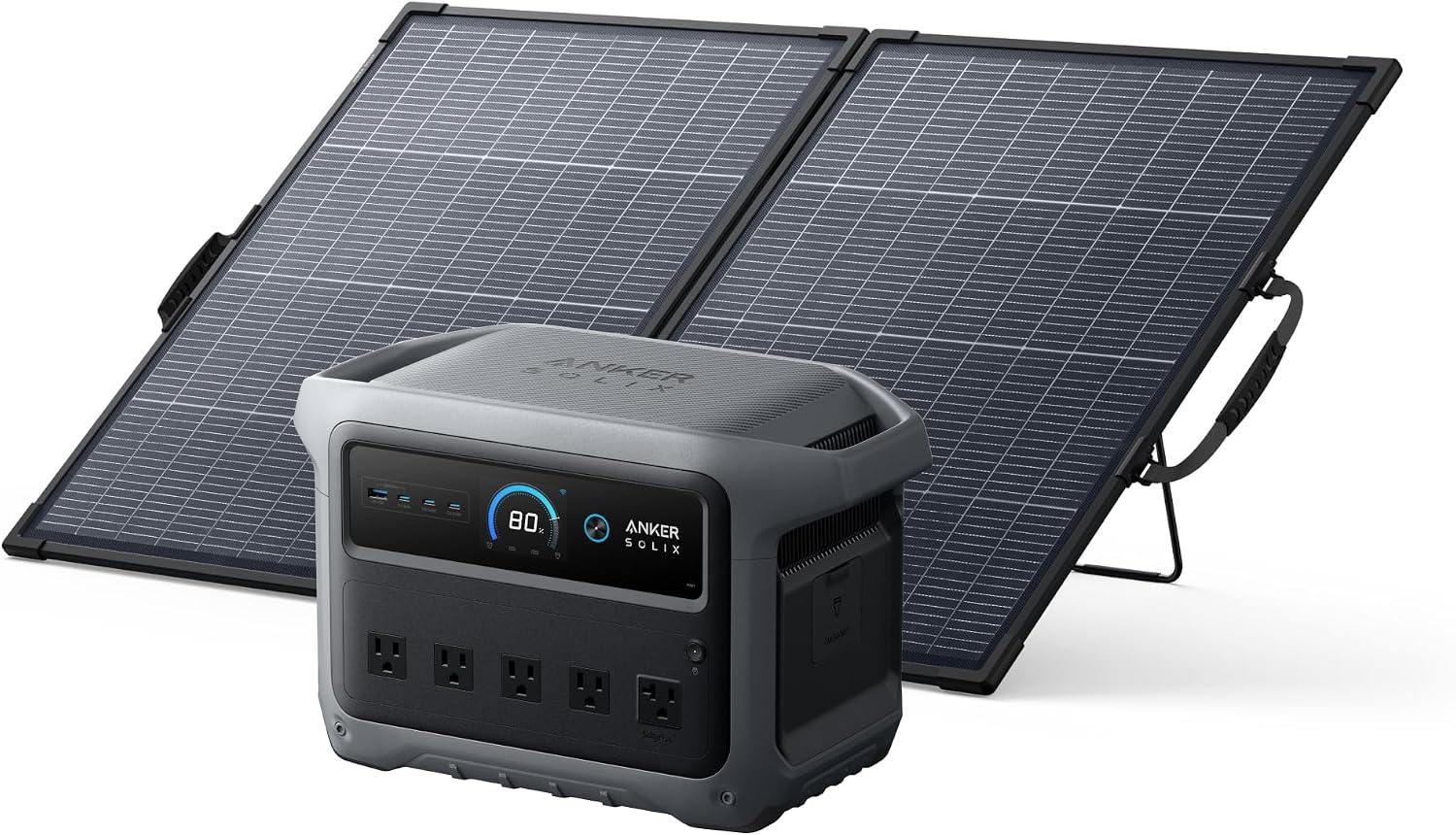
Anker SOLIX C1000 Gen2 Portable Power Station & 200W Bifacial Panel, 1024Wh
1024Wh paired with a 200W bifacial panel, and the app side of the SOLIX line is the most usable in the category
The bundle price bakes in a panel you may not need, and bifacial gains depend on where you set it up
Prices and availability were captured from Amazon Creators API and may change.
How to read this comparison without getting fooled
Watt-hours and watts are two different questions, and the spec sheet wants you to blur them together. The inverter rating tells you what you can plug in at once. The watt-hour figure tells you how long it will run. A 1500W inverter sitting on a 960Wh battery can absolutely start a 1400W load, and it will hold it for well under an hour once you account for inverter losses. Read the two numbers as a pair or you will buy the wrong box.
Then look at sustained versus surge. Motor loads like fridge compressors and well pumps pull a spike on startup and then settle. Resistive loads like heaters and kettles pull steady current the whole time. A unit that advertises a big surge number with no sustained rating is telling you half a story, and that half is the flattering one.
Pass-through and UPS mode decide whether the unit earns a permanent spot near your router. In UPS mode the station runs the load from the wall and takes over when the grid drops, with no reboot of the modem. During wildfire season that gap is the whole point. Not every unit in this table advertises it, so check before you buy for that job.
Finally, weight and connectors. The 23.9lb figure on the PECRON is a number I can carry up a flight of stairs with one hand on the rail. A 2kWh class unit is a cart-and-a-friend job, so plan a permanent spot for it. And look at the solar input port before you fall in love: standard MC4 or a proprietary adapter changes what panels you can add later.
The 2kWh class: BLUETTI Elite 200 V2
The BLUETTI Elite 200 V2 is the outlier in this group. At 2073.6Wh it carries roughly twice the stored energy of the 1kWh units, and its 2600W AC output is the highest here by a wide margin. That combination is what lets it run a space heater, a mitre saw, or a well pump and still have headroom, instead of tripping the inverter the moment a compressor kicks on.
The honest way to size it is by load math. A 1500W space heater draws 1500W continuously, so 2073.6Wh minus inverter losses lands you somewhere around an hour and a bit of runtime, not a night of it. A fridge that averages 100W to 150W with duty cycling is a different story, and this unit can carry one for the better part of a day. Same battery, two very different outcomes, which is why I keep repeating the load math.
This is not the unit for someone whose real draw is a laptop and three phones. You are paying for capacity and inverter headroom you will never cycle, and you are paying for it in weight every time you move it. Buy it for a cabin, a jobsite, or a house where the power goes out for days and the furnace blower or the well pump has to keep running. Visit on Amazon → if that is your load profile. One thing I check on every BLUETTI before trusting a wattage claim is the pure sine wave rating, because motors and electronics care about waveform, not marketing.
The middle pair: PECRON F1000LFP and Anker SOLIX C1000 Gen2
These two are the ones most people should be arguing about. The PECRON F1000LFP packs 960Wh behind a 1500W inverter, adds UPS function, and lists at 23.9 pounds. That weight matters more than any spec on the page, because a power station you can actually carry is a power station you actually use. It is the one I would hand to a neighbor who wants the fridge, the modem, and the lights to survive a two-day outage without a permanent install.
The UPS label is the feature I care about most here. With pass-through, the station sits between the wall and your network gear, runs everything from grid power, and switches to battery when the line drops. That is a real difference from a unit that only charges from the wall and has to be unplugged and re-plugged to serve a load. The trade-off is the inverter ceiling: 1500W is plenty for a fridge and a router, and not enough for an electric kettle plus a microwave at the same time.
The Anker SOLIX C1000 Gen2 brings 1024Wh and a 200W bifacial panel in the same box. Bifacial means the panel also collects light bouncing onto its back face, which is a genuine advantage on a van roof, over a white roof, or against snow, and close to a wash on a bare patch of dirt. The SOLIX app has been the best in this category for a while, and I say that as someone who thinks the app is a feature and not the product. If the buttons work, the app is a bonus.
Where the Anker bundle loses is in the bundle math. You are buying a panel whether or not you need one, and panels are the weakest link in any solar setup. If you already own a folding panel with an MC4 output, or if you plan to charge mostly from the wall and the alternator, the PECRON gets you similar storage for less kit. If you are starting from zero and want one order to cover both, the SOLIX bundle is the cleaner path. Visit on Amazon → to compare the current bundle, and Visit on Amazon → for the PECRON.
The small end: DARAN 300W bundle
The DARAN 300W unit is the smallest thing in this comparison and the only one that ships with both a 60W panel and a DC power cable. At 288Wh, which the listing states as 90,000mAh, it is a weekend camping box, not a home backup. The 300W inverter ceiling is the real limit: it will run a laptop charger, a fan, LED lights, a CPAP, and a phone, and it will not run a coffee maker or anything with a heating element.
Do the arithmetic before you buy it. 288Wh with typical inverter losses leaves you around 245Wh of usable AC energy. A 60W laptop charger drawing steady lands near four hours. A 12V fridge pulling 45W through the DC port gets you closer to five hours of continuous run, and less once the compressor cycles in summer heat. Those are real numbers derived from the stated capacity, not guesses, and they tell you exactly what this box is for.
The included 60W panel is a nice touch and a slow one. Refilling 288Wh from a 60W panel takes roughly five hours of strong sun before you account for angle, clouds, and heat derating, so plan on a full day of good weather. The DC cable is the underrated part of this kit, because it lets you skip the inverter entirely for 12V loads and stop paying the efficiency tax. This is the right first station for a car camper or a tailgater. Visit on Amazon → if that is your use case.
Panels, bundles, and watts per dollar
Solar charging is a bonus, not a religion. The math on panel-to-battery ratio is simple: divide capacity by panel wattage and you get ideal full-sun hours to refill. The DARAN sits near five hours. The Anker bundle sits near five hours as well, because 1024Wh against a 200W panel is the same ratio, and bifacial gain only improves it when the back of the panel actually sees reflected light.
That ratio is why I do not treat a bundled panel as automatic value. A panel is the component most likely to be left in the closet, and the one most likely to be proprietary in its connector. Before you buy any bundle, confirm the solar input voltage window and whether the port is MC4 or a brand-specific plug, because an adapter that costs a few dollars is fine and a cable that only exists at one vendor is a trap.
The other thing to watch is that a bigger panel does not fix a small battery. Throwing a 400W array at a 288Wh station just means you hit full charge by mid-morning and waste the rest of the day. Match the array to the bank, then spend the leftover budget on capacity, not on glass.
Trade-offs: who should buy which
- Whole-house load support, tools, well pumps, or a jobsite: the BLUETTI Elite 200 V2. The 2073.6Wh bank and 2600W inverter are the only combination here that will hold heavy resistive loads, and the weight is the price of that headroom.
- A fridge, network gear, and lights through a multi-day outage, carried room to room: the PECRON F1000LFP. UPS pass-through and 23.9 pounds are the two specs that decide it, and 960Wh is enough for a real outage without a permanent install.
- The same job with solar included and the best app in the class: the Anker SOLIX C1000 Gen2 bundle. You give up a little inverter headroom against the BLUETTI and you gain a panel and 1024Wh in one order.
- Weekend camping, phones, lights, a fan, and a 12V cooler: the DARAN 300W bundle. Accept the 300W ceiling and the 288Wh bank for what they are and it will do the job without asking you to carry 25 pounds.
The failure mode I see most often is buying the largest station someone can afford and then never discharging it past 20 percent, because it lives in a closet and takes two people to move. Size to the load, not to the fear. A 960Wh unit that gets used every outage beats a 2kWh unit that gets used twice a year.
What I'm watching next
Two things are on my list for the next round of testing. First, whether integrated MPPT becomes standard across this class, because the charge controller is where cheap solar inputs lose most of their wattage. Second, the app question: a station that can be bricked by a bad firmware push is a station that fails my bench, no matter how good its inverter is. If a unit cannot run entirely from its own buttons, it is not backup power, it is an app with a battery attached.
My working prediction for the next year: the 1kWh LiFePO4 class keeps getting lighter, the 2kWh class keeps getting cheaper, and the brands that ship buggy apps this season will lose the mid-market by spring. Watch the used market after hurricane season too. Flooded units tell you more about real durability than any spec sheet, and that is the test nobody publishes.