Related: How to Size a Power Station for a Refrigerator
Most people buy a power station backwards. They see a big wattage number on the box, get excited, and hit order. Then the first real outage arrives, the fridge compressor kicks on, and the unit shuts itself down in a few minutes. I have watched that happen to neighbors here in Salida more times than I can count, and it is almost never a hardware failure. It is a sizing failure. Portable power station sizing comes down to two numbers, watt-hours and sustained output, and once you can read those two numbers the whole market gets a lot simpler.
I spent twelve years as an electrician before I moved into solar installs and gear reviews. I live in a mountain town where the grid drops for days during wildfire season, I converted a 2004 Sprinter van myself, and I keep a Kill A Watt meter, a thermal camera, and a paper logbook on the bench. Nothing gets a public recommendation from me until it has been discharged at least three times. A spec sheet is a promise. The meter is the truth.
This guide covers four units that span the range, from a 288Wh grab-and-go box to a 3840Wh whole-home backup battery. All four run LiFePO4 chemistry. None of them is the right answer for everybody, and the point of walking through them side by side is to show you where the money actually goes as capacity climbs.
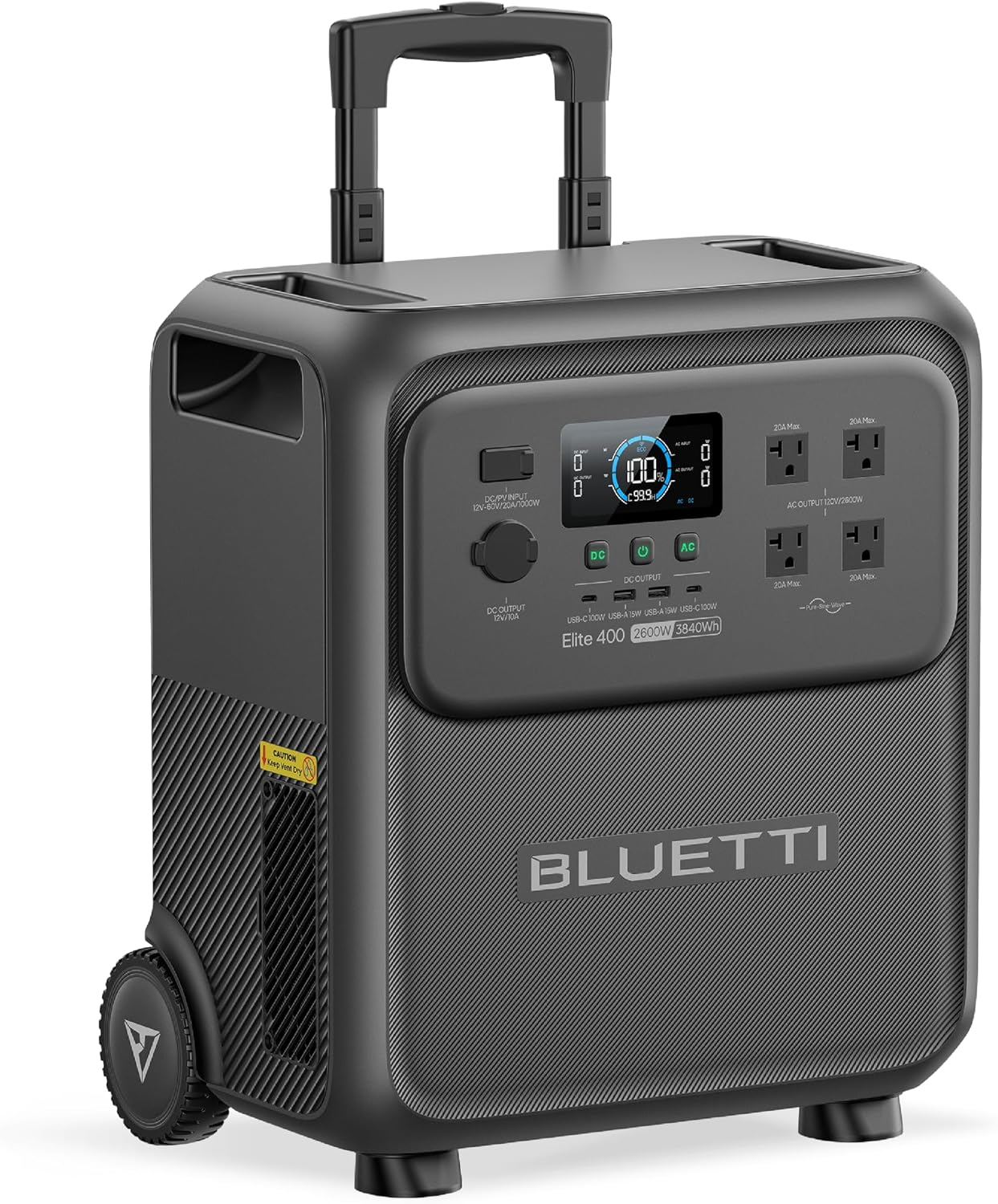
Best for Backup Power: BLUETTI Elite 400
The Elite 400 is the heavyweight of this group: 3840Wh of LiFePO4 storage behind a 2600W inverter. That is a different class of machine, and it is the one I would point at anyone who wants a refrigerator, a furnace blower, and a few lights to stay alive through a multi-day outage.
What I care about on a unit this size is the sustained rating, not the surge number. A 2600W inverter tells you what loads you can plan around. Surge figures on the box are marketing until you know how long the unit will hold them, and most brands never tell you. I also want a clean pure sine wave out of an inverter this big, because motors and sensitive electronics do not like the cheap approximation. Check that rating before you trust the wattage.
LiFePO4 matters as much as the capacity here. The chemistry shrugs off deep discharge in a way the older lithium packs never did, and it tolerates the heat of a closed van far better. If you are leaving a unit parked in a vehicle through a Colorado summer, chemistry is not a detail.
The tradeoffs are honest ones. It is heavy, it is not something you carry to a campsite on your shoulder, and it sits in a different price bracket than the other three. If your real load is phones and a laptop, you are paying for capacity you will never touch.
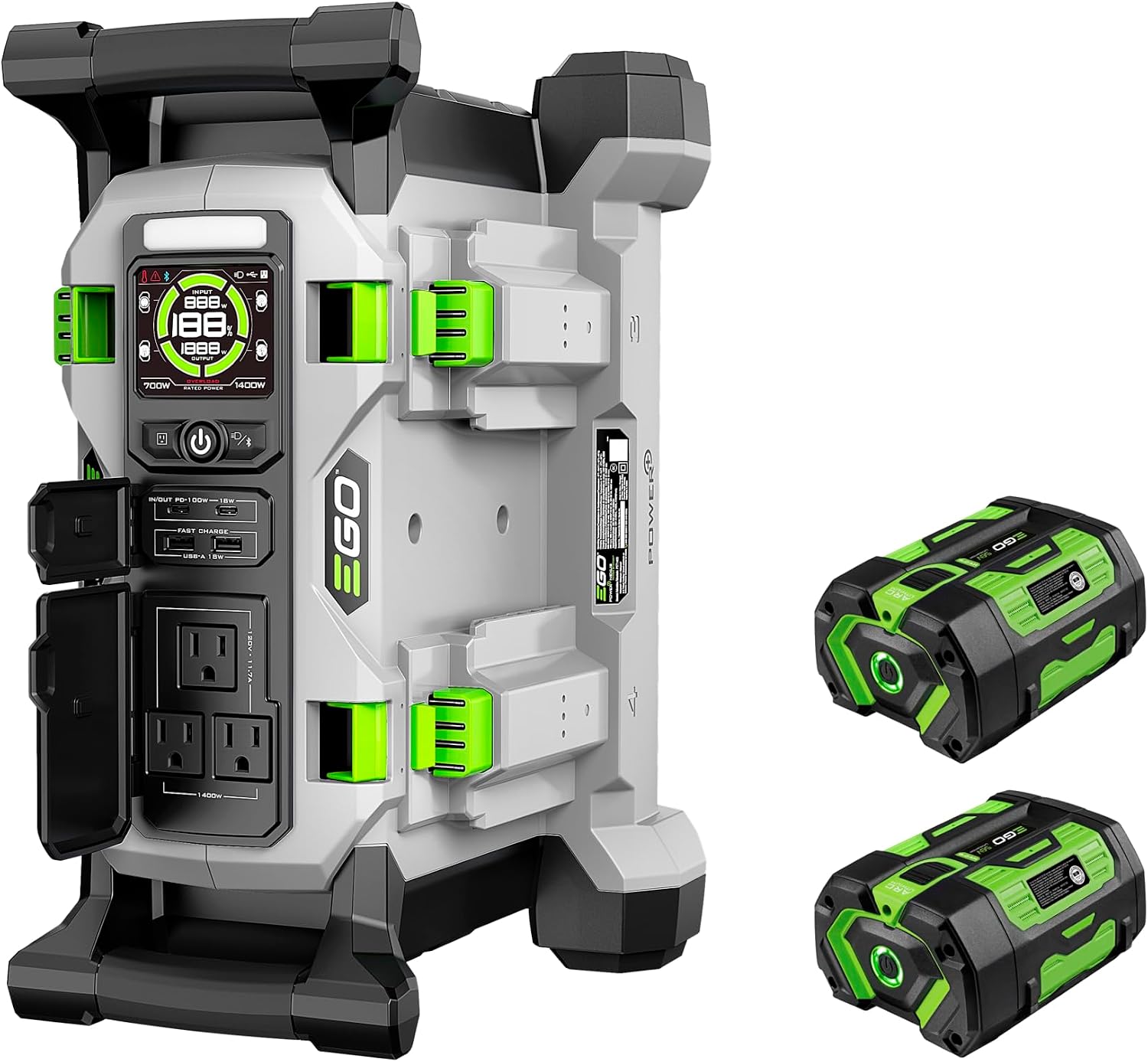
Best Battery Platform Pick: EGO POWER+ Portable Power Station
The EGO unit is the odd one in the best possible way. It does not have a sealed internal battery you can never touch. It runs on the same 56V packs that power EGO's mowers, trimmers, and blowers, and it ships with two 6.0Ah batteries and a charger.
That changes the ownership math. If you already have EGO tools in the garage, you are buying into a platform you can feed, swap, and expand. A dead pack is a replacement, not a bricked power station. For a homeowner with a shed full of that system, that is a real advantage no sealed unit can match.
The output is rated at 1400W, which puts it comfortably above the small emergency boxes and below the whole-home class. It is a solid fit for a fridge cycling on and off, a sump pump, a few lights, and charging phones during a storm. It is a battery-powered inverter, so there is no fuel, no exhaust, and no pull cord, which is exactly the point. Gas generators are for construction sites. For a house at 2 a.m., quiet wins.
The catch is that you are tied to one battery ecosystem, and the packs are the fuel. If you do not own EGO gear, you are buying a platform rather than a single appliance, and you should decide whether that is a feature or a commitment.
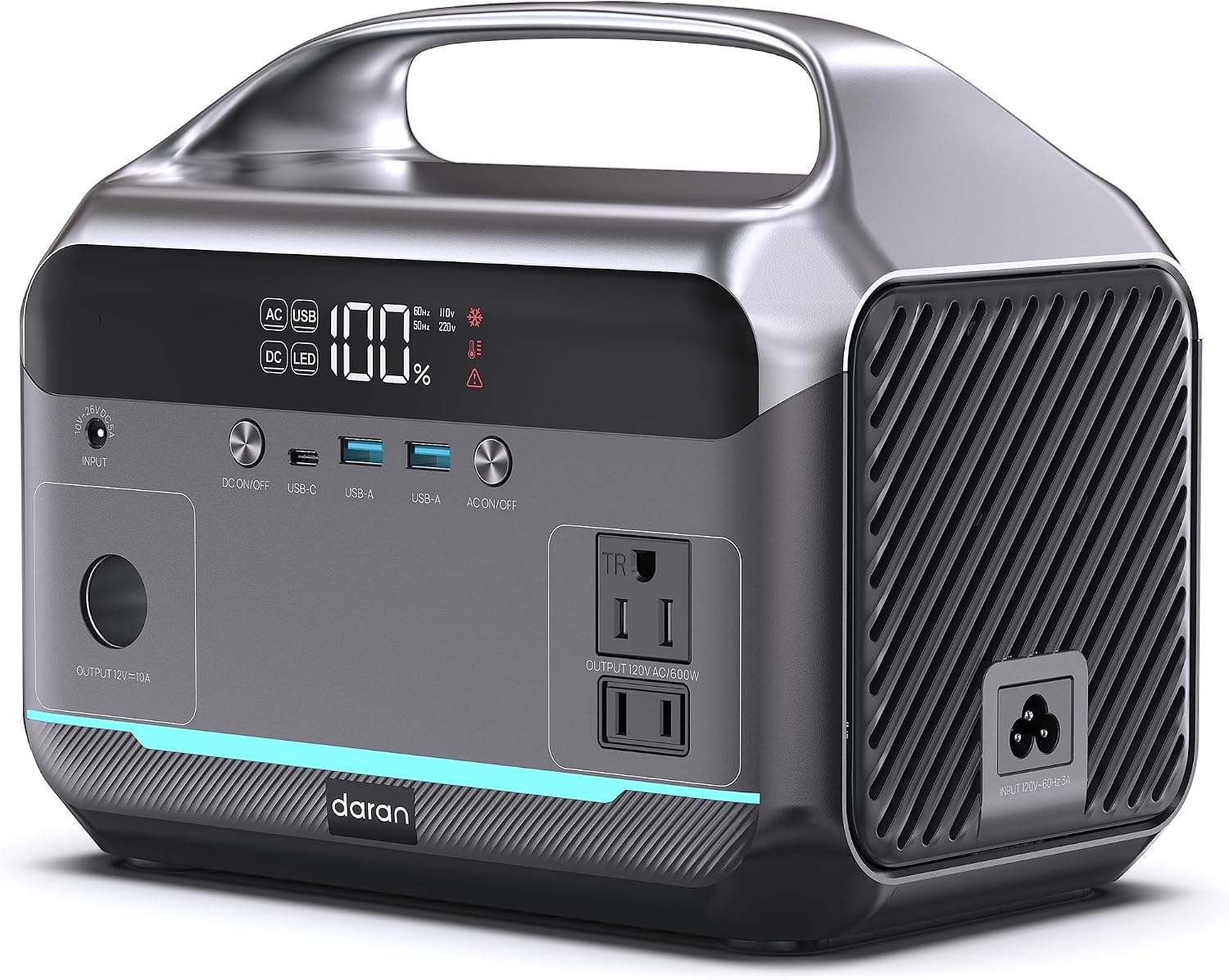
Best Everyday Emergency Unit: DARAN 1200W
This is the size most people should actually buy first. The DARAN packs 288Wh of LiFePO4 into a box with a 1200W surge rating, AC outlets, and 100W USB-C PD. It is light enough to move with one hand, it charges fast from the wall, and it is the unit I would grab for a weekend in the van, a CPAP through the night, or a router and laptop during a two-hour outage.
Note the wording on the box: 1200W surge. That is not the same as a sustained rating, and this is exactly the spec-sheet trap I complain about. Treat the surge number as a ceiling for motor startup, not a plan. The loads this unit is genuinely built for are small and steady: phones, laptops, a CPAP, LED lights, a fan, a small TV. That is a real list of things, and for a lot of households it covers the whole outage.
LiFePO4 at this capacity is what makes it worth recommending over the cheap lithium boxes on the shelf. Charge cycles are where budget gear usually dies, and the chemistry buys you years instead of seasons.
Solar is listed as optional on this one, which I appreciate. Bundles look like deals until you do the math on watts per dollar, and most people are better off putting that money into more battery than into panels. Buy the station, then decide if you actually want a panel.
Best Budget Starter: 500W Portable Power Station
Here is the one that surprised me on paper. A 500W output with 519.48Wh of capacity is an unusual pairing, because it puts more stored energy behind a smaller inverter. In plain terms, you get more runtime and less peak muscle. For LED lights, a fan, a router, phones, and a laptop, that is a favorable trade. For anything with a compressor, it is not.
That is the honest read on this unit. It is a budget starter box, and 500W sustained is the number that matters, not any surge claim on the listing. Size your loads under that ceiling and it will do a lot of quiet work for a long evening. Try to start a fridge on it and you will be disappointed, and that is not the machine's fault.
If you are buying your first power station and you are not sure what you need, this is the cheapest way to learn. Run it for a month, log what you plug in, and then decide whether your next unit should be a 288Wh fast charger or a whole-home battery.
How I test a power station
Every unit gets the same treatment on my bench. First, a full charge and a full discharge with a Kill A Watt meter inline, so I know what the inverter actually delivers against what the label claims. I do that at least three times before I write a word about it. A single discharge tells you nothing about consistency.
Second, a real load test. Small resistive loads first, then a motor, because motor startup is where weak inverters fold. Third, the button test. If the unit cannot run its own outlets, timers, and settings from the physical controls, it fails. The app is a feature, not the product, and an app that bricks a unit during a firmware update is a doorstop with a screen on it.
Then it goes in the van for a weekend, because bench numbers do not tell you whether a fan screams at 200W or whether the display is readable in daylight.
What the numbers actually mean
Watt-hours are the size of the tank. Watts are the width of the pipe. Buyers confuse the two constantly, and the marketing departments encourage it.
A 288Wh unit and a 3840Wh unit are not the same product at different prices. They are different tools. The small one lives in a closet and comes out for camping trips and short outages. The big one sits in a corner on a shelf with a pass-through charge running, waiting to carry a house through three days of smoke and no grid.
Depth of discharge matters too. You do not get to use every watt-hour you paid for, and how far a manufacturer lets the unit drain before it shuts down is a design choice, not a free lunch. LiFePO4 is more forgiving about it than the old chemistry, which is another reason I will not recommend anything else.
The reference table
| Unit | Capacity | Output | Chemistry | Best for |
|---|---|---|---|---|
 Visit on Amazon → BLUETTI Elite 400 |
3840Wh | 2600W | LiFePO4 | Whole-home backup loads |
 Visit on Amazon → EGO POWER+ Portable Power Station |
Battery platform | 1400W | LiFePO4 packs | EGO tool owners |
 Visit on Amazon → DARAN 1200W |
288Wh | 1200W surge | LiFePO4 | Camping, CPAP, short outages |
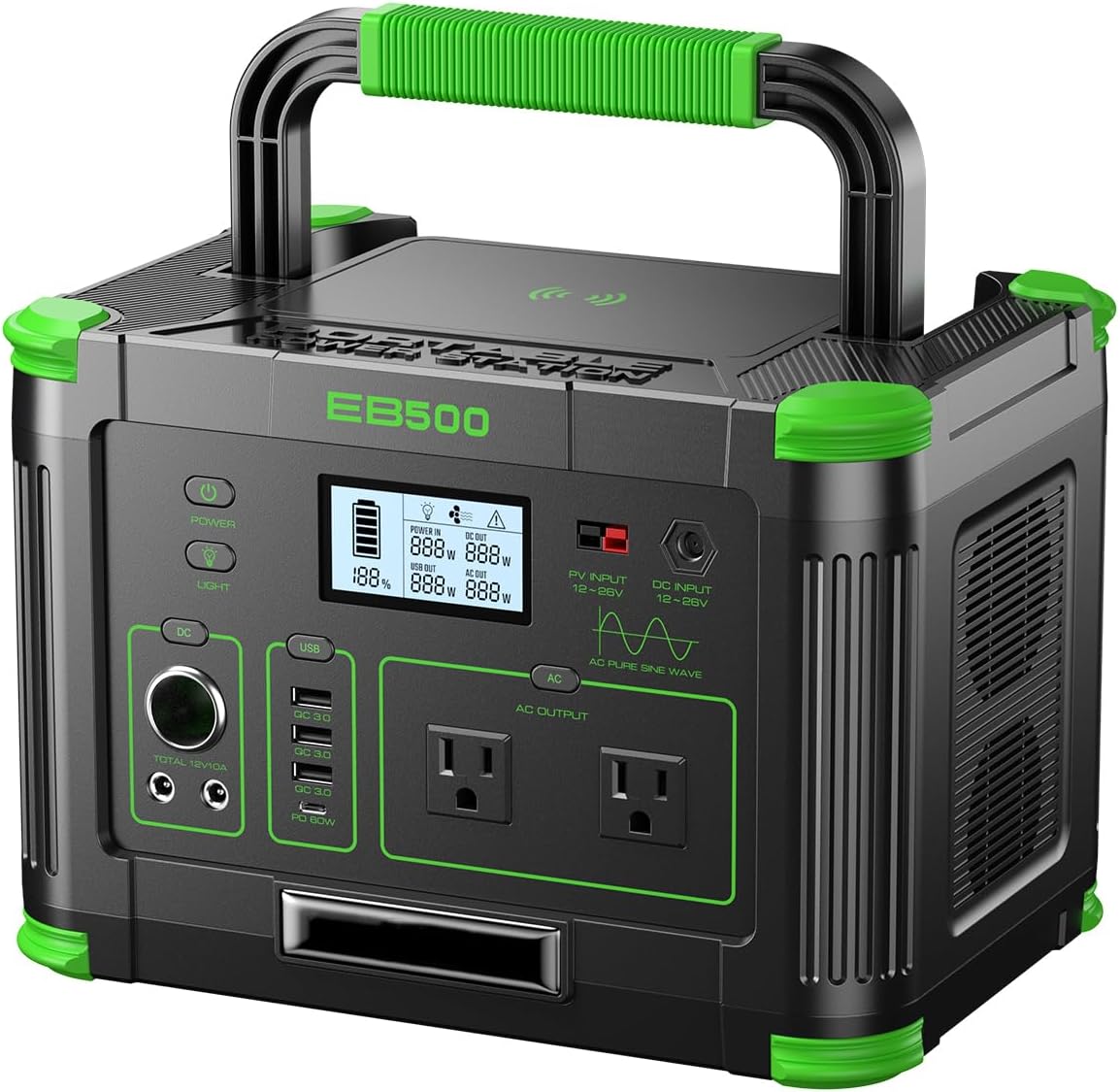 Visit on Amazon → 500W Portable Power Station |
519.48Wh | 500W | LiFePO4 | First-time buyers, light loads |
Should you buy the BLUETTI Elite 400?
If your goal is a house that stays lit, yes. It is the only unit here that gives you the capacity and the sustained output to run real appliances for real stretches of time, and the LiFePO4 bank means it will still be doing that work years from now. It is heavy, it is expensive, and it is overkill for anyone whose biggest load is a phone.
Should you buy the DARAN 1200W?
For most readers, this is the sensible first purchase. It covers camping, a CPAP through the night, and the short outages that make up the majority of grid interruptions. Just respect the surge rating for what it is and keep your loads small and steady.
Should you buy the 500W unit?
Yes, if you want to learn what you actually need without spending much. It is the cheapest education in this article, and the 519.48Wh of capacity goes a long way on lights and electronics. Do not ask it to start a compressor.
Whatever you pick, size it to the load you have, not the load you imagine. That one habit saves more money than any sale price ever will.