Most people shopping for a portable power station setup start with the wrong question. They ask which box has the biggest number printed on the side, then find out that a 2,042Wh battery does nothing for them if they cannot refill it, and that a 200W solar panel kit does nothing if the station cannot accept the charge. The useful question is smaller and more practical: what are you actually powering, for how many hours, and how do you plan to put that energy back?
This guide covers six pieces of gear that turn up in real setups: one large battery, two solar options at very different sizes, one fuel-burning inverter generator, and two adapters that solve specific device problems. Nothing here is ranked by price. Each entry earns its place because its published ratings fill a role the others do not, and because the numbers on the listing tell you what it can and cannot do.
Related: Portable Power Stations for Home Backup: Sizing a Battery to Your Fridge and Router
Quick answer
The Jackery Explorer 2000 v2 Portable Power Station, 2042Wh, 2200W AC Output is the strongest fit for carrying household essentials through a multi-day outage because its published 2,042Wh capacity and 2,200W AC output put it in the class where a refrigerator, a router, and lighting can share the same unit. Choose the Honda EU2200i 2200 Watt Inverter Generator (EU2200ITAN) instead when your outage stretches past what a battery can store and you can refuel with gasoline rather than wait on a recharge.
Portable power station gear worth comparing
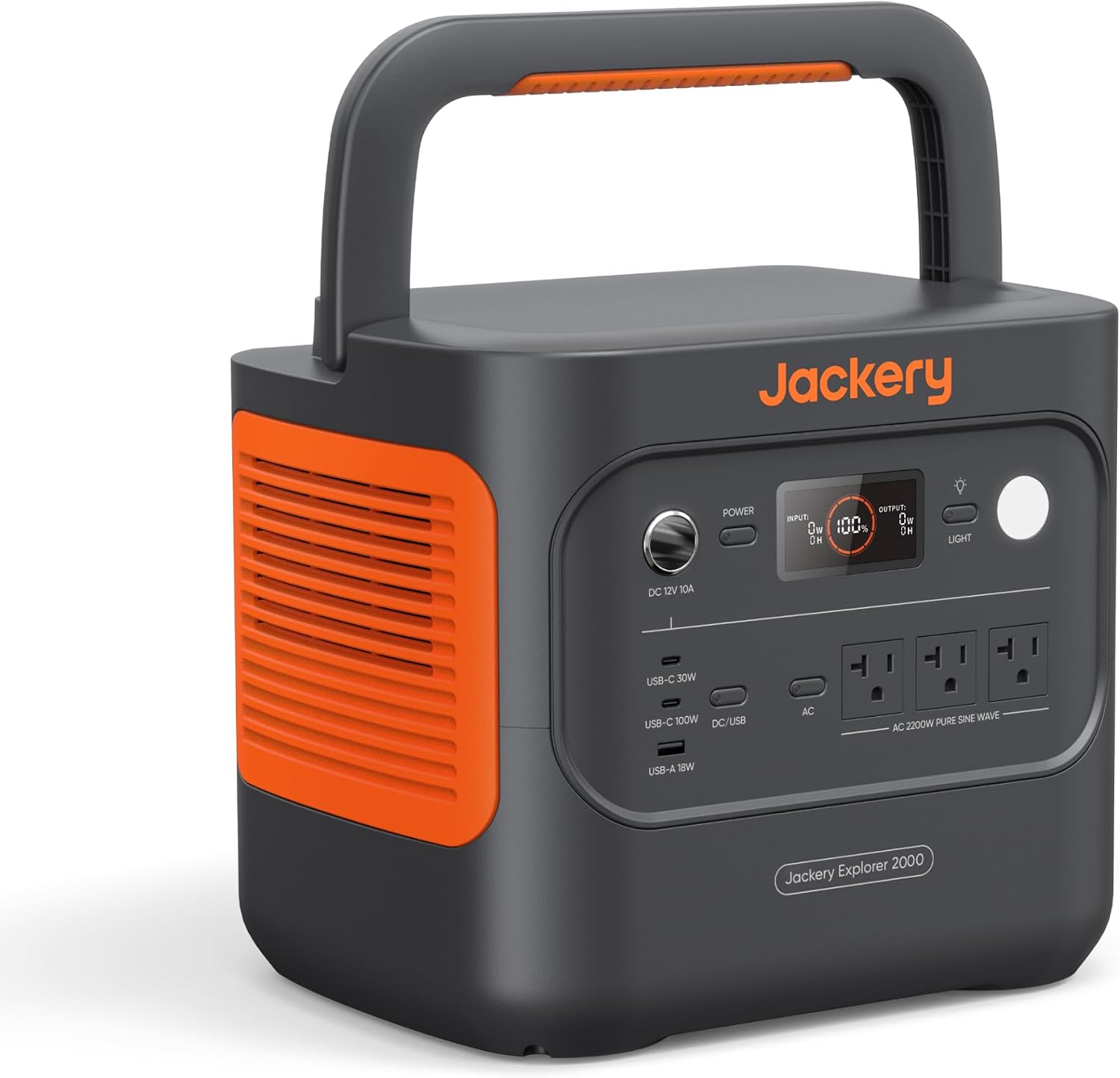
Jackery Explorer 2000 v2 Portable Power Station, 2042Wh, 2200W AC Output
A 2,042Wh station with a 2,200W AC output, sized for running appliances and electronics through a long outage instead of topping up a single phone. The anchor of a whole-home-essentials setup, and the piece everything else in this guide supports.
Visit on Amazon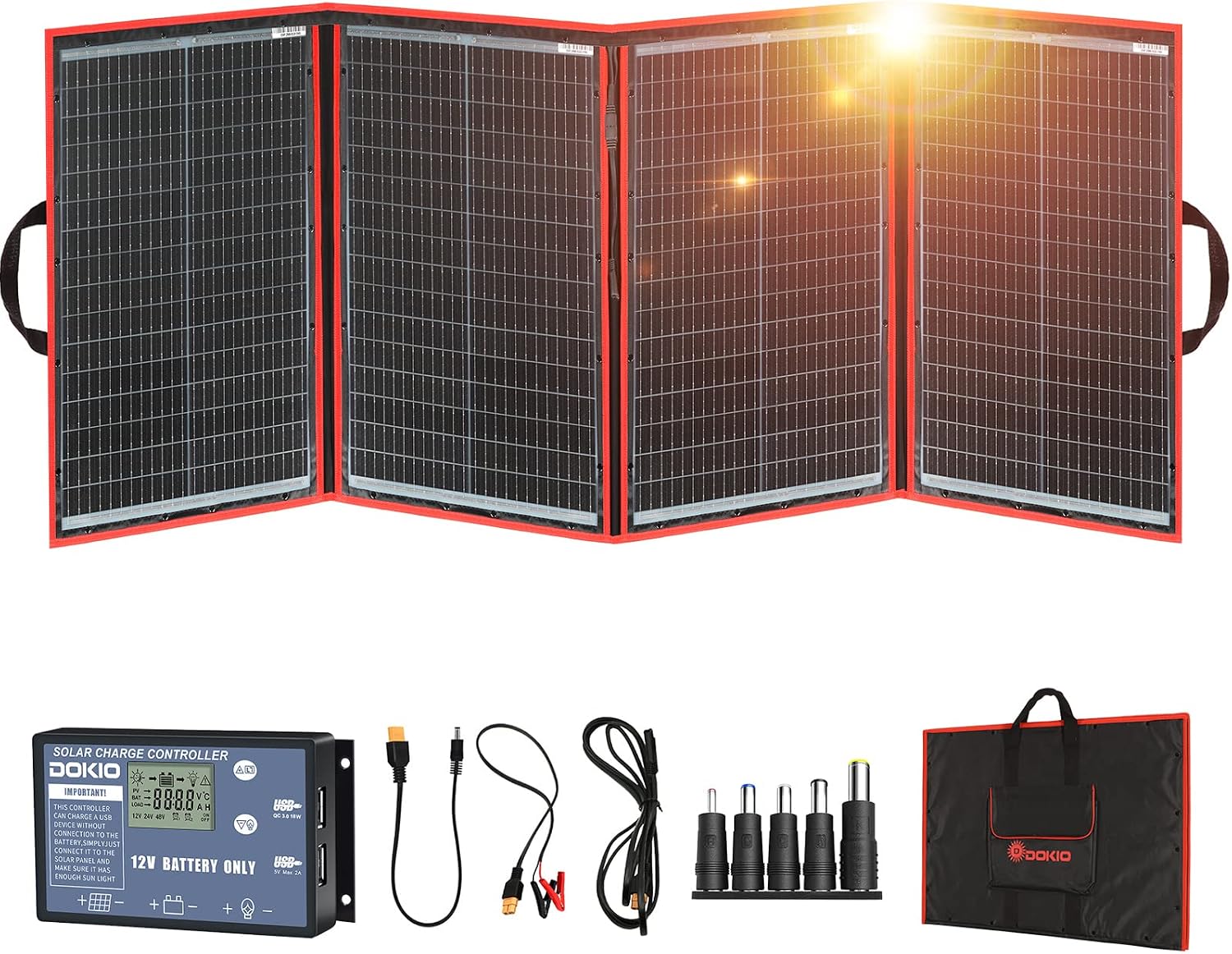
DOKIO 200W Portable Foldable Solar Panel Kit with Charge Controller
Check current Amazon price
A folding 200W panel kit that ships with its own charge controller, aimed at refilling a station or a battery bank from sunlight rather than a wall outlet. The realistic solar match for a 2kWh-class battery.
Visit on Amazon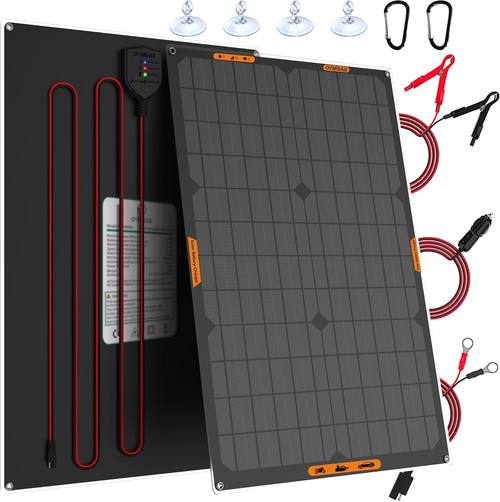
OYMSAE 30W 12V Portable Waterproof Solar Panel Trickle Charger & Maintainer
A small waterproof 12V panel built to trickle charge and maintain a battery that sits idle, such as a vehicle, trailer, or gate battery between trips. Not a recharge tool for a large station, and it does not pretend to be.
Visit on Amazon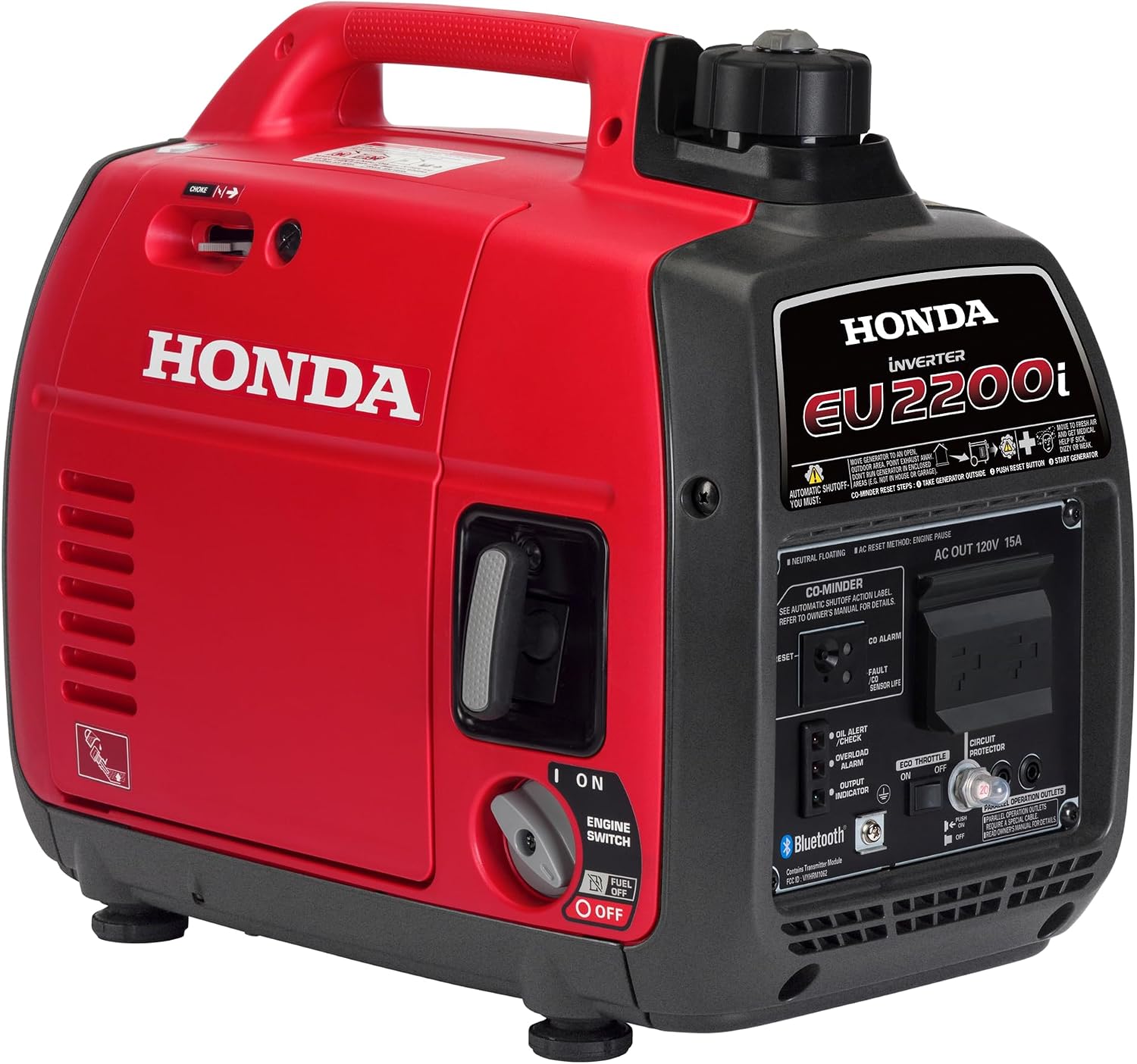
Honda EU2200i 2200 Watt Inverter Generator (EU2200ITAN)
A 2,200W inverter generator that runs on gasoline and can be refueled in minutes, which is the one advantage a battery cannot match. It belongs in the conversation when an outage lasts days, not hours.
Visit on Amazon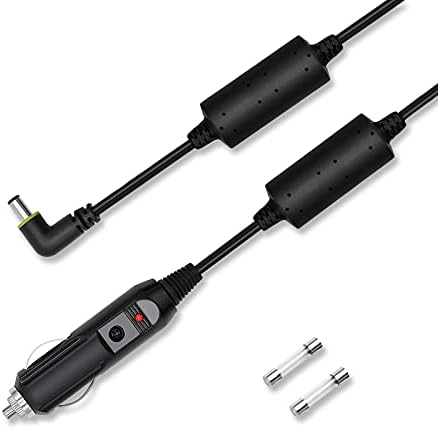
DC 12V Power Adapter for Dreamstation 2 Respironics
A 12V DC cord for running a Dreamstation 2 from a 12V outlet or a station's DC port. For anyone who uses that machine nightly, this small adapter matters more than the capacity difference between two stations.
Visit on Amazon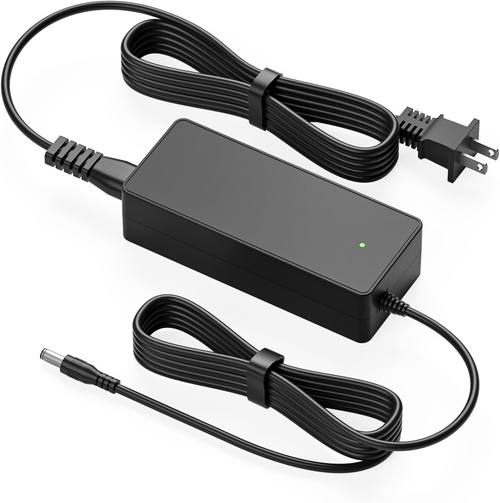
Charger for Jackery Charger 24V 90W AC Adapter for Jackery Portable Power Station Explorer 160 240 300 500 550 E300 E500 E550 Solar Generator 167Wh 240Wh 293Wh 518Wh Lithium Battery Power Supply Cord
A 24V 90W AC adapter listed for the Jackery Explorer 160, 240, 300, 500, 550, E300, E500, and E550. Useful as a replacement for a lost charger or as a second one kept in the van or at the cabin.
Visit on AmazonPrices and availability may change. Check the retailer for current details.
How these products were compared
This guide compares the role each product plays in a working setup, the capacity and output ratings published on the product listing, the charging inputs each item is built to accept, the physical form factor and how portable it really is, and the specific devices each product is designed to power. Product names, images, and retailer links are matched by ASIN so that every card points to the product shown.
The comparison is deliberately role-based rather than a single ranked list. A 2kWh battery, a folding 200W panel, a 30W maintainer, a gasoline inverter generator, and two small DC and AC adapters are not competitors. They are different answers to different problems, and the fastest way to waste money is to buy the wrong role. The one thing every reader should confirm on the listing is the current price and availability, since that is the number that moves.
How to choose the right portable power station setup
Start with watt-hours, not watts. Capacity sets how long you can run a load; the AC output rating sets what can be running at the same time. Add up the devices you actually need, multiply each by the hours you need it, and compare that total to the published capacity. A station rated at 2,042Wh and 2,200W AC output sits in the class where a refrigerator, network gear, and lighting can share the unit for an extended outage. A smaller station in the 300Wh to 500Wh range is the right call for camping, tailgates, and short overnight backup, and spending more than that on a phone-charging job is money that could have gone toward a better battery later.
Second, decide how you will refill it. Every station recharges from a wall outlet, but wall power is exactly what you are missing during an outage. That leaves solar, a 12V source, or a generator. Solar is the quiet option and the one most people choose, but panel size has to match battery size: a 200W folding kit with its own charge controller is a sensible partner for a 2kWh battery, while a 30W panel is a maintainer for a battery that sits idle, not a way to refill a large station on a cloudy afternoon. If you want the full picture on matching panels to batteries, the internal guide linked above walks through the math.
Third, buy adapters only for devices you already own. The two small items in this roundup exist because specific machines need specific cords, and no amount of battery capacity fixes a connector that does not fit. Confirm the exact model number of your device against the adapter listing before you order, and confirm the DC port on your station can supply what the device draws.
Jackery Explorer 2000 v2 Portable Power Station, 2042Wh, 2200W AC Output
This is the largest battery in the group, and it takes the top pick on arithmetic rather than branding. Published ratings put it at 2,042Wh with a 2,200W AC output, which is the range where a station stops being a camping accessory and starts being household backup. Capacity sets runtime and the output rating sets what can start at once, so a unit in this class can carry a refrigerator, a modem and router, some LED lamps, and a laptop through a long outage, with headroom left for a fan or a small appliance as long as the starting load stays inside the rating.
The trade-offs are honest ones. It is the heaviest and most expensive item here, it does not refill itself, and panels are sold separately. A battery this size also wants a solar array in the 200W range to be worth the trouble, which is precisely why the DOKIO kit appears above. Buy the battery first, then add the charging gear when the budget allows, rather than buying a small station and a large panel and wondering why the pair feels backwards.
Alternatives to consider
The DOKIO 200W Portable Foldable Solar Panel Kit with Charge Controller is better suited to refilling a large battery or battery bank away from an outlet, since 200W of folding panel with its own controller is a realistic solar match for a 2kWh-class station. The OYMSAE 30W 12V Portable Waterproof Solar Panel Trickle Charger & Maintainer is a stronger fit when the job is keeping an idle 12V battery topped up rather than moving serious energy, such as a vehicle or trailer that sits for weeks between uses.
The Honda EU2200i 2200 Watt Inverter Generator (EU2200ITAN) covers the case where runtime matters more than silence and you can refuel. It is a gasoline machine with a 2,200W rating, so it keeps running as long as you keep filling it, which no battery on this list can claim. The DC 12V Power Adapter for Dreamstation 2 Respironics and the Charger for Jackery Charger 24V 90W AC Adapter for Jackery Portable Power Station Explorer 160 240 300 500 550 E300 E500 E550 Solar Generator 167Wh 240Wh 293Wh 518Wh Lithium Battery Power Supply Cord cover the small, specific gaps: running a Dreamstation 2 from a 12V source, and replacing or duplicating the AC charger for the smaller Jackery Explorer units listed on that adapter's page.
Day-to-day use and maintenance
Store the battery where temperatures stay moderate, charge it before long periods of storage rather than leaving it flat, and check it every few months. Heat is the quiet killer of lithium packs, which matters if the station lives in a van or a shed through a mountain summer. When you do run a load, watch the total rather than the peak: a station that handles a refrigerator's running draw may still trip if you start it alongside a second heavy appliance.
Solar panels need clean surfaces and direct sun, and the numbers on the box assume ideal conditions, not the shade of a pine tree at 4pm. Folding kits should be dried before they are packed away, and the charge controller should be wired per its instructions. A gasoline inverter generator is a different maintenance routine entirely: fuel left in a carburetor over winter causes most of the problems people blame on the machine, so follow the manual's storage procedure, check oil before each run, and never operate it indoors, in a garage, or near a window or vent, because carbon monoxide is invisible and the exhaust is the risk, not the noise.
Buying checklist
- Measure the space where the station will live, and check the weight before you plan to move it regularly.
- Choose capacity in watt-hours based on your normal load and runtime, not on one worst-case night.
- Confirm the exact model of any device you plan to run from a DC adapter before ordering the cord.
- Verify that the charging gear you buy matches the station's input, including the connector type.
- Read the maintenance and storage instructions for batteries, panels, and any fuel-burning equipment.
- Verify the current retailer price, availability, and return terms before you commit.
Final recommendation
Choose the Jackery Explorer 2000 v2 Portable Power Station, 2042Wh, 2200W AC Output when you want one battery that can carry household essentials through an extended outage and you are prepared to add solar charging separately. Choose the Honda EU2200i 2200 Watt Inverter Generator (EU2200ITAN) when the outage will outlast any battery you can afford and you can safely store and refuel gasoline. If your real need is a 12V battery that stays healthy between trips, the small maintainer panel is the honest answer, and if your need is one specific cord for one specific machine, buy that cord and skip the rest of the list.