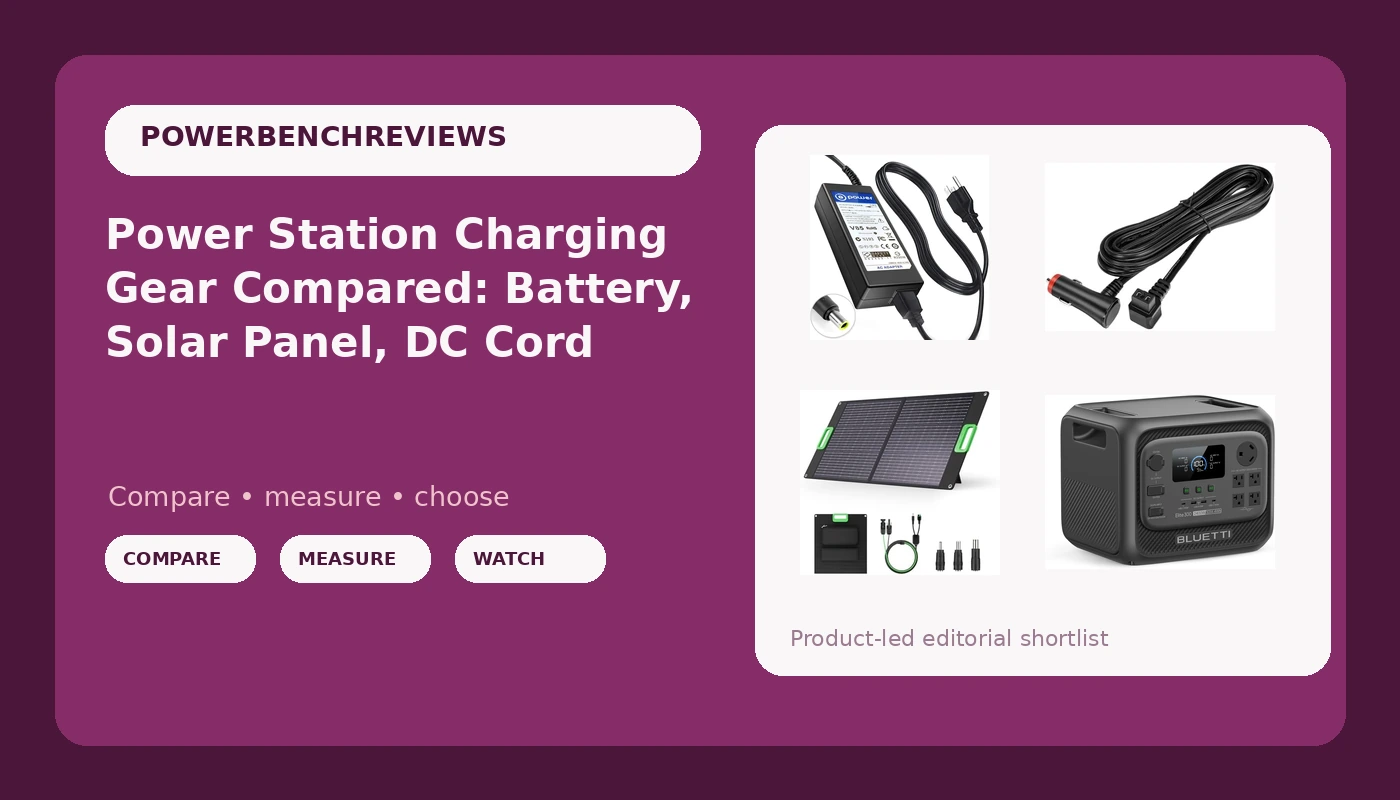
I have been an electrician for twelve years, and I have lived in Salida, Colorado long enough to watch the grid drop for four days straight during wildfire season. That is why my shop has a Kill A Watt meter, a thermal camera, and a paper logbook, and why I judge portable power station charging accessories by what they do at hour nine of an outage instead of what the box promises. The four items in this comparison cover both halves of that job: the BLUETTI Elite 300, a 3014.4Wh station built for RV and home backup duty, a 100W portable solar panel rated at 23.5% cell efficiency, a BougeRV 12V/24V DC cord for a car refrigerator, and a T Power 16V charger for the older Goal Zero Yeti and Sherpa units.
The mistake I see most often is not a bad purchase, it is an incomplete one. Somebody buys a station, then finds out their folding panel uses a connector that does not fit, their fridge only runs through the AC inverter, and the wall brick for their old Yeti disappeared two moves ago. Every one of those is a cheap fix, and every one of those fixes is in the table below.
Related: Sizing a Power Station to Your Real Load
The short answer: the BLUETTI Elite 300 is the pick if you need to carry real load through a multi-day outage, the 100W panel is the pick if you already own a station and want to refill it off-grid, and the DC cord and the 16V charger are inexpensive problem solvers rather than upgrades.
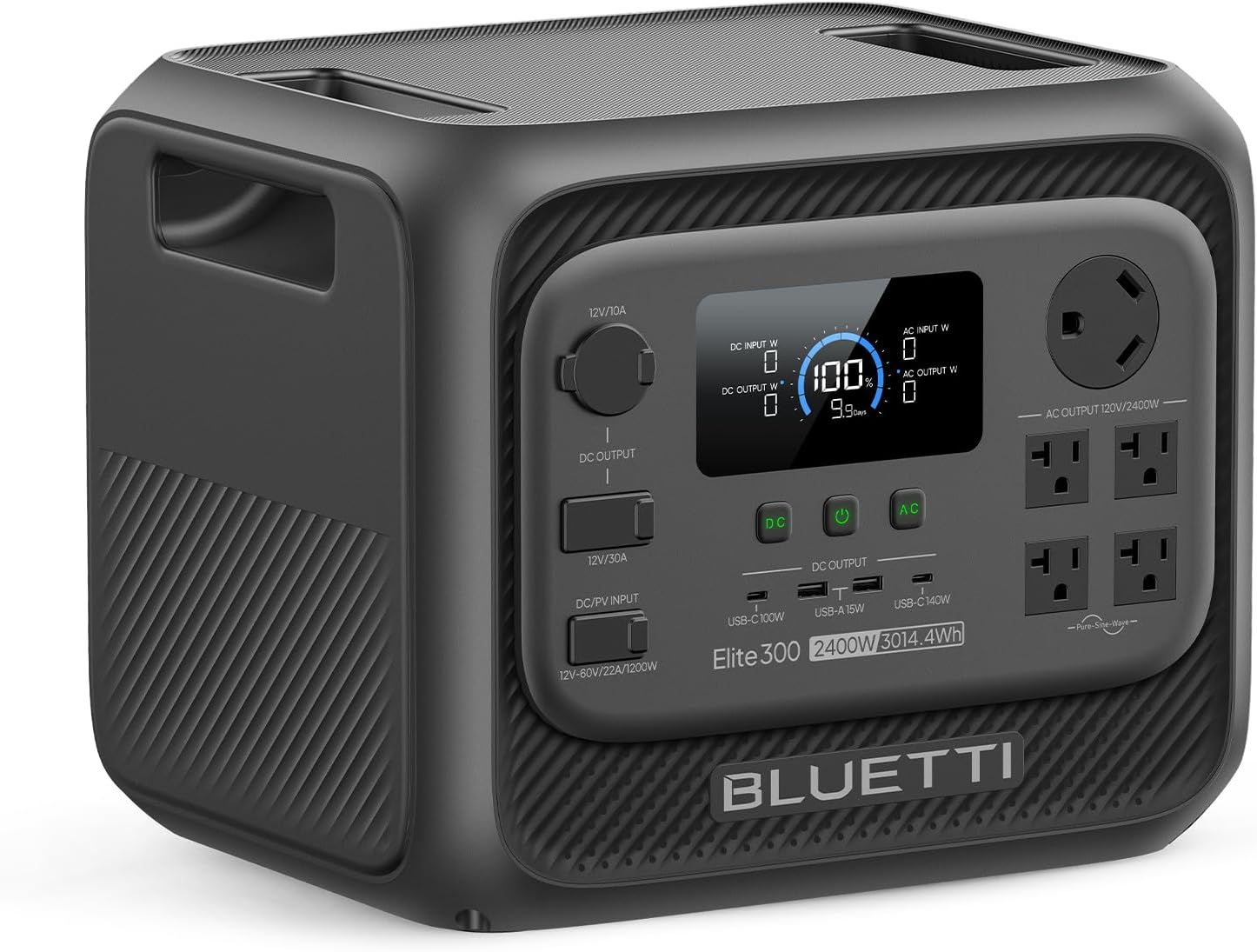
BLUETTI Elite 300 Portable Power Station for RV & Home Backup 3014.4Wh
3014.4Wh of capacity is enough to carry a fridge, lights, and communications through a multi-day outage without hauling gasoline
The heaviest and biggest spend here, and the wrong buy if your real load is a phone, a laptop, and a fan
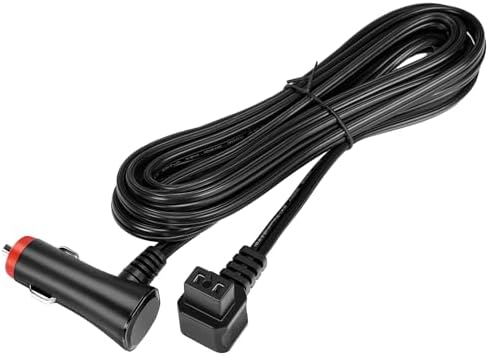
BougeRV 12V/24V DC Power Cord for 12V Car Refrigerator, Fits Most Brands
Runs a 12V compressor fridge straight from a station's 12V port or a vehicle socket, skipping the inverter conversion entirely
Only earns its place if you own a 12V fridge, and the plug has to match your fridge brand
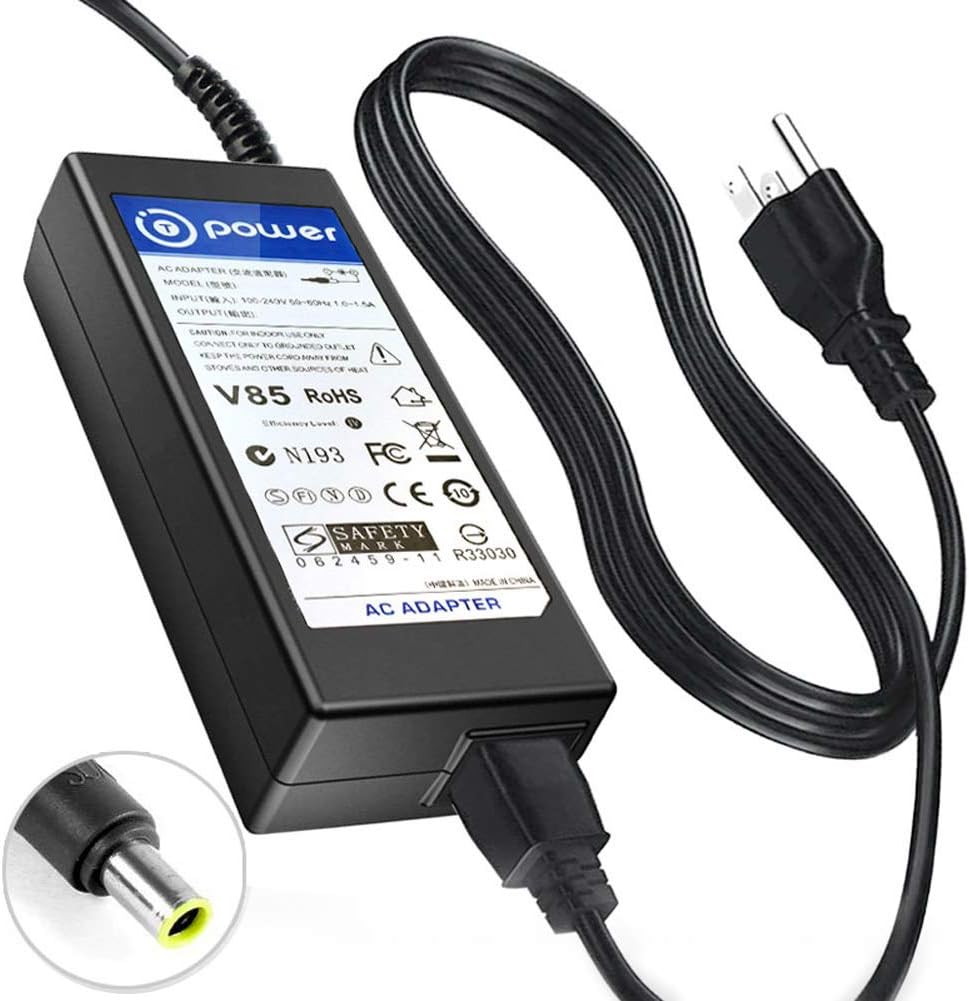
T Power 16V Charger for Goal Zero Yeti 150 400 200X 500X 1000 1250 Solar Generator, Sherpa 50 100 AC Portable Power Station Pack PN: 31901 22004 23000 22050 UT60-153300-02 Ac Dc Adapter Power Supply
An inexpensive replacement or spare wall charger for the Goal Zero Yeti and Sherpa line, matched by the model numbers printed in the listing
16V output suits the Goal Zero ecosystem only, and it is a top-up tool rather than a fast charger
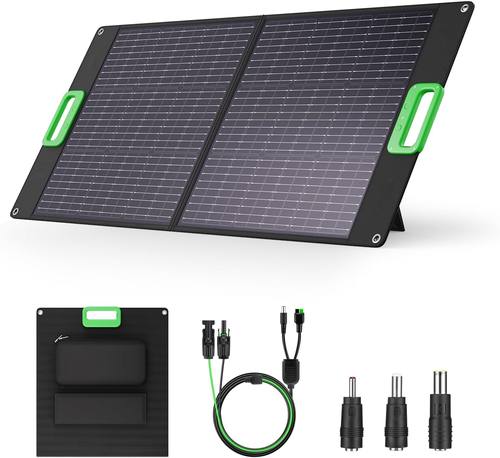
100W Portable Solar Panel for Power Station Generator 23.5% High Efficiency
23.5% cell efficiency in a folding panel that packs flat in a van, and the most practical way to refill a station when the grid is out
100W is a standard test condition rating, so real output depends on sun and angle, and the connector has to match your station
Prices and availability were captured from Amazon Creators API and may change.
What a charging kit actually needs
Two rules govern everything on this page. The first is watt-hours over watts. A station's headline wattage tells you what it can run at one instant, and the watt-hour figure tells you for how long. Do the arithmetic before you buy anything: add your loads in watts, multiply by the hours you need them, then divide by about 0.85 to account for inverter losses. A 3014.4Wh bank survives that math for a house circuit. A 500Wh bank does not, no matter how big the number on the front panel looks.
The second rule is that the refill path matters as much as the battery. A station you cannot recharge is a very expensive brick with a nice handle. That is why two of the four items here are not batteries at all. One turns sunlight into DC, and the other turns a wall outlet into DC for a specific brand of station. Both are cheap relative to capacity, and both decide whether the big purchase earns its keep.
BLUETTI Elite 300: the load carrier
At 3014.4Wh, the Elite 300 sits in the class I recommend for RV use and home backup rather than camping. That capacity is the difference between "we can keep the fridge cold and the phones charged" and "we can also run the internet router, a CPAP, some lights, and a small fan overnight." Add up those loads and you land somewhere around 1.5 to 2kWh per day, which leaves you room to spare.
What I would verify before buying any station in this class, and this one is no exception: the sustained wattage rating rather than the surge number, a pure sine wave output if you are plugging in electronics or a fridge compressor, the wall charge rate, and whether the unit runs from its own buttons when the app is misbehaving. The app is a feature, not the product. If the display and the buttons cannot run the thing on their own, it fails my bench.
The honest trade-off is weight and money. A station this size is not something you carry up a trail. It is something you wheel into a van or park next to the breaker panel. If your actual daily draw is a laptop and two phones, you are buying a dump truck to get groceries, and you should put the money into a smaller station plus a panel instead.
100W portable solar panel: the refill path
Solar is a bonus, not a religion. That said, if you already own a station, a folding 100W panel is the single most useful thing you can add, because it turns a dead battery into a slow trickle of independence. The 23.5% cell efficiency figure is real, and it is also a cell-level number measured under standard test conditions. On a roof at 9,000 feet in September haze, with the panel lying flat instead of angled at the sun, you will see less. That is physics, not a knock on the product.
Three things to check before you order. First, the connector: folding panels ship with MC4, Anderson, 8mm barrel, or a proprietary plug, and the wrong one means an adapter hunt. Second, the voltage window your station's charge controller accepts, because a panel that puts out too much voltage for a small PWM input gets clipped or refused. Third, your expectations. One 100W panel is a maintenance charge on a 3kWh bank and a genuine refill on a 500Wh unit. Match the panel to the battery, not to the sale banner.
For van life, the folding format is the whole point. It stores behind a seat, it moves to follow the sun, and it does not require drilling holes in a roof you might sell someday.
BougeRV 12V/24V DC cord: the quiet efficiency win
A 12V compressor fridge runs on DC natively. Most people plug it into the station's AC outlet, which means the station inverts DC to AC, and the fridge immediately converts it back to DC. Every one of those conversions costs you capacity, and a fridge that runs all night is exactly where that loss shows up. A DC cord removes both conversions from the path.
This is also where a lot of people discover the limits of their station. Check the amp rating and the fuse on the 12V cigarette socket before you plan around it. Many stations cap that port well below what the AC side can deliver, and a fridge compressor's startup draw can trip a small fuse. The cord itself is simple: it fits most fridge brands, it works on 12V and 24V systems, and it belongs in the van permanently.
If you do not own a 12V fridge, skip this one. It is a single-purpose part, and single-purpose parts are only worth buying when the purpose is real.
T Power 16V charger: the Goal Zero fix
Goal Zero's Yeti 150, 400, 200X, 500X, 1000, and 1250, plus the Sherpa 50 and 100, all charge from a 16V wall adapter. If that brick is lost, damaged, or living in a different vehicle than the station, the whole unit gets slow. This T Power supply is the replacement, and the listing spells out the part numbers it matches, which is how you confirm it fits your unit before you order.
Two cautions. Sixteen volts is not a universal voltage, so do not use this adapter on anything outside the Goal Zero ecosystem, and do not assume a generic 12V or 19V laptop brick will do the same job. Second, this is a top-up tool, not a fast charger. It is the right answer for keeping a Yeti healthy in storage, for arriving at a campsite with a full battery instead of a solar deficit, and for running a small station from a wall outlet during a longer outage while the bigger bank handles the house loads.
For the money, a spare wall charger is the least glamorous purchase on this page and one of the few that can save a trip.
The trade-offs the table cannot hold
The math on panels is worse than the math on batteries, and it always has been. A folding 100W panel costs more per watt than a rigid panel of the same rating, because you are paying for hinges, fabric, and a case. That is a fair trade for portability and a bad trade if the panel will live on a shed roof for ten years.
Big station versus small station plus panels is the other fork in the road. My rule is to size to the real load first, then buy the smallest refill method that keeps up with it. A 3kWh bank with one 100W panel is a well-insulated house with a garden hose for a water main.
Then there is 12V-only charging, which is the thing I keep coming back to. Running a station from a cigarette port is slow, it usually only works while the engine is running, and it will not keep up with a fridge plus a laptop on a road trip. It is a maintenance charge, not a strategy.
Finally, watch the connectors. Proprietary solar inputs and brand-specific fridge plugs are how a simple kit turns into three adapters and a search history full of forum posts.
How I would spend the money
If you are starting from nothing, buy in this order. First, the station sized to your real load, which for a household backup or a van with a fridge means a unit in the 2kWh class or larger, like the Elite 300. Second, a refill path, which means the 100W panel if you camp off-grid or a spare wall charger if you do not. Third, the DC cord, but only after you own a 12V fridge. Fourth, spare adapters and cables, because they are cheap and they fail at the worst time.
If you already own a station, the order flips. The panel comes first, since it fixes the biggest weakness in most setups, and the accessories follow.
Before you click buy
- Compare sustained wattage, not surge wattage, against your biggest load.
- Confirm pure sine wave output if a fridge, a CPAP, or audio gear is on the list.
- Check the connector type on both the panel and the station before ordering either.
- Look up the fuse rating on the 12V socket if you plan to run a fridge on DC.
- Weigh the unit. A 3kWh station is a two-person lift.
- Decide whether the unit runs from its own buttons, because firmware updates should never be the only way in.
What I am testing next
The question I keep chewing on is whether 12V-only charging is worth it for anyone who is not a delivery driver. My working prediction is that it stays a niche feature while integrated charge controllers become standard across the mid-market, and that the 2kWh class keeps sliding toward the price of a mid-size panel and battery bundle. I keep a dated list of these calls and score them every January. The used market after the next hurricane season will tell me more about real durability than any spec sheet, and I will be watching it closely.