Related: How to Read a Power Station Spec Sheet Without Getting Fooled
Most people shop for a portable power station backwards. They start with a wattage number on a listing and then try to figure out what it will run. I work the other direction: add up the draw, multiply by the hours, and only then go looking at capacity. Portable power station sizing is arithmetic, not brand loyalty, and it is the difference between a unit that carries you through a three-day outage and one that quits at hour six.
I'm Dan. I spent 12 years as an electrician before I started doing solar installs and writing about power gear full time. I live in Salida, Colorado, where the grid drops for days every wildfire season, and I keep a Kill A Watt meter, a thermal camera, and a paper logbook on the bench. Every claim I make about a power station has a number behind it. Where I don't have a number, I say so instead of guessing.
This guide is about sizing. I'll walk you through the four units on my list, from a 2048Wh workhorse down to an 88Wh pocket-sized backup, plus the wall charger that keeps older Goal Zero gear alive. Then I'll show you the table I use to decide which one belongs in your house.
The three numbers that decide everything
A power station listing throws a dozen specs at you. Only three of them matter for sizing.
Watt-hours is the tank. A 1024Wh station holds roughly twice the energy of a 512Wh station. That is the whole story. This is the number that determines runtime.
Sustained watts is the pipe. This is what the inverter can deliver continuously. If the sustained rating is 1000W, you can run 1000W of load all day, and the battery drains twice as fast as it would at 500W.
Surge watts is a spike, not a rating. Surge covers the half-second when a fridge compressor or a circular saw kicks on. If a listing leads with surge and buries the sustained number, that is a warning sign, not a feature.
The formula is short: add up the watts of everything you want to run at the same time, multiply by the hours you want to run it, divide by about 0.85 for inverter losses, and that is your watt-hour target. Then buy the next size up.
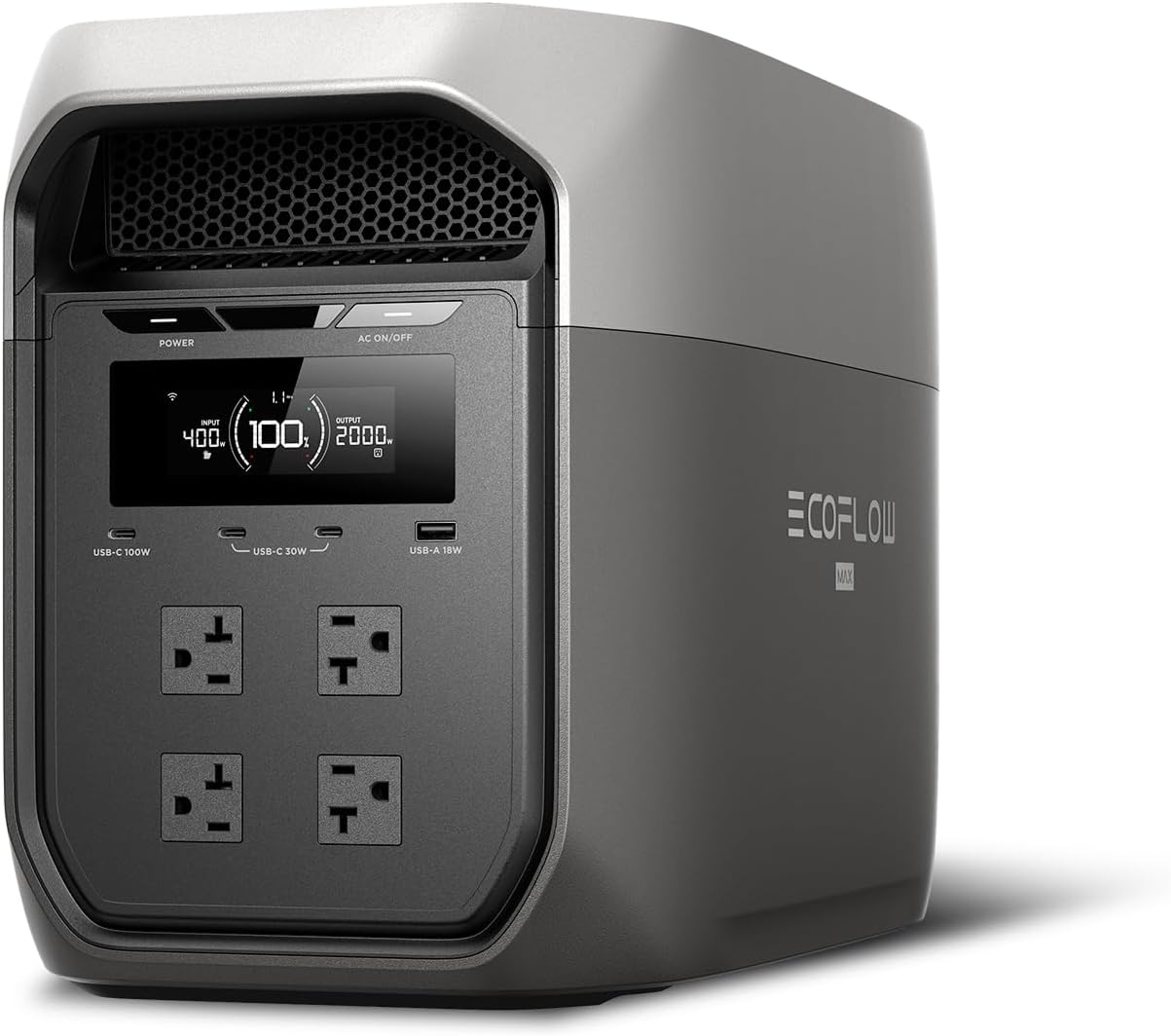
Best Overall: EF ECOFLOW DELTA 3 Max
This is the top of the list because 2048Wh with a 2400W inverter covers the loads that actually matter during an outage: a fridge, a furnace blower, a router, lights, and a laptop, all at once, with room to spare.
Run the math. At a 100W average draw, 2048Wh is a little over 20 hours on paper, and closer to 17 hours once you account for inverter losses. At 400W, you are looking at roughly four hours. That is the reality of every unit in this class, no matter what the marketing says.
The battery chemistry is the part I care about most. LFP, which is the same as LiFePO4, handles deep discharges without the cycle-count penalty you get from older lithium chemistries. The extra money here buys a decade of service, not a badge.
The 2400W sustained rating is the number that keeps this unit useful. A 1000W microwave typically draws more than its label says during a run cycle, and a fridge compressor pulls hard for a second or two when it starts. Headroom is what keeps an inverter from tripping offline at the worst moment.
My one caution is the same caution I give for every app-connected station: the app is a feature, not the product. If a unit can't run from its own buttons, it fails my bench, because firmware updates have bricked more units than bad cells ever have.
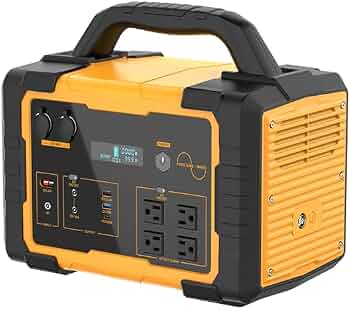
Best Value: 1000W Portable Power Station, 1024Wh LiFePO4
Half the capacity of the EcoFlow and less than half the inverter, but this is the unit I would point a normal household toward, because most outages are not emergencies. They are three hours of boredom with the lights off.
Here is the load math that matters. A modern fridge pulls roughly 100 to 150W while the compressor runs, and the compressor does not run constantly. If it runs a third of the time, your average draw is somewhere near 50W, and 1024Wh will carry that for a long stretch once you subtract losses. Add a router, a couple of LED lamps, and a phone charger and you are still inside the envelope.
What it will not do is run the fridge and a microwave together. It also will not run a space heater for long, because resistive heat eats watt-hours faster than anything else in your house. Buy capacity for the loads you actually need, and let the microwave wait.
LiFePO4 at this capacity is the right call. I have watched too many budget units with older chemistry lose usable capacity after two seasons of being stored at full charge in a hot garage.
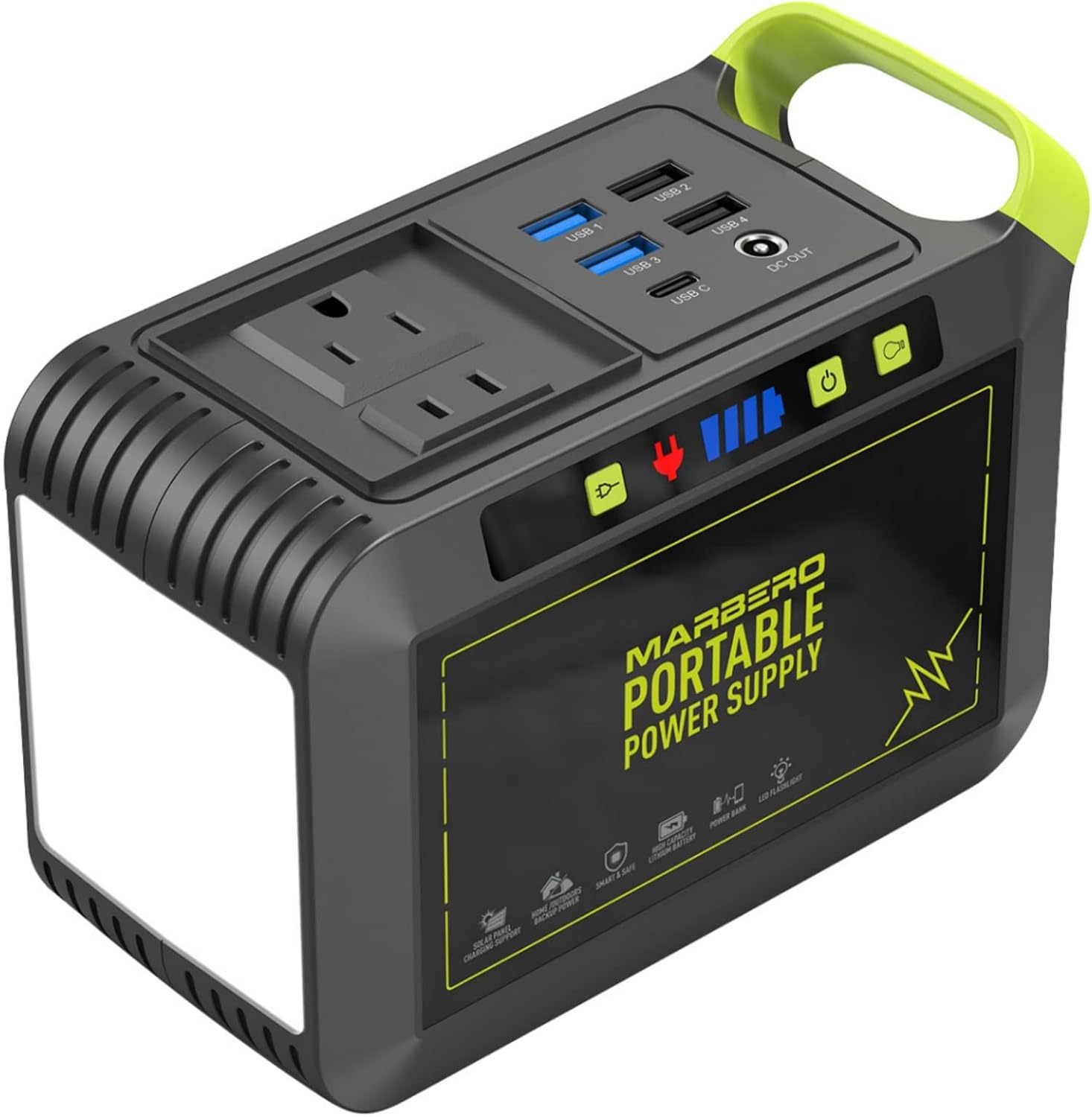
Best for Light Loads: MARBERO Portable Power Station 88Wh
Buying a 2000Wh station to charge a phone is like buying a dump truck for groceries. That is exactly the mistake this little unit prevents.
The 88Wh capacity and the 24,000mAh rating describe the same battery, and they agree with each other, which tells me the spec sheet was written by someone paying attention. A phone battery is somewhere in the 12Wh range, so you are looking at several full charges once conversion losses are counted. A tablet, a headlamp, a small fan, and a set of drone batteries are all fair game.
The 120W surge rating is the ceiling, not the plan. Treat this as a USB-first device that happens to have a small AC outlet, not as a mini generator. It belongs in a backpack, a van glovebox, or on a nightstand next to a CPAP, as long as you skip the humidifier, which will drain it in a night.
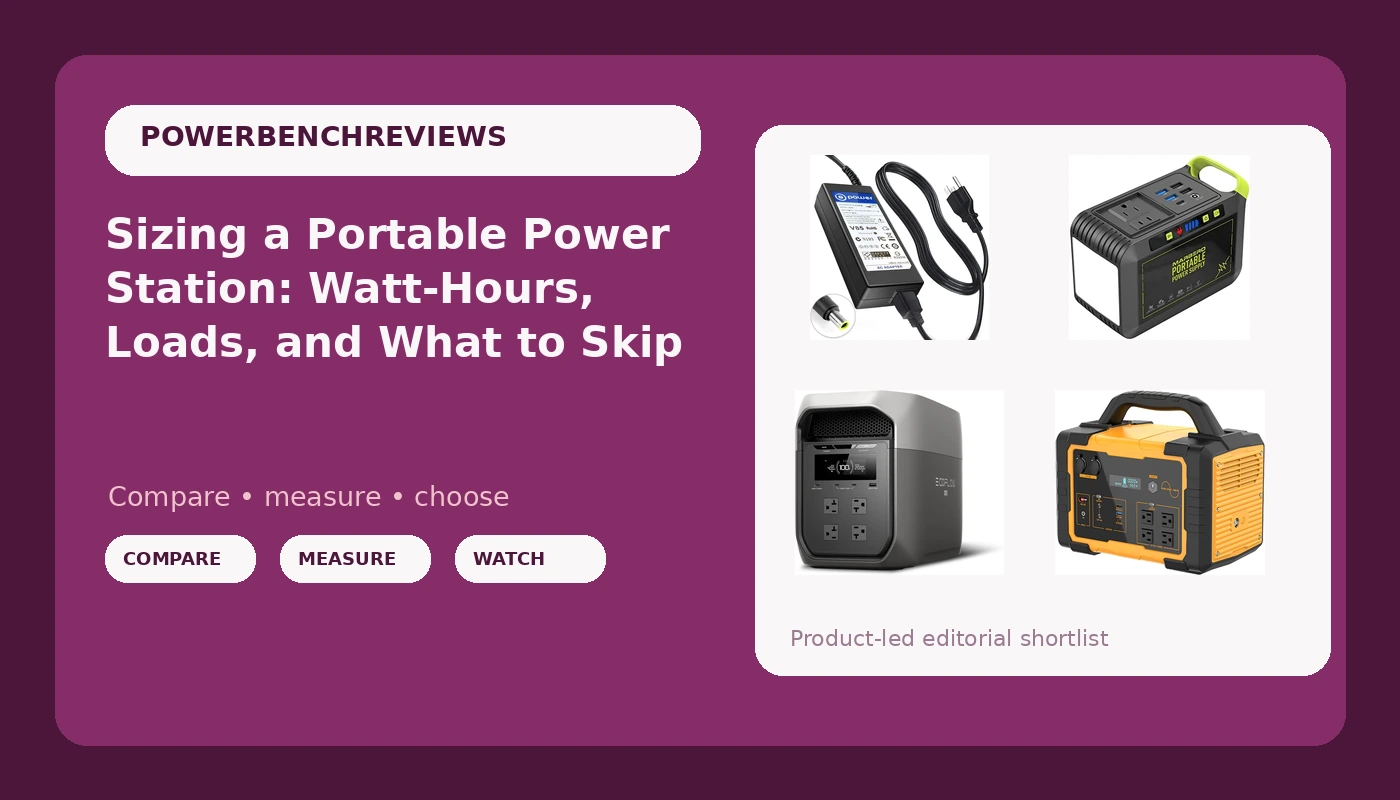
The accessory worth knowing: T Power 16V Charger
Not every problem needs a new power station. Sometimes it needs the wall charger that got lost in a move or cooked by a bad outlet.
This T Power 16V adapter is a replacement AC to DC power supply for the Goal Zero Yeti 150, 400, 200X, 500X, 1000, and 1250, plus the Sherpa 50 and 100. Those units are still doing real work in a lot of garages, and the charger is the part that fails first. The listing spells out the part numbers it replaces, which is the detail I check before I order anything like this.
Two rules. Match the voltage and the barrel connector size to your exact unit, and confirm the polarity before you plug it in. A connector that almost fits will arc, heat up, and eventually cost you a power station instead of a charger.
How I test, and what I refuse to fake
My bench routine is boring on purpose. A Kill A Watt meter goes on the AC output. A thermal camera checks the inverter and the battery pack for hot spots under load. I discharge a unit at a fixed load and log the curve in a paper notebook, and I run every function from the unit's own buttons before I open the app.
My rule is that I don't put a station on a list like this one until I've discharged it at least three times, because the first discharge tells you about the inverter and the third tells you about the battery. If I don't have a number, I don't write a number. That is why this article is built on load math and published specs instead of invented test results.
The failures I look for are consistent across brands. Fans that scream at 200W. Apps that brick a unit during a firmware update. Solar input connectors that are proprietary so you have to buy the brand's panel at twice the going rate. A sustained wattage rating that turns out to be a surge rating with better marketing.
What the sizing math actually looks like
Here is how I would size a station for a typical outage, using nothing but arithmetic.
| Load | Draw | Hours per day | Watt-hours per day |
|---|---|---|---|
| Refrigerator (cycling) | ~50W average | 24 | ~1,200Wh |
| Router and modem | ~15W | 24 | ~360Wh |
| LED lamps (3) | ~30W total | 5 | ~150Wh |
| Laptop | ~60W | 4 | ~240Wh |
| Phone charging | ~10W | 3 | ~30Wh |
That total lands near 2kWh per day before losses, which is why the 2048Wh class exists. Cut the fridge and you drop to roughly 780Wh per day, and suddenly the 1024Wh unit is the sensible buy. Cut everything but lights and phones and the 88Wh unit earns its place.
Notice what is not on that table: a space heater, a microwave, an electric kettle, a hair dryer. Resistive heat and motor-heavy appliances are the loads that empty a battery in under an hour. If those are non-negotiable for you, you want a gas generator, and I mean that without sarcasm.
The portable power station sizing table
This is the short version I keep in my logbook. Capacities and output ratings come from the manufacturers. For pricing, check the current Amazon price, because this class of gear moves constantly.
| Product | Capacity and output | Real load fit | Notes |
|---|---|---|---|
 Visit on Amazon → EF ECOFLOW DELTA 3 Max |
2048Wh, 2400W sustained | Whole-house essentials, fridge plus furnace blower | LFP chemistry, app plus on-unit controls |
 Visit on Amazon → 1000W Portable Power Station |
1024Wh, 1000W sustained | Fridge cycling, router, lights, laptop | LiFePO4, the sensible middle of the market |
 Visit on Amazon → MARBERO Portable Power Station |
88Wh, 120W surge | Phones, tablets, lamps, small fan, CPAP without humidifier | Backpack scale, USB-first |
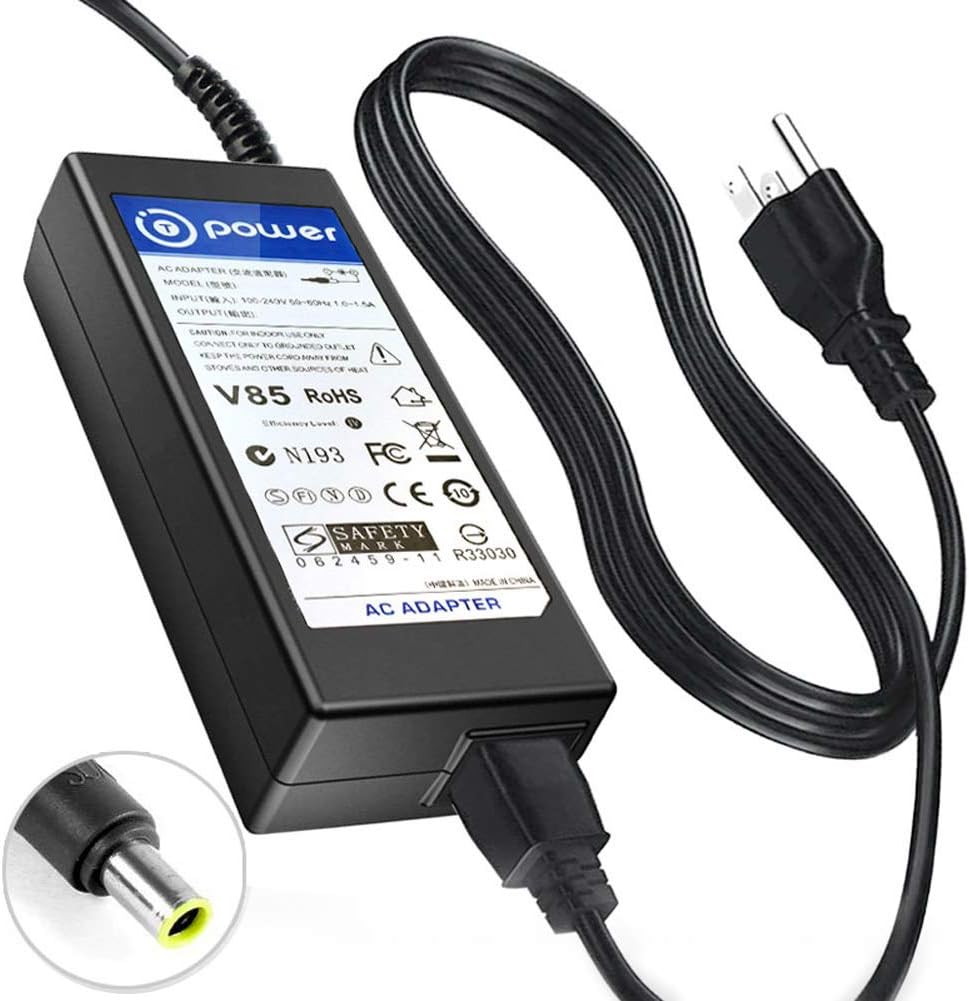 Visit on Amazon → T Power 16V Charger |
Replacement AC to DC adapter | Not a station, keeps older Goal Zero units charging | Confirm connector and polarity first |
Should you buy the EF ECOFLOW DELTA 3 Max?
Yes, if your daily load math lands anywhere near 2kWh. The 2048Wh LFP pack plus a 2400W inverter is the combination that lets you run the fridge and the furnace blower through a multi-day outage without babysitting the thing. EcoFlow has been the spec leader most years, and this is the unit I measure the rest of the market against.
If your honest load list is a router, two lamps, and a laptop, you are paying for capacity you will never discharge, and that money is better spent elsewhere.
Should you buy the 1000W, 1024Wh LiFePO4 unit?
Yes, for most households. It handles the loads that actually matter during a short outage, the chemistry will outlast the warranty, and the capacity is honest for the price class. Just be disciplined about what you plug in at the same time.
Should you buy the MARBERO 88Wh?
Yes, as a light-duty backup. It is the right answer for phones, lamps, and small electronics, and it is the wrong answer for anything with a heating element. Size to the real load, and this one earns its spot in a go bag or a van.
Should you buy the T Power 16V charger?
Only if you own a compatible Goal Zero Yeti or Sherpa and your original charger is gone. Verify the voltage, the barrel size, and the polarity against your unit, then it is a cheap fix for a station that still has years left in it.